On the third day of our Lisbon trip we visited the majestic Saint George’s Castle & the museum. Found the architecture of the medieval castle very attractive with spectacular 360* views of the Lisbon city & the Tagus river.Wonderful experience!
CASTELO DE SAO JORGE :
Saint George’s Castle (Portuguese: Castelo de São Jorge is a historic castle in the Portuguese capital of Lisbon, located in the freguesia of Santa Maria Maior. Human occupation of the castle hill dates to at least the 8th century BC while the first fortifications built date from the 1st century BC. The hill on which Saint George’s Castle stands has played an important part in the history of Lisbon, having served as the location of fortifications occupied successively by Phoenicians, Carthaginians, Romans, and Moors, before its conquest by the Portuguese in the 1147 Siege of Lisbon. Since the 12th century, the castle has variously served as a royal palace, a military barracks, home of the Torre do Tombo National Archive, and now as a national monument and museum.
Saint George’s Castle can be seen from almost anywhere in the city. Its oldest parts date from the 6th century, when it was fortified by the Romans, Visigoths, and eventually the Moors. It served as a royal Moorish residence, until Portugal’s first king, Afonso Henriques, captured it in 1147 with the help of northern European crusaders on their way to the Holy Land. It was later dedicated to St. George, the patron saint of England, commemorating the Anglo-Portuguese pact dating from 1371, and became the royal palace until another one (that was destroyed in the Great Earthquake) was built in today’s Comercio Square. It’s now an oasis of peace, but just past the main gate is a statue of King Afonso Henriques and a series of cannons, reminding you of its original purpose. What remains of the Alcaçovas Palace where medieval kings lived, is a stone building now housing a restaurant, and round the back, a small archaeological museum in three underground chambers (including the one where Vasco da Gama was received by King Manuel in 1499, after his voyage to India).
HISTORY:
Although the first fortifications on this hilltop date from the 1st century BC, archaealogical excavations have identified a human presence in the Tagus valley as far back as the 8th century BC. The first fortification was, presumably, erected in 48 BC, when Lisbon was classified as a Roman municipality. The hill was first used by Celtic tribes, then by Phoenicians, followed by Greeks and later the Carthaginians as a defensive outpost that was later expropriated successively by the Romans, the Suebi, the Visigoths, and the Moors. During the 10th century, the fortifications were built by Berber forces; these included the walls or Cerca Moura (Moorish Encirclement .The hill on which St George’s Castle sits was inhabited as early as the 6th century BC, with the first fortifications dating back to the 2nd century BC. This hill was of military importance to a number of peoples, including Lisbon’s indigenous Celtic and Iberian tribes as well as the Romans, the Visigoths (5th century) and the Moors (mid-11th century). The earliest mentions of St George’s Castle date back to the 11th century, when Arab geographers mention it defending the ‘quasabah’ or ‘fortress’. In 1147, St George’s Castle was conquered from the Moors by Portugal’s first king, Afonso Henriques helped by crusaders as part of the Seige of Lisbon. In 1255, when Lisbon became the capital city, St George’s Castle served as the royal palace and was later renovated by King Dinis I. The castle was dedicated to Saint George ,patron Saint of England, by King João I in the 14th century, commemorating the 1371 Anglo-Portuguese pact. However, St George’s Castle began to lose its stature in the 16th century, when King Manuel I built the Ribeira Palace, particularly when St George’s Castle was damaged by earthquakes in 1531 and 1755 and never properly rebuilt. A major restoration project of the Castle took place in the 1940’s which completely rebuilt the ramparts, embellished the watchtowers and added gardens to the courtyards.
ARCHITECTURE: The castle is in the centre of Lisbon, on a hill, while many of its walls extend around the citadel into the civil parishes that surround it to the east and south.
The castle’s plan is roughly square, and it was originally encircled by a wall, to form a Citadel. The castle complex consists of the castle itself (the castelejo) , some ancillary buildings (including the ruins of the royal palace), gardens, and a large terraced square from which an impressive panorama of Lisbon is visible. The main entrance to the citadel is a 19th-century gate surmounted by the coat of Arms of Portugal, the name of Queen Maria II, and the date 1846. This gate permits access to the main square (Praça d’Armas), which is decorated with old cannons and a bronze statue of Afonso Henricks, the Portuguese monarch who took the castle from the Moors. This statue is a copy of the 19th-century original, by the romantic sculptor Antonio Soares Reis, which is located near Guimaraes Castle in northern Portugal. The remnants of the royal palace are located near the main square, but all that is left are some walls and a few rebuilt rooms such as the Casa Ogival. It now hosts the Olissipónia, a multimedia show about the history of Lisbon.
The medieval castle is located toward the northwest corner of the citadel, at its highest point. Hypothetically, during a siege, if attackers managed to enter the citadel, the castle was the last stronghold, the last place in which to take refuge. It is rectangular, with ten towers. A wall with a tower and a connecting door divides the castle courtyard into halves. A series of stairways allow visitors to reach the walkway atop the wall and the towers, from which magnificent views of Lisbon can be enjoyed. The Tower of Ulysses (where the Torre do Tombo archive used to be) had in 1998 a camera obscura installed that allows spectators a 360-degree view of the city and Tagus River. Apart from its main walls, the castle is protected, on its southern and eastern sides, by a barbican (barbacã), a low wall that prevented siege engines from approaching the main castle walls. The northern and western sides of the castle, on the other hand, were naturally protected by the steep hillside sloping downward from the castle’s foundations. The castle is also partially encircled by a moat, now dry. The main entrance is fronted by a stone bridge across the moat. On the west side, there is a long curtain wall extending downhill, ending at a tower (the Torre de São Lourenço).This tower guarded a gate in the Cerca Fernandina.
SAINT GEORGE CASTLE MUSEUM :
We visited the museum with great collection of artefacts of the medieval period enhancing our knowledge of the bygone times:
My dear readers may kindly point out any incorrect information in my above writeup needing any corrections! I am truly indebted to Wikipedia for the invaluable information on the subject ! Happy Reading !
On the second day(2/9/22) of our Lisbon trip we made visits to Belem Tower,Padrao dos,Jeronimos Monastery ,Rossio Square, Pillar 7Bridge Experience & the Hippo Trip.
BELEM TOWERBELEM TOWERINSIDE THE BELEM TOWER
BELEM TOWER : Belém Tower, officially the Tower of Saint Vincent is a 16th-century fortification located in Lisbon that served as a point of embarkation and disembarkation for Portuguese explorers and as a ceremonial gateway to Lisbon. It was built during the height of the Portuguese Renaissance, and is a prominent example of the Portuguese Manueline style, but it also incorporates hints of other architectural styles. The structure was built from lioz limestone and is composed of a bastion and a 30-metre, four-storey tower. Since 1983, the tower has been a UNESCO World Heritage Site, along with the Jerónimos Monastery. It is often portrayed as a symbol of Europe’s Age of Discoveries and as a metonym for Portugal or Lisbon, given its landmark status. It has incorrectly been stated that the tower was built in the middle of the Tagus and now sits near the shore because the river was redirected after the 1755 Lisbon earthquake. In fact, the tower was built on a small island in the Tagus river near the Lisbon shore.
PADRAO DOS DESCOBRIMENTOS : Padrão dos Descobrimentos is a monument on the northern bank of the Tagus river estuary, in the civil parish of Santa Maria de Belém, Lisbon. Located along the river where ships departed to explore and trade with India and the Orient, the monument celebrates the Portuguese Age of Discovery during the 15th and 16th centuries. The monument was conceived in 1939 by Portuguese architect José Ângelo Cottinelli Telmo, and sculptor Leopoldo de Almeida, as a temporary beacon during the Portuguese World Exhibition opening in June 1940.
PADRAO DOS DESCOBRINMENTOS, LISBONPORT OF LISBON
JERONIMOS MONASTERY :
The Jerónimos Monastery or Hieronymites Monastery is a former monastery of the Order of Saint Jerome near the Tagus river in the parish of Belém, in the Lisbon Municipality, Portugal. It became the necropolis of the Portuguese royal dynasty of Aviz in the 16th century but was secularized on 28 December 1833 by state decree and its ownership transferred to the charitable institution, Real Casa Pia de Lisboa. The Jerónimos Monastery is one of the most prominent examples of the late Portuguese Gothic Manueline style of architecture in Lisbon. It was erected in the early 1500s near the launch point of Vasco da Gama’s first journey, and its construction funded by a tax on the profits of the yearly Portuguese India Armadas. In 1880, da Gama’s remains and those of the poet Luís de Camões (who celebrated da Gama’s first voyage in his 1572 epic poem, The Lusiad), were moved to new carved tombs in the nave of the monastery’s church, only a few meters away from the tombs of the kings Manuel I and John III, whom da Gama had served. In 1983, the Jerónimos Monastery was classified as a UNESCO World Heritage Site, along with the nearby Tower of Belém
JERONIMOS MONASTERYROSSIO SQUARE
ROSIO SQUARE :
The Rossio is the popular name of the King Pedro IV Square in the city of Lisbon, in Portugal. It is located in the Pombaline Downtown of Lisbon and has been one of its main squares since the Middle Ages. It has been the setting of popular revolts and celebrations, bullfights and executions, and is now a preferred meeting place of Lisbon natives and tourists alike. The current name of the Rossio pays homage to Pedro IV, King of Portugal. The Column of Pedro IV is in the middle of the square.The Rossio has been a meeting place for people of Lisbon for centuries. Some of the cafés and shops of the square date from the 18th century, like the Café Nicola, where poet Manuel Maria Barbosa du Bocage used to meet friends. Other traditional shops include the Pastelaria Suíça (1922–2018) and the Ginjinha, where the typical Lisbon spirit (Ginjinha) can be tasted. The building of the Maria II Theatre and the Public Gardens to the north of the square only made the area more attended by Lisbon high society in the 19th century. Nowadays it is constantly populated by Lisboners and tourists.
AT THE PILLAR 7 BRIDGE EXPERIENCE
PILLAR 7 BRIDGE EXPERIENCE : A new cultural attraction in Lisbon! Located in Alcântara (Avenida da Índia), this interactive centre allows all visitors to have an unique experience of the bridge – considered one of the prettiest in the world – via a tour that takes in the exterior areas of this key pillar and the sensory experience of visiting its interior. It is a trip through the history of its construction and ends with an elevator ride up to a panoramic viewing point that provides an unrivalled view of the city and the river.
HIPPO TRIPIN LISBON :AMPHIBIOUS TOURIST CIRCUIT!90 MINUTES OF FUN!!
Aboard one of the amphibious vehicles, lets explore the heart of the Portuguese capital, by land and water, always in the comfort of your seat. Is it a bus? Is it a boat? It’s both… so lets get ready to “dive” into the Tagus River with a huge smile. Lets have fun with the entertainers who will share myths, legends and curiosities, in a 90 min circuit full of positive energy and interaction. Fun reigns, so don’t expect a “traditional” panoramic tour with a “traditional” guide. The entertainers provide a memorable experience and we’ll be screaming —Hippo, Hippo, Hurrah!!!
LETSTRY A HIPPOTRIP… LISBON WITH A SPLASH!
PRACADOS RESTAURADORESMARQUIS OF POMBAL SQUARE
TRAM 28 :
Riding tram 28 has become one of Lisbon’s most popular activities. It’s a journey back in time, over hills and medieval streets, in vintage trams from the 1930s that are still part of the city’s public transportation network. These charming vehicles go past some major attractions, and guidebooks never fail to recommend the experience. Here’s what we should know: Line 28 of Lisbon’s iconic trams was inaugurated in 1914, and today it has a 7km-(4.5 miles) route between Martim Moniz Square and Prazeres, by the neighborhood of Campo de Ourique (at night, after 9:30pm, it terminates a few stops before, by the basilica of Estrela). It survived the rise of the automobile and of the bus by being the best way to squeeze through the narrow streets and corners of the older districts, for being an attractive tourist route, and for its clean energy. It’s now an essential part of Lisbon’s life, and the city would lose part of its soul without the constant rattling of these singular yellow “boxes.”
On 01/09/22, we four set-off from Eindhoven ,Netherlands on our 11-day exciting trips to the amazing European destinations: Portugal ,Spain, Italy,Pisa & Vetican city.We thoroughly enjoyed the mesmerizing locations.I am hereby describing our visits to Lisbon attractions in 3 blogs this one being the first one!
FLAG OF PORTUGALSetting -off from Eindhoven ,Netherlands to Lisbon (Portugal)Flying to Lisbon
PORTUGAL :
Portugal is a southern European country on the Iberian Peninsula, bordering Spain. Its location on the Atlantic Ocean has influenced many aspects of its culture: salt cod and grilled sardines are national dishes, the Algarve’s beaches are a major destination and much of the nation’s architecture dates to the 1500s–1800s, when Portugal had a powerful maritime empire.
PORT OF LISBONBELEM TOWERSANTA MARIA MAIORA FADO SINGER AT THE SAO JORGE CASTLE
LISBON ,THE CAPITAL OF PORTUGAL : Lisbon is Portugal’s hilly, coastal capital city. From imposing São Jorge Castle, the view encompasses the old city’s pastel-colored buildings, Tagus Estuary and Ponte 25 de Abril suspension bridge. Nearby, the National Azulejo Museum displays 5 centuries of decorative ceramic tiles. Just outside Lisbon is a string of Atlantic beaches, from Cascais to Estoril. Lisbon is one of the oldest cities in the world, and the second-oldest European capital city (after Athens), predating other modern European capitals by centuries. Julius Caesar made it a municipium called Felicitas Julia, adding to the name Olissipo. After the fall of the Roman Empire it was ruled by a series of Germanic tribes from the 5th century; later it was captured by the Moors in the 8th century. In 1147 Afonso Henriques conquered the city and since then it has been the political, economic and cultural centre of Portugal. It is mainland Europe’s westernmost capital city and the only one along the Atlantic coast. Lisbon lies in the western Iberian Peninsula on the Atlantic Ocean and the River Tagus. The westernmost portions of its metro area, the Portuguese Riviera, form the westernmost point of Continental Europe, culminating at Cabo da Roca..
SANTA MARIA MAIOR, LISBON
ARCO DA RUA AUGUSTA : This triumphal arch in Rua Augusta has always impressed those roaming Lisbon’s busiest pedestrianised street. But now you can visit the top of this unique structure for a truly singular and impressive view of Baixa and the river. It symbolises the rebirth of a new Lisbon after the tragedy of the earthquake, fire and tsunami in 1755 that razed what stood before. And it affirms, in Latin, “The Virtues of the Greatest”: the strength, resilience and achievements of the Portuguese people. At the top stand the sculptures by Célestin Anatole Calmels of Glory crowning Genius and Valour. You can’t help but be inspired by these values as you admire the 360º view of the best Lisbon has to offer. The remaining statues, by Victor Bastos, represent figures of our history. On the left we find the Marquis of Pombal, the following are Vasco da Gama and Viriato and, on the right, Nuno Álvares Pereira. Discover the history of this arch in the exhibition in the Clock Room for a sense of what it stands for.
PRACA DE COMERCIO
PRACA DO COMERCIO : One of Lisbon’s most emblematic squares is Praça do Comércio. Better known by locals as Terreiro do Paço, since it was once where the paço, or palace, used to stand before the earthquake in 1755, it is one of the largest squares in Europe. As a symbol of the city, it provides access to various attractions that mustn’t be missed: Pátio da Galé; Cais das Colunas; and the innovative Lisbon Story Centre. You should also climb up the Arco da Rua Augusta to marvel at the symmetry of the streets, the calçada portuguesa and the view of the river. Take a rest at the feet of King José I and the imposing horse Gentil, a statue sculpted by Machado de Castro which so well illustrates royal power and the nobility of the Lusitano breed. Make Praça do Comércio your starting point for discovering the city.
PRACA DO COMERCIO, LISBONPraca do ComercioPRACA DE COMERCIO
SANTA MARIA MAIOR : Santa Maria Maior is a freguesia (civil parish) and district of Lisbon, the capital of Portugal. Located in the historic center of Lisbon, Santa Maria Maior is to the west of São Vicente, east of Misericórdia, and south of Arroios and Santo António. It is home to numerous historic monuments, including Lisbon Cathedral, the Rossio, and the Praça do Comércio, as well as famous neighborhoods, such as the Lisbon Baixa, as well as parts of Bairro Alto and Alfama. The Praça do Comércio. The parish was created by the administrative reorganization of Lisbon on 8 December 2012. from the incorporation of other 12 old small parishes: Mártires, Sacramento, São Nicolau, Madalena, Santa Justa, Sé, Santiago, São Cristóvão e São Lourenço, Castelo, Socorro, São Miguel and Santo Estêvão. The official name of the freguesia comes from Cathedral of Santa Maria Maior, seat of the Patriarchate of Lisbon. The Baixa was built following the destruction of the 1755 Great Earthquake of Lisbon, under orders of King Joseph I of Portugal’s prime minister, Sebastião José de Carvalho e Melo, 1st Marquis of Pombal, whose architects rebuilt the area in what is known as the Pombaline style.
SANTA JUSTA LIFT IN THE BACKGROUNDSANTA JUSTA LIFTSITTING INSIDE THE LIFT
SANTA JUSTA LIFT : The Elevador de Santa Justa is one of the city’s most famous sights. Designed by Mesnier du Ponsard, it was originally called the Ascensor Ouro-Carmo.It connects Rua do Ouro to Largo do Carmo via a neogothic-style structure completely unlike any of the other elevadores in the city. The lifts themselves, made of wood elegantly decorated with brass, evoke a journey in time as they ascend and descend towards the most exclusive areas of the city. At the top of the tower is one of the best viewing points in the city, providing a splendid panorama of Baixa, Castelo, the Tagus and also the impressive ruins of the church of the Convento do Carmo. It’s worth a ride to feel a surge of emotion at the view which extends before your eyes.
OCEANARIO DE LISBOA :(Lisbon Oceanarium) The Lisbon Oceanarium is an oceanarium in Lisbon, Portugal. It is located in the Parque das Nações, which was the exhibition grounds for the Expo ’98. It is the largest indoor aquarium in Europe. The Lisbon Oceanarium has a large collection of marine species — penguins, seagulls and other birds; sea otters (mammals); sharks, rays, chimaeras, seahorses and other bony fish; crustaceans; starfish, sea urchins& other echinoderms; sea anemones, corals and other cnidaria; octopuses, cuttlefish, sea snails and other mollusks; amphibians; jellyfish; marine plants and terrestrial plants and other marine organisms totaling about 16,000 individuals of 450 species.
PRACA DA FIGUEIRA
THE PRACA DA FIGUEIRA : The Praça da Figueira is a large square in the centre of Lisbon, in Portugal. It is part of the Lisbon Baixa, the area of the city reurbanised after the 1755 Lisbon earthquake. In the 16th century the square did not exist, and most of its area was occupied by the Hospital Real de Todos os Santos, the most important in the city. In 1755, after the great earthquake which destroyed most of Lisbon, the hospital was greatly damaged. It was demolished around 1775. The large area previously occupied by the hospital in the Baixa was turned into an open market square. Around 1885, a large covered market of 8,000 m² was built. This market existed until 1949, when it was demolished. Since then the square has been an open space. In 1971 a bronze equestrian statue representing King John I, by sculptor Leopoldo de Almeida, was inaugurated in the square. The monument also carries medallions with the effigies of Nuno Álvares Pereira and João das Regras, two key characters in the 1385 Revolution that brought John I to power.
MUSEU DO FADO(Fado Museum): Born in the popular contexts of the 1800s Lisbon, Fado was present in convivial and leisure moments. Happening spontaneously, his execution took place indoors or outdoors, in gardens, bullfights, retreats, streets and alley, taverns, chambermaid cafes and half-door houses. Evoking urban emergence themes, singing the daily narratives, Fado is profoundly related to social contexts ruled by marginality and transgression in a first phase, taking place in locations visited by prostitutes, faias , sailors, coachmen and marialvas . Often surprised in prison, its actors – the singers – are described in the beechfigure, a fado singer guy, a bully of a rough and hoarse voice with tattoos and skilled with a flick knife who spoke using slang.I love everything connected to Fado, In this beautiful museum, you can go through the history of this UNESCO- protected Portuguese gem! There is a room in which you can sit and listen to historical records of Fado songs and performers arranged in alphabetical order.
FADO SINGERS & MUSICIANSPERFORMING
Alfama :a neighborhood in Lisbon.
The steep streets of Alfama, one of Lisbon’s oldest areas, are lined with shops selling traditional crafts and cafes. Passengers pack the historic no. 28 tram, which winds through Alfama on its way up to 11th-century São Jorge Castle. Views from Miradouro da Graça terrace stretch over the city to the River Tagus. In the evening, melancholy Fado music can be heard in some of the area’s long-running restaurants.
ALFAMA
Overlooking the Alfama is the medieval Castle of São Jorge, royal residence until the early 16th century with views of the city. In the slopes of Alfama there are other terraces (miradouros) from which to see the city, like the Miradouro de Santa Luzia, near the church of the same name and over remnants of the Moorish city walls, and the Miradouro das Portas do Sol (Gates of the Sun). Near Miradouro of Santa Luzia is located the Museum of Decorative Arts (Museu de Artes Decorativas), a 17th-century mansion. From 2012, Alfama is part of the freguesia of Santa Maria Maior. Among the churches of the Alfama are Lisbon Cathedral (12th–14th centuries), the oldest of the city and located to the West of the neighbourhood, the Convent of the Grace (Convento da Graça, 18th century), near the Castle, the mannerist Monastery of São Vicente de Fora (late 16th–18th century), where the Kings of the House of Braganza are buried, and the baroqueChurch of Santa Engrácia(17th century), now converted into a National Pantheon of S. Engrácia. for important Portuguese personalities.
The Rua do Barão is one of the streets of the Freguesia da Sé, which begins at the Rua São João da Praça (where once stood the Door of the Alfama) and ends at Rua Augusto Rosa (at the Cathedral’s walls). The toponym “Rua do Barão” is because João Fernandes da Silveira, the first Baron of Alvito, minister of Portuguese kings Dom Afonso V and Dom João II, lived here. During the times of Moorish domination, Alfama constituted the whole of the city, which later spread to the West (Baixa neighbourhood). Alfama became inhabited by the fishermen and the poor, and its condition as the neighbourhood of the poor continues to this day. The 1755 Lisbon earthquake did not destroy the Alfama, which has remained a labyrinth of narrow streets and small squares. Lately the neighbourhood has been restored with the renovation of the old houses and new restaurants where Fado Portuguese typical is sometimes played.
ALFAMA
My dear readers may kindly point out any incorrect information in my above writeup needing any corrections! I am truly indebted to Wikipedia for the invaluable information on the subject ! Happy Reading !
We reached Eindhoven Netherlands for the third time on 10/5/24(for 75 days) apart from two other occasions (50 days in 2019 & 75 days in 2022 )in this beautiful, calm ,modern, friendly, pleasant & peaceful place! We have always found the place bustling with Innovation,design & technology !This fascinating combination makes it an extraordinatory place!It has a vibrant urban culture!It is a rare blend of tradional & modern trends !Eindhoven has proved to be as an excellent base for our fabulous trips to France, Belgium,Switzerland, Germany,Spain, Portugal, Rome, Vatican & Venice! Out of sheer curiosity,we wanted to have a peek at the medieval history of this amazing place which we are sharing with our valued readers! We will be leaving for India tomorrow carrying with us great memories of our stay at Eindhoven & the marvellous trips to the beautiful & amazing destinations planned & emanated from here! ‘Goodbye’ Eindhoven for now.
Eindhoven is the fifth-largest city and a municipality of the Netherlands, centrally located(being in close proximity with cities like Antwerp,Amsterdam,Dusseldorf & London) in the south of the country .Known as a technology and design hub, it’s the birthplace of Philips electronics, which built the Philips Stadium, home to the PSV soccer team. The Philips Museum traces the company’s design history. Nearby, the Van Abbemuseum focuses on art and design.In the Eindhoven museum, located in the Genneper parken,one can experience life in our prehistoric/medieval times.Its a cycling city with innovation in the form of the Luminous Van Gogh Roosegarde cycle path inspired by Van Gogh’s Starry Nights. Northwest, the post- industrial area of old factories & buildings have been converted into Strijp-S houses, design studios/shops/academy, innovation labs, network of appartment buidings and restaurants.It is a thriving centre outside the city centre.Famous place is the Veem market which is good for Danish food market culture.It had a population of 235,923 in 2021, making it the largest city in the province of North Brabant. Eindhoven was originally located at the confluence of the Dommel and Gender. Neighbouring cities and towns include Son en Breugel, Nuenen, Geldrop-Mierlo, Helmond, Heeze-Leende, Waalre, Veldhoven, Eersel, Oirschot and Best. The agglomeration has a population of 337,487. The metropolitan area consists of 780,611 inhabitants. The city region has a population of 753,426.The Brabantse Stedenrij combined metropolitan area has about two million inhabitants.
How was the name ‘Eindhoven’ derived? “Eind” may have been derived from “Gender”, the city is located at the end of this little river. Genderhoven phonetically would have changed to Endehoven. ‘Ende’ is also the old spelling and pronunciation of the word ‘eind’, which would explain the change from ‘Gender’ to ‘Eind’.
History of Eindhoven : 13th–15th centuries: The written history of Eindhoven started in 1232, when Duke Hendrik I of Brabant granted city rights to Eindhoven, then a small town right on the confluence of the Dommel and Gender streams. At the time of granting of its charter, Eindhoven had approximately 170 houses enclosed by a rampart. Just outside the city walls stood a small castle. The city was also granted the right to organize a weekly market and the farmers in nearby villages were obliged to come to Eindhoven to sell their produce. Another factor in its establishment was its location on the trade route from Holland to Liège. Around 1388, the city’s fortifications were strengthened further. And between 1413 and 1420, a new castle was built within the city walls. In 1486, Eindhoven was plundered and burned by troops from Guelders.
16th–18th centuries:
The capture of Eindhoven in 1583, by Frans Hogenberg. The reconstruction of Eindhoven was finished in 1502, with a stronger rampart and a new castle. However, in 1543 it fell again, its defense works having been neglected due to poverty. A big fire in 1554 destroyed 75% of the houses but by 1560 these had been rebuilt with the help of William I of Orange. During the Dutch Revolt, Eindhoven changed hands between the Dutch and the Spanish several times during which it was burned down by renegade Spanish soldiers, until finally in 1583 it was captured once more by Spanish troops and its city walls were demolished. Eindhoven did not become part of the Netherlands until 1629. During the French occupation, Eindhoven suffered again with many of its houses destroyed by the invading forces. Eindhoven remained a minor city after that until the start of the Industrial Revolution.
19th century: The Industrial Revolution of the 19th century provided a major growth impulse. Canals, roads and railroads were constructed. Eindhoven was connected to the major Zuid-Willemsvaart canal through the Eindhovens Kanaal branch in 1843 and was connected by rail to Tilburg, ‘s-Hertogenbosch, Venlo and Belgium between 1866 and 1870. Industrial activities initially centred around tobacco and textiles and boomed with the rise of lighting and electronics giant Philips, which was founded as a light bulb manufacturing company in Eindhoven in 1891. Industrialisation brought population growth to Eindhoven. On the establishment of the Kingdom of the Netherlands in 1815, Eindhoven had 2,310 inhabitants.
20th century: By 1920, the population was 47,946; by 1925 it was 63,870 and in 1935 that had ballooned to 103,030. The explosive growth of industry in the region and the subsequent housing needs of workers called for radical changes in administration, as the City of Eindhoven was still confined to its medieval moat city limits. In 1920, the five neighbouring municipalities of Woensel (to the north), Tongelre (northeast and east), Stratum (southeast), Gestel en Blaarthem (southwest) and Strijp (west), which already bore the brunt of the housing needs and related problems, were incorporated into the new Groot-Eindhoven (“Greater Eindhoven”) municipality. The prefix “Groot-” was later dropped. After the incorporation of 1920, the five former municipalities became districts of the Municipality of Eindhoven, with Eindhoven-Centrum (the City proper) forming the sixth. Since then, an additional seventh district has been formed by dividing the largest district, that of Woensel, into Woensel-Zuid and Woensel-Noord.There was National Socialist Movement in the Netherlands, Eindhoven in April 1941.People of Eindhoven (during World War II) watched the Allied forces entering the city following its liberation from Axis forces on 19 September 1944.
The early 20th century saw additions in technical industry with the advent of car and truck manufacturing company Van Doorne’s Aanhangwagenfabriek (Trailer factory) (DAF) which was later renamed to Van Doorne’s Automobiel Fabriek and the subsequent shift towards electronics and engineering, with the traditional tobacco and textile industries waning and finally disappearing in the 1970s. A first air raid in World War II was flown by the RAF on 6 December 1942 targeting the Philips factory downtown, in which 148 civilians died, even though the attack was carried out on a Sunday by low-flying Mosquito bombers. Large-scale air raids, including the bombing by the Luftwaffe on 19 September 1944 during Operation Market Garden, destroyed large parts of the city and killed 227 civilians while leaving 800 wounded. The reconstruction that followed left very little historical remains and the postwar reconstruction period saw drastic renovation plans in highrise style, some of which were implemented. At the time, there was little regard for historical heritage. During the 1960s, a new city hall was built and its Neo-gothic predecessor (1867) demolished to make way for a planned arterial road that never materialised.
The 1970s, 1980s, and 1990s saw large-scale housing developments in the districts of Woensel-Zuid and Woensel-Noord, making Eindhoven the fifth-largest city in the Nls. The large-scale housing developments of the 20th century saw residential areas being built on former agricultural lands and woods, former heaths that had been turned into cultivable lands in the 19th century.
Timeline of Eindhoven history in 20th century:
1904 – Wilhelminaplein (Eindhoven) laid out. 1909 -Eindhoven Football club formed. 1910 – Philips Stadion (stadium) opens. 1911 – Eindhovens Dagblad (newspaper) begins publication. 1913 – PSV Eindhoven (football club) formed. 1920 :Gestel, Stratum, Strijp, Tongelre &Woensel become part of the municipality of Eindhoven. Population: 47,946. 1921 – Lichttoren (Eindhoven) built. 1931 – Witte Dame built. 1932 :Welschap Airfield begins operating. DAF Trucks in business. 1936 – Van Abbemuseum opens. 1937 – Museum Kempenland opens. 1944, 20 September -Liberation of Eindhoven 1939 – Witte Dorp neighborhood developed. 1942 – December: Aerial bombing by Allied forces. 1944 – September: City besieged by Allied forces. 1945 – Het Vrije Volk newspaper begins publication. 1947 – Design Academy Eindhoven established. 1955 – Population: 154,604 1956 :Eindhoven railway station rebuilt. Eindhoven University of Technology established. 1959 :Eindhoven Marathon begins. Herman Witte becomes mayor. 1964:Parktheater Eindhoven opens. Philips Nederland built. 1966 – The futuristic Evoluon science museum was built. 1967 – City Hall rebuilt. 1969 – Student centre De Bunker (Eindhoven) built. 1970 – De Bijenkorf department store built 1971 – Effenaar youth centre established. 1976 – Administrative entity for the Eindhoven agglomeration created. 1979 – Gilles Borrie becomes mayor. 1980 – Het Apollohuis cultural venue established. 1982 – Open-air Eindhoven Museum & Streekarchief regio established 1984 – Eindhoven Airport terminal built. 1985 – May: Catholic pope visits city. 1992 -Muziekgebouw Frits Philips (concert hall) opens. Rein Welschen becomes mayor. 1993 – Holland Casino branch in business. 1996 -Belgian Air Force Hercules accident occurs at Eindhoven Airport. 1997 -Philips headquarters relocated to Amsterdam. Jan Louwers Stadion (stadium) in use. 1999 – De Regent hi-rise built. 2000–UEFA Euro 2000 football contest held.
21st century: At the start of the 21st century, a whole new housing development called Meerhoven was constructed at the site of the old airport of Welschap, west of Eindhoven. The airport itself, now called Eindhoven Airport, had moved earlier to a new location, paving the way for much-needed new houses. Meerhoven is part of the Strijp district and is partially built on lands annexed from the municipality of Veldhoven.
21st century time line history of Eindhoven 2001 – City joins regional BrabantStad group. 2002-Leefbaar Eindhoven political party active. Dutch Design Week begins. Avant-Garde van Groeninge restaurant in business. 2003-Regionaal Historisch Centrum Eindhoven active. Kennedytoren hi-rise built. 2004 – Inkijkmuseum opens. 2006-Glow Festival Eindhoven begins. De Admirant, Porthos, and Vesteda Toren hi-rises built. 2008-De Parade (Eindhoven) built. Rob van Gijzel becomes mayor. Automotive Pole Position Eindhoven event held. 2009 – Strijp R redevelopment begins (approximate date). 2010-Admirant shopping centre’s “Blob” building constructed. Piet Hein Eek studio in business. 2012 – Stadionkwartier (Eindhoven) built. 2014 – 19 March: Dutch municipal elections, 2014 held. 2015 – Population: 223,220 city; 753,426 metro region
Archeological Research to the Medieval Eindhovan: The Medieval Roots of Eindhoven
At present Eindhoven is a modern city with few historical remains.This is largely due to sustained bombings in the World war II & subsequent urbanization.The high tech industry for which Eindhoven is renowned makes one think of the future rather than the past.However as Archeological excavations have revealed that the city has a rich history with a wealth of remains & important clues particularly from the medieval period.
Back in the past era :
The city originated some 800 yrs ago,in the so called Kempen;a rural dutch brabant founded at the current market Square which was located along the road from Den Bosch to the North & Antewerp to the west.City charter was imparted by the duke of Brabant in 1232..Due to its central location,Eindhoven quickly developed into an important centre of commerce.As the city archieve was destroyed in an extensive fire in fifteenth century,this early phse in history is not well known.Recent archeological invesigations& excavations have revealed remains that offer important clues.Archeological excavations of various areas such as the City Castle,Church of St. Catharina & Woenselse city gate have provided important new information about the city & inhabitants of the middle ages & their way of living.
New Research:
In 2019 ,new investigation took place as part of the reconstruction of the Vestdijk, Hertogstraat & Kanalstraat.During these excavations remains of the medieval city moat(a defensive canal), the Castle & two Tanneries were recovered in Eindhoven.From historical sources,it was already known that the medieval stronghold of Eindhoven consisted of a double moat & double earthen ramp.It was only recently in 2019 that remains of these came to light during an excavation at the Vestdijk.During the ‘Eighty -years-war'(1568-1648), the double moat was temporarily inoperative & a new moat was dug through a large part of the city remains of which have also been discovered in the 2019 excavations.
A Castle in the City-Even the residents of the city might be surprised to know that Eindhoven once had a Castle(which was a part of the Fortifications) belonging to the Lords of Eindhoven located at the present Vestdijk(fortress dyke).
Craft & industry-Though Eindhoven is famous for its Philips industry but even long back the city was bustling with commercial activities such as production of soap, matches,cigars,linen & leather.Many of these facilities needed water ,hence their location near the Dommel & Oude stadsgratch(the remains of the 19th century Tannery has been found)
My dear readers may kindly point out any incorrect information in my above writeup needing any corrections! I am truly indebted to Wikipedia & eindhoven.nl/vestdijk for the invaluable information on the subject !Happy Reading !
We reached Berlin on 13/8/22 on a two day tour of the historic landmarks & mueums.On our second day we visited some of the finest museums of Berlin exhibiting unique collection of art & artefacts from all over Europe & Mediteranean region!It was a wonderful experience seeing vast variety of specimens in the Natural history museum.
Museum Island(Museumsinsel), Berlin
The Museumsinsel Berlin is one of the country’s major sights, attracting hundreds of thousands of guests from all over the world each year. This unparalleled museum ensemble was the cradle of today’s Staatliche Museen zu Berlin and is where it showcases its magnificent collections of art and cultural artefacts spanning several millennia from Europe and the wider Mediterranean region. In 1999 UNESCO announced that it recognized the Museumsinsel Berlin as a place of world cultural heritage for being ‘a unique ensemble of museum buildings illustrating the development of modern museum design over the course of more than a century’.
The Museum Island (German: Museumsinsel) is a museum complex on the northern part of the Spree Island in the historic heart of Berlin. It is one of the most visited sights of Germany’s capital and one of the most important museum sites in Europe. Built from 1830 to 1930 by order of the Prussian Kings according to plans by five architects. It consists of the Altes Museum, the Neues Museum, the Alte Nationalgalerie, the Bode-Museum and the Pergamonmuseum. As Museum Island includes all of Spree Island north of the Unter den Linden, the Berliner Dom is also located here, near the Lustgarten. To the south, the reconstructed Berlin Palace houses the Humboldt Forum museum and opened in 2020. In 2019, a new visitor center and art gallery, the James Simon Gallery, was opened.The new reception building – the James Simon Gallery – functions as a visitor center. From here, visitors to Museum Island should have access to four of the five museums.The Museum Island is so-called for the complex of internationally significant museums, all part of the Berlin State Museums, that occupy the island’s northern part:
The Altes Museum (Old Museum) named as the Königliches Museum when it was built on August 3, 1830, until it was renamed in 1841. The museum was completed on the orders of Karl Friedrich Schinkel.The Altes Museum, “Old Museum” in English, was built by Karl Friedrich Schinkel and is a masterpiece of classicist architecture. The rotunda in this first museum building in Berlin is stunning: modeled after the Pantheon in Rome, it makes for a fitting prelude to the collection of antiquities on display.
The Neues Museum (New Museum) finished in 1859 according to plans by Friedrich August Stüler, a student of Schinkel. Destroyed in World War II, it was rebuilt under the direction of David Chipperfield for the Egyptian Museum of Berlin and re-opened in 2009.The Neues Museum (“New Museum”) exhibits objects from the collections of the Egyptian Museum, the Papyrus Collection, the Museum of Prehistory and Early History, and the Collection of Classical Antiquities. The museum was built according to the plans of Friedrich August Stüler and was almost destroyed during the Second World War. After thorough restoration, the building is now an impressive symbiosis of old and new.
The Alte Nationalgalerie (Old National Gallery) completed in 1876, also according to designs by Friedrich August Stüler, to host a collection of 19th-century art donated by banker Joachim H. W. WagenerNext to the Neues Museum stands Stüler’s second work: the Alte Nationalgalerie (“Old National Gallery”). The 19th-century building houses paintingd and sculptures and resembles an ancient temple on a high pedestal. The equestrian statue on the flight of steps represents King Frederick William IV, who had the idea for the Museum Island. The museum exhibits works by famous French Impressionists such as Manet, Monet, Renoir, along with Romantic paintings by Caspar David Friedrich and Karl Friedrich Schinkel.
BODE MUSEUM
The Bode Museum on the island’s northern tip, opened in 1904 and then called Kaiser-Friedrich-Museum. It exhibits the sculpture collections and late Antique and Byzantine art.The magnificent Bode Museum makes up the northern tip of Museum Island. The building, designed by Ernst von Ihne, houses a collection of sacred art from Byzantium as well as European sculptures from the Renaissance to the Baroque.
PERGAMON MUSEUM
The Pergamon Museum, constructed in 1930. It contains multiple reconstructed immense and historically significant buildings such as the Pergamon Altar and the Ishtar Gate of Babylon.The absolute crowd-pleaser of Museum Island is Alfred Messel’s Pergamon Museum., Built between 1907 and 1930, the museum features archaeological finds from antiquity, the Ishtar Gate from Babylon, and the impressive Pergamon Altar.
The DDR Museum is a museum in the centre of Berlin. The museum is located in the former governmental district of East Germany, right on the river Spree, opposite the Berlin Cathedral. The museum is the 11th most visited museum in Berlin.[1] Its exhibition depicts life in the former East Germany (known in German as the Deutsche Demokratische Republik or DDR) in a direct “hands-on” way. For example, a covert listening device (“bug”) gives visitors the sense of being “under surveillance”.[2] One can also try DDR clothes on in the recreated tower block apartment, change TV channels or use an original typewriter. The exhibition has three themed areas: “Public Life”; “State and Ideology” and “Life in a Tower Block”.[3] Each of them is presented under a critical light: the positives as well as the negatives sides of the DDR are explored in this exhibition. A total of 35 modules illustrate these three themes The museum was opened on July 15, 2006, as a private museum.
NATURAL HISTORY MUSEUM
The Natural History Museum (German: Museum für Naturkunde) is a natural history museum located in Berlin, Germany. It exhibits a vast range of specimens from various segments of natural history-the origin of Earth & of the life on Earth. The museum houses more than 30 million zoological, paleontological, and mineralogical specimens, including more than ten thousand type specimens. It is famous for two exhibits: the largest mounted dinosaur in the world (a Giraffatitan skeleton), and a well-preserved specimen of the earliest known bird, Archaeopteryx. The museum’s mineral collections date back to the Prussian Academy of Sciences of 1700. Important historic zoological specimens include those recovered by the German deep-sea Valdiva expedition (1898–99), the German Southpolar Expedition (1901–03), and the German Sunda Expedition (1929–31). Expeditions to fossil beds in Tendaguru in former Deutsch Ostafrika (today Tanzania) unearthed rich paleontological treasures. The collections are so extensive that less than 1 in 5000 specimens is exhibited, and they attract researchers from around the world. Additional exhibits include a mineral collection representing 75% of the minerals in the world, a large meteor collection, the largest piece of amber in the world; exhibits of the now-extinct quagga, huia, and tasmanian tiger, and “Bobby” the gorilla, a Berlin Zoo celebrity from the 1920s and 1930s
The Berlin Cathedral (German: Berliner Dom), also known as, the Evangelical Supreme Parish and Collegiate Church, is a monumental German Evangelical church and dynastic tomb (House of Hohenzollern) on the Museum Island in central Berlin. Having its origins as a castle chapel for the Berlin Palace, several structures have served to house the church since the 1400s. The present collegiate church was built from 1894 to 1905 by order of German Emperor William II according to plans by Julius Raschdorff in Renaissance and Baroque Revival styles. The listed building is the largest Protestant church in Germany and one of the most important dynastic tombs in Europe.[2] In addition to church services, the cathedral is used for state ceremonies, concerts and other events.
BERLIN CATHEDRAL
Checkpoint Charlie: Background and name: During the time of the divided Berlin , Checkpoint Charlie was one of nine checkpoints on the border of the American and Russian sectors, at a passage of the Berlin Wall on Friedrichstraße . After World War II , both Germany and Berlin were divided into four zones of occupation : an American , a British , a French , and a Soviet zone of occupation Checkpoint Charlie was the third checkpoint that one had to pass on the way. Checkpoint Charlie was the only checkpoint where the diplomatic corps and other foreigners (everyone except West Berliners, West Germans, and Allied Control Council residents ) could enter East Berlin by road. By public transport, the nearby Bahnhof Friedrichstraße was the only way to enter the country as a tourist.
CHECKPOINT CHARLIE
The Berliner Fernsehturm or Berlin Television Tower: Its a television tower in central Berlin, Germany. Located in the Marien quarter, close to Alexanderplatz in the locality and district of Mitte, the tower was constructed between 1965 and 1969 by the government of the German Democratic Republic (East Germany). It was intended to be both a symbol of Communist power and of the city. It remains a landmark today, visible throughout the central and some suburban districts of Berlin. With its height of 368 metres (including antenna) it is the tallest structure in Germany, and the third-tallest structure in the European Union. When built it was the fourth-tallest freestanding structure in the world after the Ostankino Tower, the Empire State Building and 875 North Michigan Avenue, then known as The John Hancock Center.
BERLIN TV TOWER
Alexanderplatz: is a large public square and transport hub in the central Mitte district of Berlin. The square is named after the Russian Tsar Alexander I and is often referred to simply as Alex, which also denotes the larger neighbourhood stretching from Mollstraße in the north-east to Spandauer Straße and the Rotes Rathaus in the south-west. It is a popular starting point for tourists, with many attractions including the Fernsehturm (TV tower), the Nikolai Quarter and the Rotes Rathaus (‘Red City Hall’) situated nearby. Alexanderplatz is still one of Berlin’s major commercial areas, housing various shopping malls, department stores and other large retail locations
Alexander platz
Potsdamer Platz:
Its a public square and traffic intersection in the center of Berlin, Germany, lying about 1 km south of the Brandenburg Gate and the Reichstag (German Parliament Building), and close to the southeast corner of the Tiergarten park. It is named after the city of Potsdam, some 25 km to the south west, and marks the point where the old road from Potsdam passed through the city wall of Berlin at the Potsdam Gate. Since German reunification, Potsdamer Platz has been the site of major redevelopment projects
My dear readers may kindly point out any incorrect information in my above writeup needing any corrections! I am truly indebted to Wikipedia for the invaluable information on the subject !Happy Reading !
On 13/08/22 ,We reached the Berlin Haupthahnhof stn from Eindhoven, Netherlands on our two-day tour to witness the world renowned historical landmarks & the captivating museums which are full of unique specimens of art & cultural artefacts. On the first day we visited some of these great monuments !
TOPOGRAPHY OF TERROR
About Berlin :
Berlin is the capital and largest city of Germany by both area and population. Its 3.7 million inhabitants make it the European Union’s most populous city, according to population within city limits. First documented in the 13th century and at the crossing of two important historic trade routes, Berlin became the capital of the Margraviate of Brandenburg (1417–1701), the Kingdom of Prussia (1701–1918), the German Empire (1871–1918), the Weimar Republic (1919–1933), and Nazi Germany (1933–1945). Berlin in the 1920s was the third-largest municipality in the world. After World War II and its subsequent occupation by the victorious countries, the city was divided; West Berlin became a de facto exclave of West Germany, surrounded by the Berlin Wall (from August 1961 to November 1989) and East German territory. East Berlin was declared capital of East Germany, while Bonn became the West German capital. Following German reunification in 1990, Berlin once again became the capital of all of Germany. Berlin is a world city of culture, politics, media and science.Its economy is based on high-tech firms and the service sector, encompassing a diverse range of creative industries, research facilities, media corporations and convention venues. Berlin serves as a continental hub for air and rail traffic and has a highly complex public transportation network. The metropolis is a popular tourist destination.Significant industries also include IT, pharmaceuticals, biomedical engineering etc .Berlin is home to world-renowned universities .Its Zoological Garden is the most visited zoo in Europe and one of the most popular worldwide. With Babelsberg being the world’s first large-scale movie studio complex, Berlin is an increasingly popular location for international film productions. The city is well known for its festivals, diverse architecture, nightlife, contemporary arts and a very high quality of living. Since the 2000s Berlin has seen the emergence of a cosmopolitan entrepreneurial scene. Berlin contains three World Heritage Sites: Museum Island ,the Palaces and Parks of Potsdam and Berlin and the Berlin Modernism Housing Estates. Other landmarks include the Brandenburg Gate, the Reichstag building, Potsdamer Platz, the Memorial to the Murdered Jews of Europe, the Berlin Wall Memorial, the East Side Gallery, the Berlin Victory Column, Berlin Cathedral and the Berlin Television Tower, the tallest structure in Germany. Berlin has numerous museums, galleries, libraries, orchestras, and sporting events,Madam Tussauds & Mall of Berlin. These include the Old National Gallery, the Bode Museum, the Pergamon Museum, the German Historical Museum, the Jewish Museum Berlin, the Natural History Museum, the Humboldt Forum, the Berlin State Library, the Berlin State Opera, the Berlin Philharmonic and the Berlin Marathon.
<<THE FACORY ACTION>>……. and the Protest in RosenstrasseADOLF HITLER PRESENTS HEINRICH WITH THE CERTIFICATE OF APPOINTMENT AS REICHSFUHRER SS &CHIEF OF GERMAN POLICE ON 17/6/36
Brandenburg Gate:
The Brandenburg Gate is an 18th-century neoclassical monument in Berlin, built on the orders of Prussian king Frederick William II after restoring the Orangist power by suppressing the Dutch popular unrest.One of the best-known landmarks of Germany .It is located in the western part of the city centre of Berlin west of the Pariser Platz. One block to the north stands the Reichstag building, which houses the German parliament (Bundestag). The gate is the monumental entry to Unter den Linden, a boulevard of linden trees which led directly to the royal City Palace of the Prussian monarchs.Throughout its existence, the Brandenburg Gate was often a site for major historical events and is today considered not only as a symbol of the tumultuous histories of Germany and Europe, but also of European unity and peace.
The Reichstag (German Parliament):
It is a historic building in Berlin which houses the lower house of Germany’s parliament.It was constructed to house the Imperial Diet (German: Reichstag). It was opened in 1894 and housed the Diet until 1933, when it was set on fire.The Reichstag served as the home of the German parliament until 1933 when the building was badly damaged in a fire. This event marks the end of the Weimar Republic and provides a convenient pretext for Hitler to suppress dissent.. The ruined building was made safe against the elements and partially refurbished in the 1960s, but no attempt at full restoration was made until after German reunification on 3 October 1990, when it underwent a reconstruction led by architect Norman Foster. After its completion in 1999, it once again became the meeting place of the German parliament: the contemporary Bundestag.
AT THE HOLOCAUST MEMORIAL
The Memorial to the Murdered Jews of Europe also called the Holocaust Memorial Its a memorial in Berlin to the Jewish victims of the Holocaust, designed by architect Peter Eisenman and Buro Happold. An attached underground “Place of Information” holds the names of approximately 3 million Jewish Holocaust victims, obtained from the Israeli museum Yad Vashem. Building began on 1 April 2003, and was finished on 15 December 2004. It was inaugurated on 10 May 2005, sixty years after the end of World War II in Europe.
The Topography of Terror & preserved section of the Berlin wall :
TOPOGRAPHY OF TERROR:
Its the present day name of the site on which the important institutions of Nazi apparatus of terror & persecution were located between 1933-1945 is an outdoor and indoor history museum in Berlin, Germany. It is located on Niederkirchnerstrasse. The buildings that housed the Gestapo and SS headquarters were largely destroyed by Allied bombing during early 1945 and the ruins demolished after the war. The boundary between the American and Soviet zones of occupation in Berlin ran along the Prinz-Albrecht-Strasse, so the street soon became a fortified boundary, and the Berlin Wall ran along the south side of the street, renamed Niederkirchnerstrasse, from 1961 to 1989. The wall here was never demolished. The first exhibitions of the site took place in 1987, as part of Berlin’s 750th anniversary. The cellar of the Gestapo headquarters, where many political prisoners were tortured and executed, was found and excavated. The site was then turned into a memorial and museum, in the open air but protected from the elements by a canopy, detailing the history of repression under the Nazis. The excavation took place in cooperation with East German researchers, and a joint exhibition was shown both at the site and in East Germany in 1989.In 1992, two years after German reunification, a foundation was established to take care of the site .This stood on the site for nearly a decade until it was finally demolished in 2004 and a new building began.The construction of the new Documentation Centre was finished in 2010. The new Documentation Centre was officially opened on 6 May 2010 on the occasion of the 65th anniversary of the end of World War II. The new exhibition and documentation building and the redesigned historic grounds were opened to the public on 7 May 2010.
EAST SIDE GALLERY
Berlin Wall Memorial:
It commemorates the division of Berlin by the Berlin Wall and the deaths that occurred there. The monument was created in 1998 by the Federal Republic of Germany and the Federal State of Berlin. It is located on Bernauer Straße at the corner of Ackerstraße and includes a Chapel of Reconciliation, the Berlin Wall Documentation Centre, a 60-metre (200 ft) section of the former border, a window of remembrance and a visitor center. On 11 September 2008 the Berlin House of Representatives approved the opening of the memorial on the anniversary of the day that the Berlin Wall fell.
My dear readers may kindly point out any incorrect information in my above writeup needing any corrections! I am truly indebted to Wikipedia for the invaluable information on the subject !Happy Reading !
Philips is a multinational technology company that is engaged in the healthcare, lighting, and consumer well-being markets. It operates through the following segments: Healthcare, Consumer Lifestyle, Lighting, and Innovation, Group and Services. The Healthcare segment offers imaging systems, patient care and clinical informatics, home healthcare solutions, and customer services. The Consumer Lifestyle segment involves health and wellness, personal care, domestic appliances, television, audio and video multimedia, and accessories. The Lighting segment includes lamps, consumer and professional luminaires, lighting systems and controls, automotive lighting, packaged light-emitting diodes (LEDs), and LED solutions. The Innovation, Group and Services segment provides operating sectors with support through shared service centers. The company was founded by Anton Frederik Philips and Gerard Leonard Frederik Philips in 1891 in Eindhoven and is headquartered in Amsterdam, Netherlands.“ Here I would like to present the original history of the prestigious company (chronologically) to the present day to my interested & valued readers !The source of the information is Wikkipedia to whom I am so very grateful.My readers may be already aware that I am in Eindhoven, Netherlands on a 75 days trip upto 27th ,July 2024!Happy Reading Friends!
F0UNDER OF THE PHILIPS COMPANYANTON PHILIPS (1874-1951)FRITZ PHILIPS (1905-2005)
Koninklijke Philips N.V. (lit. ’Royal Philips’), commonly shortened to Philips, is a Dutch multinational conglomerate corporation that was founded in Eindhoven on 15 May 1891. Since 1997, it has been mostly headquartered in Amsterdam, though the Benelux headquarters is still in Eindhoven. Philips was formerly one of the largest electronics companies in the world but is currently focused on the area of health technology, having divested its other divisions. The Philips Company was founded in 1891, by Dutch-Jewish entrepreneur Gerard Philips and his father Frederik Philips with their first products being light bulbs.. Frederik, a banker based in Zaltbommel, financed the purchase and setup of an empty factory building in Eindhoven, where the company started the production of carbon-filament lamps and other electro-technical products in 1892. It currently employs around 80,000 people across 100 countries. The company gained its royal family title(hence the Koninklijke) in 1998 and dropped the “Electronics” in its name in 2013,due to its refocusing from consumer electronics to healthcare technology. Philips is organized into three main divisions: Personal Health (formerly Philips Consumer Electronics and Philips Domestic Appliances and Personal Care), Connected Care, and Diagnosis & Treatment (formerly Philips Medical Systems). The lighting division was spun off as a separate company, Signify N V. The company started making electric shavers in 1939 under the Philishave and Norelko brands, and post-war they developed the Compact Casette format and co-developed the Compact Casette format with Soni, as well as numerous other technologies. As of 2012, Philips was the largest manufacturer of lighting in the world as measured by applicable revenues. Philips has a primary listing on the Euronext Amsterdam stock exchange and has a secondary listing on the New York Stock Exchange. Acquisitions include that of Signetics and Mognavax. It also founded a multidisciplinary sports club called PSV Eindhoven in 1913
PHILIPS STADIUM ,EINDHOVENFOOTBALL STADIUM EINDHOVEN ,THE CITY OF INNOVATION & TECHNONOLOGY
The Philips Company was founded in 1891, by Dutch-Jewish entrepreneur Gerard Philips and his father Frederik Philips. Frederik, a banker based in Zaltbommel, financed the purchase and setup of an empty factory building in Eindhoven, where the company started the production of carbon-filament lamps and other electro-technical products in 1892.The very first Philips factory in Eindhoven is now a public museum.
The Philips Museum is located in the center of Eindhoven, where Gerard Philips produced his first light bulbs in 1891. Here you will be taken into the story of the company. You see how Philips is constantly reinventing itself and how it plays an important role in social change with innovative technology. First with electric light, later with radio, television and the arrival of the digital age. And right now Philips is at the forefront of major changes in healthcare. Always with the aim: To improve people’s lives..
HISTORY OF THE PHILIPS COMPANY :
The Philips Company was founded in 1891, by Dutch-Jewish entrepreneur Gerard Philips & his father Frederik Philips who set started the production of carbon-filament lamps & other electro-technical products in 1892 in an empty factory building in Eindhoven.In 1895, after a difficult first few years and near-bankruptcy, the Philipses brought in A, Gertard’s younger brother by sixteen years. Though he had earned a degree in engineering, Anton started work as a sales representative & soon he began to contribute many important business ideas. With Anton’s arrival, the family business began to expand rapidly, resulting in founding of Philips Metaalgloeilampfabriek N.V. (Philips Metal Filament Lamp Factory Ltd.) in Eindhoven in 1908, followed in 1912, by the foundation of Philips Gloeilampenfabrieken N.V. (Philips Lightbulb Factories Ltd.). After Gerard & Anton Philips changed their family business by founding the Philips corporation, they laid the foundations for the later multinational. In the 1920s, the company started to manufacture other products, such as vacuum tubes.
Radio :
On 11 March 1927, Philips went on the air, inaugurating the shortwave radio station PCJJ (later PCJ) which was joined in 1929 by a sister station (Philips Omroep Holland-Indië, later PHI). PHOHI broadcast in Dutch to the Dutch East Indies (now Indonesia), and later PHI broadcast in English and other languages to the Eastern hemisphere, while PCJJ broadcast in English, Spanish and German to the rest of the world. The international program Sundays commenced in 1928, with host Eddie Startz hosting the Happy Station show, which became the world’s longest-running shortwave program. Broadcasts from the Netherlands were interrupted by the German invasion in May 1940. The Germans commandeered the transmitters in Huizen to use for pro-Nazi Broadcasts, some originating from Germany, others concerts from Dutch broadcasters under German control. In the early 1930s, Philips introduced the “Chapel”, a radio with a built-in loudspeaker. Philips Radio was absorbed shortly after liberation when its two shortwave stations were nationalised in 1947 and renamed Radio Netherlands Worldwide, the Dutch International Service. Some PCJ programs, such as Happy Station, continued on the new station.
Stirling engine: Philips was instrumental in the revival of the Stirling engine when, in the early 1930s, the management decided that offering a low-power portable generator would assist in expanding sales of its radios into parts of the world where mains electricity was unavailable and the supply of batteries uncertain. Engineers at the company’s research lab carried out a systematic comparison of various power sources and determined that the almost forgotten Stirling engine would be most suitable, citing its quiet operation (both audibly and in terms of radio interference) and ability to run on a variety of heat sources (common lamp oil – “cheap and available everywhere” – was favored). They were also aware that, unlike steam and internal combustion engines, virtually no serious development work had been carried out on the Stirling engine for many years and asserted that modern materials and know-how should enable great improvements: In parallel with the generator set, Philips developed experimental Stirling engines for a wide variety of applications and continued to work in the field until the late 1970s, though the only commercial success was the ‘reversed Stirling engine’ cryocooler. However, they filed a large number of patents and amassed a wealth of information, which they later licensed to other companies. Shavers: The first Philips shaver was introduced in 1939, and was simply called Philishave. In the US, it was called Norelco. The Philishave has remained part of the Philips product line-up until the present. World War II :On 9 May 1940, the Philips directors learned that the German invasion of the Netherlands was to take place the following day. Having prepared for this, Anton Philips and his son-in-law Frans Otten, as well as other Philips family members, fled to the United States, taking a large amount of the company capital with them. Operating from the US as the North American Philips Company, they managed to run the company throughout the war. At the same time, the company was moved (on paper) to the Netherlands Antilles to keep it out of German hands.
Fritz Philips, the son of Anton, was the only Philips family member to stay in the Netherlands. He saved the lives of 382 Jews by convincing the Nazis that they were indispensable for the production process at Philips. In 1943, he was held at the internment camp for political prisoners at Voutte for several months because a strike at his factory reduced production. For his actions in saving the hundreds of Jews, he was recognized by Yad Vasham in 1995 as a “Righteous among nations”.
1945-95 :After the war, the company was moved back to the Netherlands, with their headquarters in Eindhoven.
The Philips Light Tower in Eindhoven, originally a light bulb factory and later the company headquarters.
The Evoluon in Eindhoven was opened in 1966. Originally a science museum, the distinctively designed Evoluon in Eindhoven is now a sleek, modern conference center. This famous landmark has secured the coveted Benelux’s highest possible rating, of ‘5 hammers’ and vaunts an events venue that can accommodate up to 1500 visitors.
EVOLUON,EINDHOVEN life
Frits Philips commissioned the Evoluon to commemorate the Philips company’s 75th anniversary in 1966 and gifted it to the public. The Evoluon was extremely popular, attracting over 500,000 visitors in 1970 with its thought-provoking science and technology exhibits that encouraged visitor interaction.
In 1949, the company began selling television sets In 1950, it formed Philips Records, which eventually formed part of PolyGram in 1962. Philips introduced the Compact Cassette audio tape format in 1963, and it was wildly successful. Cassettes were initially used for dictation machine for office typing stenographers and professional journalists. As their sound quality improved, cassettes would also be used to record sound and became the second mass media alongside vinyl Records used to sell recorded music.Philips introduced the first combination portable radio and cassette recorder, which was marketed as the “radio recorder”, and is now better known as the boombox. Later, the cassette was used in a telephone answering machines, including a special form of cassette where the tape was wound on an endless loop. The C-cassette was used as the first mass storage device for early personal computers in the 1970s and 1980s. Philips reduced the cassette size for professional needs with the Mini-Cassettes, although it would not be as successful as the Olympus Microcassettes. This became the predominant dictation medium up to the advent of fully digital dictation machines. Philips continued with computers through the early 1990s.In 1972, Philips launched the world’s first home videocassette Recorder, in the UK, the N1500.In 1982, Philips teamed with Sony to launch the Compact Disc; this format evolved into the CD-R,CD-RW, DVD and later Blu-ray, which Philips launched with Sony in 1997 and 2006 respectively.
In 1984, the Dutch Philips Group bought out nearly a one-third share and took over the management of the German company Grundig. In 1984, Philips split off its activities on the field of photolithographic. integrated circuit production equipment, the so-called wafer steppers, into a joint venture with ASM International, under the name ASML in Eindhoven. Over the years, this new company has evolved into the world’s leading manufacturer of chip production machines at the expense of competitors like Nikon and Canon. In the 1980s, Philips’s profit margin dropped below 1 percent, and in 1990 the company lost more than US$2 billion (biggest corporate loss in Dutch history). Troubles for the company continued into the 1990s as its status as a leading electronics company was swiftly lost. In 1985, Philips was the largest founding investor in TSMC which was established as a joint venture between Philips, the Taiwan government and other private investors.
In 1991, the company’s name was changed from N.V. Philips Gloeilampenfabrieken to Philips Electronics N.V. At the same time, North American Philips was formally dissolved, and a new corporate division was formed in the US with the name Philips Electronics North America Corp. In 1997, the company officers decided to move the headquarters from Eindhoven to Amsterdam along with the corporate name change to Koninklijke Philips Electronics N.V., the latter of which was finalized on 16 March 1998. In 1998, looking to spur innovation, Philips created an Emerging Businesses group for its Semiconductors unit, based in Silicon valley. The group was designed to be an incubator where promising technologies and products could be developed.
The move of the headquarters to Amsterdam was completed in 2001. Initially, the company was housed in the Rembrandt Tower. In 2002, it moved again, this time to the Breitner Tower. Philips Lighting, Philips Research, Philips Semiconductors (spun off as NXP in September 2006), and Philips Design, are still based in Eindhoven. Philips Healthcare is headquartered in both Best,Netherlands (near Eindhoven) and Andover Massachussetts, United States.
In 2000, Philips bought Optiva Corporation, the maker of Sonicare Electric Toothbrushes. The company was renamed Philips Oral Healthcare and made a subsidiary of Philips DAP. In 2001, Philips acquired Agilent Technologies Healthcare Solutions Group (HSG) for EUR 2 billion.[31] Philips created a computer monitors joint venture with LG called LG Philips displays in 2001. In 2001, after growing the unit’s Emerging Businesses group to nearly $1 billion in revenue, Scot A McGregore was named the new president and CEO of Philips Semiconductors. McGregor’s appointment completed the company’s shift to having dedicated CEOs for all five of the company’s product divisions, which would in turn leave the Board of Management to concentrate on issues confronting the Philips Group as a whole.In February 2001 Philips sold its remaining interest in battery manufacturing to its then partner Matsushita (which itself became Panasonic in 2008). In 2004, Philips abandoned the slogan “Let’s make things better” in favor of a new one: Sense & Sensibility and in 2013 to Innovation and You .
In 2006, Philips bought out the company Lifeline Systems headquartered in Framingam,Massachusetts, in a deal valued at $750 million, its biggest move yet to expand its consumer-health business (M).In August 2007, Philips acquired the company Ximis, Inc. headquartered in El Paso Texas, for their Medical Informatics Division.In October 2007, it purchased a Moore Microprocessor Patent (MPP) Portfolio license from The TPL Group.On 21 February 2008, Philips completed the acquisition of VISICU in Baltimore, Maryland, through the merger of its indirect wholly-owned subsidiary into VISICU. As a result of that merger, VISICU has become an indirect wholly-owned subsidiary of Philips. VISICU was the creator of the eICU concept of the use of Telemedicine from a centralized facility to monitor and care for ICU patients.
Philips made several acquisitions during 2011, announcing on 5 January 2011 that it had acquired Optimum Lighting, a manufacturer of LED based luminaires. In January 2011, Philips agreed to acquire the assets of Preethi, a leading India-based kitchen appliances company. On 27 June 2011, Philips acquired Sectra Mamea AB, the mammography division of Sectra AB. Following two decades in decline, Philips went through a major restructuring, shifting its focus from electronics to healthcare. Particularly from 2011 when a new CEO was appointed, Frans van Houten. The new health and medical strategy have helped Philips to thrive again in the 2010s. On 29 January 2013, it was announced that Philips had agreed to sell its audio and video operations to the Japan-based Funai Electric for €150 million. In April 2013, Philips announced a collaboration with Paradox Engg for the realization and implementation of a “pilot project” on network-connected street-lighting management solutions. This project was endorsed by the San Francisco Public Utilities Commission(SFPUC). In 2013, Philips removed the word “Electronics” from its name – becoming Royal Philips N.V. On 13 November 2013, Philips unveiled its new brand line “Innovation and You” and a new design of its shield mark. The new brand positioning is cited by Philips to signify company’s evolution and emphasize that innovation is only meaningful if it is based on an understanding of people’s needs and desires.
The Philips Physics Laboratory was scaled down in the early 21st century, as the company ceased trying to be innovative in consumer electronics through fundamental research. On 23 September 2014, Philips announced a plan to split the company into two, separating the lighting business from the healthcare and consumer lifestyle divisions. It moved to complete this in March 2015 to an investment group for $3.3 billion. In February 2015, Philips acquired Volcano Corporation to strengthen its position in non-invasive surgery and imaging.In June 2016, Philips spun off its lighting division to focus on the healthcare division.In June 2017, Philips announced it would acquire US-based Spectranetics Corp, a manufacturer of devices to treat heart disease, for €1.9 billion (£1.68 billion) expanding its current image-guided therapy business.
Health ,wellness & personal care is now called “Personal Health”
In May 2016, Philips’ lighting division Philips Lighting went through a spin -off process, and became an independent public company named Philips Lighting N.V.In 2017, Philips launched Philips Ventures, with a health technology venture fund as its main focus. Philips Ventures invested in companies including Mytonomy (2017) and DEAR health (2019).In 2018, the independent Philips Lighting N.V. was renamed Signify NV However, it continues to produce and market Philips-branded products such as Philips Hue color-changing LED light bulbs.Lighting & domestic appliances business is now sold out.
Philips is registered in the Netherlands as a public corporation and has its global headquarters in Amsterdam. At the end of 2013, Philips had 111 manufacturing facilities, 59 R&D facilities across 26 countries and sales and service operations in around 100 countries. Philips began its operations in India in the year 1930.
Philips is organized into three main divisions:
1) Philips Consumer Lifestyle (formerly Philips Consumer Electronics and Philips Domestic Appliances& Personal Care), 2)Philips Healthcare (formerly Philips Medical Systems),&3) Philips Lighting (Former).
‘The strategic focus & view on Healthcare’ as per Philips in their own words : Our strategic focus : At Philips, our purpose to improve people’s health and well-being through meaningful innovation is at the center of everything we do. This core principle has never been more important than it is in these challenging times. As a leading health technology company, we believe that – viewed through the lens of customer needs – innovation can improve people’s health and healthcare outcomes, as well as making care more accessible, personal, connected and sustainable. In concrete terms, we aim to improve lives of 2 billion people a year by 2025, including 300 million in underserved communities, rising to 2.5 billion and 400 million resp. by 2030. Guided by this purpose, it is our strategy to lead with innovative solutions that combine products, systems, software and services and leverage clinical and operational data, to help our customers deliver on the Quadruple Aim (better health outcomes, improved patient experience, improved staff experience, lower cost of care) and help people take better care of their health at every stage of life. We strive to deliver superior, long-term value to our customers and shareholders, while acting responsibly towards our planet and society, in partnership with our stakeholders.
Our view on healthcare : Besides the healthcare sector’s natural drivers of growth – aging populations, the rise of chronic diseases, increased spending on healthcare in emerging markets – we believe that health technology will be a major growth driver in the years to come. At Philips, we see healthcare as a continuum – this puts people’s health journeys front and center and enables integrated care pathways. Believing that healthcare should be safe, seamless, efficient and effective, we strive to ‘connect the dots’ for our customers and consumers, supporting the flow of real-time data needed to provide precision diagnoses, treatment and chronic care for patients .
My dear readers may kindly point out any incorrect information in my above writeup needing any corrections! I am truly indebted to Wikipedia for the invaluable information on the subject !Happy Reading !
Daan Roosegaarde’s smart highway :an innovative twinkling path for cyclists moving in the night inspired by Van Gogh’s Starry Nights
On 6/8/22 ,We went on our second visit to Nuenen village (8kms from Eindhoven station) in Netherlands after Sept.2019 nearly 3 years back !In our last trip we had missed out on a visit to the ‘Twinkling Paths for the Cyclists moving in the night time’ which is a great innovation inspired by the famous Painter Vincent Van Gogh who lived in this village once upon a time!We reached at the location in Nuenen just before sunset at 9:30 pm & remained there for one hour at the cycling path to witness the complete transition of the 600 mts track from normal to ‘Twinkling Path’ guiding the cyclists in the otherwise dark surroundings! We were truly mesmerized by the great spectacle before our eyes!
ABOUT THE ARTIST : Painter Vincent Van Goghwho once lived in Nuenen village !
Vincent Van Gogh ( March 30, 1853 – July 29, 1890 ) was a Dutch painter . His work falls under post-impressionism, an art movement that followed nineteenth-century impressionism( Post-Impressionism was a predominantly French art movement that developed roughly between 1886 and 1905, from the last Impressionist exhibition to the birth of Fauvism. Post-Impressionism emerged as a reaction against Impressionists’ concern for the naturalistic depiction of light and colour)! Van Gogh’s influence on Expressionism , Fauvism and early abstraction was enormous and can be seen in many other aspects of twentieth-century art. The Van Gogh Museum in Amsterdam is dedicated to the work of Van Gogh and his contemporaries. In the Kröller-Müller Museum is home to the second largest Van Gogh collection in the world. Van Gogh is considered one of the greatest painters of the 19th century. This recognition came late, however: although he already had some fame in select art circles in the last years of his life, his work was not noticed by the general public until after his death !He posthumously became one of the most famous and influential figures in Western art history. In a decade, he created about 2,100 artworks, including around 860 oil paintings, most of which date from the last two years of his life. They include landscapes, still lifes, portraits, and self-portraits, and are characterised by bold colours and dramatic, impulsive and expressive brushwork that contributed to the foundations of modern art. He was not commercially successful and, struggling with severe depression and poverty, committed suicide at the age of 37.
Starry Nights The Starry Night is an oil-on-canvas modern art painting by the Dutch Post-Impressionist painter Vincent van Gogh. Painted in June 1889, it depicts the view from the east-facing window of his asylum room at Saint-Rémy-de-Provence, just before sunrise, with the addition of an imaginary village !It has been in the permanent collection of the Museum of Modern Art in New York City since 1941, acquired through the Lillie P. Bliss Bequest. Widely regarded as Van Gogh’s magnum opus, The Starry Night is one of the most recognizable paintings in Western art.
VAN GOGH ROOSEGARDE Cycle Path:
The light emitting bicycle path which glows at night inspired by Van Gogh Starry Night. The VAN GOGH PATH is located where Van Gogh lived in 1883-1885 in Eindhoven and Nuenen, the Netherlands.The path celebrates this cultural heritage and connects it with innovation. The path charges during the day and glows at night. It creates a place of wonder and inspiration, but is also an enhancement of public safety and local tourism.VAN GOGH PATH is a part of SMART HIGHWAY, which are interactive and sustainable roads of tomorrow by Daan Roosegaarde and Heijmans Infrastructure. Its goal is to make smart roads by using light, energy and information that interact with traffic.The collaboration between Roosegaarde and Heijmans is a true example of innovative industry. The design and interactivity by Studio Roosegaarde and the craftsmanship of Heijmans fuse one common goal: innovation of the Dutch landscape. The bicycle path will be illuminated by thousands of twinkling stones. The glow in the dark bicycle path uses the led light-emitting technique. The light stones will charge during the day and emit light during the evening and bring alive the famous Starry Night painting by Van Gogh.
Ode to Vincent van Gogh :
Vincent van Gogh was born in Brabant.It was here that he grew up, found his inspiration, made his first sketches &created his first masterpiece: The Potato Eaters. The Van Gogh cycle route invites you to be inspired by the heritage locations, Van Gogh Monuments & the countryside that was inscribed on Vincent’s heart.The Dutch artist Daan Roosegaarde developed this 600 meters cycle path that contains thousands of twinkling colored stones. His goal is to make smart roads by using sustainable light, energy & information that interact with the traffic situations and will enhance the public safetytoo.
My dear readers may kindly point out any incorrect information in my above writeup needing any corrections! I am truly indebted to Wikipedia for the invaluable information on the subject !This is my second visit to the place & anyone interested to know about the first visit may kindly go through my blog dated 1st April,2020!Happy Reading💕
On 6/8/22, We visited the great amusement fare at Park Hilaria & had a nice time!
Park Hilaria Fare’22, Eindhoven,Netherlands
The Kennedylaan in Eindhoven has been transformed into Park Hilaria, a temporary amusement park, from 5 to 14 August. From Eindhoven Central it is about a ten minute walk to the fairgrounds, so the fair is easily accessible by train and bus In addition to more than a hundred spectacular and nostalgic fairground attractions, Park Hilaria offers lively pavement cafés and live performances on various themed squares. This varied mix guarantees great summer entertainment for all ages. Admission to the park is free of charge. The live performances in Hollario are also open to all visitors without any charge.
TRAVELING TO OISTERWIJKSE BOSNON EN VENONROUTE MAP
On 23/7/22 ,We set-off on a day tour of Oisterwijkse Bossen en Vennen from Eindhoven, Netherlands(at a distance of 32 kms) which is a mesmerizing landscape/waterscape with tall pine trees which create incredible reflections on the lakes!It is home to stunning nature trails in a landscape of woods ,ferns ,water pools,dragon flies & tawny owls !We enjoyed the great location thoroughly !Its a great entertaining place for all(the old, the young & kids)& a heaven for people indulging in health promoting excercises such as sports ,long walks, cycling & tracking !Lets learn about ‘origin’ of this destination with an interesting history !
HAVING A NICE TIME IN THE NATURAL SETTINGPosing beside a beautiful lake in Oisterwijkse en Bossenon
HISTORY: The area was once a vast heathland(a barren wasteland) with many fens(marshlands), but from 1801 the area was forested. Younger plantations date from about 1840 . Until 1912 the area belonged to the estate “De Hondsberg”, once attached to the former Castle Durendaal . There were plans to allot and build on the area, after which it was purchased in 1913 by the Vereniging Natuurmonumenten. It was encouraged to do so by the local tourist office , which was wary of plans to cut down the forests and drain the fens, and received support from the municipalities of Tilburg and Oisterwijk in the form of interest-free loans and later also gifts. An important objective in the purchase was also to prevent the area from being built up with villas. Pieter van Tienhoven played as treasureran important role in this. The Van Tienhovenlaan , which bisects the area, is named after him. Purchases were made until 1932 , making the area 391 ha.The area is part of the European nature network Natura 2000 under the area name Kampina & Oisterwijkse Vennen
Keep distance :Wasps’ nest ! Who will discover which insect checked in here ?
About the area
Oisterwijkse Bossen and Vennen is a varied forest area with atmospheric fens and hidden moors. Lovely to walk through. There are vistas everywhere and on one of the many benches you can dream away at the fens. Sturdy walkers can continue walking in the adjacent Kampina nature reserve.
Its one of the most popular nature reserve among nature lovers with nature trails in a landscape of woods ,ferns ,freshwater pools ,home to dragon flies & tawny owls!Its centrally located in North Brabant between Tilsburg, Den Bosch & Eindhoven & is best known hiking areas in the province !To the East it almost joins the Kampina also owned by Natuurmonumenten!To the west it joins the area Oude Housberg which is owned by Brabant Landscape ! You can enjoy walking & cycling but above all you can enjoy natural surroundings with many rare species plants with leaves of changing colours sighted in all seasons here !It has total 80 fens & the area is full of woodpeckers ,kingfishers, deers, birds ,ducts & teals, dragon flies & water critters! Walking routes,cycling routes, childrens’ tracks are so very attractive & enjoyable being guided with cute ‘direction boards’ displayed everywhere!One can even take a guide!For night stay one has to book a nature cottage! In winters the place turns into a fairytale & looks breathtaking with so many birds singing & chattering around flowering trees & shrubs! Regardless of the seasons,sunrise reflected in clear dark waters of the Oisterwijksefens looks so very enchanting !Most of the fens in this nature reserve arose after the last ice age. Icy arctic winds blew sand into mounds, which can still be clearly seen in the forest. Behind the hills, the blown-out bowls filled with rainwater, creating dozens of fens. A layer of loam in the soil ensures that the water does not sink. An exception is the Kolkven, which was created by the swirling water of an old river. Other fens recall their former use, such as the Brouwkuip, where beer brewers cleaned their vats. The Brandven owes its name to the fact that fire water used to be extracted here. Still others are named after well-known families or persons, such as Het Speijckven and Van Esschenven. Each lake has its own atmosphere, its own nature and its own story. Discover it during one of the many walking routes through this surprising fen area full of winding paths and vistas !
CYCLING/WALKING DIRECTION SIGN BOARDS
SAVED FROM DESTRUCTION : A wonderful place for a break is the Van Tienhovenbank on the edge of the Van Esschenven. The bench has been there since 1935 and is named after Pieter van Tienhoven, a nature conservationist from the very beginning. He was a board member of Natuurmonumenten from 1907 to 1952 and played a leading role in the purchase of the Oisterwijkse Bossen and Vennen. Just in time; a project developer wanted to cut down the forest and drain the fens to build a villa park there. The local tourist office alerted the then still young ‘Association for the Preservation of Nature Monuments’. The association bought the forest area in 1913. Since then, nature has taken precedence here.It is the habitat for numerous special plants and animals, such as the marsh dewclaw, gale, little grebe and tufted duck. And you might even see a kingfisher chasing fish from the Van Tienhoven Bank!
Vereniging Natuurmonumenten: Society for Preservation of Nature Monuments in the Netherlands is a Dutch Nature Conservation Organisation founded in 1905 by Jacobus Pieter Thijsse and Eli Heimans that buys, protects and manages nature reserves in the Netherlands. It is a member of the European Environmental Bureau !
My dear readers may kindly point out any incorrect information in my above writeup! I am truly indebted to Wikipedia & the site :https://www.natuurmonumenten.nl/natuurgebieden/oisterwijkse-boss for the invaluable information on this beautiful excursion site ! Happy reading friends!


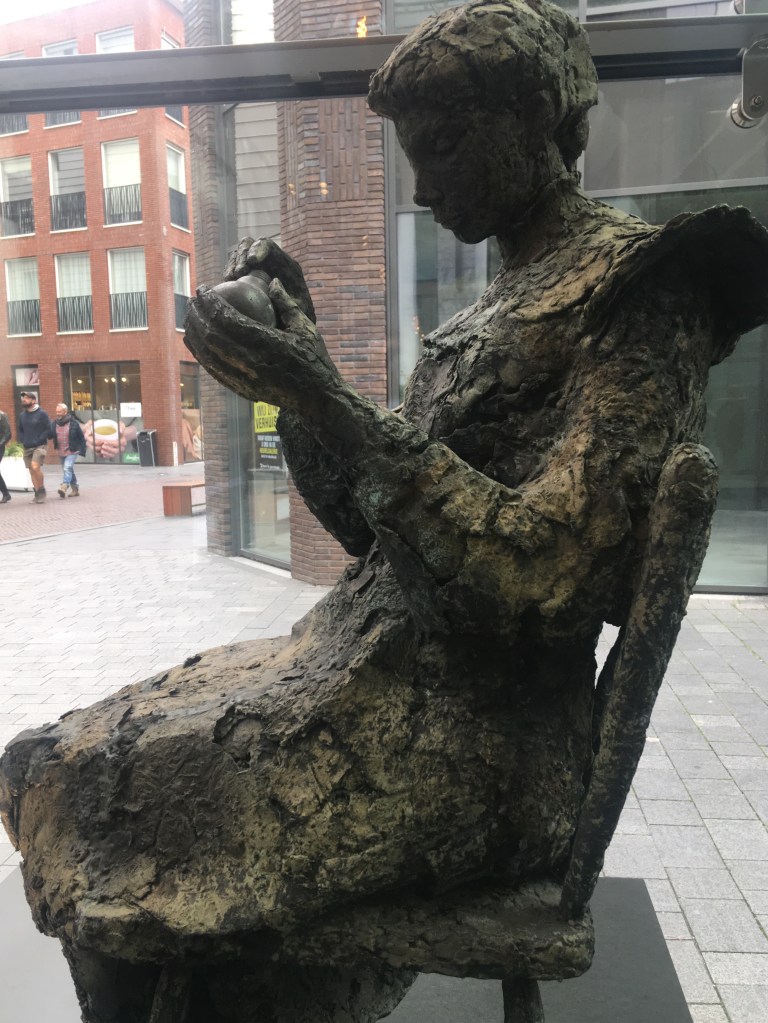
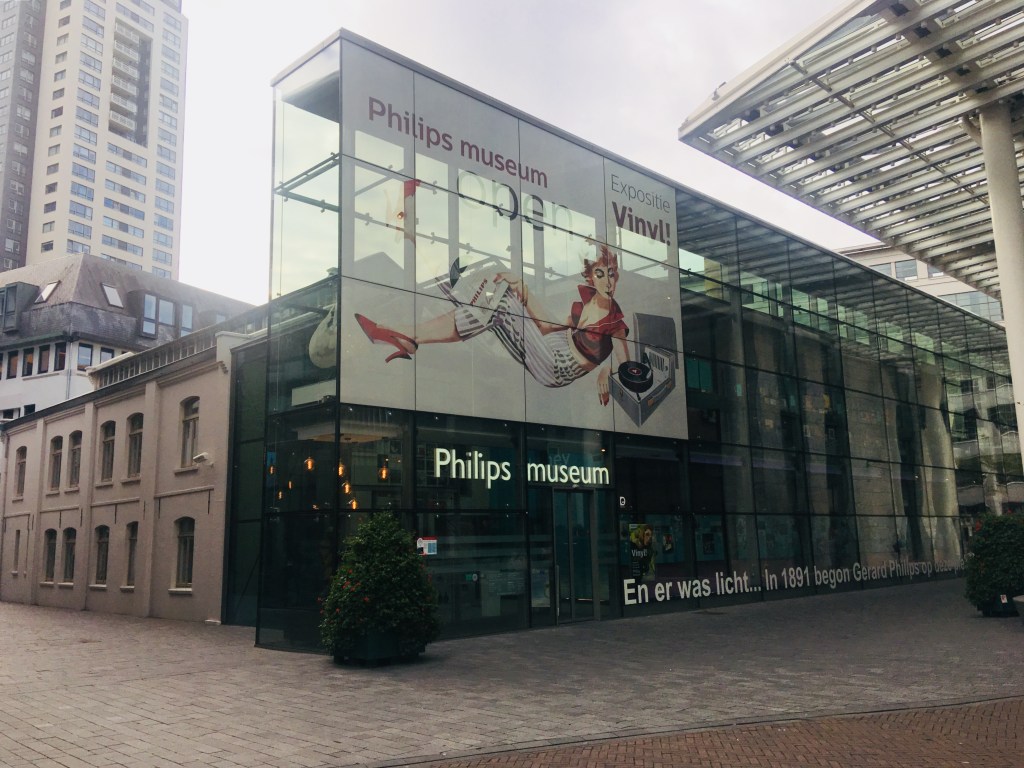
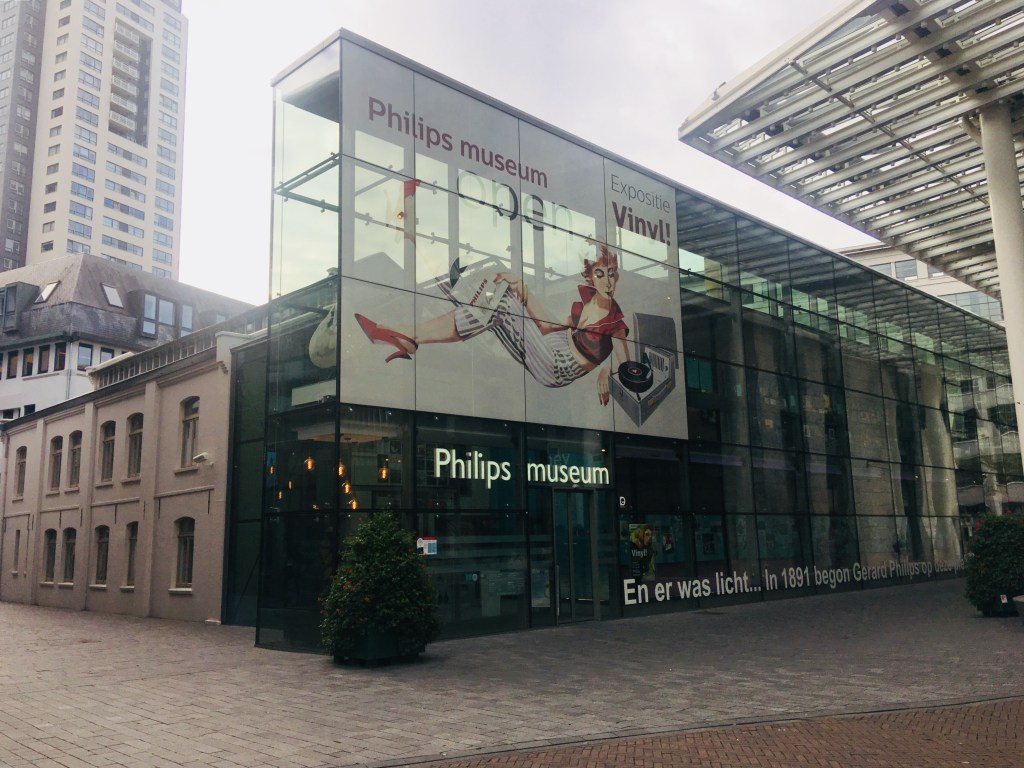


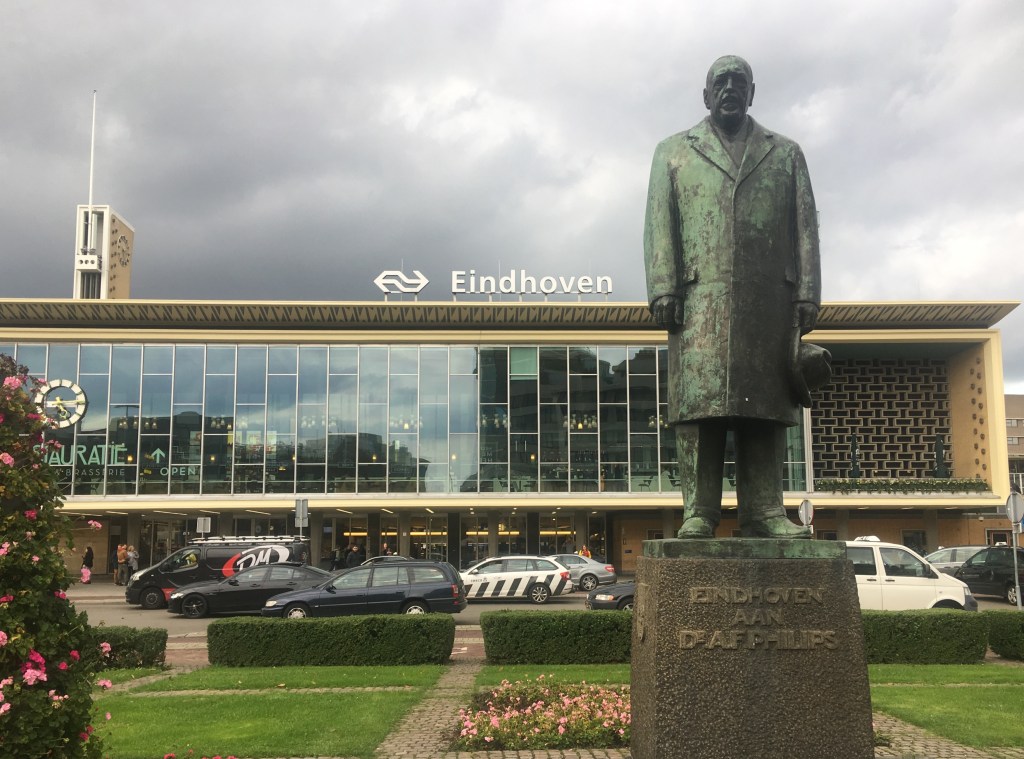


 Travel and Share


.svg)