Expressing my heartfelt gratitude to my lovely readers for their great response to my last post on the subject of grave concern:Indians migrating abroad in quest of higher earnings & better lives

This is in continuation to my earlier blog on the subject dated 1st April,2026 presenting here some more views/real life experiences of people who moved to foreign countries & of those who returned back sharing their invaluable insights & suggestions on the subject.They have very elaborately mentioned the pros & cons of moving abroad & returning back to India citing the social & financial implications involved thereof.To my previous post ,some of my valued readers have responded with their invaluable views & opinions on the topic.These will definitely serve as useful inputs for people in dilemma over the decision of moving abroad or returning back to India thus encouraging them in taking the right decision or making the difficult choice under the prevailing situations in a cool calculated manner!

2)Indians avoid Indians like a plague !This may seem a bit bewildering but is mostly true !I encountered this trend during my foreign visits!Mostly they will avoid you by physically dodging you & in case yuo succeed in coming near them they will knod their head & walk away hastily!This was so perplexing & I could only think about their mindset which says why to come in contact when the successfully left India to keep away from them.Amazing?

3)Life abroad is lonely ,cold & expensive :Mostly for a single person, life is lonely after spending a little time ordering Swiggy & watching Netflix!If your paycheque isnt very healthy ,you may not be saving much after paying heftily for flat rent ,costly grocerries, wifi/ mobile network & so on!The list is quite lengthy! Your motive of coming abroad is defeated if you cant save for the future if at all you came here to earn big money or was it your purpose to escape from responsibilities back home !Simple conclusion is that you cant fulfill your monetory aspirations unless both the spouses are earning or IF you are already a very rich person.

4)Life is cold & Lonely more so in winters when the sun sets at 4pm and your body begins to forget what Vitamin D feels like ?In such scenario a person suffers on both accounts: physically as well mentally a)Physically due to the defficiency of nutrients & proper nourishment in the body(more so if person is single with no one to assist)& b)Mentally due to sense of melancholly rendered due to cloudy & gloomy atmosphere compounded by the lingering memories of the near & dear once back home.This is where depression sets in so very dangerous for physical & mental health.Every time you see all your friends/family celebrating together in festivals, you’ll feel very lonely here.

5)Not admitting the actual life situation due to ego issues which is again unhealthy for the indivisual suffering all alone by not asking for counselling or help in whatever form desired under the circumstances !There should not be any issue in speaking out your problems which could be addressed timely to avoid physical & mental agony(the situation is similar to the one where you try to hide your ailments from your Doctor)

REAL LIFE EXPERIENCES OF PEOPLE WHO MOVED ABROAD & RETURNED BACK

-A Story by Nidhi.

For years, leaving India for the West or the Gulf was seen as the ultimate life plan — a ticket to higher salaries, better standards of living, safe cities, global education for children, and a more comfortable future. But increasingly, Indians abroad are discovering that a bigger paycheque doesn’t automatically translate into a better life. Beyond currency conversions, banking slips, and job titles, there are real-life everyday trade-offs that no one fully prepares you for.

1. More Indians Want to Move Abroad, Even the Ultra-Wealthy

A recent survey by Kotak Mahindra Bank’s private banking division, conducted with consultancy EY, reveals that migration is not just for students and workers — even the super-rich are planning to move abroad. According to the report, about one in five ultra high net worth Indians (UHNI) — those with a net worth above ₹25 crore are considering settling overseas.

These wealthy Indians cite reasons beyond money:

a)Better living conditions and lifestyle abroad. b)Superior healthcare systems,c)Better educational opportunities for children,d)Easier business environments in host countries e)Two-thirds of the wealthy respondents said smoother business conditions were a key factor, and many intend to make their host country their long-term or permanent base.

This phenomenon shows that migration motivations have broadened. For the affluent too, quality of life is a major decision driver – not just salary.

2. Financial Gains Are Real, But Are Far From the Whole Picture:

One of the key drivers for Indians moving abroad has always been money. Salaries in the US, UK, Canada, and Europe often look astronomically larger than equivalent jobs in India when quoted in rupees …….But the day-to-day reality tells a different story.

Cost of living in many host countries is very high: rent, transportation, food, insurance, healthcare premiums, and taxes take a big bite out of gross income — often more than migrants anticipate. Online discussions among Indians living abroad highlight this exact point: higher salaries do not always equal better savings or financial comfort because living costs can erode much of that advantage. Even things like groceries and daily bills which may feel affordable in India can seem shockingly expensive in places like the US or UK. This is a frequent theme in discussions where Indians abroad contrast expectations before migrating with realities after.

3. Career Growth Isn’t Always Faster Overseas:

Many Indians move abroad hopeful that international experience will mean rapid career growth — global recognition, quicker promotions, and bigger roles.

While this is true for some, especially in tech hubs and specific sectors, it’s not universal. In some cases, migrants find that job progression is slower than expected, visa restrictions limit opportunities, or the job market is far more competitive than imagined. This sometimes leads to feelings of stagnation despite working hard and earning well. This slowdown in career momentum — contrasted with fast-rising opportunities back home, particularly in India’s booming start-up ecosystem — occasionally makes migrants question whether the move abroad was the right strategic call.

4. Quality of Life – A Mixed Reality:

a)Life abroad offers real benefits ,b)Cleaner public infrastructure, c)Better regulated civic systems ,d)Public safety and rule of law , e)World-class education

But quality of life is a multi-dimensional concept.

Many Indians abroad express that they miss family gatherings, festivals, and familiar social structures that were part of daily Indian life. A Reddit discussion among Indians living overseas reveals that beyond the initial thrill, many people find themselves reflecting on:

a)High living costs ,b)Limited leave time ,c)Loneliness and cultural distance , d)Expensive travel back home ,e)Difficulty maintaining close family ties

All these add a social cost to migration decisions that no paycheque captures.

5. Emotional and Identity Costs:

Beyond economics, there is a deeper psychological aspect to migration — identity and belonging. Some Indians abroad feel fulfilled, while others struggle with cultural integration, feelings of isolation, or a longing for home comforts. These emotional experiences don’t always correlate with income level. For some, the distance from extended family and community is a welcome break from social pressures. For others, it can feel like a loss of identity. Moments such as festivals or family milestones become reminders of what they left behind.

This human dimension money can’t buy social belonging or deep emotional comfort is often only realized years after migrating.

6. The Brain Drain and Economic Implications

Migration does not just affect individuals – it shapes economies. India’s large diaspora population is among the world’s biggest, and Indian migrants contribute significantly through remittances and global networks. Yet perceptions about economic pressures at home from infrastructure challenges to public services – do play into individual decisions to move. For some Indians, leaving is seen as securing a better future for their children, rather than simply chasing higher pay.

The Kotak survey underscores this complex motive: education, lifestyle, and business environment rank just as highly as financial reasons for those thinking of migration.

7. Decisions Are Personal – Not Binary:

Not everyone abroad regrets their decision. Many migrants cherish the personal freedom, civic safety, quality public services, and lifestyle benefits they enjoy. Some share that the move brought them growth, independence, and opportunities they never would have had in India. But for a growing cohort, especially those who moved with expectations shaped primarily by income numbers, the lived reality highlights a broader truth: money is only one part of life satisfaction. Understanding cultural context, emotional roots, social comfort, and long-term personal goals often proves more important than gross salary or foreign currency income.

Why do Indians choose to go abroad & Settle there:So many reasons clear as day

Story by Amit Ghule,
Project Engineer in America

Disclaimer: I love my country with all my heart. My opinion here is based on practical observations, which does not imply that I dislike India as a country. I love the good bits about my country, but I do not mention them here since that isn’t the scope of the question. Also, I speak from the point of view of an Indian in America.

  1. Education – Our education system needs a major overhaul. Emphasis on repetition and recitals, judging answers by their lengths and number of pages filled, bias shown by the examiners in vivas/oral exams/ practicals, authoritarian attitude and ego exhibited by professors, are problems with education system. The professors are people who have taken up teaching as their full time occupation for years and have lost touch with industry. The education material taught is not in line with what is happening in the industry – consequently each year thousands of students pass out who are unemployable because they cannot apply their knowledge.
  2. Exams in US are purely to test your skills- you can carry papers with factual data and formulae with you to exams. The exam time can be extended if majority of students haven’t finished their paper – it’s a test of your skills, not about how fast you can write. You can answer a 10 point question with a single sentence if that sufffices, and you get 10 points. The professors are retired Industry people who occasionally call in their work buddies (CEOs, CTOs, heads of companies usually) to the class for guest lectures. You don’t get KTs or are failed. They work WITH you so that you pass. They WANT you to pass. The professors have free hand over the syllabus, the books the exam and its grading structure and the class conducting – the professors are happy and thus teach practical things that you can actually apply in the industry.

2. Employment – I have seen my friends in India being humiliated by the watchmen to the HR, going from company to company to drop off their resumes for jobs. A handful of students get recruited in good companies. A herd of sheep moves to Infosys, Wipro and TCS who recruit engineers for mundane jobs with illegal work bonds of couple of years. I’ve rarely heard of an effective college placement office that did its job rightfully. That is also due to the fact that there are more candidates/students than their are jobs available. (Seriously, stop opening up new colleges and start improving the existing ones!)

Here, you have so many avenues to get jobs. I volunteer at a non-profit for entrepreneurship a couple of times and they offered me a job despite being an international student. I worked on a project in a class and one of my professors buddies (a senior R&D director at a reputed medical device company) offered me a paid internship. I have had few friends here approach people on LinkedIn and get referrals to jobs. The university-industry interface and connect is so seamless that you get a fair chance of getting employed. That’s also because there ARE so many available jobs out there.

3. Social life – This is somewhat of a pros and cons situation. I love that if your car breaks down on the street in India, there will be 10 people rushing to see if you need help. If you are arguing with your partner on the streets, people will most likely jump in with a ‘are Bhai, kya hua?’ to help solve it.

That’s also the reason why your sexual orientation, your actions, the way you dress, talk, behave and carry yourself is constantly judged by people. They feel they have a right to do so. I see people with face tattoos, bright blue hair with half the head shaven, drag queens, gay couples kissing in public, girls wearing short shorts and deep (by our standards) cleavages normally walking about on the streets and I think ‘this definitely cannot be happening on the streets in India.’ You are free to do what you want with no judgement. If that is loneliness or solitude, isolation or personal space, you decide.

4. Work- life balance – I have worked in Mumbai wherein I worked 8am to 11pm for months on end. I would be called in on weekends. I don’t blame the company, but that was horrible work ethic. And that is a norm for many that I know.

People here do not make you wait till late night to work on something. They do not expect you to come in on weekends or from your vacations. (Of course there’s exceptions. friends at Tesla have worked for 12 hrs in a day, but they say they wanted to do that and weren’t asked by the company to do so. Same for friends working with startups.) You are treated well.

5. Infrastructure and facilities – The public transport. The roads. You know what I’m saying.

6. Bureaucracy – never have had to get something attested, or photocopied. Almost never had to carry a passport sized photo. Social Security Number will pull up my history when needed. I love the fact that Aadhar card system is being implemented on similar lines.

7. Better pay– people get paid well right off the bat if compared, since most currencies are stronger to our Rupee.

People who don’t plan to settle save money earned here and send it back. (You Save $100 here and its not much, but you send it back it will be ~Rs. 7,000, which is considerable.) They buy houses/invest it/ pay off loans and liabilities, and prepare things for eventual retirement in India. Every nation has its own set of problems. We deal with female safety, US has gun control. We have beggars, US has homeless people. The medical bills here are so huge that people can fly to India, get operated and fly back in lesser amount that what it would be to get operated here.

Nevertheless. The bottom line would be India’s population density is high. There’s only so much with given infrastructure that can be provided to all. Thus, some people choose to move to places they feel that can provide for them. Seeking betterment of yourself and your family isn’t wrong. It doesn’t always correlate to your patriotism, but to your pragmatism.

WHY MORE INDIANS ARE MOVING ABROAD & THEN REGRETTING IT ?

A Story by Pranav :

By the time your friend tells you they’re flying off to Toronto, Melbourne, or Berlin, you already know the script. They’ll post a gleeful airport selfie, a tearful goodbye to their dog, and a LinkedIn update that includes words like “grateful,” “excited,” and “new beginnings.” But fast forward a few months, and suddenly those airport selfies start to dry up. The new beginning? It’s starting to feel more like an existential middle. So what’s going on? Why are so many Indians, after months (or even years) of IELTS prep, visa applications, and goodbye parties, beginning to wonder if they made a huge mistake?

The Big Fat Dream of “Settling Abroad”

Let’s be honest. For many Indians, moving abroad is not just a decision. It’s a legacy. You don’t simply go to another country. You “settle,” like your cousin’s best friend’s husband who moved to Canada in 2014 and now drives a Tesla. Or that one girl from your school who posts New York skyline pictures with captions like “blessed beyond words.” Whether it’s the allure of better job prospects, a cleaner environment, or the sheer prestige of saying “I live in the U.S. now,” the grass has always looked greener on the other side — quite literally, because it rains a lot more there. But the truth behind the visa stamp is a little less shiny.

The Culture Shock Nobody Prepares You For

When Indians move abroad, most are prepared for a little homesickness. They expect to miss the food, their families, and probably the luxury of having someone else do their laundry. But what catches many off-guard is the strange cultural flatness that creeps in after the initial euphoria fades. You go from Diwali with 30 cousins to a muted Skype call at 3 a.m. from your studio apartment. The neighborhood doesn’t smell like samosas anymore. It smells like snow and silent streets. And no one invites you over randomly for chai and unsolicited career advice. Making friends abroad is also harder than it looks. Unless you count the cashier at the mL Nk supermarket who says, “Hi, how are you?” without waiting for a reply. Or your Pakistani Uber driver who asks if you like biryani and gives you a nod of mutual homesickness.

Work-Life Balance or Work-Life… Confusion?

One of the biggest reasons Indians head west is the promise of a better work-life balance. But here’s the plot twist: balance is a lot more boring than expected. In India, your life is your work sometimes, and as much as that can be frustrating, it also gives you a sense of motion and connection. Abroad, things can get eerily slow. You clock out at 5, and then what? Netflix? A lonely walk through a park where nobody even makes eye contact? Also, that whole idea of meritocracy in the West can come with its own hidden layers. Yes, there’s less hierarchy. But there’s also less warmth. Your boss might smile at you, but good luck getting a Diwali off without a half-hour HR negotiation and a passive-aggressive calendar invite titled “Happy Holidays.”

The Ice-Cold Reality of Climate

Let’s take a moment to talk about weather. Because no matter how many jackets you buy, nothing prepares you for the bone-deep sorrow of a Canadian winter. You start to understand why people drink hot soup out of paper cups and wear thermal underwear like it’s a fashion statement. One day you’re battling heat in Delhi, and the next, you’re Googling “how to de-ice windshield” at 7 a.m. The weather isn’t just a temperature change. It’s an emotional adjustment. Especially when the sun sets at 4 p.m. and your body begins to forget what vitamin D feels like.

The Economic Reality Behind the Glamour

There’s also the money situation. Everyone assumes that dollars and euros are automatic upgrades from rupees. But guess what? Earning in dollars also means spending in dollars. Rent is wild. Grocery shopping becomes a strategic game of “What can I live without this week?” And Indian food, if not cooked at home, is either way too expensive or tastes like someone added sugar to turmeric and hoped for the best. Sure, salaries are higher, but so is everything else. And unless you land a truly golden job (and even then), saving money while trying to keep up with basic expenses becomes its own math puzzle.

Social Status: The Illusion That Follows You

Here’s the funny part. Even if life abroad is kind of lonely and cold and expensive, there’s still pressure to act like everything’s going amazing. Why? Because back home, you’ve already told everyone you’ve “settled.” You post photos of sunsets and captions about growth. You mention your office building has free coffee. You show your new apartment, carefully cropped so no one sees the two roommates you share it with. Because admitting regret feels like admitting defeat. And nobody wants to be that person who went abroad only to say, “Actually… it’s not as great as I thought.”

When Home Stops Feeling Like Home:

The real kicker? Even if you do come back, you don’t fit in the same way anymore. Your friends have moved on. Your old job market feels like a time capsule. And everyone keeps asking, “Why’d you come back?” It’s like you became a different person in a different timezone, and now you’re somewhere in between. Not fully abroad, not fully home. Just suspended in a strange cultural jet lag.

So Why Are Indians Still Going?

Because the dream still sells. Despite the many challenges, people continue to chase that international dream. And to be fair, for some it does work out beautifully. They build a new family, find purpose, and learn how to navigate both worlds. But for many others, the dream turns out to be a carefully filtered version of someone else’s Instagram highlight reel.

What’s the Takeaway?

If you’re reading this while studying for the GRE or updating your resume for a job in Berlin, don’t worry. This isn’t a guilt trip. It’s just a heads-up. Moving abroad can be amazing. It can also be unexpectedly hard, weirdly lonely, and filled with the kind of growth that doesn’t look good on Instagram. It’s not about whether it’s right or wrong. It’s about whether it’s right for you. Before you buy that ticket and pack your pressure cooker, maybe ask yourself a few question:

In the end, whether you stay, go, or come back, it helps to remember that life isn’t a race to settle somewhere. Sometimes the real adventure is just figuring out where you belong, with or without maple syrup, subway maps, and snow boots. Unlock insightful tips and inspiration on personal growth, productivity, and well-being. Stay motivated and updated with the latest at My Life XP.

1)Mr X posted his real life experiences /comments regarding his return to India:

Nothing surprised me . I was in India for 30 years of my life. I find these people very dramatic who go to other countries and once they come back pretend that they gonna faint the moment they set their foot in. I was in the US working for 3 years and left voluntarily ( No visa or Job issue ) . I left my job consciously. So despite the popular opinion that people with only job or visa issue come back is bit false.

Coming back to my reasons , western world is very individualistic, personally not for me . It killed me everyday to deal with the loneliness. The social dynamics of Americans is very different from the Indians. The struggle to always converse in English and only to a very selective topic is honestly a struggle ( I mean , how long can you talk about the weather or food ). The Indians in the US avoid other Indians like a plague. You might just be all by yourself. You drown yourself in work. My mental health was deteriorating. I had no friends or family there. The sadness increased every year around the winter time.

I also saw lots of people in the same boat , who were struggling more than me ( you won’t find them online or they are too proud to admit that because leaving India should solve all your problems, right ? ).

2)Mr Y posted his real life experiences /comments regarding his return to India:

I lived in the US for nearly a decade. Moved back to take care of my parents and be close with the family.I absolutely love it. While it does take some time to adjust your mindset and expectations coming back from the Western world, once you adapt you will home. After all, India is our “home”. Yes there are inconveniences like pollution, traffic etc. If your finances are in a good shape, you can avoid most of these inconveniences. Get a good car and avoid public transport, living in a good gated community etc.

3)Mr Z posted his real-life experiences and comments regarding his return to India: I am from a relatively rich family in India. I stayed in the UK last 3 years on a visa working in a software role there. Out of those 3 years, 2 years I stayed as a bachelor and my first year of marriage. I just returned back from there to India permanently this week only.

Here are my thoughts(Thoughts of Mr. Z) :

There’s no right answer. It all boils down to individual choices and situations. If you have a toxic family in India, the freedom you have abroad is amazing. And first year of marriage away from others intervening in your life was certainly helpful. The work life balance, fresh air, simpler weather were all better. However on the downside, you’ll always have a sense of loneliness which you’ll never lose. You’ll have to manage your daily households, washing utensils, and all household chores which can easily be handled by a maid in India. Every time you see all your friends/family celebrating together in festivals, you’ll feel very lonely. Things are ,of course, super expensive.

Overall, it’s a tough choice to make and I myself am still doubting my decision of coming back. Lot of people were really surprised to see me come back.

4)Young Physio Manav Shah quit Rs 40 LPA UK job, starts over in India. Here’s why

Physiotherapist Manav Shah had what many would call a dream start, a high-paying job in the UK with just over a year of experience. But behind the financial success, he felt increasingly restricted by the structure of a traditional 9-to-5 job. He later shared that the routine began to feel suffocating, describing it as a space where he felt mentally confined, almost like being trapped. Over time, the comfort of a stable salary was no longer enough to outweigh his desire for independence and control over his own work life.He wanted to work as an enterprenuer

Beyond career goals, Shah also spoke about the emotional reality of living overseas. While the UK offered financial comfort and a high standard of living, it lacked the everyday emotional connections he valued deeply. He shared that loneliness is often an unspoken challenge for many professionals abroad. Simple moments, like spending time with family, having conversations over tea, or being physically present with loved ones, were missing. Over time, this emotional distance made him reassess what truly mattered to him.

5)”CONTRAST IS SO ABSURD”:INDIAN WOMEN ON IDENTITY CRISIS AFTER MOVING BACK FROM LONDON :

Story by Bhavya Sukheja

Reflecting on her time in London, Janhavi Jain said everything about her life there “made sense”. In recent times, conversations around reverse migration and the emotional challenges of returning home after living abroad have been gaining traction on social media. Adding to the discussion, a post by an Indian woman has struck a chord with many users who related to the sense of displacement she described after moving back to India from London.

Taking to X, Janhavi Jain spoke about the “very specific kind of identity crisis” that comes with returning home after building an independent life overseas. “Moving back to India after living abroad is a very specific kind of identity crisis nobody prepares you for,” she wrote. Reflecting on her time in London, Jain said everything about her life there “made sense”. “The independence, the career, the routine, the version of myself I’d built over years,” she said. However, returning home created a stark contrast. “Then you come home and your room is exactly how you left it. Your mom still knocks before entering (sometimes). The neighbourhood aunty still asks ‘shaadi kab hai.’ And you’re sitting in the same chair where you studied for boards at 17 except now you’re on a call with a supplier in Korea about formulation stability in humid conditions,” Jain wrote, calling the contrast “so absurd”.

How Did Social Media React ?

Her post quickly resonated with many who had undergone similar transitions. Several users agreed that the initial months after returning can be particularly challenging. “Yes, its a kind of a identity crisis & your mind will do multiple iterations of your decision , But the first few months will be difficult takes a lot of adaptations, you just need to weigh the benefits & make your decision based on your age,family etc,” one user wrote.

6)Women Shares What Working in India is Really Like for NRIs Who Move back :

Story/Edited by Nikhil Pandey

For the growing number of Non-Resident Indians returning home to work, the dream of reconnecting with their roots often meets a rather different reality on the ground, according to NRI counsellor and author Nupur Dave, who shares candid insights with her followers on Instagram.

Dave, who advises Indians navigating life between countries, says the first thing that catches most returning professionals off guard is geography. Multinational companies tend to cluster in tech parks on the city fringes, think Whitefield in Bangalore, Gurgaon outside Delhi, or Hinjewadi on the edges of Pune, placing workers far from the cultural heart of their cities. This creates an immediate dilemma for anyone moving back. Live centrally, close to the cafes, the culture and the social scene, and face a commute of up to 90 minutes each way through some of the world’s most punishing traffic. Or opt for a flat near the office on the outskirts, where rent is manageable and the commute is a breezy 15 minutes, but where the evening offers little beyond food delivery apps and streaming service

“Most times the decision gets made for you,” Dave writes, “based on where you find a decent flat or what rent you can actually afford.” Beyond the logistics of where to live, the rhythm of the working day itself takes adjustment. Lunch in India is rarely a rushed, solitary affair eaten at a desk. Colleagues gather in groups, wander the food court together, gossip and linger. It happens at 2 in the afternoon, not noon, and it is unmistakably social in a way that many returning NRIs find both surprising and rather welcome after years of eating sad desk salads on conference calls abroad. Dave is careful not to romanticise the experience. This is not, she stresses, the soft-focus homecoming narrative that fills social media feeds. It is the daily grind: the traffic, the heat, the noise, the late lunches and the office friendships that gradually, unexpectedly come to mean something.

My earnest gratitude to the people who have posted their views & real-life experiences in different News media/megazines on above subject & contributed to creation of this Blog: Mr Pranav ,Mr Amit Ghule ,Mr.Nikhil Pandey ,Miss Bhavya Sukheja & Miss Nidhi.

Welcome dear readers to the richly debatable topic of grave Concern: People moving to foreign countries in Quest of better Lives & then Sharing their Real-Life experiences & Socio-Financial Implications on their Return to India

As per my opinion :

1)The decision to move to a foreign land in pursuit of a better life,healthy financial gains & building a reasonable corpus before returning to India to lead a comfortable life with near & dear ones, is quite a critical one !Hence I want to personally suggest all concerned to closely & carefully examine the various real-life experiences of people sharing precious information regarding financial implications ,cautions & alerts before making such critical decisions in a cool & calculated manner.

2)As for the slight adjustments essential in “lifestyle” on return to India ,both young & the old should happily adapt to a mid-path respecting each others’ modern & traditional values !I know its not a big ask considering that everyone carries a thinking head on his/her own shoulders & wants to live a very peaceful & comfortable life ahead !

4)One last suggestion:On your return to India never ever give loan to anyone if you think of getting it back!Its your hard earned money & you can’t afford to lose it in this manner !Let me explain it this way :Koyal : it is colloquially known as the “Indian Nightingale” or “Rainbird” due to its melodious call, similar to the European nightingale. It belongs to the cuckoo family (Cuculidae)! But practically speaking ,koyal doesn’t have the most melodious call which belongs to a person requesting you for loan which he will never ever repay you back !So never give loan to anyone please!

For the longest time, we’ve looked at Indians living abroad in a very simple way. They go out, build a life, and send money back home. That was the story we grew up hearing. But today, that story feels incomplete. Because the scale has changed. The impact has changed. And honestly, the meaning of “being Indian” has expanded far beyond geography. With over 35 million Indians living across more than 200 countries and earning nearly $730 billion every year, the diaspora is no longer just connected to India. It is actively shaping its future.

1. Earning at a scale that changes how we see success :

When you hear $730 billion, it does not immediately register. But think of it this way. This income is larger than the total economy of many countries. And this is only from formal jobs, not even counting businesses, investments, or startups. What this really tells us is that Indians abroad are no longer just participants in global economies. They are key drivers. For someone sitting in India, it shifts the idea of success. It is no longer limited to what you build within the country. A huge part of India’s economic strength is now being created globally by Indians themselves.

2.Moving from sending money to building influence :

India still receives the highest remittances in the world, around $100 billion plus every year. But that is no longer the most important part of the story. What is changing is the nature of contribution. Indians abroad are now investing in startups, mentoring founders, opening global doors, and bringing knowledge back home. The relationship has evolved from financial support to strategic partnership. It is less about sending money and more about creating opportunities that did not exist earlier.

3. Becoming the familiar faces behind global success :

This shift feels relatable because we see it everywhere. The CEOs of global companies, the engineers building new technologies, the doctors, researchers, and founders. A significant number of them are Indian-origin. This is not just representation. It is influence. Indians are not just part of global systems anymore. They are shaping how these systems work. For many of us, this hits personally because we all know someone who went abroad and “made it.” That individual journey has now become a collective global presence.

4. Acting as India’s fastest bridge to the world :

For most countries, becoming global takes decades of effort. India has something unique. Millions of people already positioned across the world who understand both India and the global market. They bring in investments, create partnerships, and build trust in ways that no policy alone can achieve. Reports describe this as a combination of capital, capability, and credibility. In simple terms, they make it easier for India to grow faster because they are already inside the systems India wants to enter.

5.Staying connected not just emotionally but intentionally :

What makes this story even more powerful is that the connection has not weakened with distance. In fact, it has evolved.Many Indians abroad actively want to contribute to India’s future through business, innovation, and social impact. It is no longer just about nostalgia or roots. It is about responsibility and opportunity. They are not just connected to India. They want to build with India.

N.R.Is. RETURNING TO INDIA :

The Key Reasons for Returning :

  • Family Ties & Belonging: The primary drivers are caring for aging parents, a sense of belonging, and raising children in Indian culture.
  • Visa/Legal Security: Relief from immigration uncertainty, H1B anxieties, or deportation fears in foreign countries.
  • Superior Quality of Life (Contextual): Some seek a better social support system, household help, and the comfort of home. 

Challenges and Realities

  • Professional Challenges: Returning professionals often encounter toxic work cultures, lack of work-life balance, lower salaries, and navigating complex corporate hierarchies.
  • Reverse Culture Shock: Challenges include adjusting to air pollution, traffic congestion, red tape, and lower public service standards.
  • Financial Missteps: Many fail to manage the high costs of moving, tax complications, and property decisions, often leading to losses.
  • Social Adjustments: Dealing with changed societal expectations and feeling like a “walking wallet” in some scenarios. 

Key Takeaways

  • Mixed Feelings: While many are glad to be closer to family, they may struggle with the practical realities of daily life in India.
  • Planning is Crucial: Successfully moving back involves significant financial planning, such as avoiding premature property purchases and managing foreign assets.
  • Workplace Cultural Shift: The professional environment in India can be demanding compared to the work-life balance often found abroad.

Why do Many Western countries Envy Everyday Life in India ?

Because what is luxury in America or Europe, is basic, affordable and accessible in India.

1. Daily newspaper at your doorstep by 7 AM — not a paid luxury, just routine.

2. 300+ TV channels for just ₹500/- month + low-cost OTT — entertainment doesn’t empty wallets.

3. Nationwide high-speed 5G for ₹300/ month- world’s cheapest data at massive scale.

4. World-class airports across major cities — clean, modern, fast-growing.

5. 10-20 minutes delivery for groceries& essentials —convenience unmatched globally.

6. Doctors available without long waiting lists — consult same day, often without appointments

7. Home sample collection & diagnostic tests at low prices — health is accessible.

8. Doorstep laundry/ ironing services at pocket-friendly rates — luxury abroad, normal here.

9. Affordable domestic help — maids, cooks, drivers, and childcare support — making life easier.

10. Fresh milk delivery every morning at 5 AM — straight to your door.

11. Free water at restaurants + cheap bottled water everywhere — not charged for basics.

12. UPI payments anywhere, even for ₹5 — instant, universal, digital-first economy.

13. No litigation-fear culture — relatives don’t sue each other over minor issues.

14. A calmer life if you avoid the material rat race — community warmth over cut-throat hustle. India isn’t perfect — but it is wonderfully livable. Affordable. Convenient. Connected. Human. India is not just a country — it is a comfort living. You grow spiritually. Size and diversity of country offers so much to visit places. We realise this when we go out of our country. 

15. Life in India: Family, Festivals, and Fresh Vegetables :The user explained that one of the biggest reasons for relocating was to spend more time with ageing parents. “I wanted to make up for 14 missed years,” he wrote, noting that his parents’ health is not in the best condition.The user also highlighted the joy of celebrating Indian festivals, enjoying year-round sunlight, and having access to fresh green vegetables — things they missed while in Canada. “Everything is handy, and all the trade jobs are easy to get done here,” he added. Medical help, according to him, is “fantastic” and the ease of travelling to destinations like Dubai ,Bali , Nepal, and Vietnam is a big plus. The favorable exchange rate is another benefit: “Dollar goes a long way here.”

16 .In the West, assisted living is pretty rare and typically used only in extreme old age when prople hit their nineties. In India, seniors in their early sixties are already choosing to move into retirement communities.Managing a large home by yourself in a foreign country can be tough with finances, loneliness, and maintenance. India offers community, familiarity, and far better support systems at a much earlier stage of ageing.

17.Living independently in India could mean a lot of work in terms of security risks, maintenance, unreliable household help, & the fear of facing a health emergency all alone. A good retirement facility eliminates all of this through round-the-clock staff, housekeeping, in-house medical support, meals, transport, recreation & fitness spaces!

18.An Indian-German couple recently opened up about their decision to leave Germany and move to India, stating that life in the European nation had become “too comfortable” and they were moving in circles. “Life started running on autopilot,” the man, Deepesh Patel, wrote in an Instagram post, explaining that they craved a challenge and an opportunity to grow. The couple felt that their life in Germany was too predictable & lacked excitement. They also wanted to experience personal transformation.”We didn’t leave Germany because of the cold weather or the strict bureaucracy (although, we admit, there were moments when those things tested our patience),” the caption of the post read. “Ironically, we left because life had become too comfortable. Germany gave us financial stability, social security, & a sense of ease. But over time, our lives started running on autopilot. Days felt repetitive, & it seemed like we were moving in circles. So how do you think we can shift these perceptions. Financially, the couple said they had invested their money in mutual funds instead of real estate, avoiding rental properties or land that “don’t appreciate a lot &take time to sell.”

19.Mr X shared his experience…. I moved back from US in 2023 and it was my decision to come back because I was not enjoying my life the way I expected it would happen after earning in USD and driving German cars. The amount of stress one has to go through while living in US related to planning for everything from retirement planning to higher education for children, managing medical issues to emotional disconnect. Everything seemed very superficial. So finally I got back. One thing to keep on mind is that humans always feel that the grass is greener on the other side. You felt the same before going to US & feeling the same after returning. The biggest positive I observed is that the money I saved there is generating enough returns in India that I am not dependent on my new job to pay my bills. Focus on the freedom that you have here, you can show up at your friend’s or relative’s place without planning in advance and they will still welcome you. Don’t expect people to behave the way they did in US. You can’t control others so just control the controllable & don’t waste your energy on other things. And no one expecting you to be the perfect citizen here. Be a little reckless and enjoy spontaneity of India. Go on unplanned trips, eventually things always work out in India!

Why do NRIs come back to India after having kids :

This pattern seems to be most common & the rationale behind thos is quite logical ! Kids get citizenship, their future prospect is all set. Now they prefer to enjoy the life in India while helping their parents in their old age and enjoying the luxury of drivers, maids, plus getting diverse services(such as medical consultation & treatment) without appointment.A man living in US has said that 3-4 friends of his, who have moved back to India, gave him this reason ! Pretty much this. Once kids have US born citizen ship, then can do their schooling in India for very cheap and go back to the States whenever they want to after 18 years of age . It just makes sense if the parents do see long term settling abroad! Another one commented on this: Why do you think their future is set? When layoffs happen, they are the first one to get laid off, being US citizens. Plus, they eventually have to compete with Indians coming to the US like there is no end. Look around, all their nanas and grannies are sitting on green card/ US citizenships.Amazing scenario ! 

Why NRIs are leaving India again after returning to it–the real reasons explained: In 2023 alone, over 9.38 million Indians returned to the country, a sharp rise from previous years, especially after the pandemic.Surveys also show that 60–80% of NRIs globally consider returning at some stage,particularly for retirement or family reasons. But beneath this strong “return to India” wave lies a quieter truth. A significant number of those who come back don’t stay. And the reasons are deeper than they appear.

1.The Return Dream is Real ,but so is the Exit :

A soul that feels the world more than it shows. The idea of returning to India is powerful. It combines emotional belonging with economic logic. Lower living costs, proximity to family, and a rapidly growing economy make India an attractive option. Even recent accounts highlight how NRIs are often surprised by India’s lower healthcare, transport, and daily living costs compared to the US .But returning is often a “trial phase” rather than a permanent decision. Data suggests that around 60% of returned Indians still plan to go back abroad, even if they are not entirely unhappy in India . This reveals something important: Returning is not always a final destination. It is often an experiment.

2.Reverse Culture Shock is more Intense than Expected :

Most NRIs spend years adapting to highly structured systems abroad. When they return, the contrast is immediate and constant.

India’s fast pace, population density, and unpredictability create friction in everyday life. What was once normal begins to feel overwhelming. This phenomenon, often referred to as reverse culture shock, is not just emotional—it is behavioral and psychological.

The challenge is not that India lacks progress. In fact, India is growing rapidly. The challenge is that returnees have been conditioned to expect systems that are predictable and efficient, and when those expectations are not met consistently, even small inconveniences feel magnified. The result is a constant low-level discomfort that builds over time.

3.Economic Growth vs Lifestyle Expectations :

India’s economic growth story is undeniable. With GDP growth consistently around 6–7%, expanding startup ecosystems, and increasing global investment, it offers strong opportunities for professionals and entrepreneurs.

However, lifestyle expectations often evolve faster than infrastructure.

NRIs returning from developed countries are used to:

  • Clean, organized urban spaces
  • Predictable public services
  • High personal convenience

While India delivers on opportunity, it does not always deliver on uniform lifestyle standards across cities. This gap between macro growth and micro experience becomes a key friction point.

It is not about whether India is growing.It is about whether it feels seamless to live in.

4. Career Ecosystem Differences Still Mattter

Economy : Professionally, India offers scale and speed, but the structure differs from global markets.

Many returnees are used to :

1.Clearly defined career paths 2.Merit-driven promotions 3.Strong work-life boundaries

In India, they often encounter:

a).Faster growth but less predictability , b).Informal networks influencing outcomes c).Longer work hours and intensity

At a broader level, the continued outward migration of talent reflects this gap. India still sees 60,000–75,000 skilled professionals leaving every year for better pay and opportunities .

This indicates that while India is improving, global career ecosystems still hold structural advantages that some returnees struggle to give up.

5.Identity Conflict Becomes the Deepest Issue

The most underestimated factor is not external-it is internal.

India has the world’s largest diaspora, with over 35 million Indians living abroad . Many of them spend years building a life defined by independence, personal space, and individual decision-making.

When they return, they often face a subtle but powerful shift:

a).From individual to family-centered living, b).From independence to expectation c).From system-driven life to relationship-driven life

This creates an identity conflict.

Even when everything seems “right” on the surface, something feels misaligned internally. And that discomfort is often what drives the decision to leave again.

6.Migration Today is fluid ,not Final.

Perhaps the biggest shift is this: migration is no longer a one-time decision.

Earlier, moving abroad or returning to India was seen as permanent. Today, it is dynamic. People move based on:

a).Career opportunities, b).Life stages , c).Financial goals

The data supports this evolving pattern.Post-pandemic, return migration surged by nearly 40% , but global mobility continues to remain high .

7.Challenges: Civic Sense, Privacy, and Hygiene : However, some authors expressing their views didn’t shy away from pointing out the struggles citing poor civic sense, lack of privacy, and subpar customer service as notable drawbacks. Hygiene and food quality when eating out, along with what they described as “lack of common sense and gratitude” in some interactions, were also mentioned as pain points.

So how do you think we can shift these perceptions?

This means movement is now cyclical. People don’t just migrate. They oscillate.

NRIs Returning To India Permanently? Here Are The Financial Implications & Cautions/alerts Every NRI Should understand:

Returning to your roots is always an emotional experience. However, when you are coming back to India for good, it’s not just about emotions; several financial matters need careful attention. From banking to taxation and investments, your financial life will undergo a significant transition. Understanding these financial implications can help Non-Resident Indians (NRIs) settle back into life in India with ease.

1.Familiarise yourself with regulatory frameworks – For NRIs, two key regulatory frameworks govern financial matters in India – the Foreign Exchange Management Act (FEMA), which determines where and how you can invest, and the Income Tax Act, which regulates how your income and investments are taxed. Once your residency status changes, the rules applicable to you will change as well. Being aware of these shifts early can help you avoid compliance issues later. Here’s How NRI Tax Status in India Changes If You Stay Convert Your NRI Accounts – Your Non-Resident External (NRE) and Non-Resident Ordinary (NRO) accounts must be redesignated as resident savings accounts once your status changes. Similarly, fixed deposits held under these accounts should be converted into resident fixed deposits to remain compliant with regulations. Delaying this process may lead to reg

2.Understand the Double Taxation Avoidance Agreement (DTAA) – The DTAA helps prevent you from being taxed twice on the same income in India and the country where it was earned. This becomes particularly useful if you qualify as a Resident but Not Ordinarily Resident (RNOR), a special tax status available to returning NRIs. For instance, if you have already paid tax abroad on dividends or salary, you may be able to claim tax credit or exemption in India. Make sure to maintain proper documentation, such as Form 67 and foreign tax certificates, to support these claims. Powered By Know Your Tax Benefits – Returning NRIs may be eligible for certain tax reliefs under RNOR status. Some overseas income, such as capital gains from foreign assets, rental income from overseas property, withdrawals from foreign retirement accounts, or interest and dividends from global investments, may remain exempt from Indian taxation for a limited period. Understanding this window can help you plan income flows efficiently.

3.Plan for Repatriation of Funds – You may choose to retain some funds abroad for future international needs, but it’s important to plan fund transfers carefully. Inform asset management companies about your change in residency status, close existing NRI demat accounts, and open resident demat accounts to continue investing in India without regulatory issues. This ensures continuity in your investment journey. Review Foreign Investments Carefully – If you hold assets such as 401(k)s, ISAs, or overseas property, consult a cross-border financial planner before making any decisions. Liquidating or transferring these assets could trigger tax liabilities, and proper timing can help reduce your tax burden. A well-thought-out strategy can help preserve wealth during the transition. Build a Local Financial Safety Net – Most importantly, before relocating to India, it is wise to establish an emergency fund covering 6 to 12 months of expenses as well as adequate health insurance. While speaking with friends or family who have already returned to India can offer helpful insights, professional guidance is always invaluable. Consulting tax experts or wealth advisors can help you make informed decisions and avoid costly mistakes.

4.Consolidate your assets before you move©The Economic Times: Many NRIs hold Indian property and bank deposits bought with dollar earnings years ago. Before returning, consolidating all the assets and investing in a retirement home is a smart rupee-to-rupee shift that can unlock capital gains tax benefits and put those Indian deposits to productive use, Meanwhile, the dollar assets stay available for the next generation

5. Keep your taxes clean and simple©The Economic Times :Even after moving to India, NRIs who retain foreign citizenship must continue filing taxes in their adopted country. The smart move is to delegate this to a trusted CPA or tax preparer abroad, ideally the same one your children use. This keeps the whole family informed and aligned on assets, income, and spending

6.One big caution: Don’t rush the property decision©The Economic Times :Heading back to India is a smart financial and social move for many NRIs, but hold off on purchasing retirement property until you are ready to use it. Amenities change and improve rapidly, and what appears premium today may look dated in just five years. Plus, the rupee’s steady depreciation means locking dollar savings into rupee property early can silently erode your wealth. So, do your homework, take your time, and only buy when the time is right and you have found the right place.

My dear readers :I truly feel indebted to all my thoughtful people for sharing their insightful views & enlightening us with their valuable real-life experiences on various social sites & platforms ! The following lines by one of the authors stood out to me !

Happy Reading friends! Here I want to request my valued readers to kindly express their views on the above topic which is a richly debatable one & your comments may benefit the affected parties in their ongoing thought process to reach a good decision!Many many thanks in anticipation,dear friends !

Expressing my earnest gratitude to my amazing co-bloggers for their hearty wishes,blessings & invaluable support extended to me throughout the six years of my WordPress Journey.

I STARTED MY WONDERFUL JOURNEY WITH AMAZING WORDPRESS.COM ON 26TH NOV. 2019, SIX YEARS AGO
WE ALL CHILLING IN JUNGFRAU(SWISS ALPS) IN 2019. I AM GRATEFUL TO MY SON ABHIMANYU & DAUGHTER IN LAW AKANKSHA FOR PLANNING & EXECUTING,SO METICULOUSLY,MANY AMAZING TRIPS TO FOREIGN DESTINATIONS

Yesterday I recieved a heartwarming notification for completing 6 years journey with WordPress.com, wishing me a happy Anniversary & encouraging me to continue the “good blogging” in future too.I express my hearty gratitude to WordPress.com for the nice wishes & for providing us with such a great platform for expressing ourselves freely & sharing precious thoughts & informations which may be useful to our lovely readers & followers.I extend my sincere & wholehearted gratitude to my co-bloggers who have always stood my side in this period expressing their hearty wishes & blessings throughout this blogging journey & conveying their support & guidance through their meanigful comments.I too have reciprocated to their affection & kindness & believe that these hearty exchanges will continue in the future too.

As I am a traveller ,my readers are well aware that if I do not get an opportunity to travel in the near future,I may not be posting any blogs.Never the less, I will still be active enough on the site offering responses/comments on my co bloggers’ posts.Wishing my all readers a very happy, peaceful & healthy life ahead .Have a great day !

Let me Convey my Sinceremost Gratitude to my dear Readers & Subscribers of my Site,for the Overwhelming Support & Encouragement Showered upon me during this Beautiful WordPress Journey

All-time stats:

Views=26,524 ,Visitors=10,471 ,Posts=130 ,Comments=2,733 ,Subscribers= 400

Yesterday I received the intimation of attaining 400 Subscribers of my site & felt a deep sense of encouragement & achievement in this marvellous WordPress journey. I am very very grateful to all my readers & Subscribers for extending the much-needed blessings & support making the blogging journey till date such a memorable one.I dont know where I would be without their support & encouragement.I will be hoping for the continued support in future too. I have been conveying my sincere gratitude & due credit to the great authors & the Wikipedia for quoting their words, phrases & any relevant information used by me in my blog posts.On a positive note, I wish all my readers & subscribers a very happy ,healthy & peaceful life ahead.Happy Reading.

BEING A TRAVELER, I BELIEVE IN FOLLOWING THOUGHTS ON LIFE & TRAVEL:

Travel is an aspect of life like our journey through life. Traveling is like pursuing our goals in life. Exploring a new country is like a dream turning into a reality .To journey is to enjoy what is on the route: whatever our interests are: people, architecture, customs, history, weather, the local situation, their politics & the personal ups and downs of journeying. This is just like life. We expect life to run smoothly, often complain when it doesn’t, some of us even try to control life tightly in our fists so that we don’t face any unexpected situations. But if we let go and flow with life, we enjoy what is on route; it might not be exactly the way we thought it would turn out but it will be fuller & richer. My experience of life & travel is that it is much better than what I imagined it would be

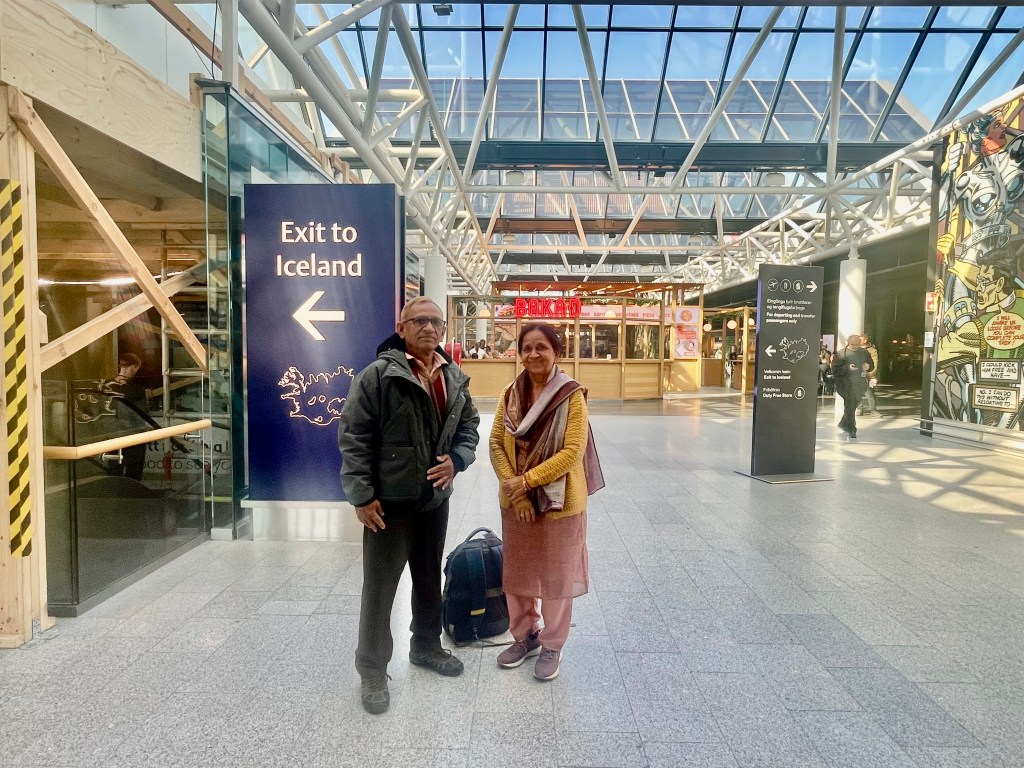
Cherishing Memories of Precious Moments of our Eindhoven/Iceland Adventure:A recap of the breathtaking Glaciers, beautiful waterfalls,massive Volcanoes,Amazing Lava Tunnel,Geysers & Caves

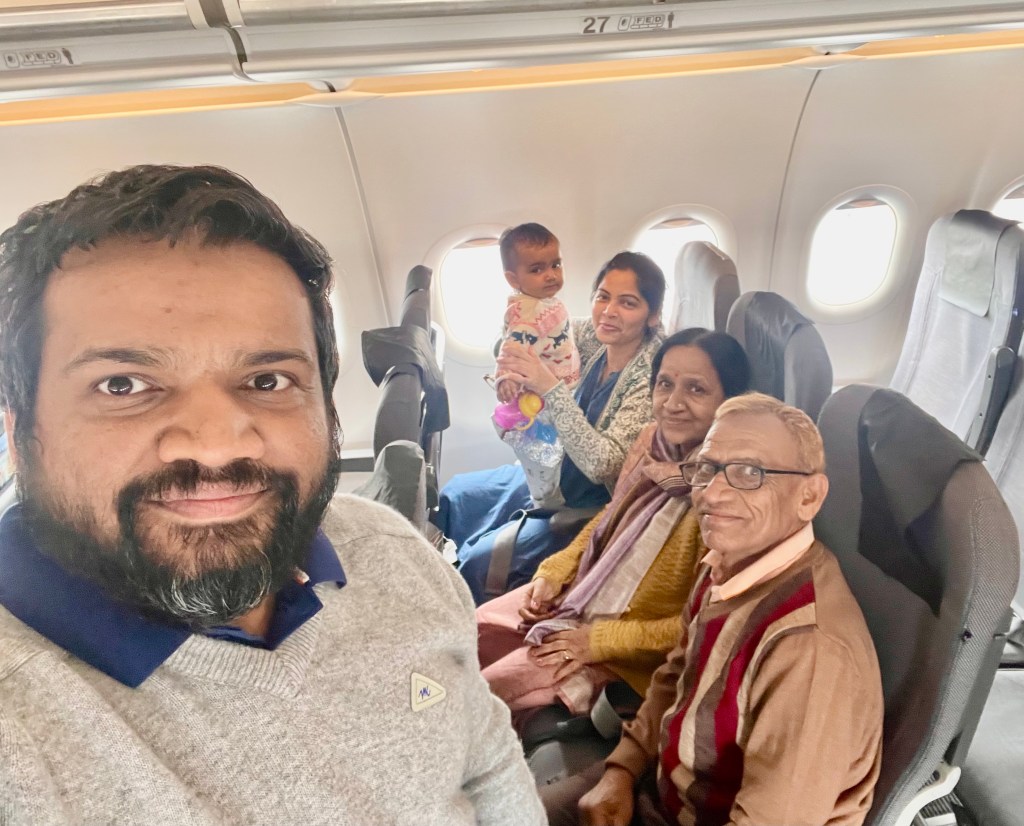
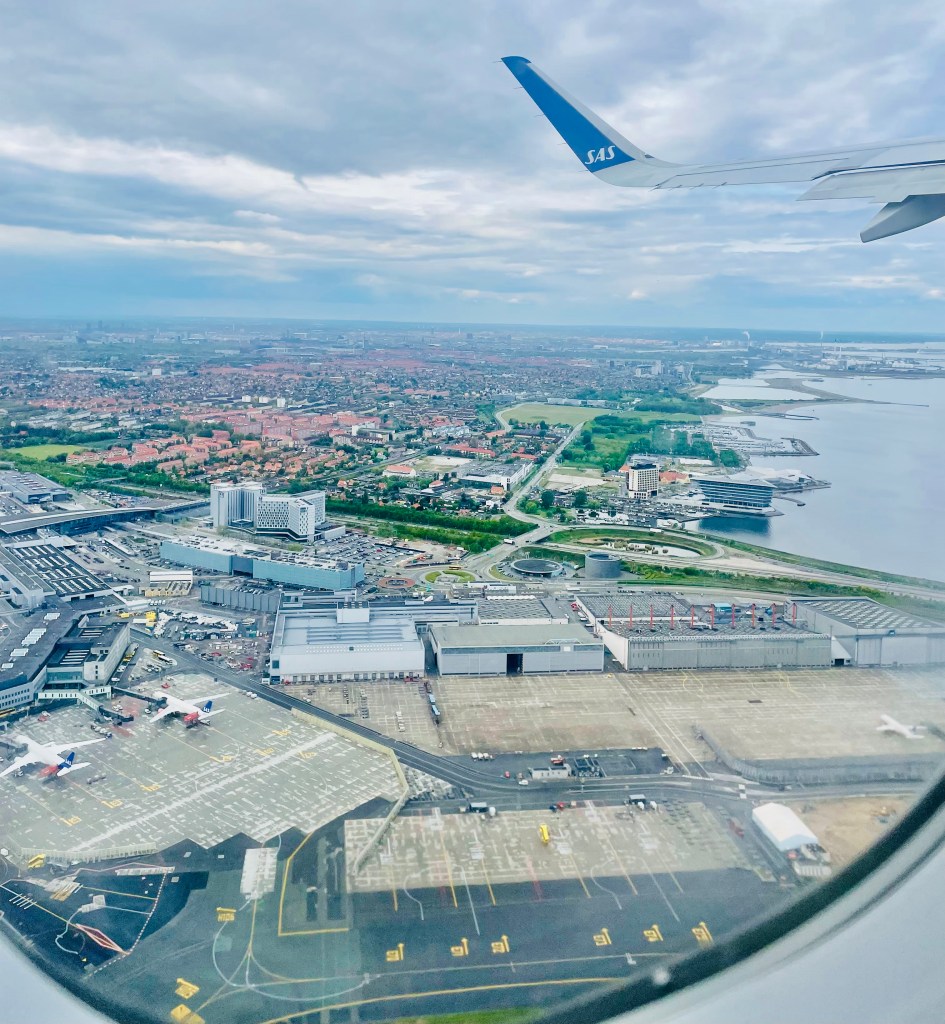
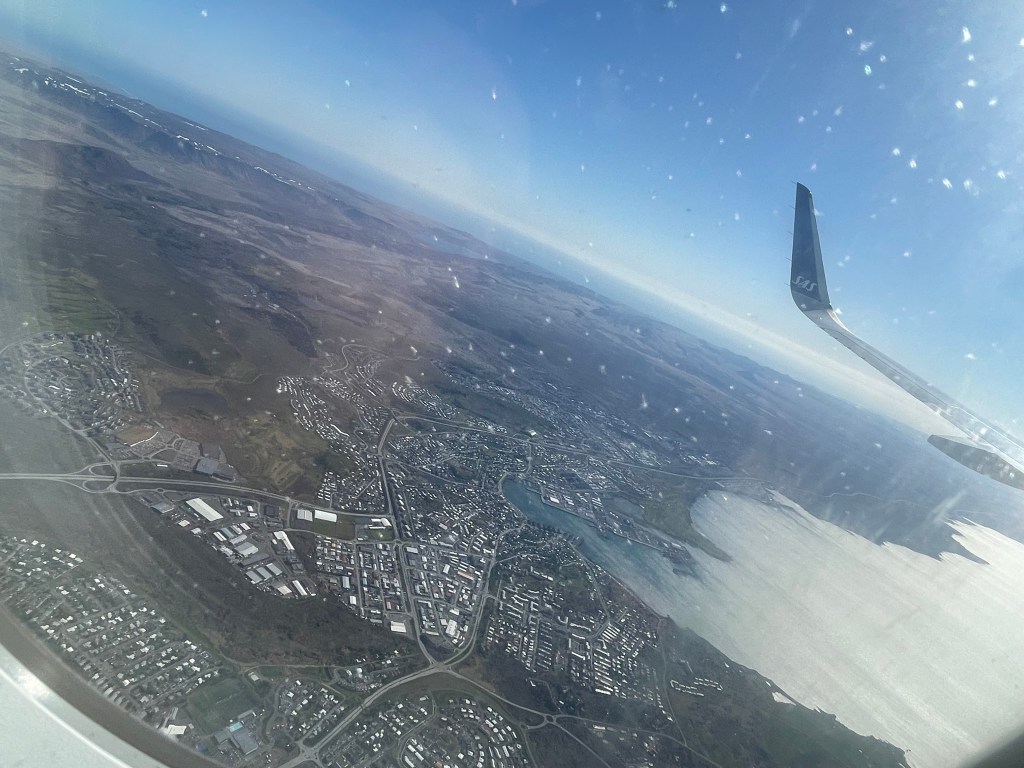
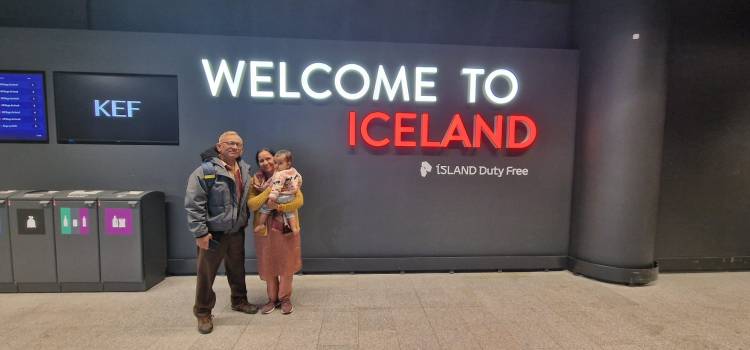
Going through my latest blogs, my lovely co-bloggers & readers must already be aware that we were on a 50-day tour of Eindhoven (Netherlands) from 9/05/24-27/6/25 to spend some quality time with son & family and to Celebrate birthday of grand daughter Tarinni in Iceland on 19/5/25(after traveling to Iceland from Eindhoven(Netherlands).During our stay at Eindhoven,apart from our amazing Iceland trip,we undertook some short local trips to make each moment memorable.In the process we made some memories of the place that will live on in our hearts, creating emotional connection which we will cherish for ever. We never know this may have been our last visit to the amazing place.We returned to India on 27/6/25 after a changeover/layover at Warsaw for 4 hours!In this period, I collected some information from Wikipaedia on this unique & beautiful capital city of Poland which I will share with my readers in my next blog ! Warsaw will be on my bucket list.

“Memories are the timeless treasures of the heart.” – Unknown. By valuing and cultivating memories as treasures of the heart, we can keep the essence of cherished experiences alive within us.

“The best things in life are the people we love, the places we’ve been, and the memories we’ve made along the way.” – Unknown.This quote encapsulates the essence of a rich and fulfilling life, emphasizing the importance of relationships, experiences, and memories.

“Memories are the key to unlocking the future.” – Unknown. This quote suggests that memories shape and inform our decisions and actions as we move forward in life. By reflecting on past experiences, learning from them & using those lessons to guide our choices, we can create a future that aligns with our values & aspirations. Memories serve as keys that unlock the potential for personal growth and development.

“Our memories are the bridge between the past and present – they help us move forward while keeping the past alive.” – Unknown. This quote highlights the role that memories play in connecting our past experiences with our present lives. Memories act as a bridge, allowing us to carry the lessons and experiences of the past into the present, while still appreciating and honoring our personal history. By embracing and reflecting on our memories, we can remain connected to our past while remaining open to new experiences and opportunities in the present.

Here I take this opportunity to replay some precious moments through a panaroma of images captured by us during our amazing Iceland adventure & Eindhoven stay.

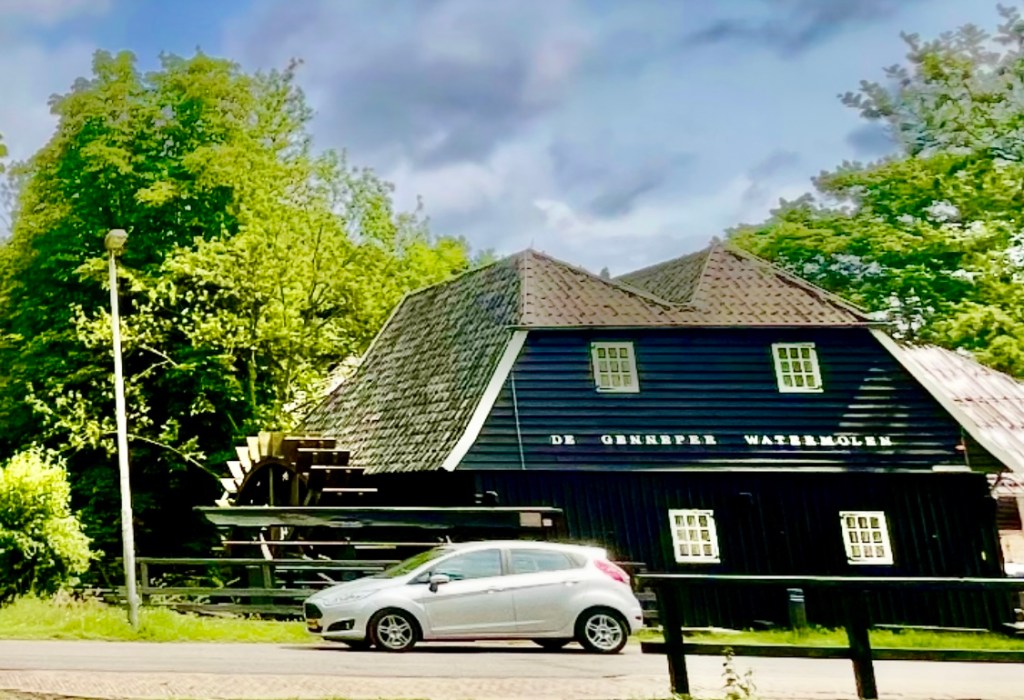
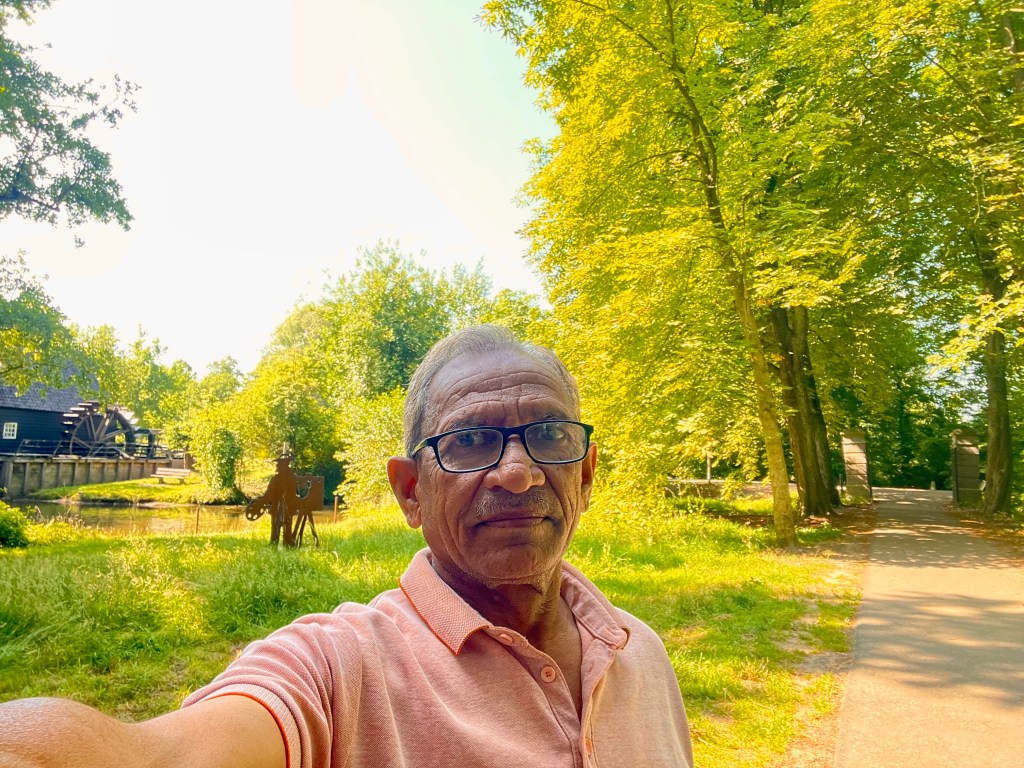
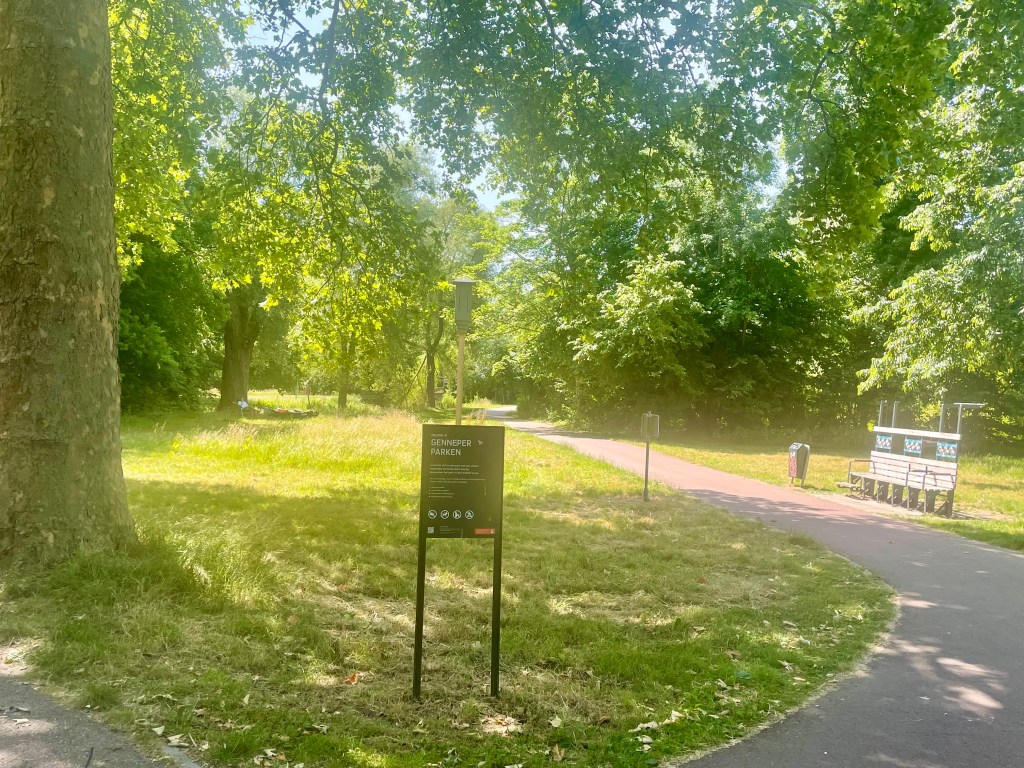
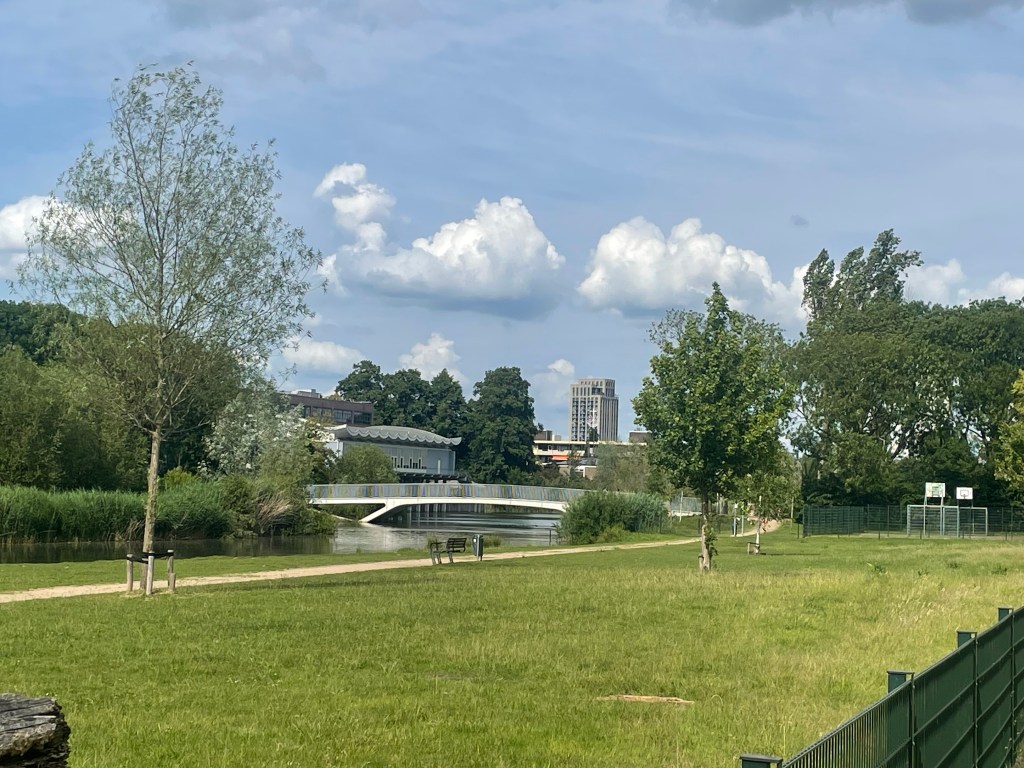
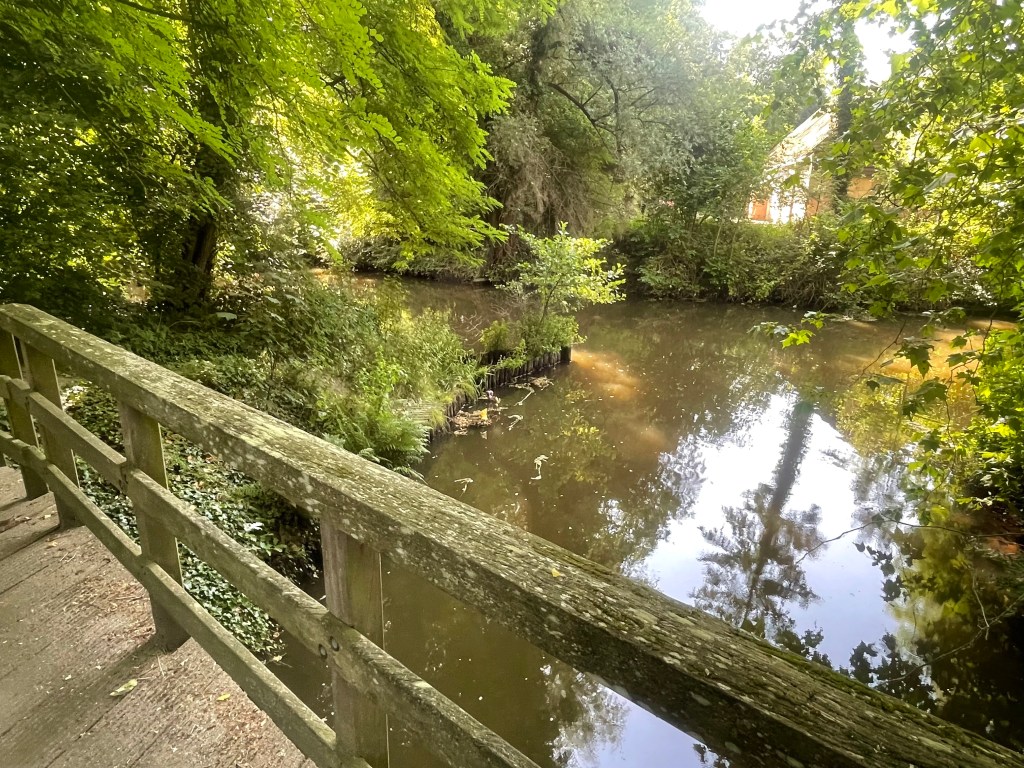
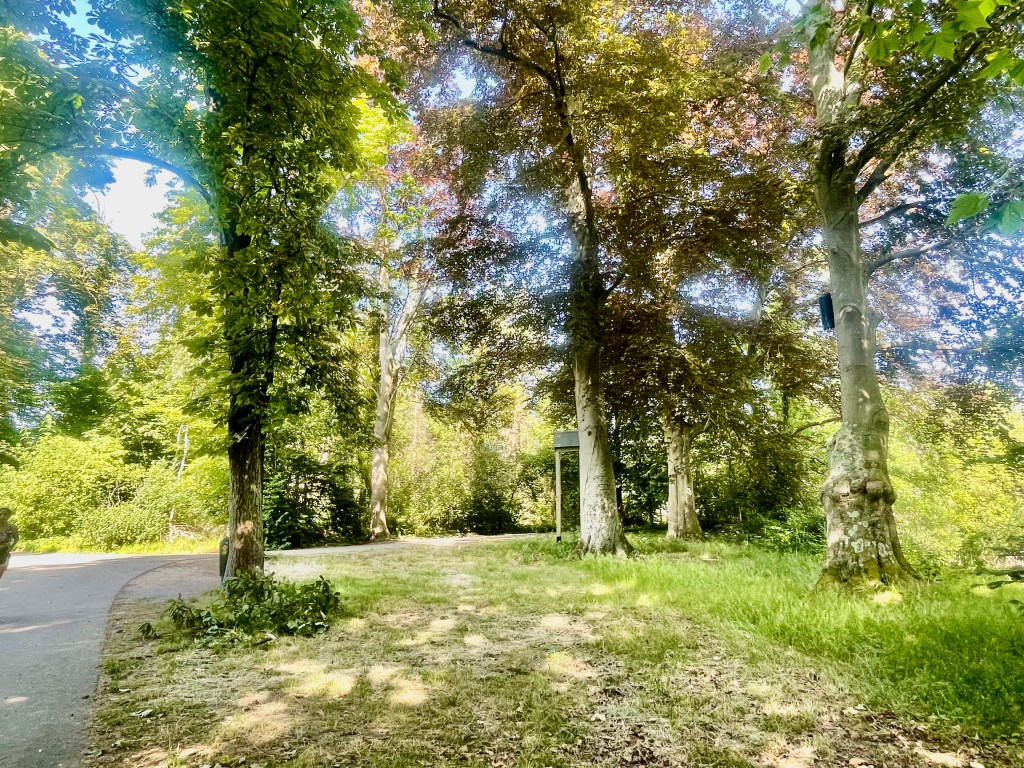
After a long walking tour of Genneper park(NLs)in a summer afternoon,resting in the refreshing shade of Chestnut trees & watching the Watermill go around & around through flowing stream of Dommel was an experience of a lifetime

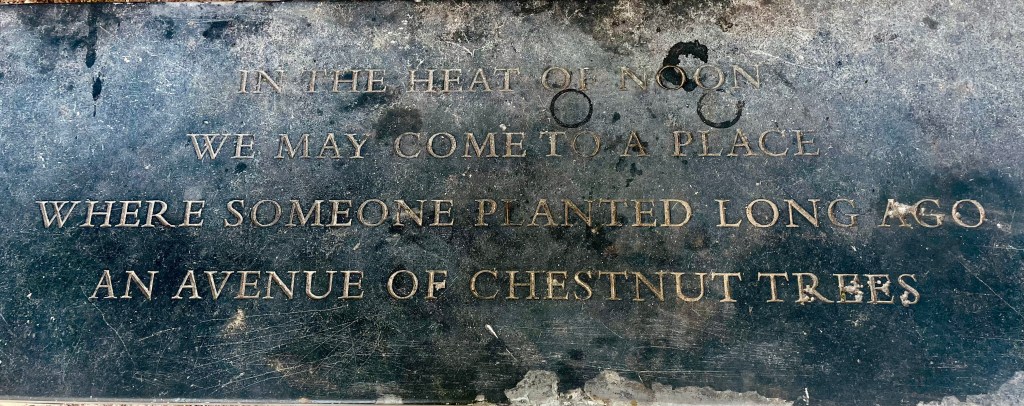
ON THE STONE BENCH, FOLLOWING MEANINGFUL WORDS WERE ENGRAVED :-

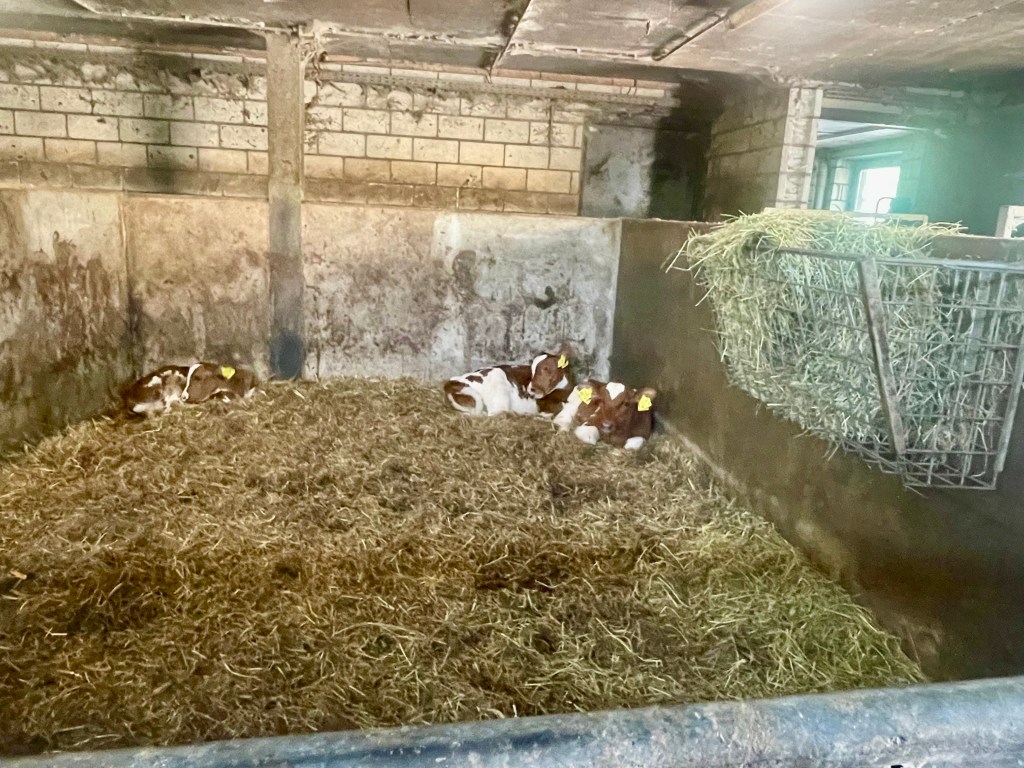
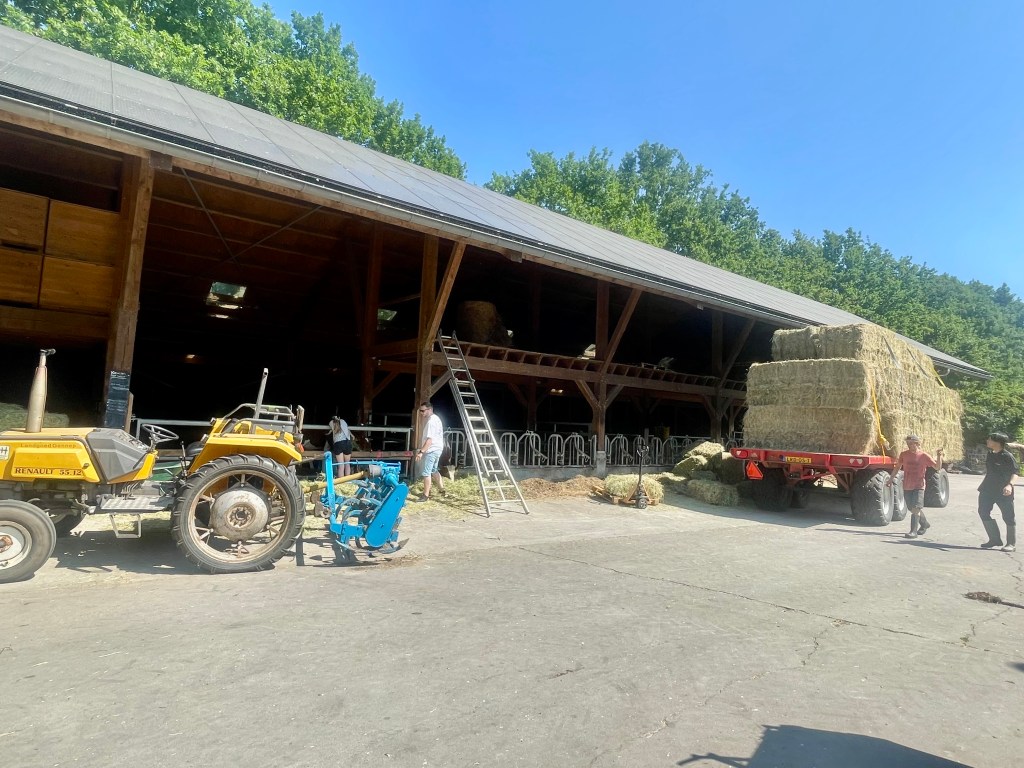
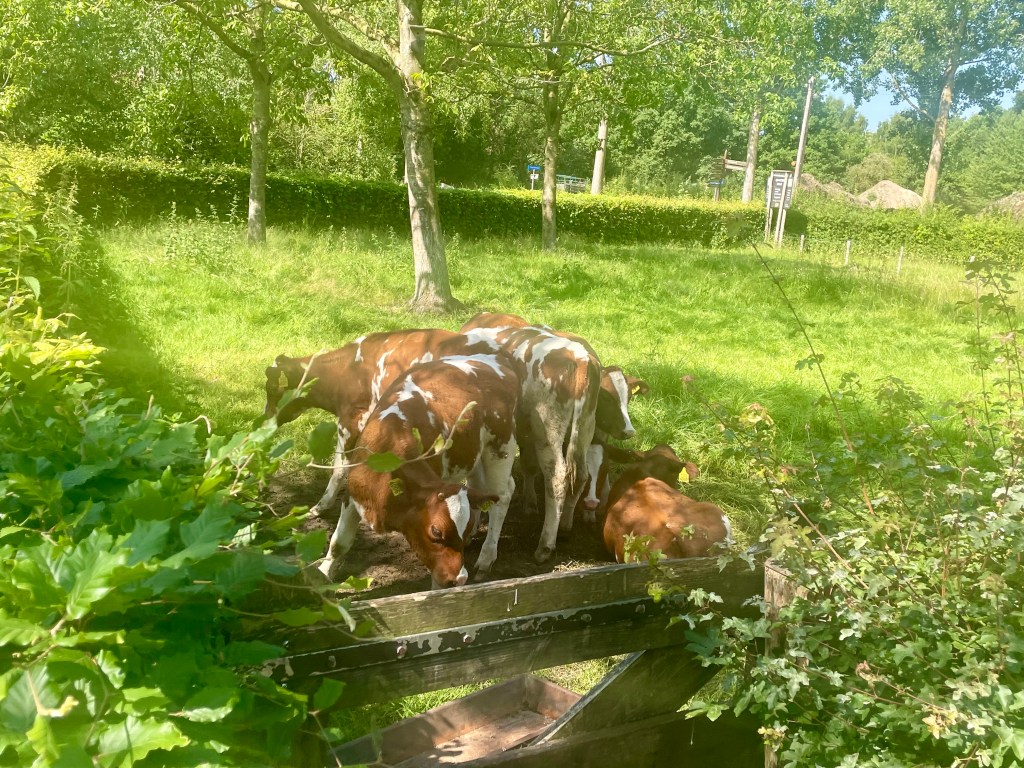
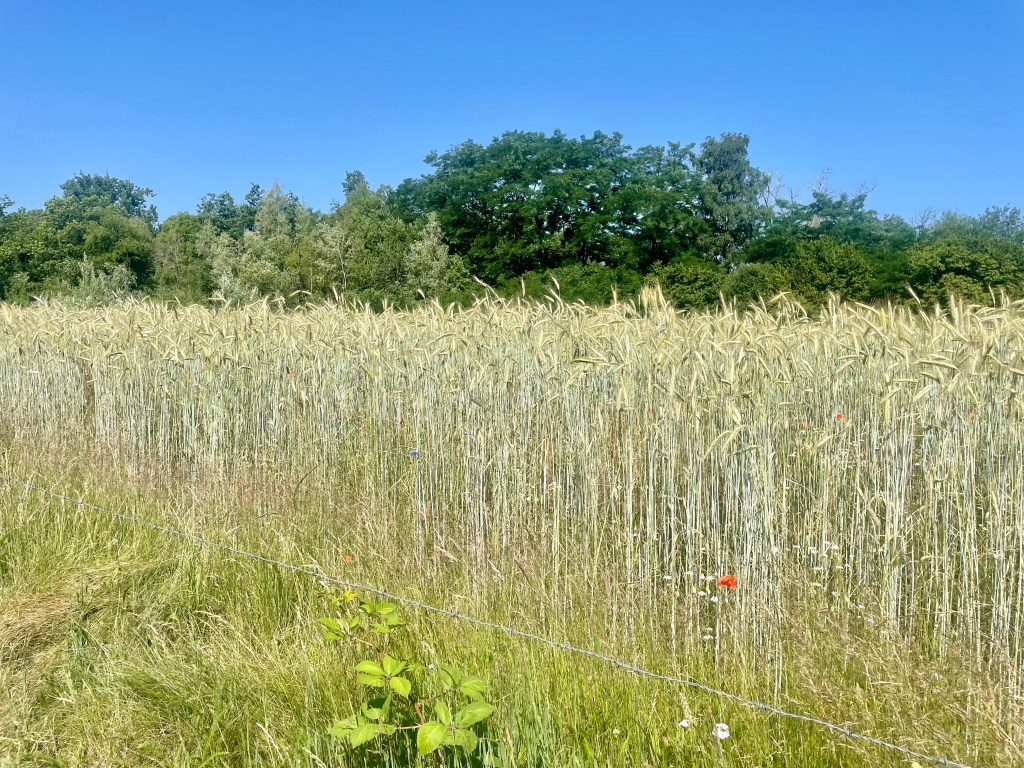
In the area ,Eindhoven muncipal authorities are engaged in Nature-inclusive farming with rich Biodiversity maintaining the ecological balance in nature.Muncipality is also committed to provide shelter to animals(like Bats,Bees, sparrows ducks & small insects) in the farms to boost the much needed animal diversity.

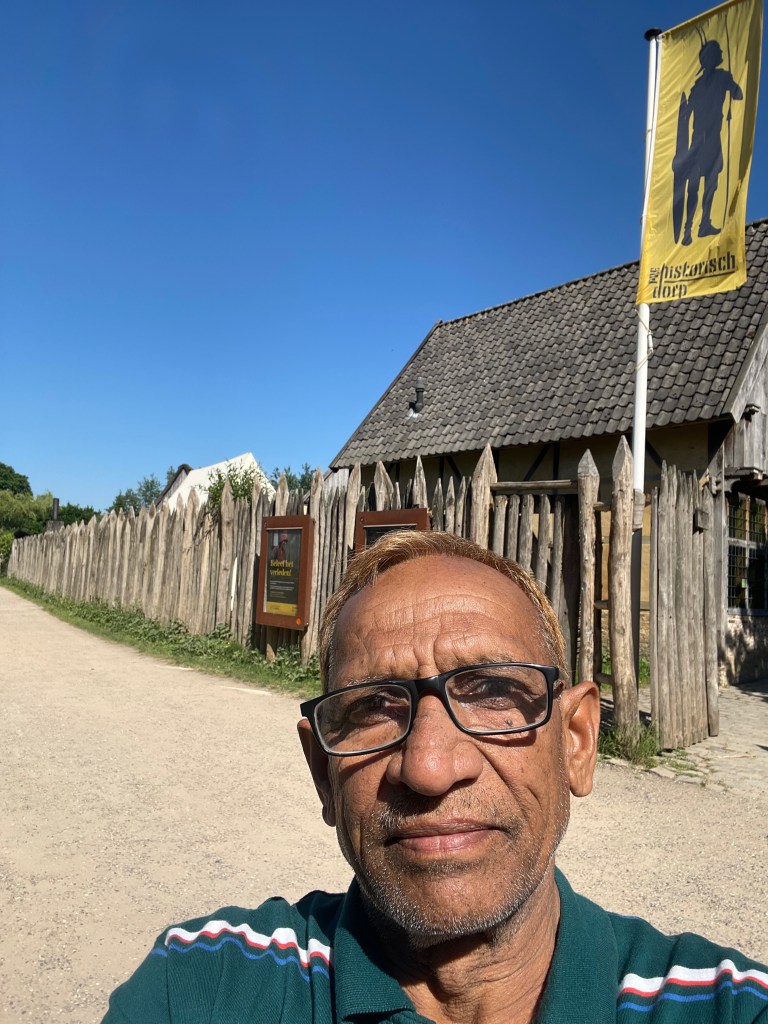
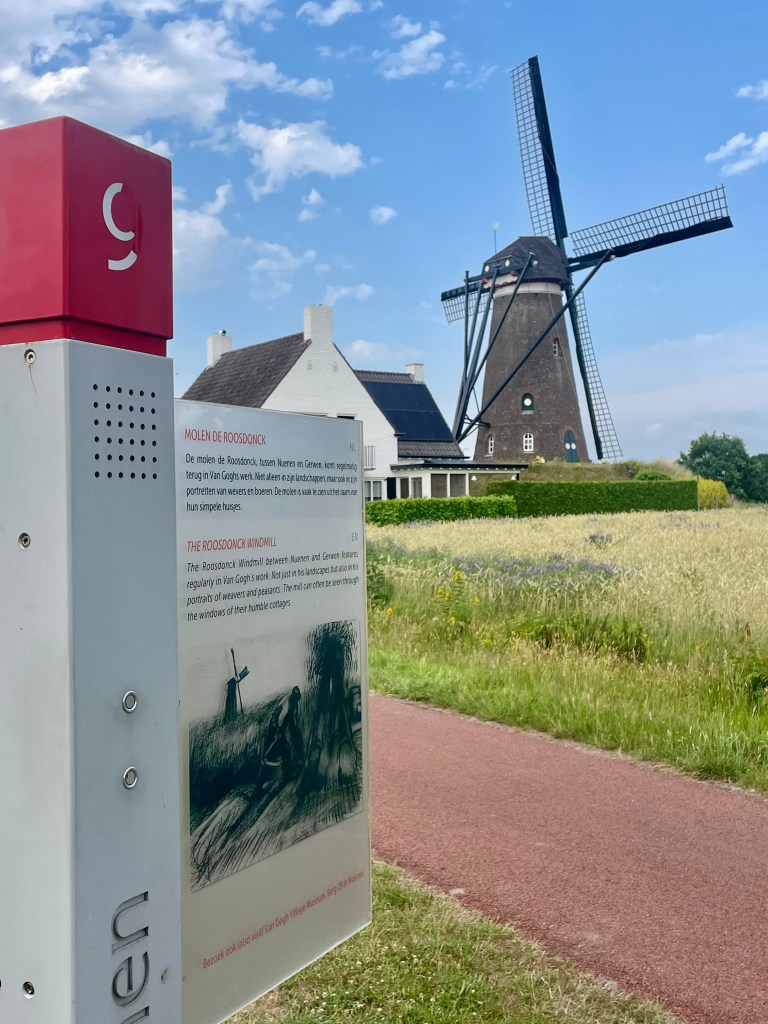
In the park, the Pre-historisch Dorp(Eindhoven Museum)is there exhibitting the life in the pre-historic era !An old Water-Mollen is still operating efficiently for milling wheat flour & many grains!It was constructed around 1249(which was once painted by the renowned Painter Vincent Van Gogh in 1884) .My readers are aware that I have already described these in my previous visits to Eindhoven.

After my 90 minutes walk through the expansive park in the sunshine ,I came to a place beside the Dommel river feeling quite tired searching for a place to sit under the shade of trees!Finally I found a stone bench & while I was about to sit on it ,I read some lines engraved on the bench surface. I was so curious & impressed by the “meaningful lines” that I googled to find out about the originator & found that it was taken from the collection of poems by a Scotish poet Thomas A Clark who was born in Greenock(Scotland) in 1944.These meaningful lines conveyed a message to anyone & everyone depending on his /her interpretation of the message.

Please Note: My readers may please note that this may be my last blog on this 45-days Netherlands tour before our scheduled return to India on 26/6/25!Of course ,we will need open airspace to India to travel amidst the prevailing situation in middle east arising out of Israel-Iran war!My readers may assume that this blog is the recap of my earlier posts on “Genneper parken” of Eindhoven town. But this time I have taken up a new subject in the same premises for my dear readers! Happy Reading ,friends !

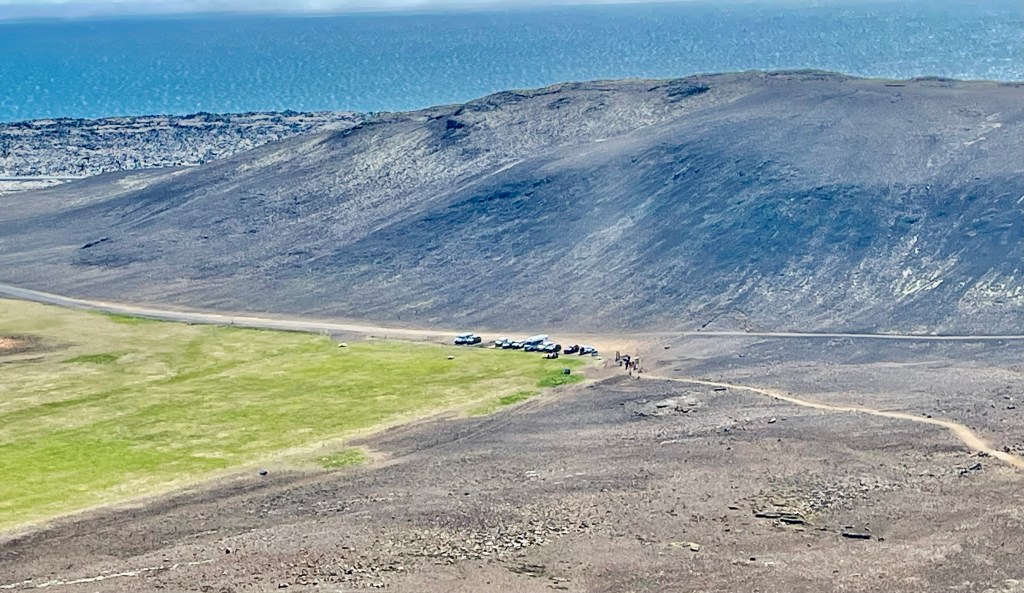
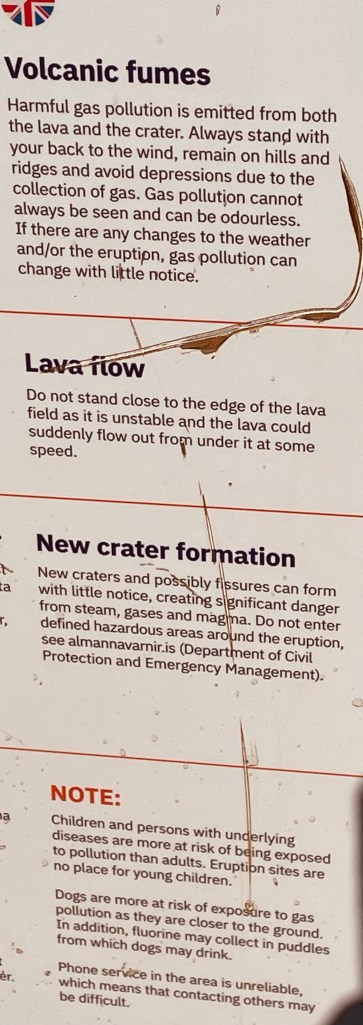
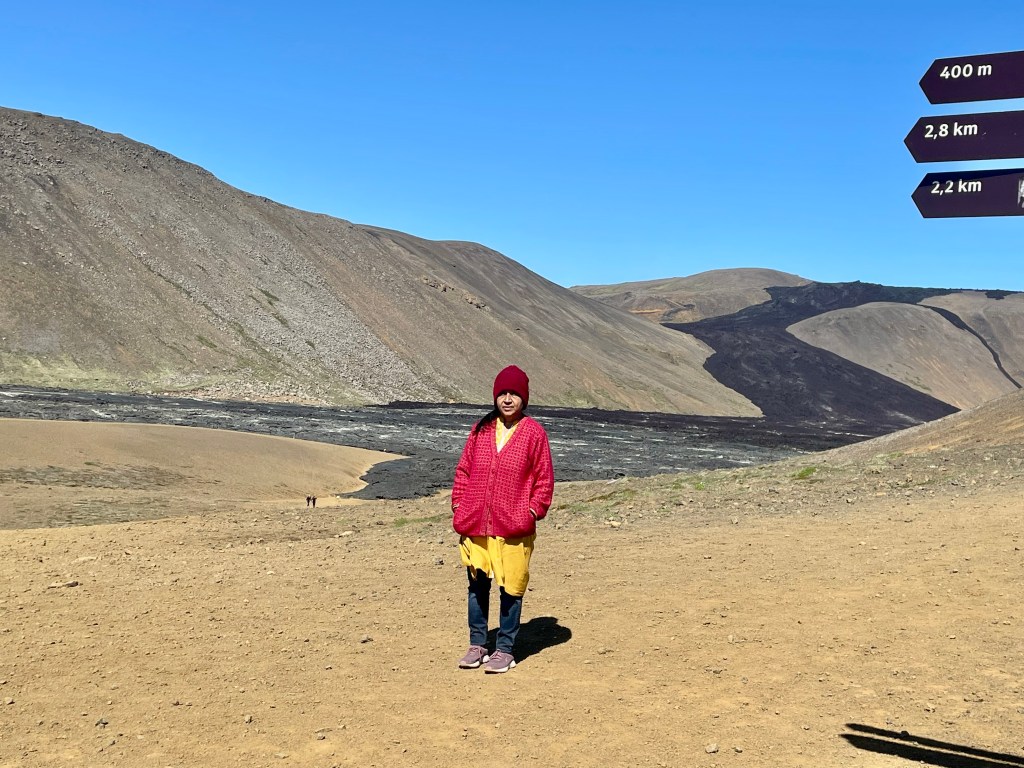
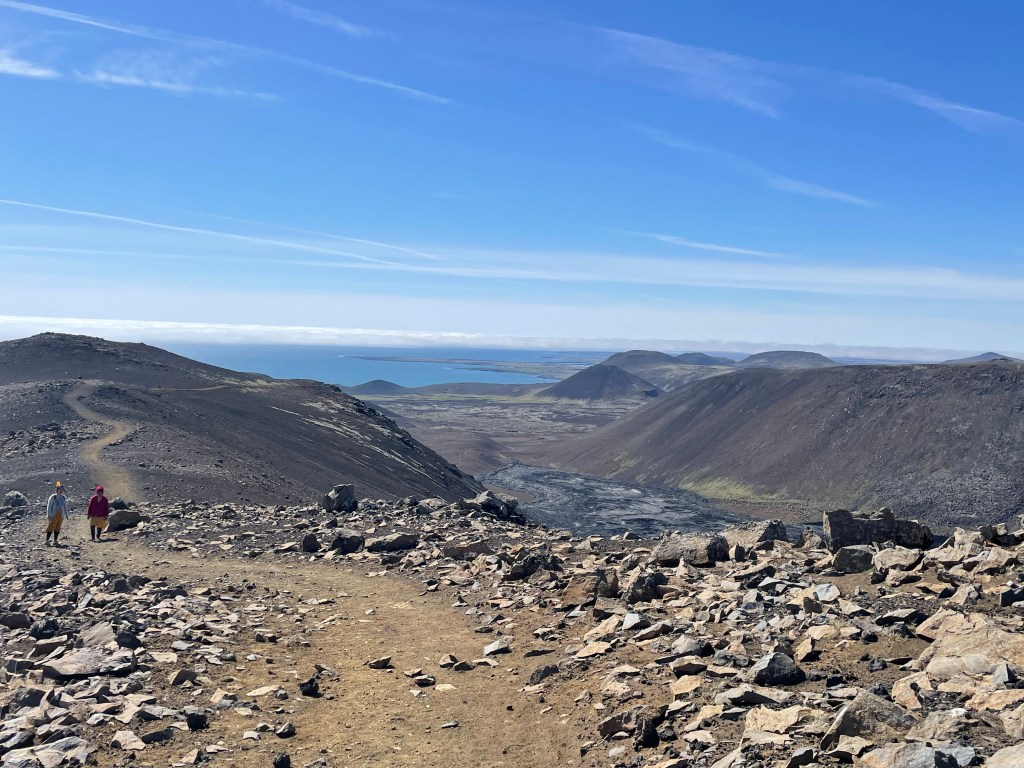
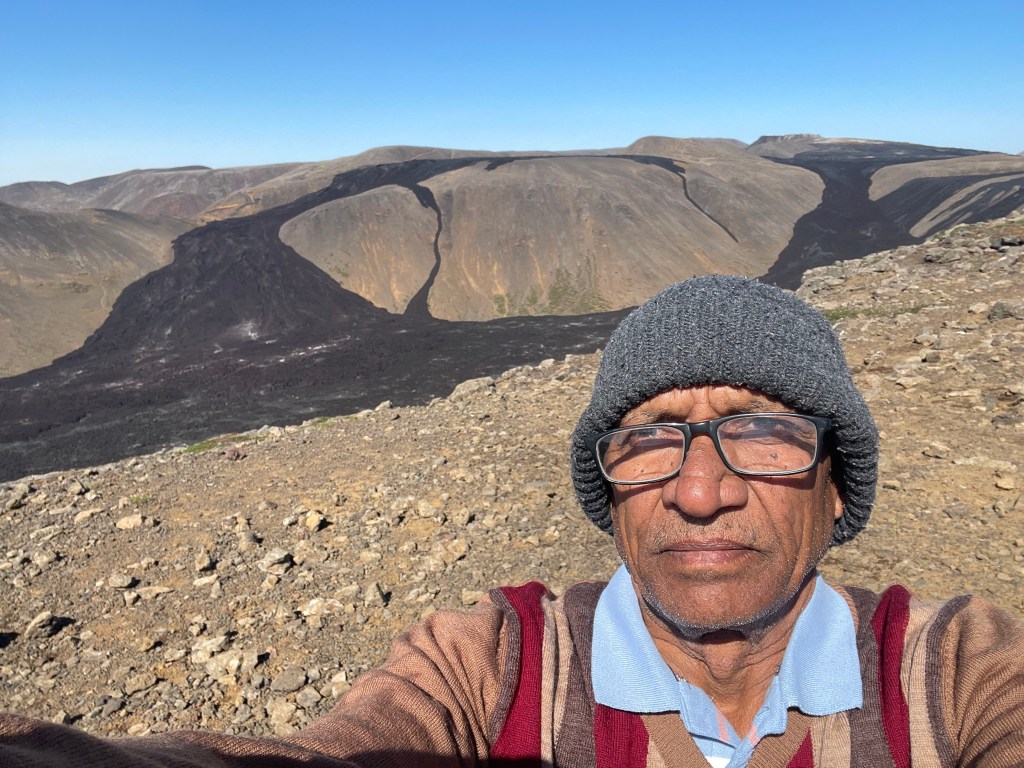
WENT ON A THRILLING VISIT OF RECENTLY ERUPTED VOLCANO & AMAZING VIEWS OF IT’S LAVA TRAILS DWINDLING DOWN THE HILLS IN ICELAND

Volcanic activities in Iceland :

Iceland experiences frequent volcanic activity, due to its location both on the Mid Atlantic Ridge, a divergent tectonic plate boundary, and being over a hotspot. Nearly thirty volcanoes are known to have erupted in the Holocene epoch; these include Eldgja, source of the largest lava eruption in human history.The island has around 30 active volcanic systems. Within each are volcano-tectonic fissure systems and many, but not all of them, also have at least one central volcano Some of the various eruptions of lava, gas and ash have been both destructive of property and deadly to life over the years, as well as disruptive to local and European air travel.

IMPORTANT VOLCANIC ERUPTIONS IN ICELAND’S HISTORY :

1)Hekla:

It has erupted more than 20 times in recorded history. It was known to medieval Europeans as the “Gate of Hell” & that reputation persisted into the 19th century.

2)Laki/Skaftáreldar 1783–1784:

The most deadly volcanic eruption of Iceland’s history was the so-called fires of Skafta. The eruption was in the craters of Laki. Roughly a fifth of the Icelandic population died because of the eruption.Most died not because of the lava flow or other direct effects of the eruption but from indirect effects, including changes in climate and illnesses in livestock in the following years caused by the ash and poisonous gases from the eruption. The eruption resulted in the second largest basaltic lava flow from a single eruption in historic times.
3)Eldfell 1973

The Eidfell eruption happened without warning, causing the island’s population of about 5,300 people to evacuate within a few hours. Importantly, the progress of lava into the harbour was slowed by manual spraying of seawater. One person died including destruction of homes and property on the island.

4)Eyjafjallajökull 2010

The eruption in April 2010 caused extreme disruption to air travel across western and northern Europe over a period of six days in April 2010. About 20 countries closed their airspace to commercial jet traffic and it affected approximately 10 million travellers.

The eruption in May 2011 at Grisvotn under the Vatnajokull glacier sent thousands of tonnes of ash into the sky in a few days, raising concerns of the potential for travel chaos across northern Europe although only about 900 flights were initially disrupted.

5)Holuhraun 2014–2015:

Bárðarbunga is a Stratovolcano and is roughly 2,000 metres above sea level in central Iceland, i.e. in the northern edge of Vatnajökull. This makes it the second highest mountain in Iceland.

Holuhraun is an older lavafield situated 50 km (31 mi) north-east of Bárðarbunga.Here the eruption started on August 17, 2014, and lasted for 180 days.The 2014–2015 eruption was Iceland’s largest in 230 years.Following a major earthquake swarm, multiple lava fountain eruptions began in Holuhraun.The primary concern with this eruption was the large plumes of Sulphur dioxide(SO2) in the atmosphere which adversely affected breathing conditions across Iceland, depending on wind direction. The volcanic cloud was also transported toward Western Europe.
6)Fagradalsfjall 2021–2022:

Following a three-week period of increased seismic activity, an eruption fissure developed near Fagradalsfjall, a mountain on the Reykjance Peninsula. Lava flow from a 200-meter fissure was first discovered by a Coast Guard helicopter on March 19, 2021

Litli-Hrútur 2023

On 10 July 2023 , a fissure erupted adjacent to the summit of Litli-Hrutur.

Sundhnúkur 2023–2025:

On December 18, 2023, the volcano began a fissure eruption. In January, 2024 lava from this eruption destroyed 3 houses in the nearby town of Grindavik.

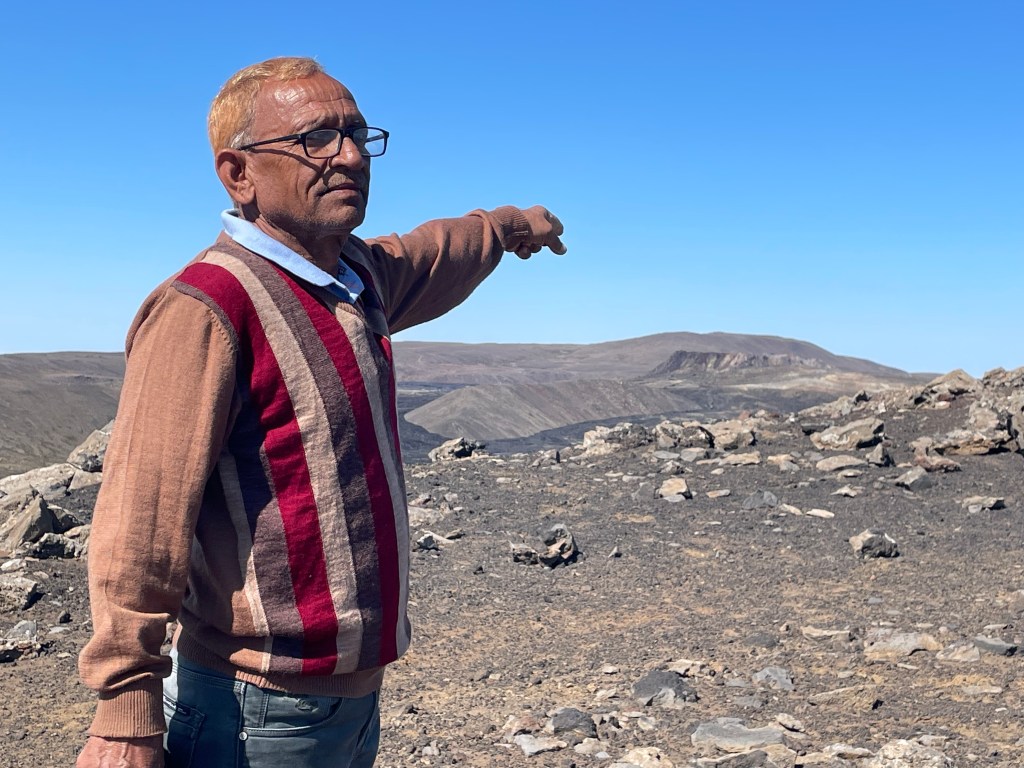
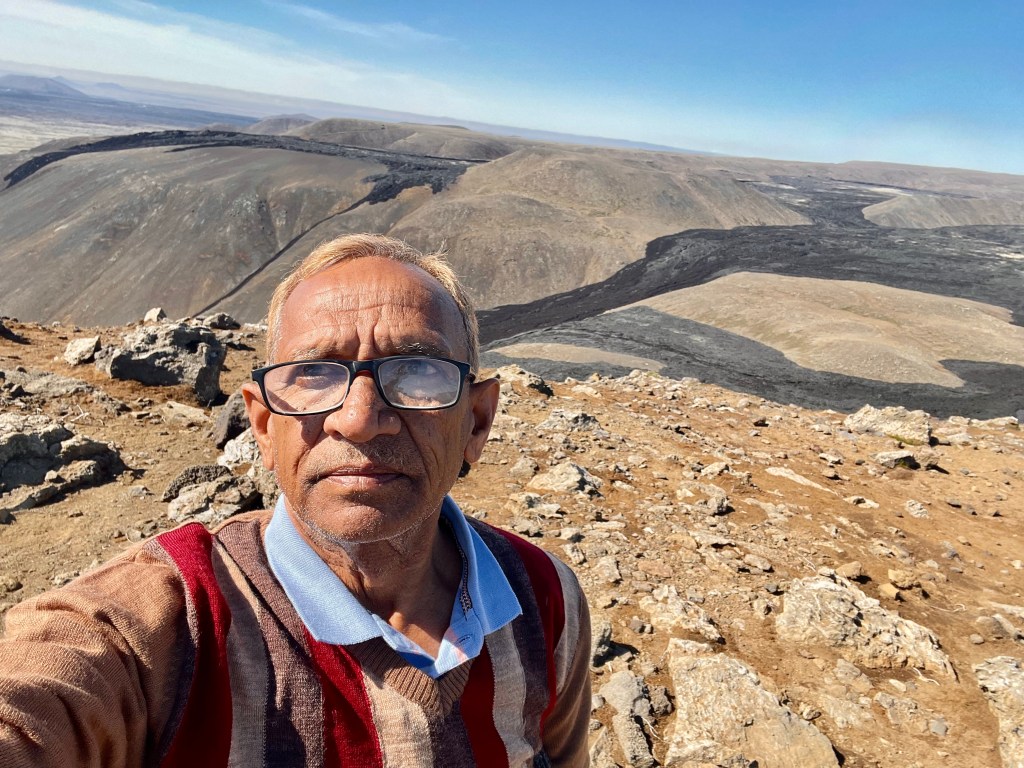
The second eruption occurred on 14 January 2024, lasting approximately two days. This event had a fissure opening nearly 100 m from a nearby town. The eruption breached anti-lava defences and destroyed three homes. Tragically, just before this eruption, one person was reported missing and presumed to have fallen into a crack caused by seismic activity, resulting his death. On 8 February 2024, the third eruption caused extensive damage, including the loss of hot water supply for several days. The fourth eruption started in March 2024 and became the longest in the series, spanning 54 days. The fifth eruption, which began in May 2024, continued for 24 days. This eruption caused damage to Power Lines.In August 2024, the sixth eruption commenced, lasting 14 days. It released 61 million m3 of lava, covering an area of 15.8 km2 and resulting in 40 cm of land subsidence. Despite being the largest eruption in the series, it did not cause any infrastructure damage. The seventh eruption began in November 2024 and extended over 18 days. It quickly engulfed the parking lot of the BlueLagoon .The latest & the eighth Volcanic Eruption commenced on 1st April 2025 and concluded approximately seven hours later the same day, marking the shortest and least intense event in the eruptive series to date.(we visited this site on 21/5/25)

Structure of lava fields:

PAHOEHOE (HELLUHRAUN)LAVA FIELD
apalhraun Lava Field near Blue Lagoon 

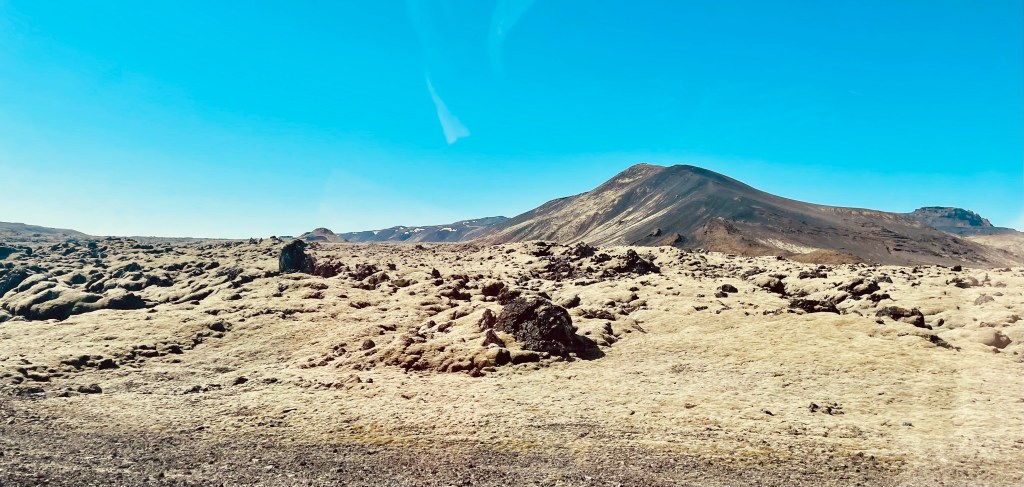
The smooth flowing basaltic lava pahoehoe is known in Icelandic as helluhraun .It forms smooth surfaces that are quite easy to cross. More viscous lava, known in Icelandic as apalhraun .The loose, broken, sharp, spiny surface makes hiling across it difficult, slow and dangerous, it is easy to stick a foot into a hole and break a leg.

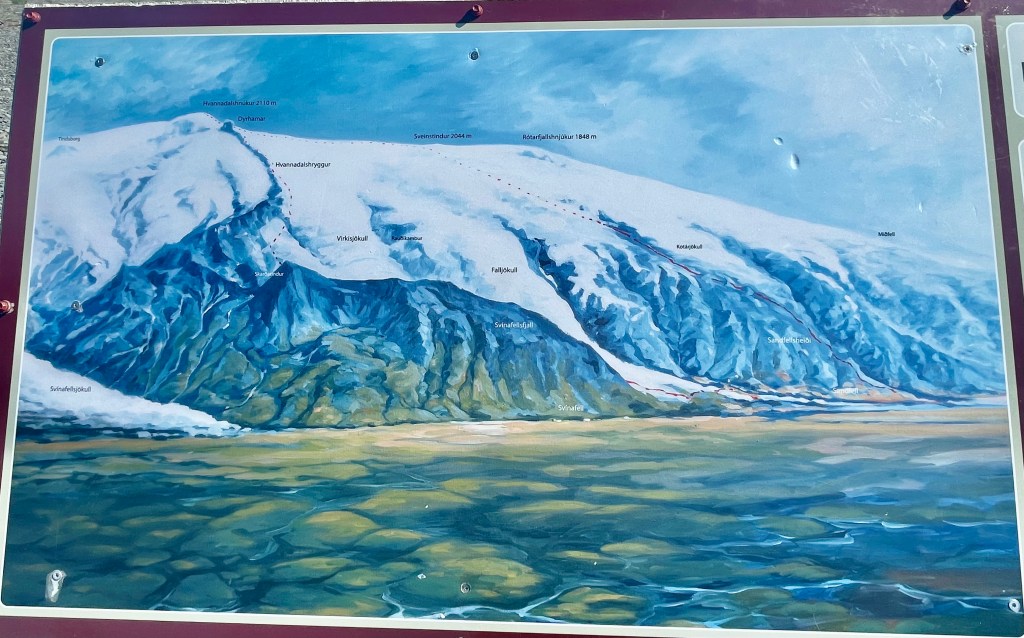
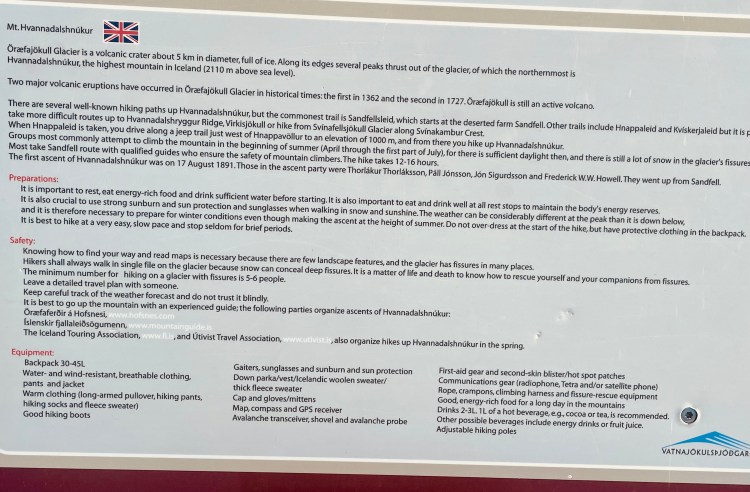
Hvannadalshnúkur, the highest point of Iceland at a height of 2110 mts

Description :

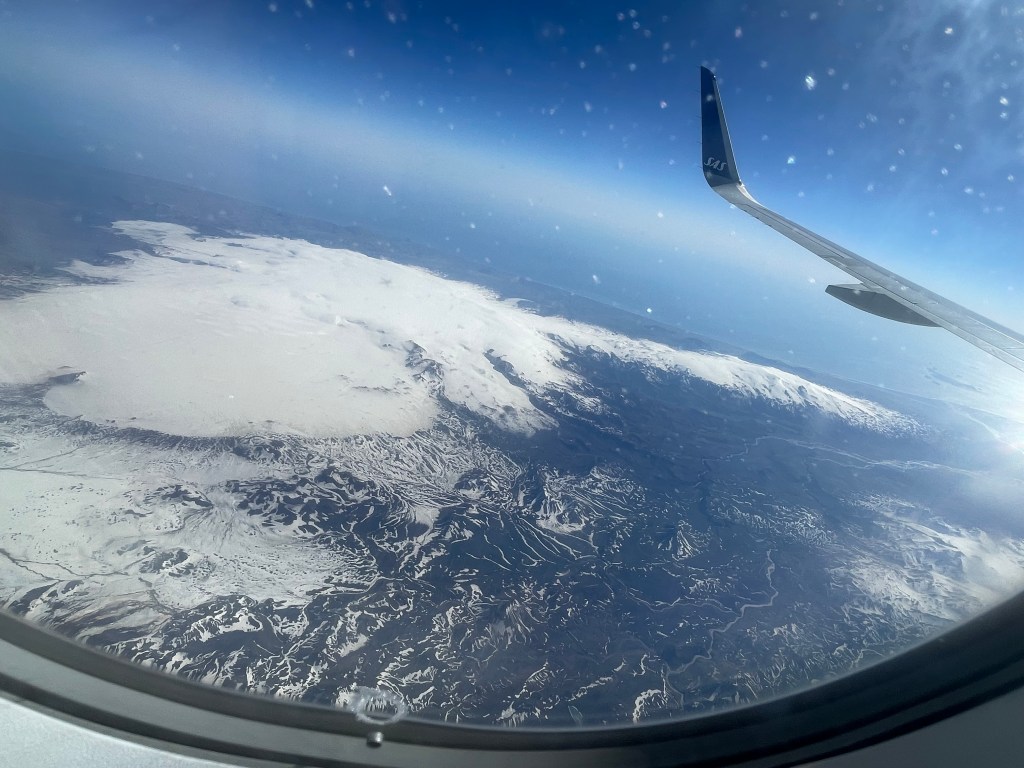
It is located at the southern extremity of the Vatnajökull  glacier and overlooking the Ring road between Hofn and Vik.Öræfajökull is the largest active volcano in the country, and on the summit crater’s north-western rim is Hvannadalshnúkur , the highest peak in Iceland at 2,110 metres. Geographically, Öræfajökull as the glacier, is considered part of Vatnajökull, and the area covered by glacier is within the boundary of Vatnajökull National park . Öræfajökull has erupted twice in historical times, in 1362 and 1728. These were explosive silicic eruptions with bulk volumes of 0.1–10.0 km3 

Colour codes, which are in accordance with recommended International Civil Aviation Organisation (ICAO)procedures,are intended to inform the aviation sector about a volcano’s status. Notifications are issued for both increasing and decreasing volcanic activity, and are accompanied by text with details (as known) about the nature of the unrest or eruption, especially in regard to ash-plume information and likely outcomes. The Colour code is given below the map.

GREY: Volcano appears quiet but is not monitored adequately. Absence of unrest unconfirmed.
GREEN: Volcano is in normal, non-eruptive state.
   or, after a change from a higher alert level:
Volcanic activity considered to have ceased, and volcano reverted to its normal, non-eruptive state.
YELLOW: Volcano is experiencing signs of elevated unrest above known background levels.
   or, after a change from higher alert level:
Volcanic activity has decreased significantly but continues to be closely monitored for possible renewed increase.
ORANGE: Volcano is exhibiting heightened unrest with increased likelihood of eruption.
   or,
Volcanic eruption is underway with no or minor ash emission.
RED: Eruption is forecasted to be imminent with significant emission of ash into the atmosphere likely.
  or,
Eruption is underway with significant emission of ash into the atmosphere.

World Organisation of Volcano Observatories: Further information can be obtained from the seismological group if necessary. Siesmological Overview from the last 48 hours is available alongwith an enlarged aviation coloour code map. 


Sundhnúkur Volcanic Eruptions of 1st April’2025:Visited the site on 21/5/25by us.

I am very grateful to the Wikipaedia for infomation on the Volcanoes in iceland.

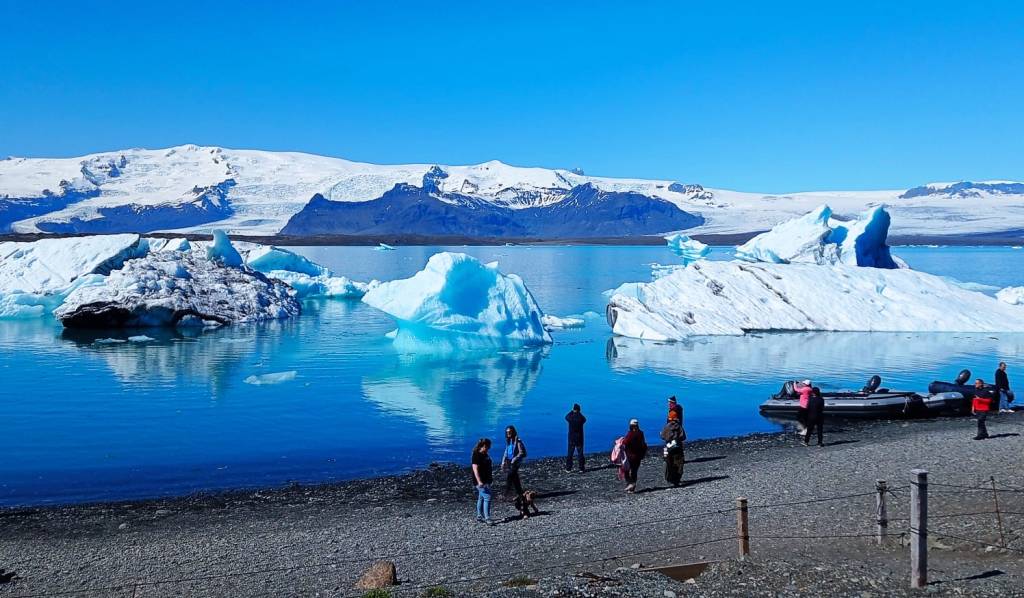
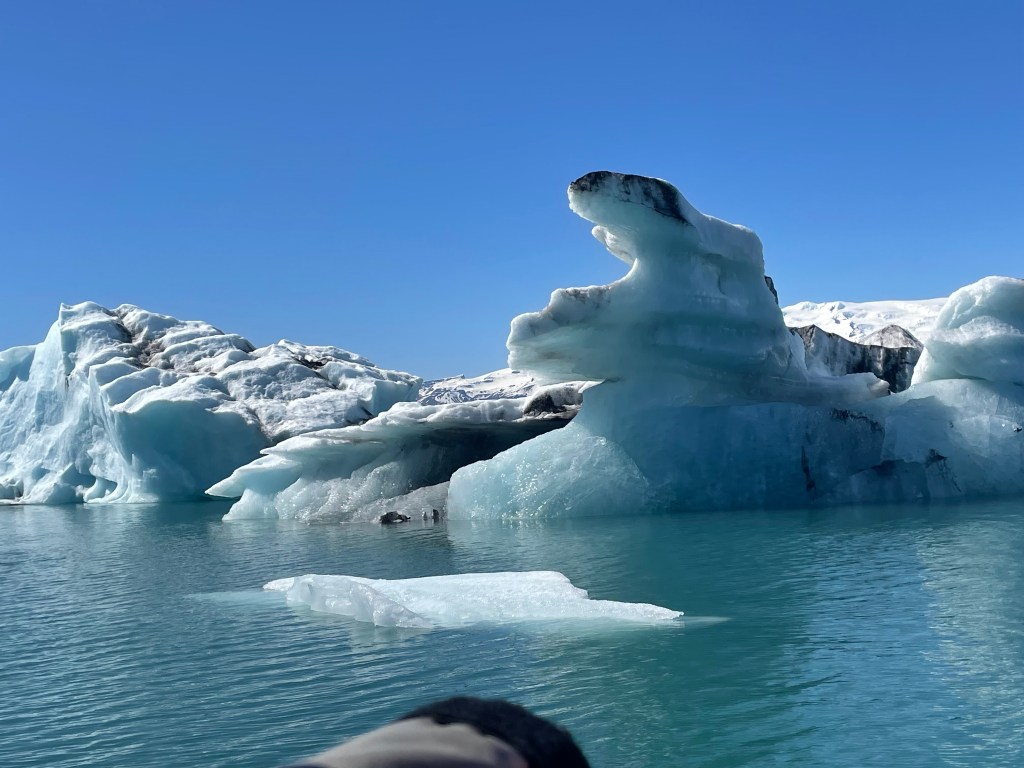
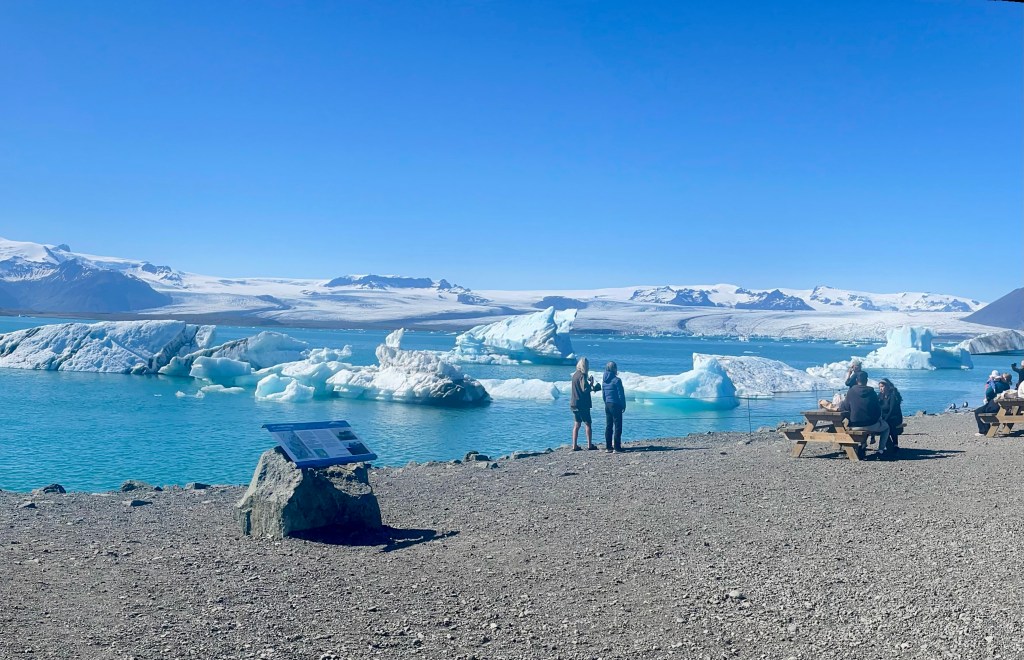
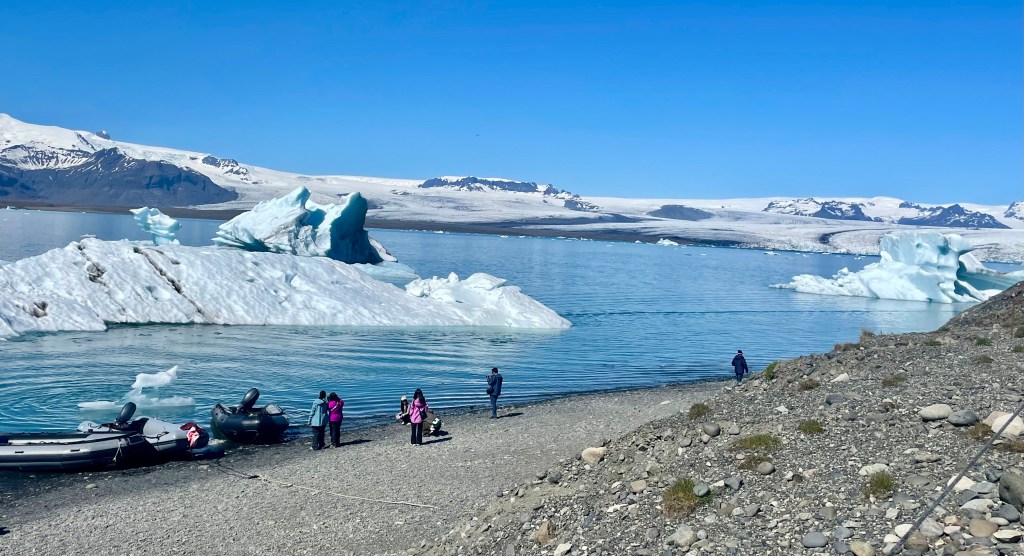
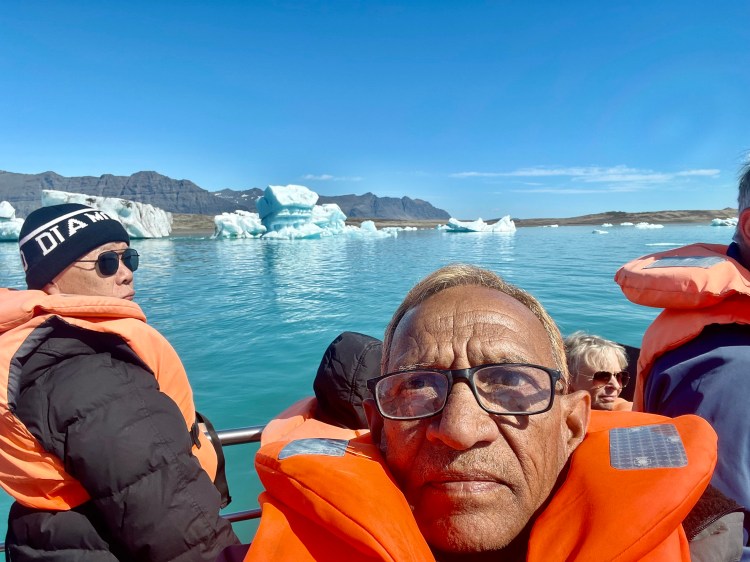
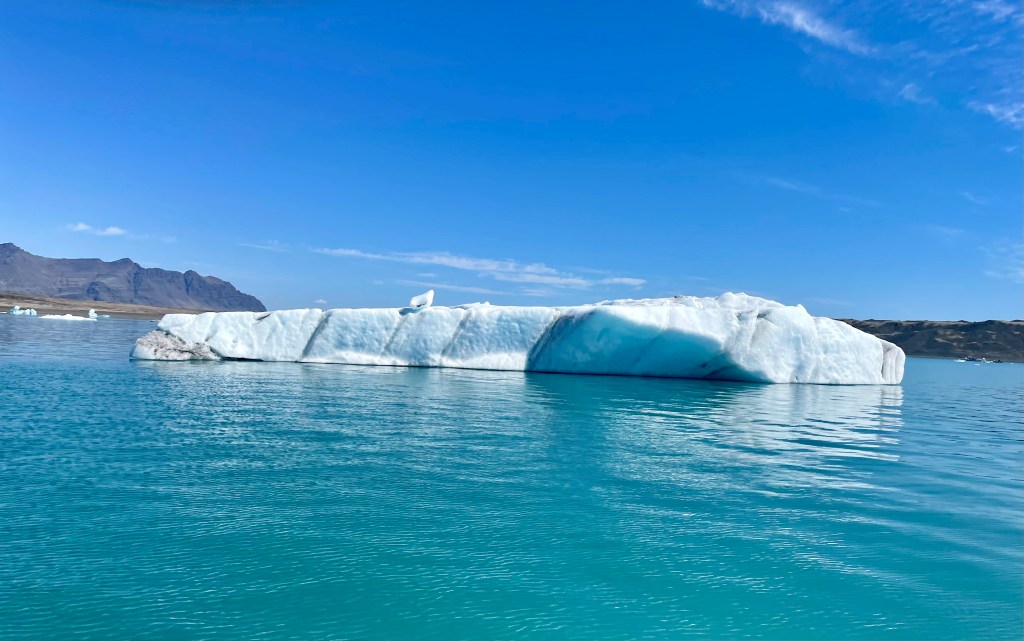
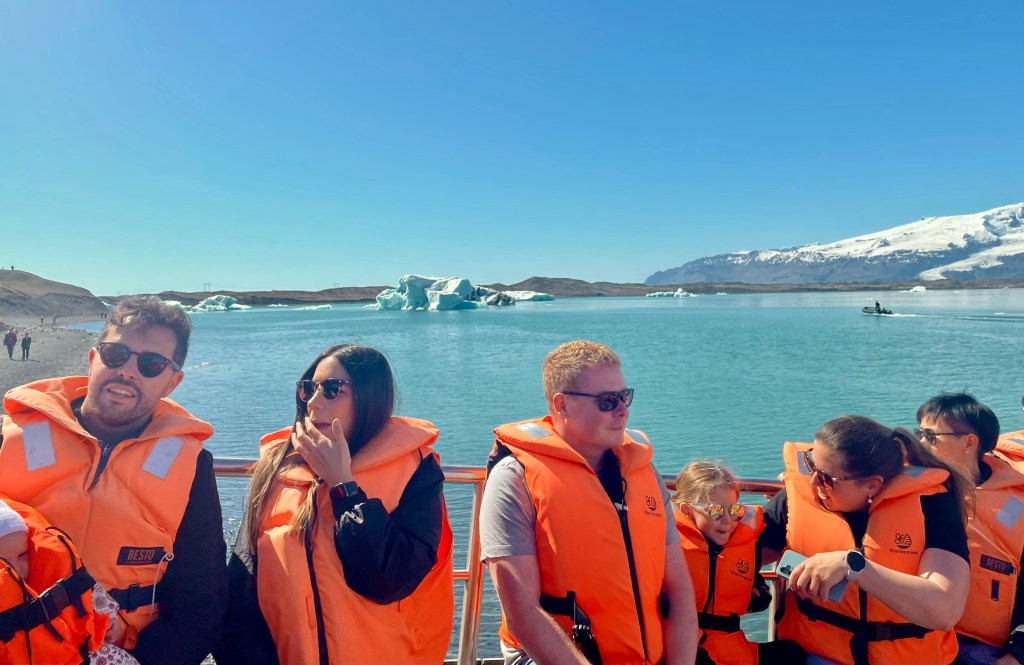
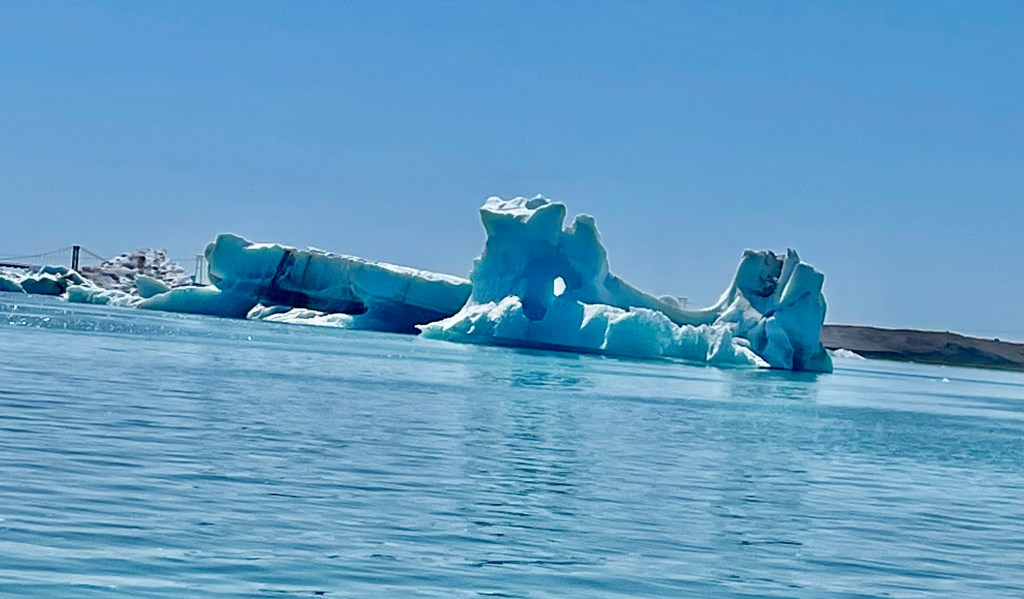
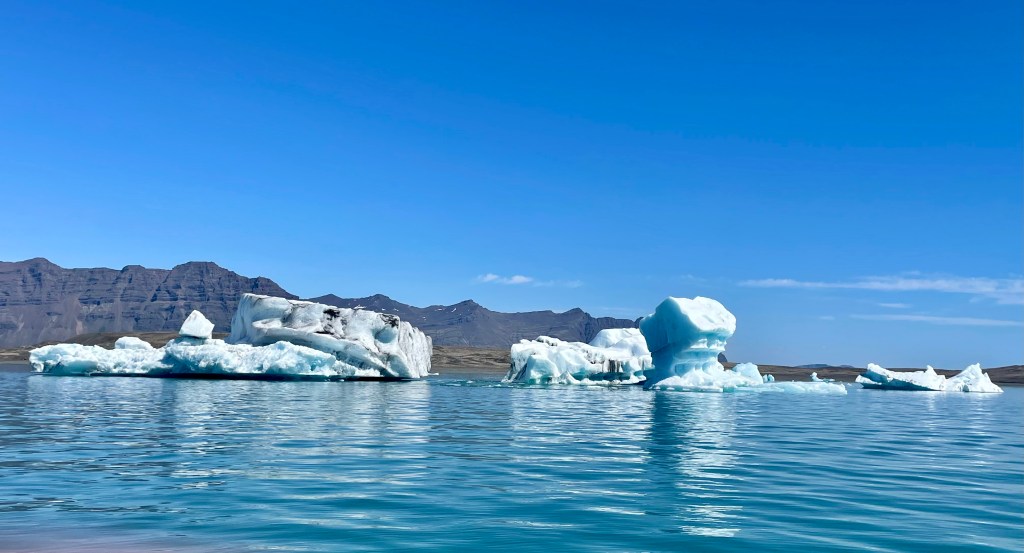
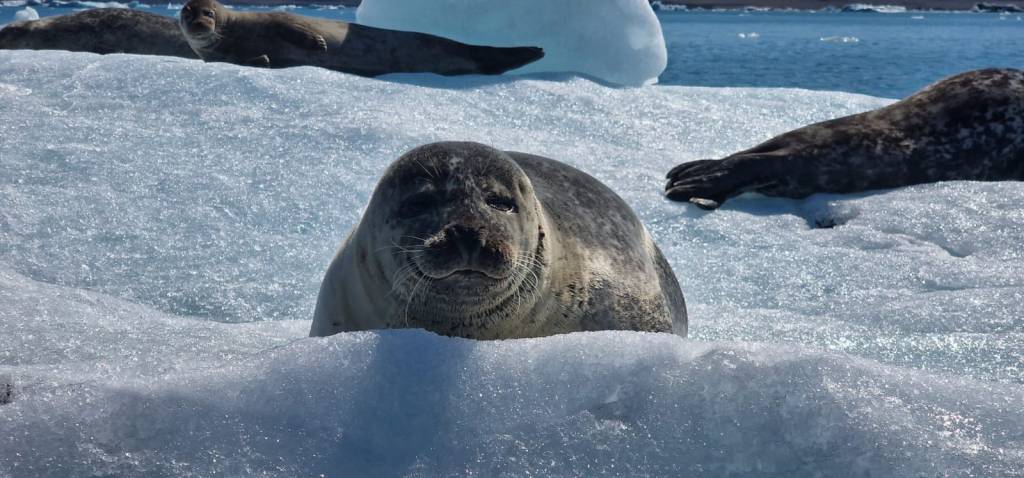
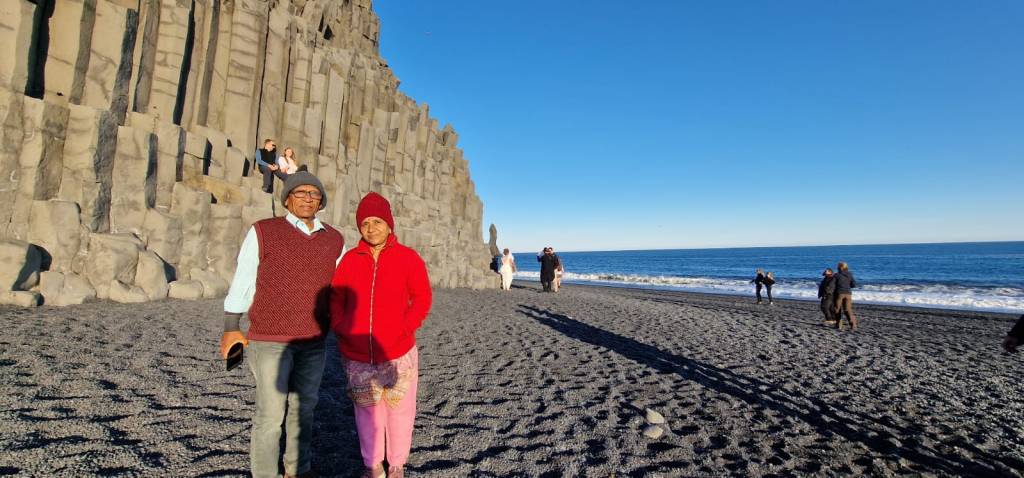
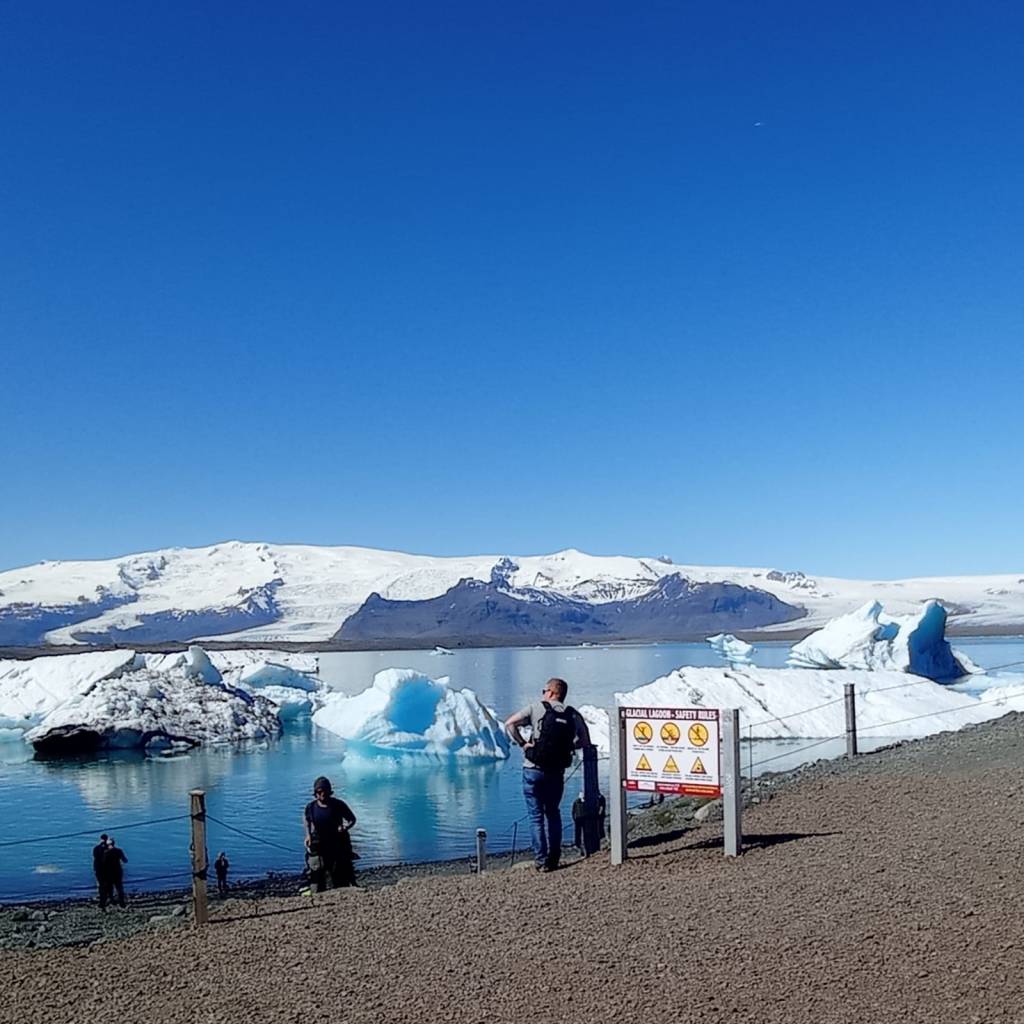
Toured the Stunning Jokulsarlon Glacial Lagoon,Sparkling Diamond Beach & an amazing Reynisfjara black stone beach in Iceland

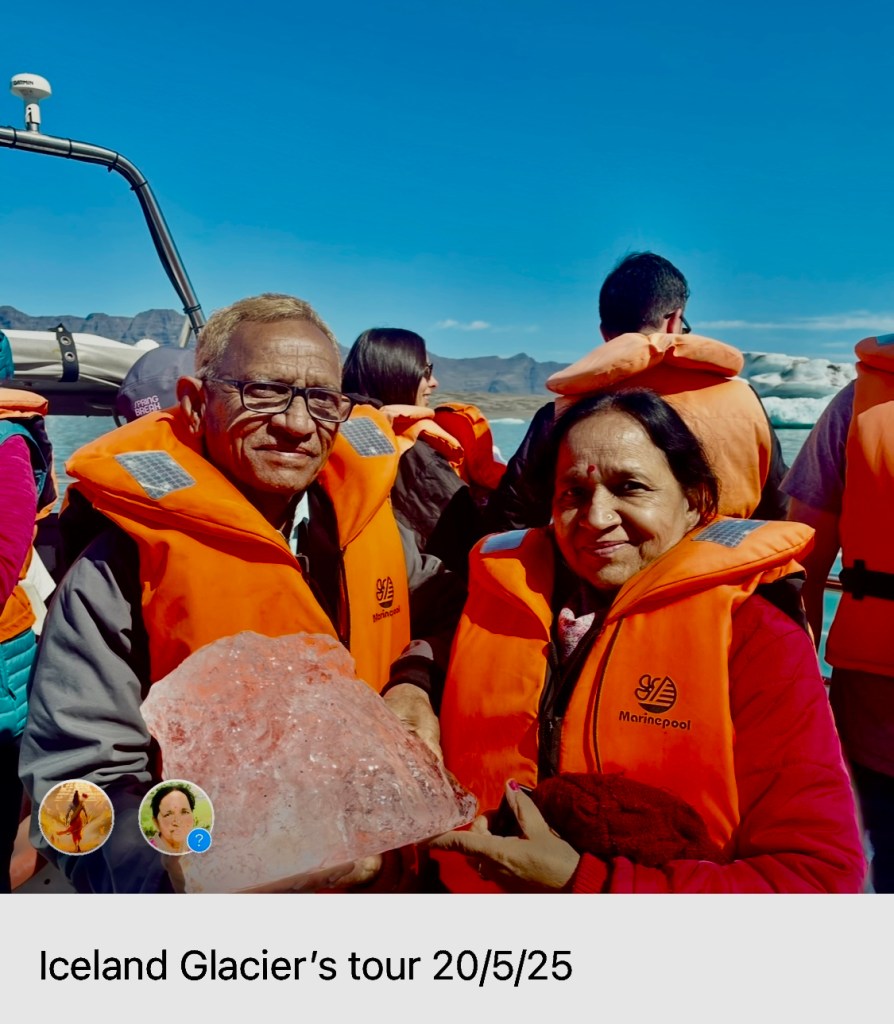
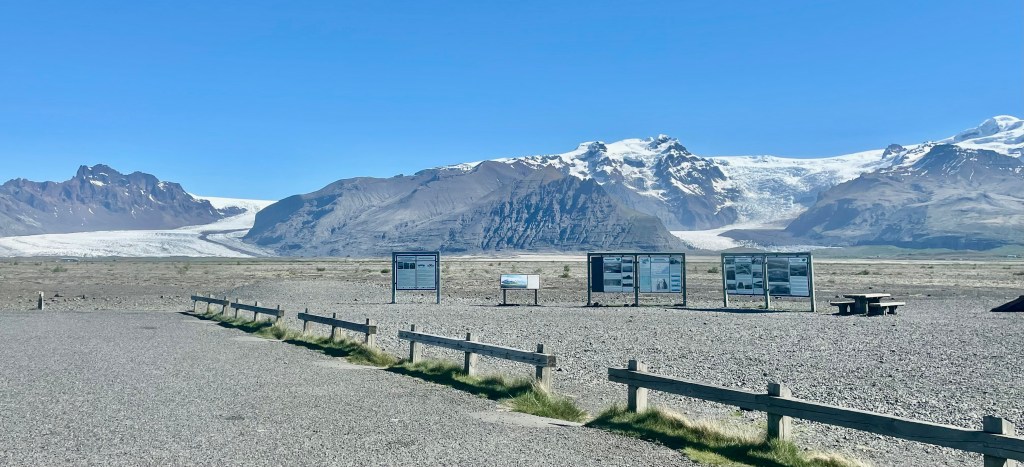
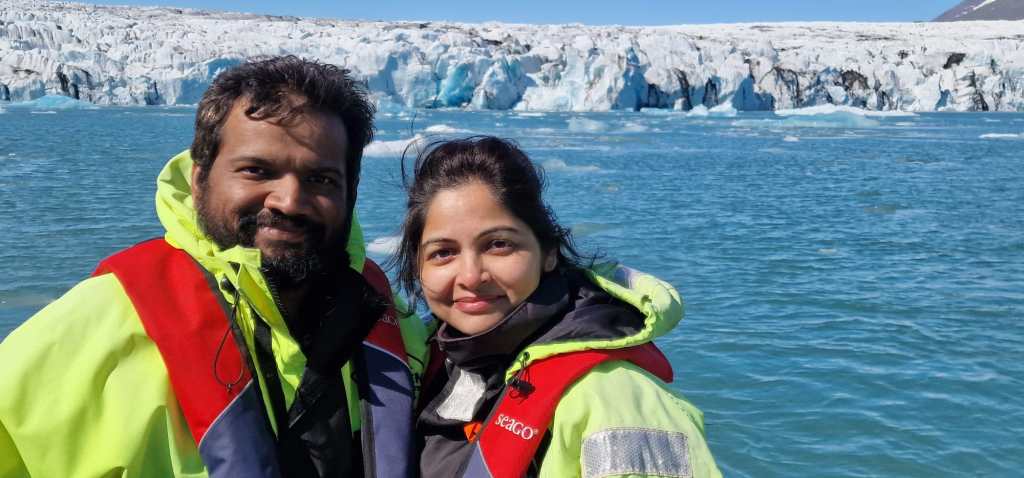
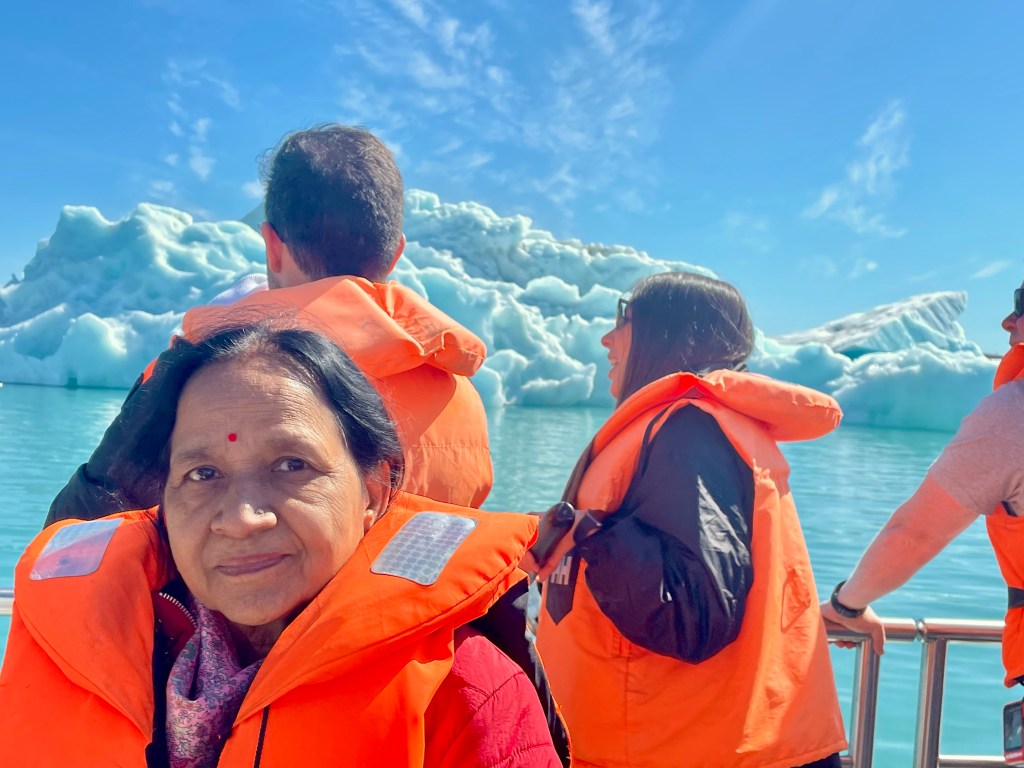
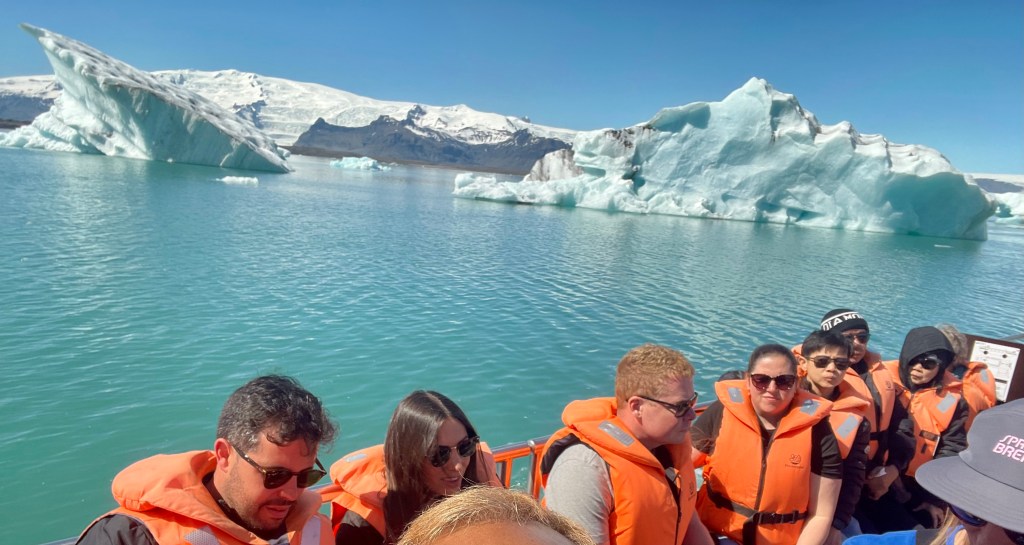
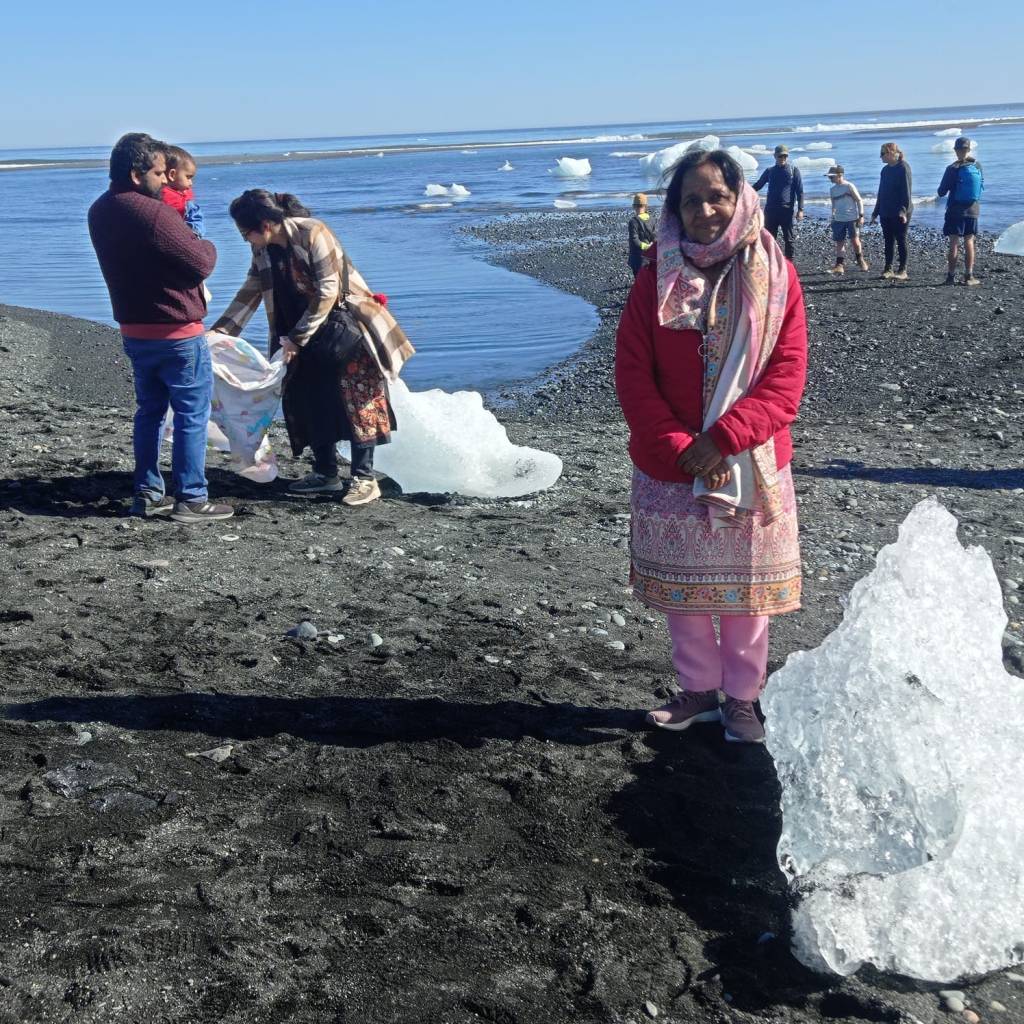
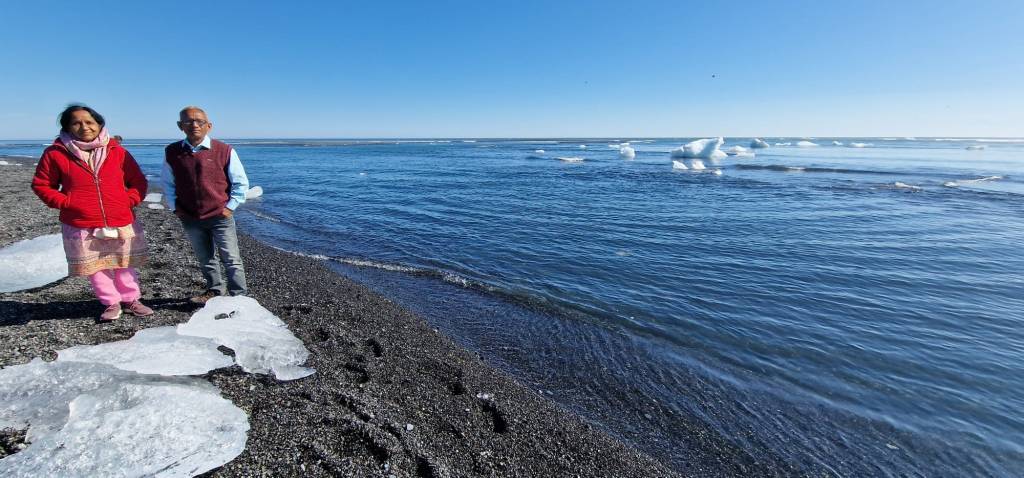
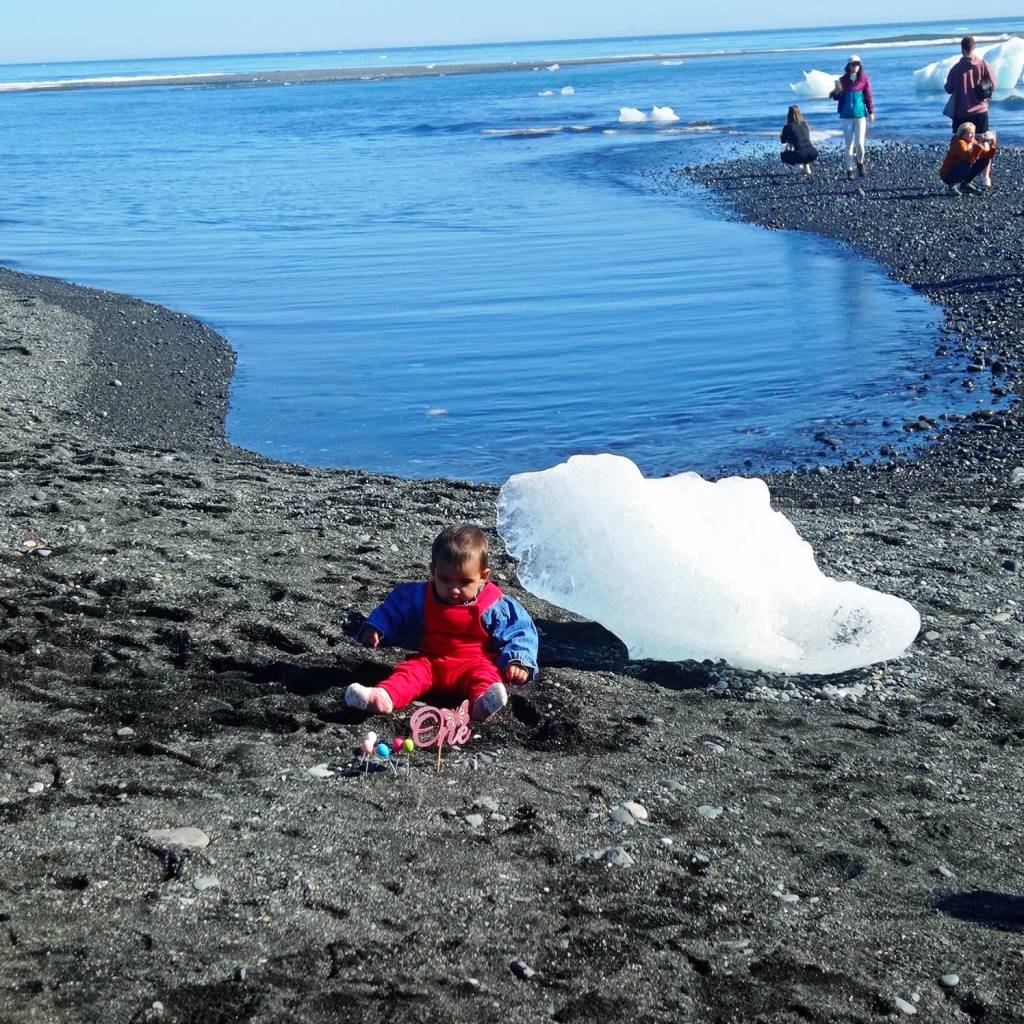
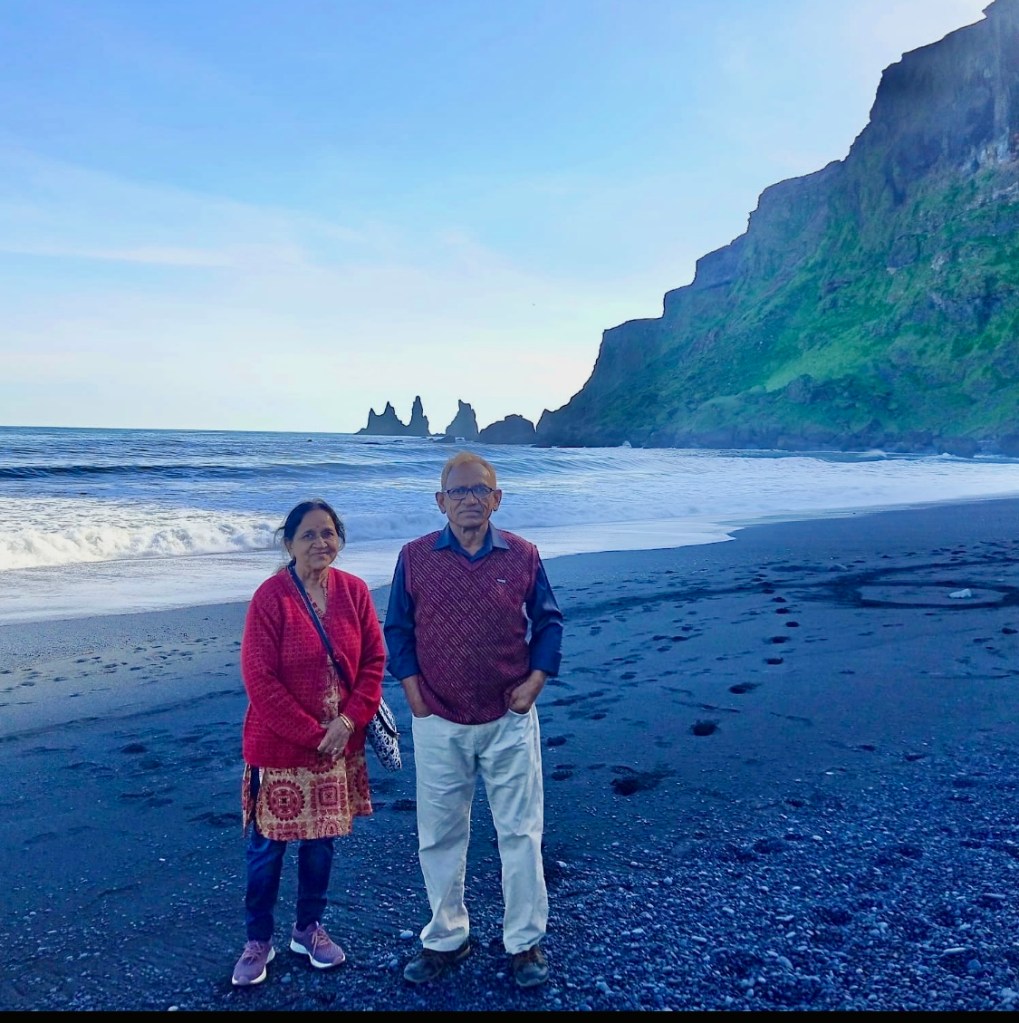
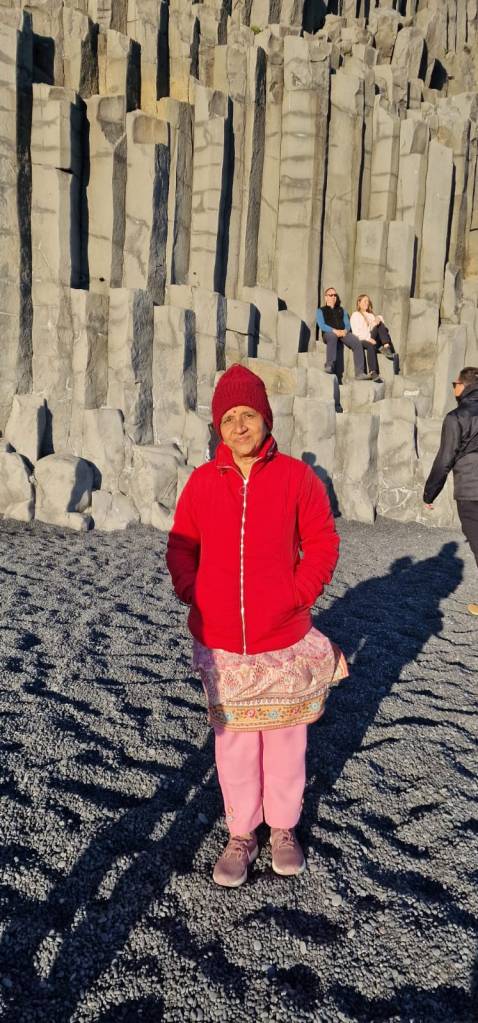
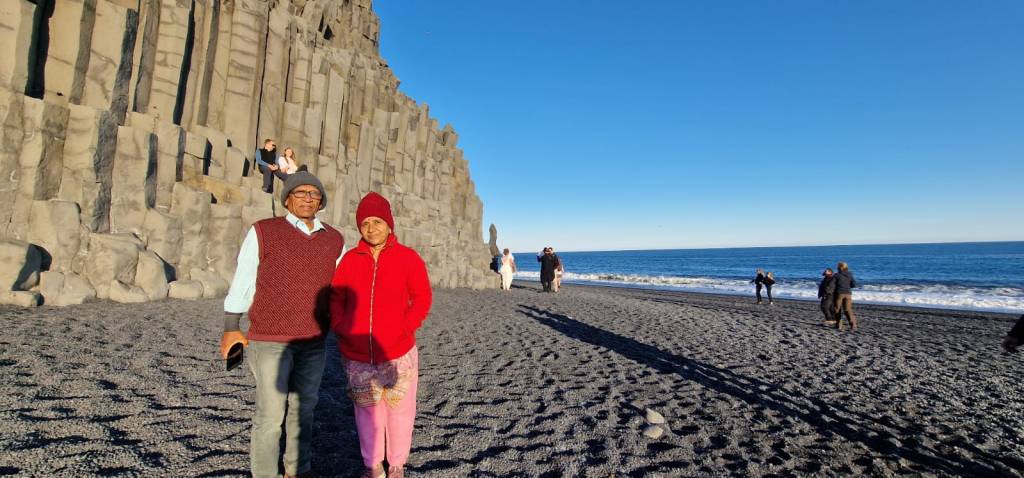
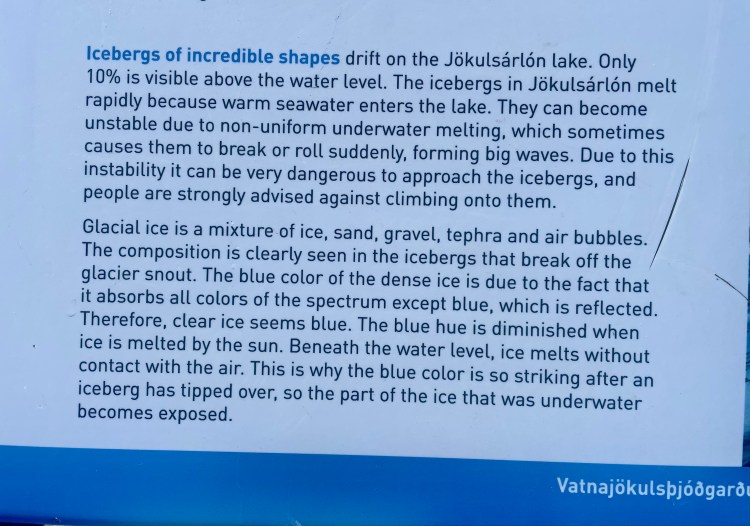
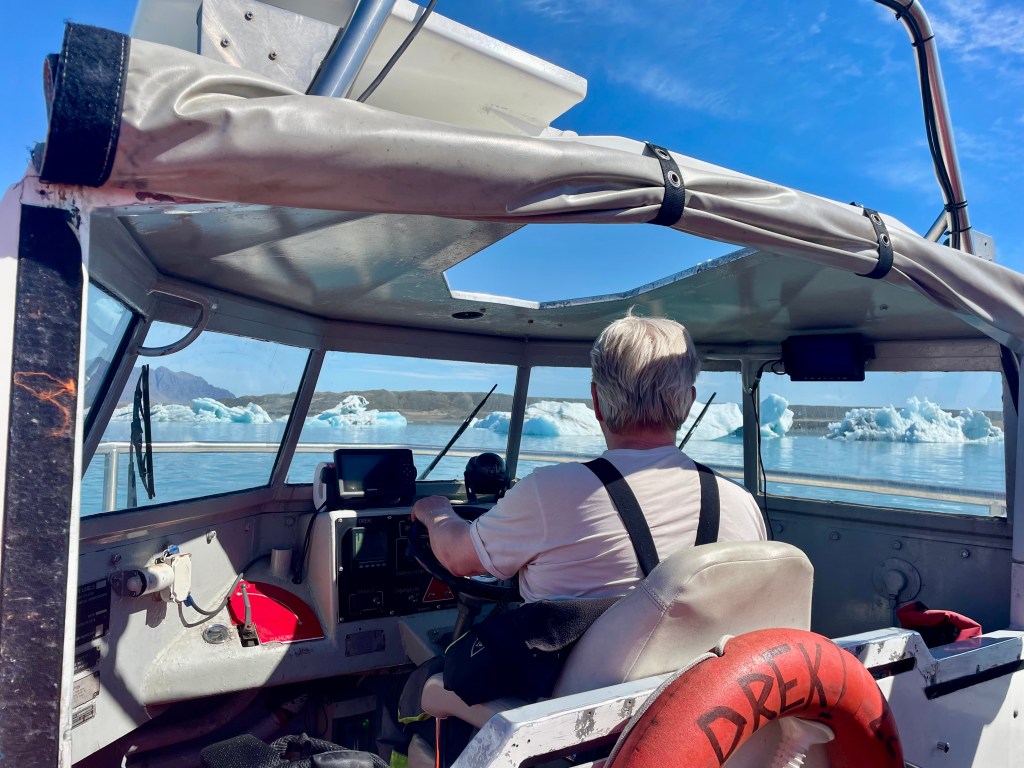
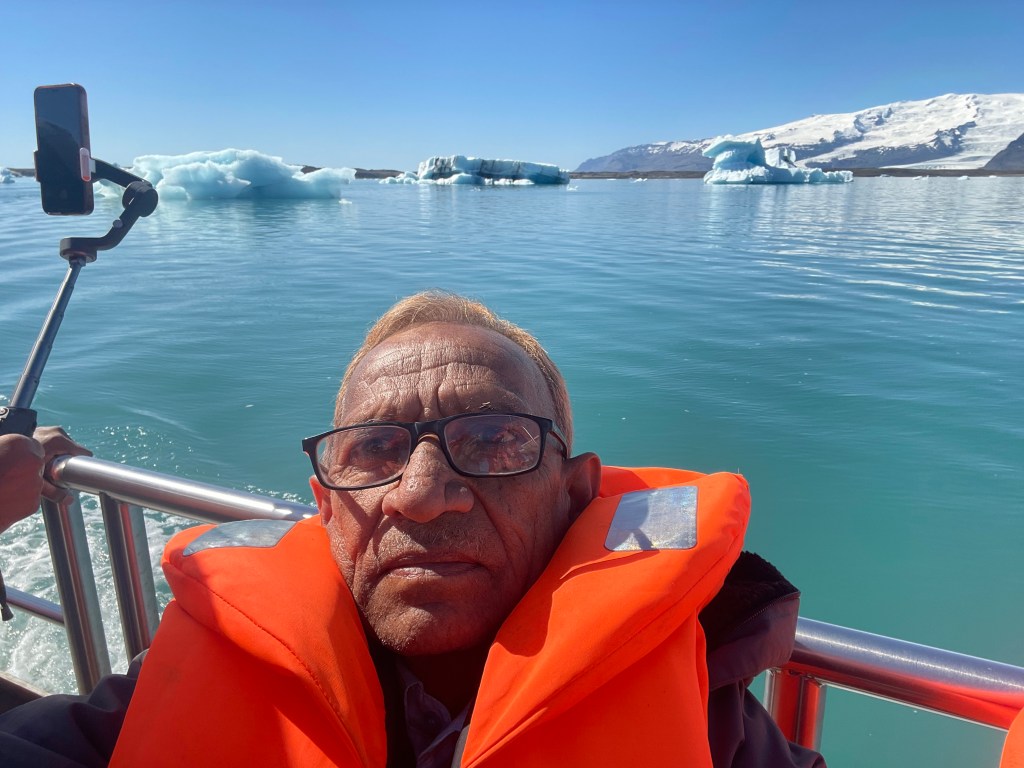
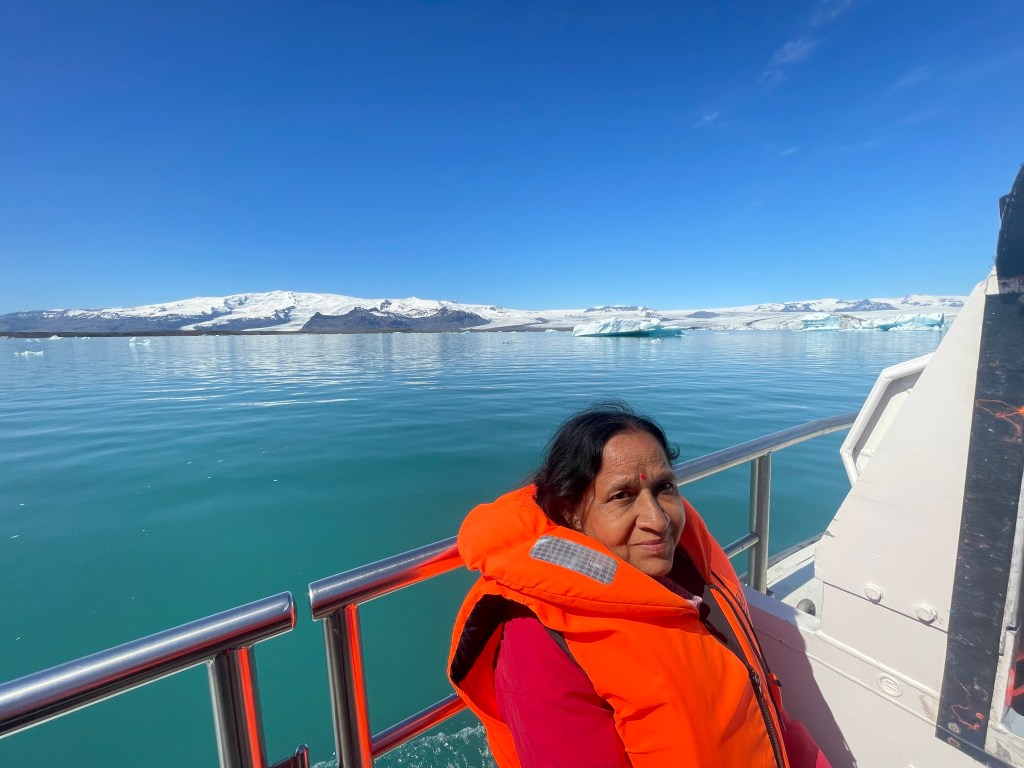
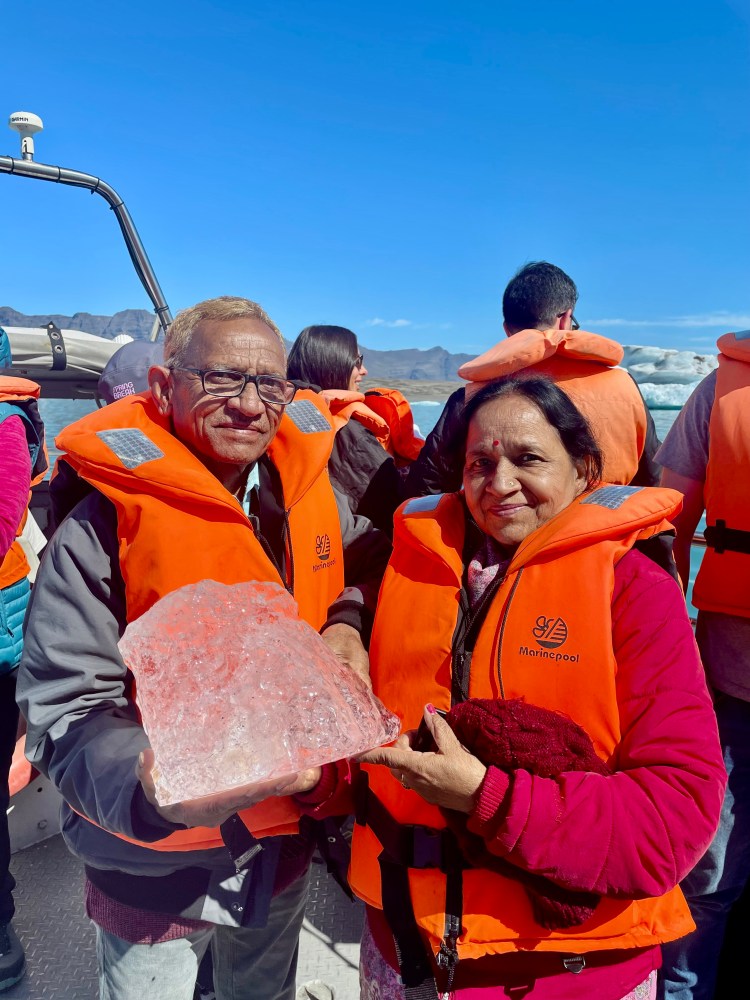
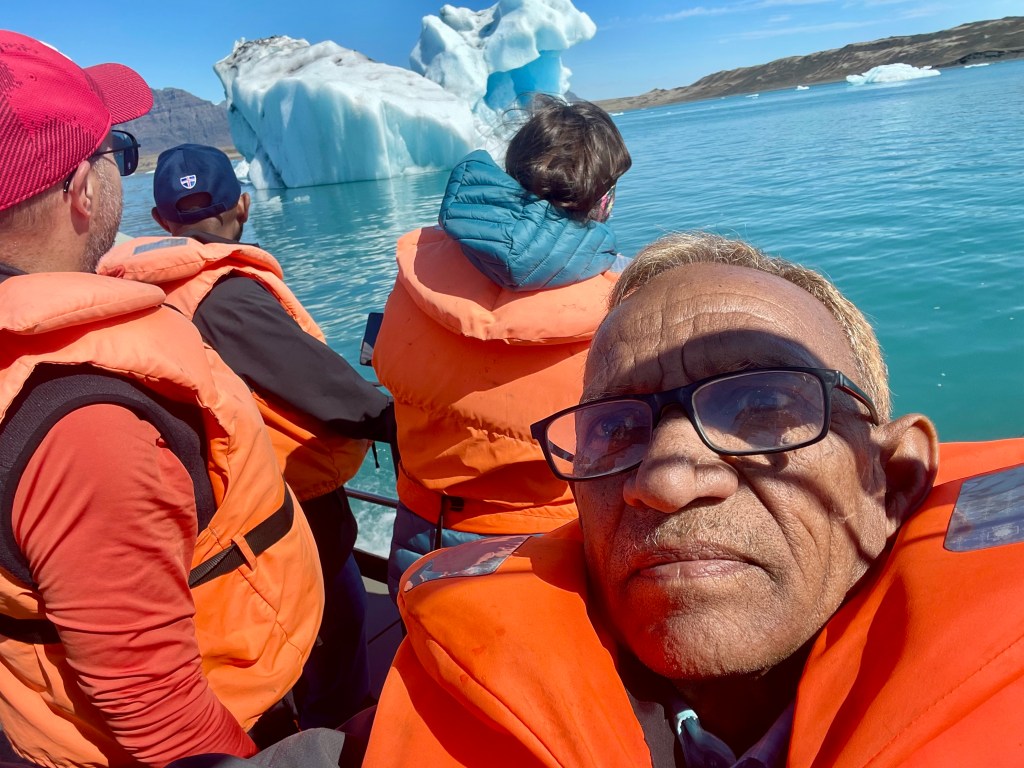
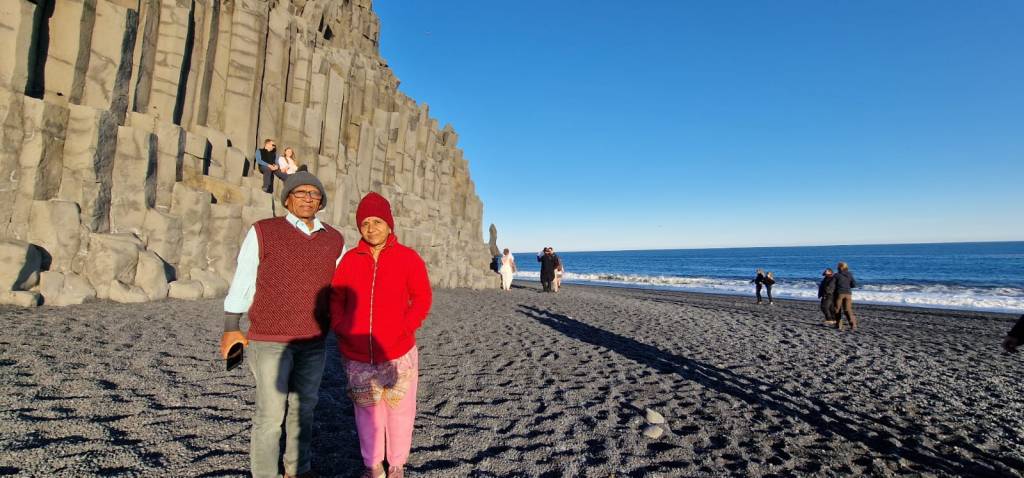
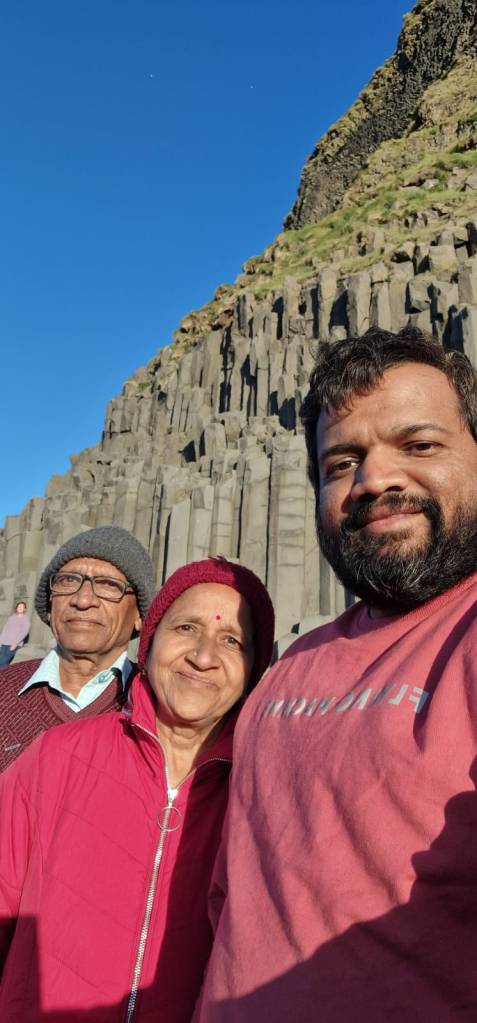
On 20/5/25 ,We all proceeded to visit the stunning glacial lagoon-the Jökulsárlón Lake,the sparkling Diamond black sand beach & the amazing Reynisfjara black stone beach in Iceland !We had a very enjoyable & enriching time of our lives.

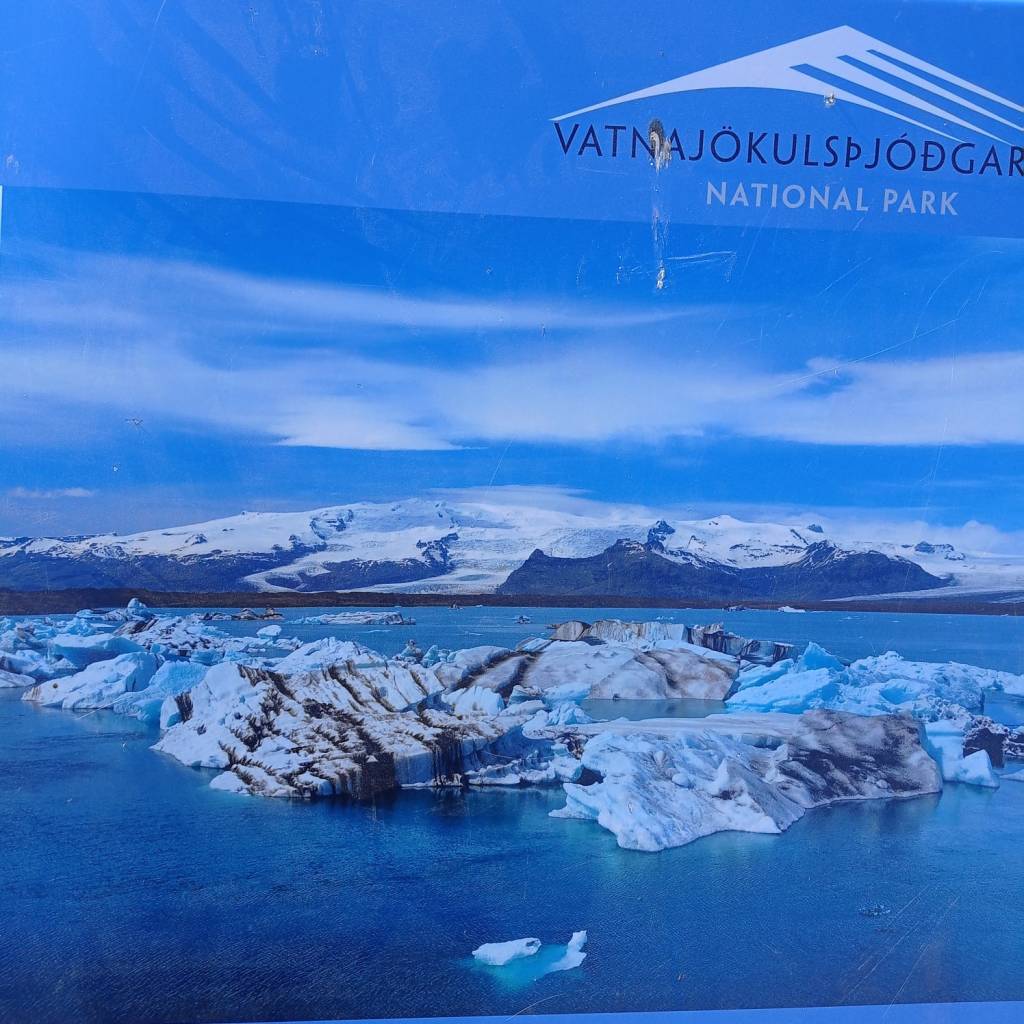
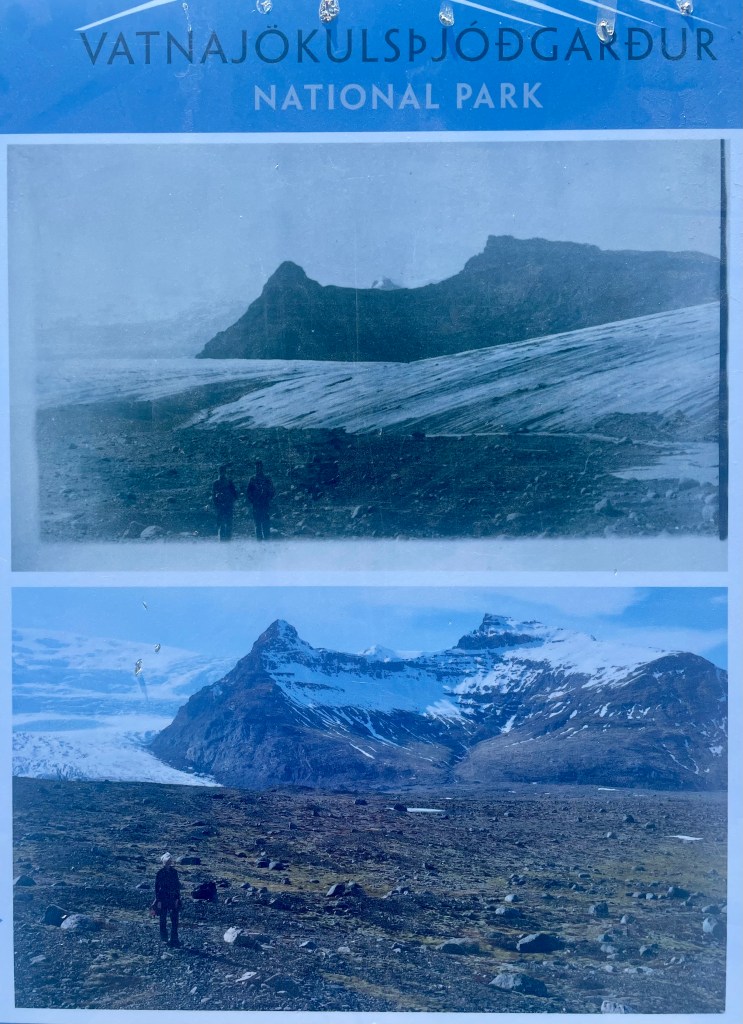
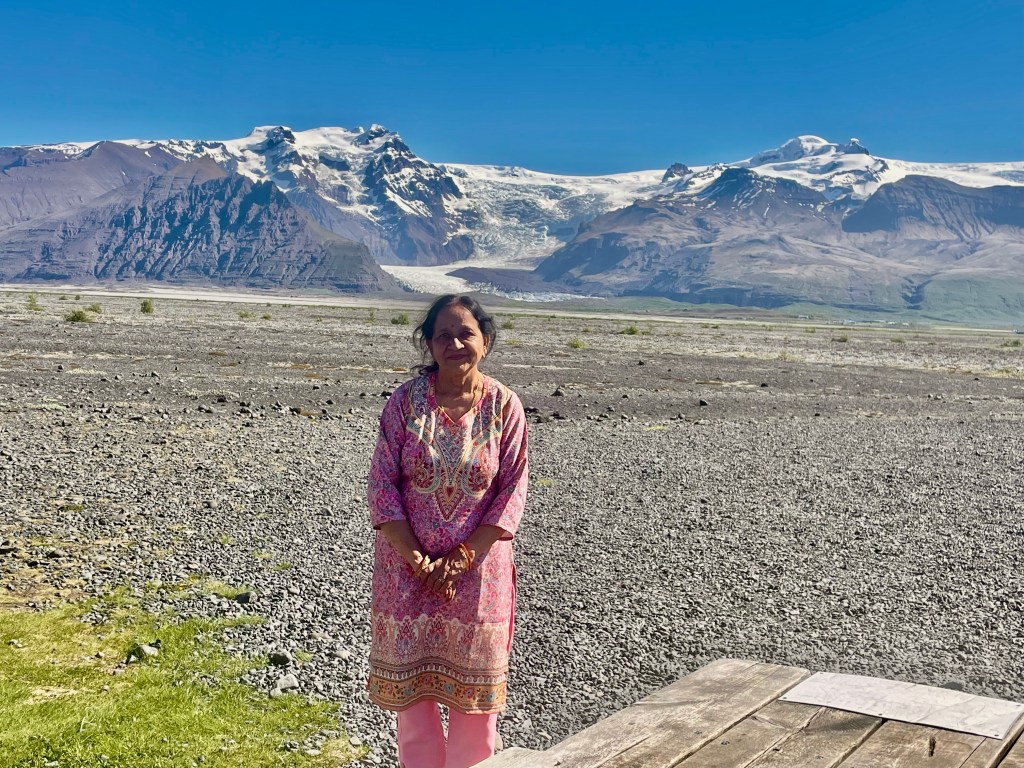
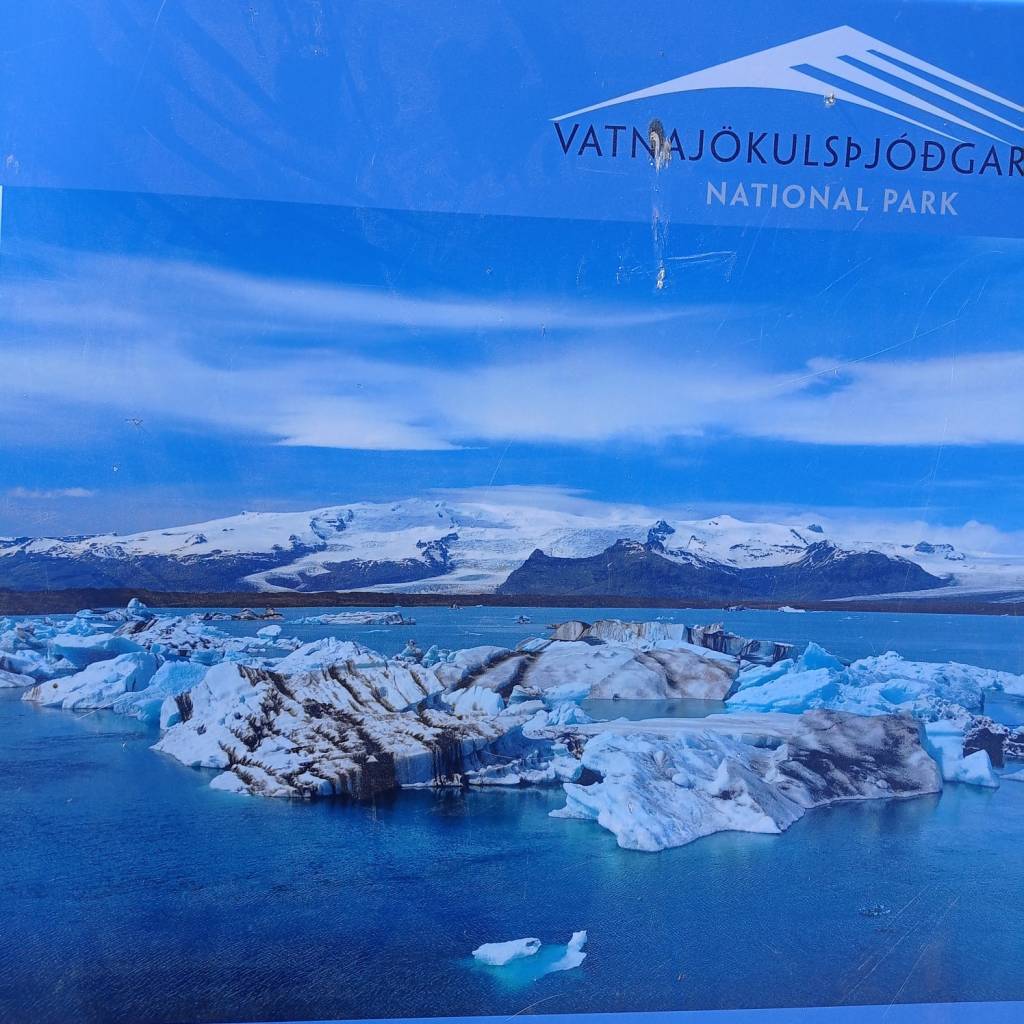
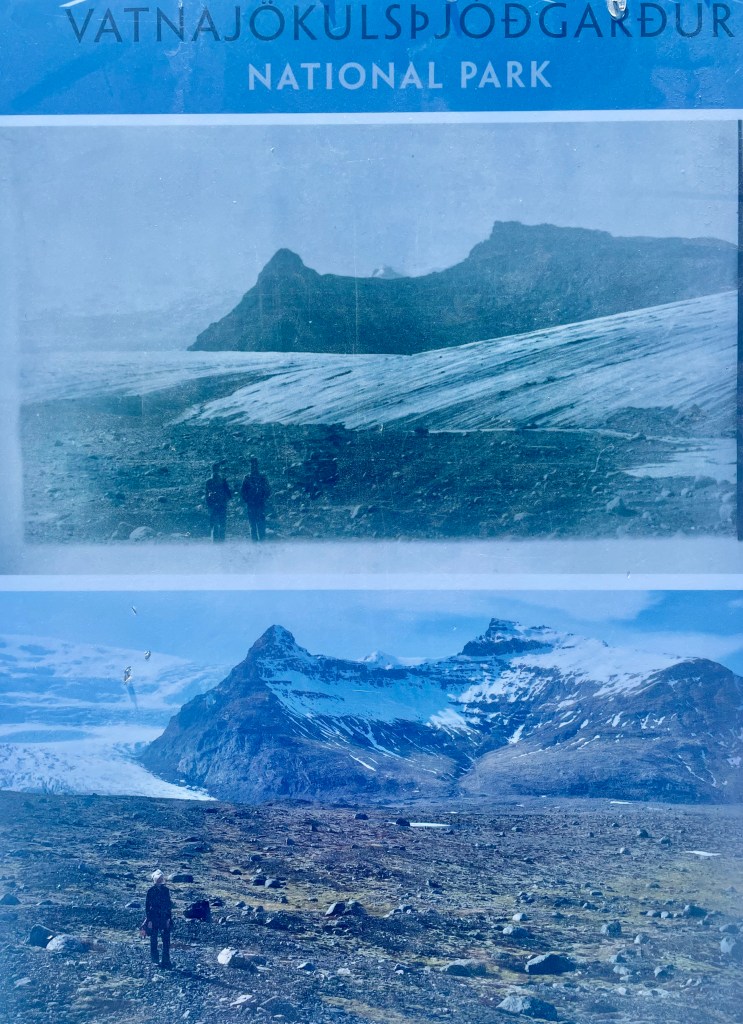
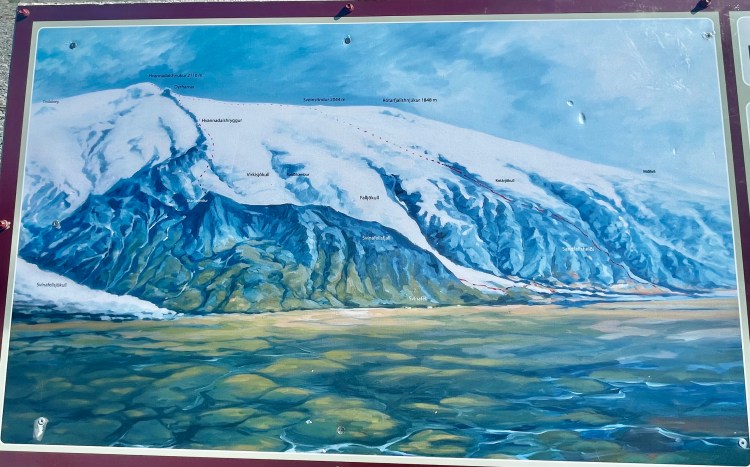
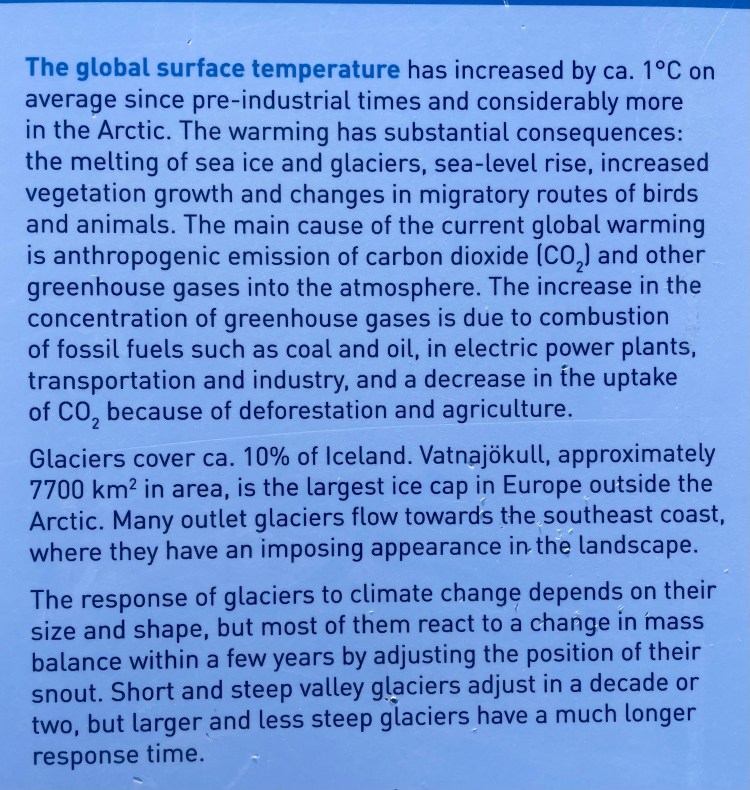
Vatnajökull National Park is the largest one in Iceland which encompasses all of Vatnajokull glacier.The unique qualities of Vatnajökull National Park are primarily its great variety of landscape features, created by the combined forces of rivers, glacial ice, and volcanic and geothermal activity. The park is Europe’s second largest national park in terms of area after Yugyd Va in the Ural Mountains of Russia. The glacier itself is the largest in Europe at 7,700 square kilometres. Vatnajökull National Park was established on 7 June 2008 !It was inscribed as a World Heritage site on 5 July 2019.

It is located at the southern extremity of the Vatnajökull  glacier and overlooking the Ring road between Hofn and Vik. It is the largest active volcano in the country, and on the summit crater’s north-western rim is Hvannadalshnúkur , the highest peak in Iceland at 2,110 metres.

FACTS ABOUT Mt.Hvannadalshnúkur & PRE-REQUISITE PREPARATIONS BEFORE GOING ON TREK TO THE SUMMIT
HIKERS TRAILS TO THE TOP OF THE Mt. .Hvannadalshnúkur

It is a pyramidal peak on the northwestern rim of the summit crater of the Öræfajökull volcano in Vatnajökull National Park, Iceland.Its summit is the highest point & the only Ultra-prominent peak in the country.There are several well known hiking paths up the Mt.Hvannadalshnúkur.The adjoining photo show the trails of the paths taken by hikers to the top.

A detailed look at Diamond Beach its Location and Formation:

  • 1)Southeast Iceland:Its located on the south coast of Iceland, near the Jökulsárlón Glacier Lagoon. 2)Black Sand Beach:The beach itself is composed of black volcanic sand, created by the breakdown of lava. 3)Icebergs:Icebergs from the lagoon, which is fed by glaciers, drift out to sea and eventually wash ashore on the beach. 
  • 1)Glistening Ice: The nickname “Diamond Beach” comes from the dazzling, almost diamond-like appearance of the icebergs against the dark sand.2)Photography and Wildlife:The unique scenery & wildlife viewing opportunities make Diamond Beach a popular spot for photographers and the nature lovers. 
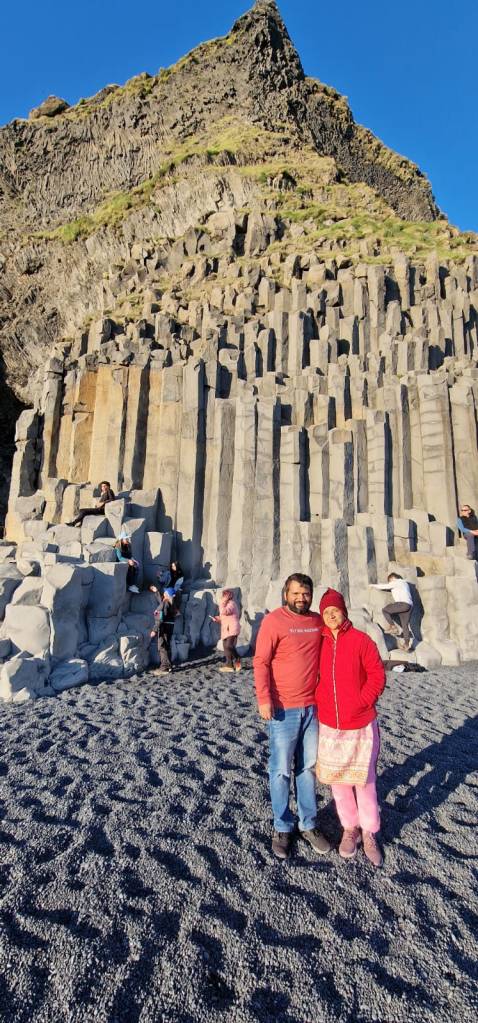
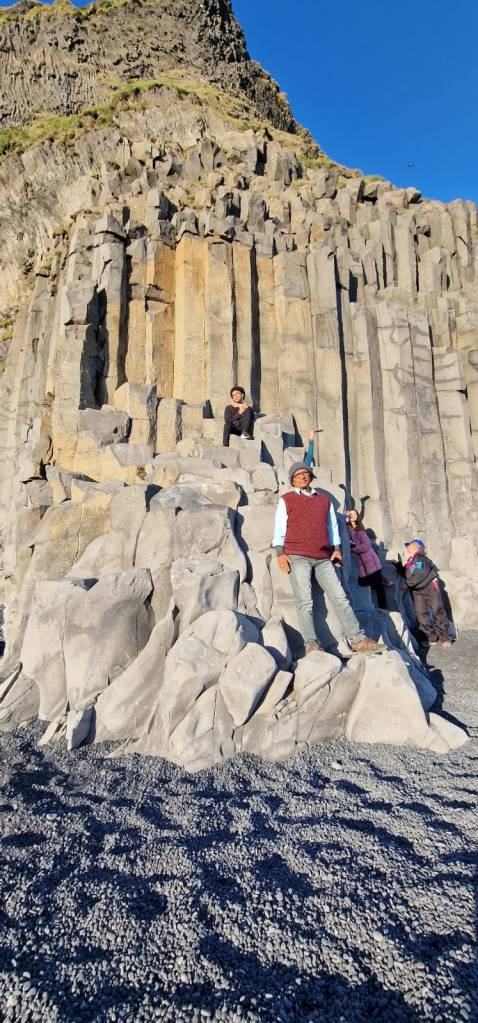
  • 1)Black Sand: The beach is famous for its dark, black sand, formed from volcanic activity. 2)Basalt Columns:Unique basalt columns line the cliffs,creating a dramatic backdrop.3)Sea Stacks: The Reynisdrangar sea stacks rise dramatically out of the ocean, adding to the beach’s unique character. 4)Power Waves: The Reynisfjara is known for its strong and unpredictable waves, making it a beautiful but potentially dangerous place to visit, especially during high tide. 5)Puffins: During the summer months, the cliffs are home to puffins, which nest on the cliffs and add to the wildlife experience. 6)Accessibility: Reynisfjara is easily accessible from Reykjavik and is a popular stop on the South Coast tour.

Safety concerns & Safety measures :

Conditions on the beach vary greatly and can change quickly. Reynisfjara beach attracts large numbers of visitors year-round due to its striking black sand and dramatic basalt sea stacks, but it is also the site of unpredictable sneaker waves that can surge far inland without warning. Because many tourists focus on photography and overlook hazard signage, these powerful waves—generated by the convergence of swell trains over a submerged offshore ledge—have led to at least twelve serious emergency rescues and five fatalities since 2007.

In response to the ongoing risk, Icelandic authorities and local stakeholders have proposed and begun implementing a series of interventions. The beach has a warning system with condition-dependent safety zones for cautioning visitors during hazardous conditions, such as sneaker waves.  This system was installed following fatal accidents.

Please note that some information I have collected from Wikkipaedia to which I am very grateful.

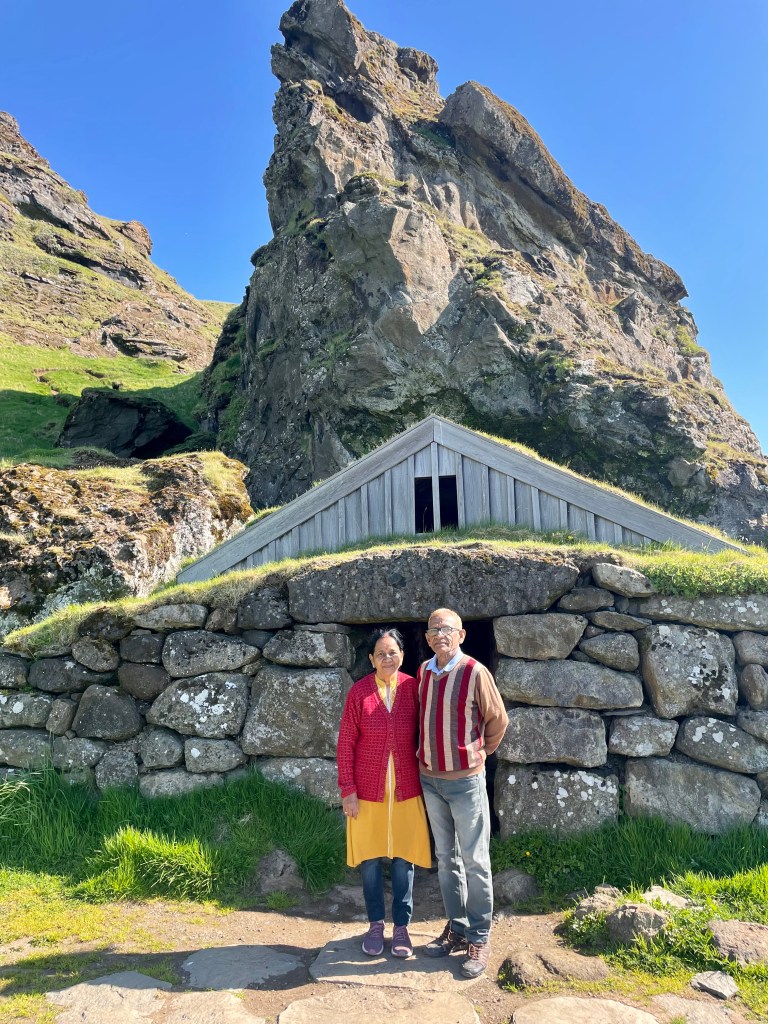
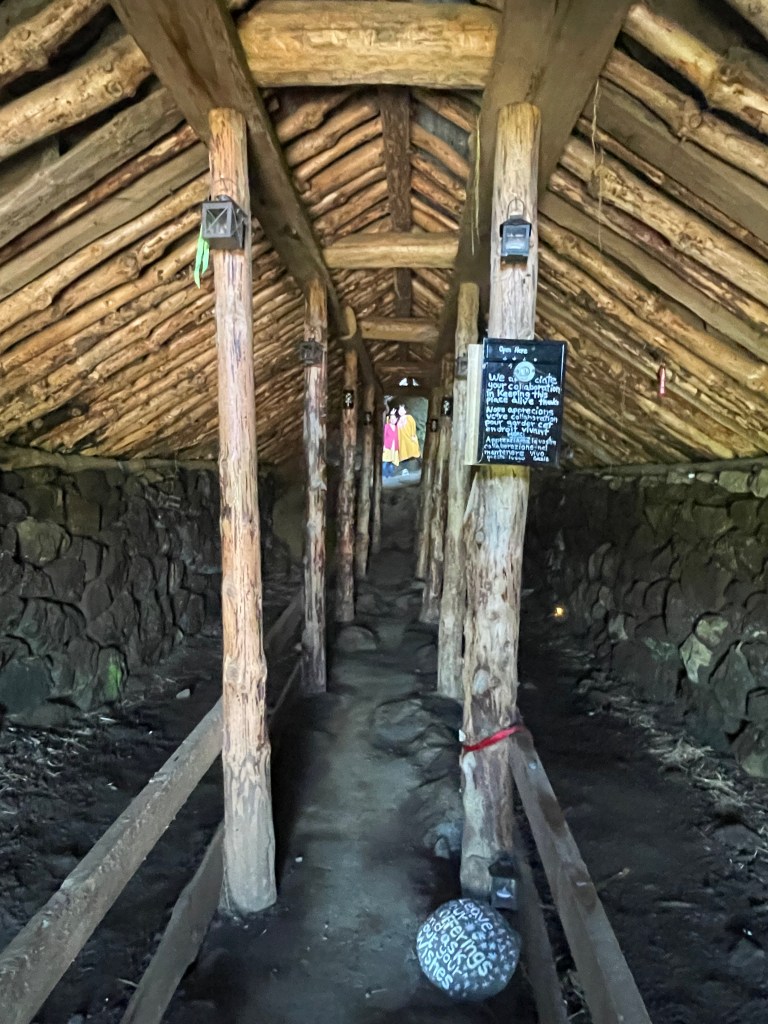
Celebrated Grandaughter Tarinni’s Birthday, Visited the Spectacular Waterfalls & magical man-made Rutshellir Caves of Iceland

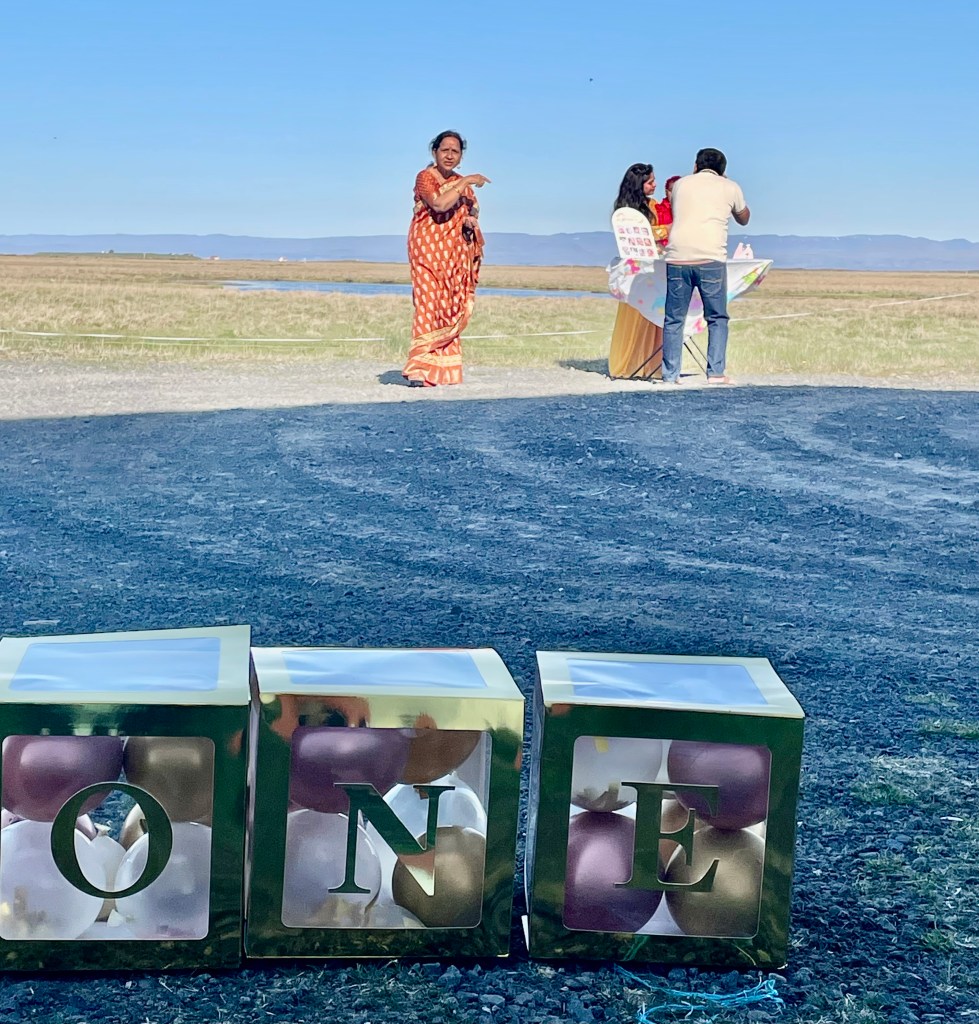
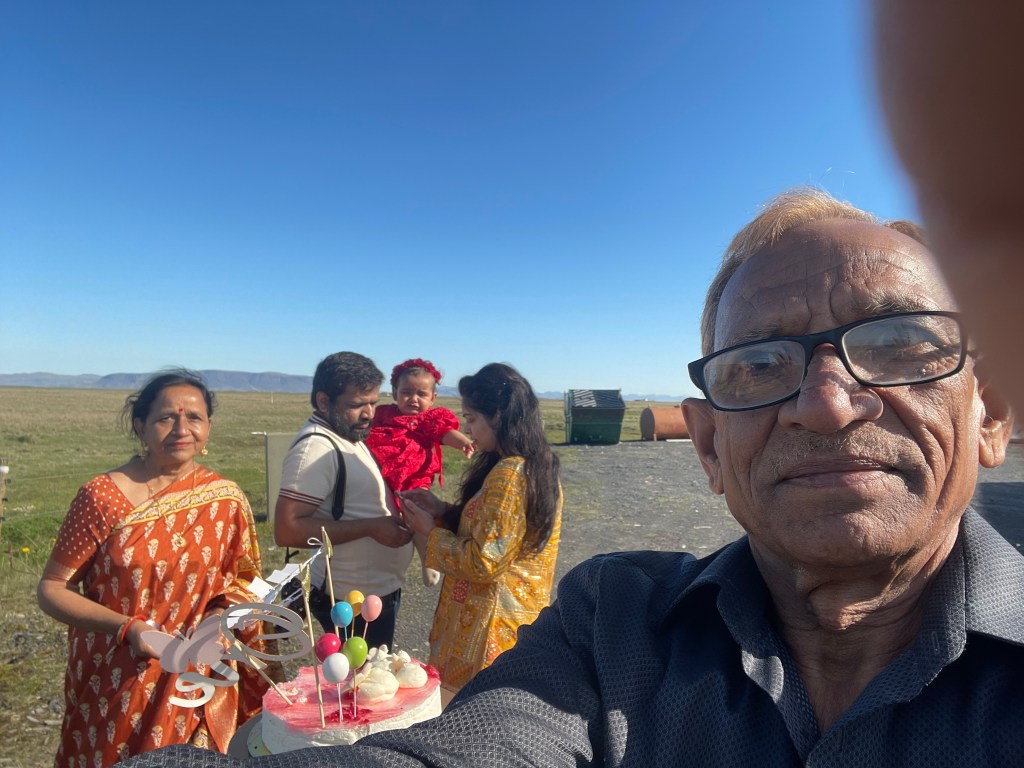
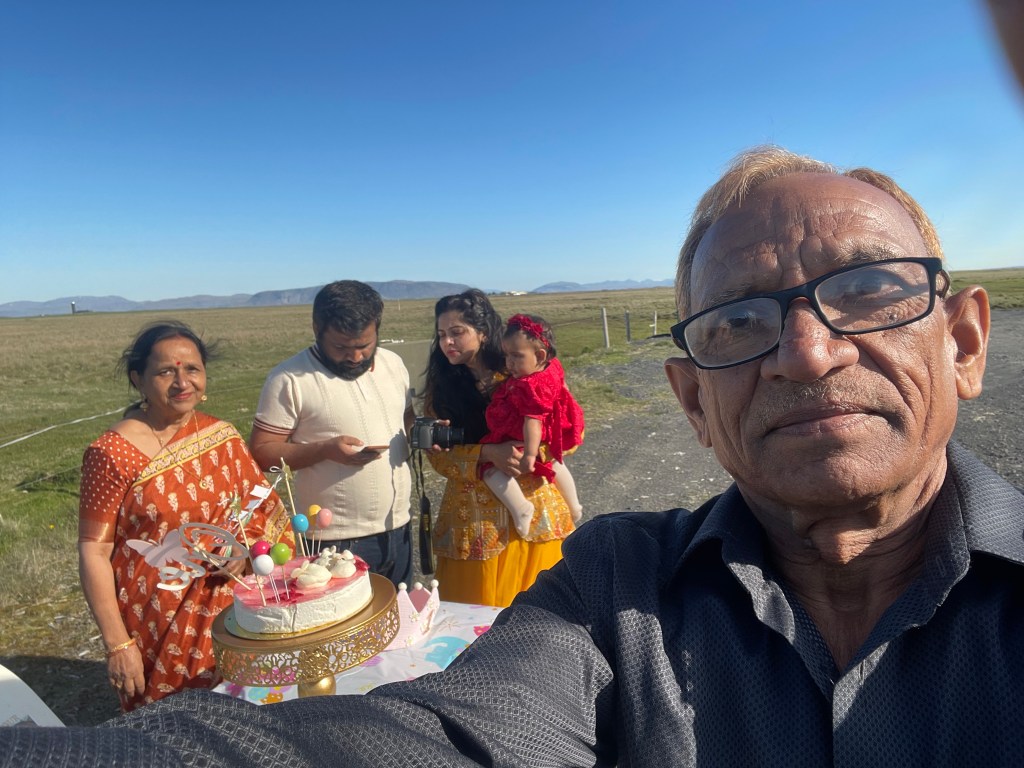
We had made all requisite preparations the previous evening for Tarinni’s birthday celebration like procuring a nice cake ,blowing baloons ,setting Candles on the table beside the cake,etc !Birthday Celebrations arranged in the open with cool refreshing breeze blowing!We kept the Celebration very simple with only 5 of us participants!Of course we connected with our relatives & few friends in India through Video Conferencing! Cake cutting ceremony was performed & the little cute Tarinni was showered with hearty wishes on the occasion !After the ceremony ,we started for the visit of Waterfalls.

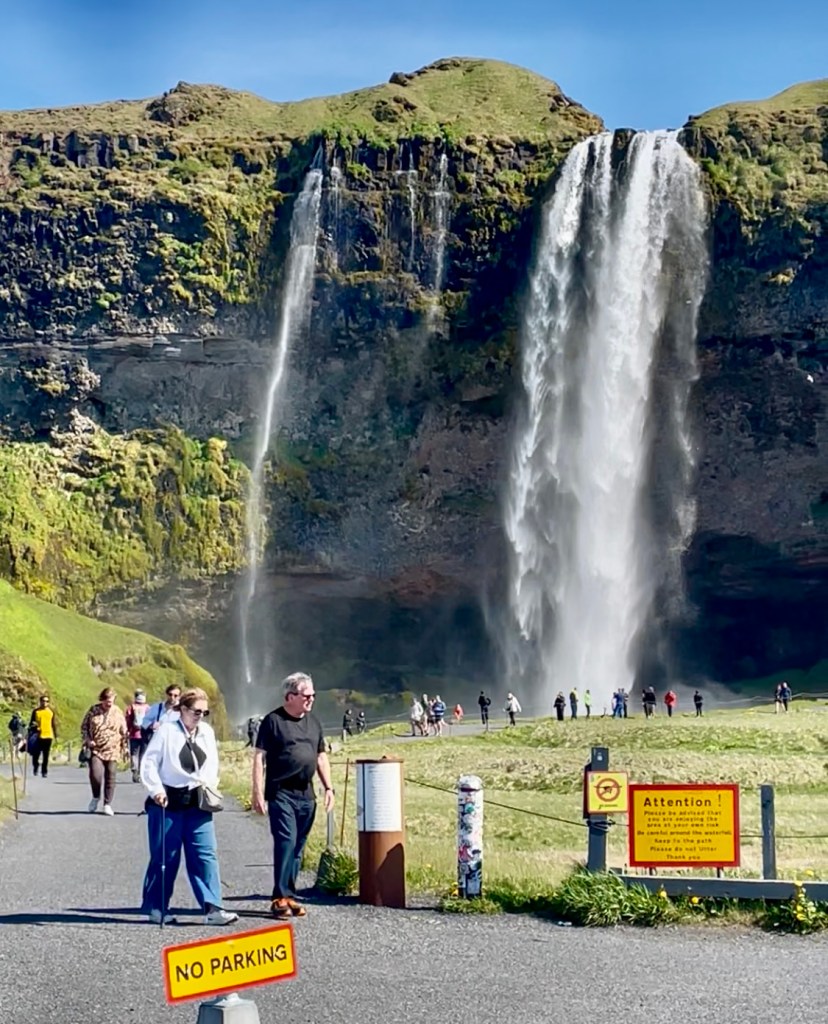
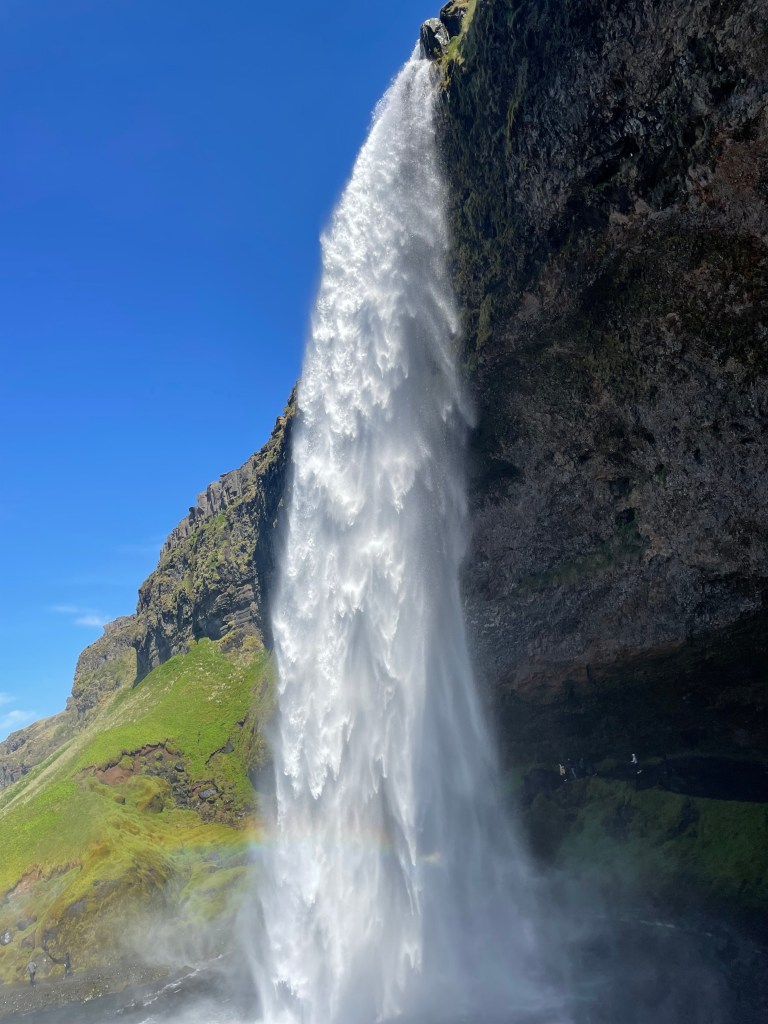
We visited the following three waterfalls :

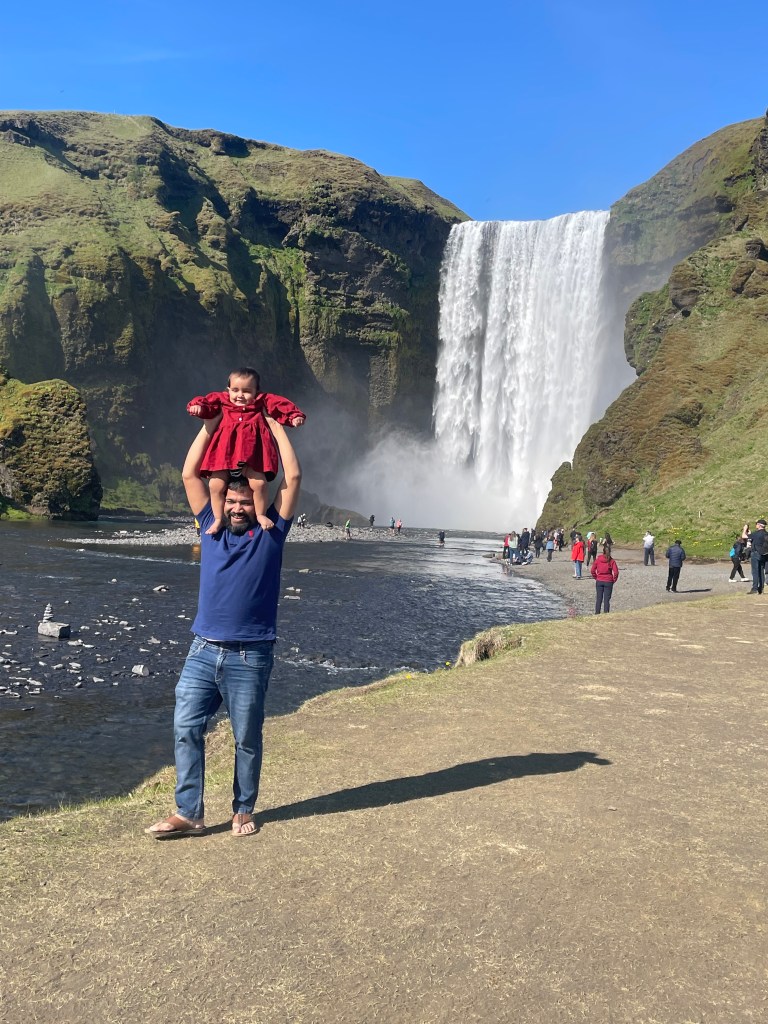
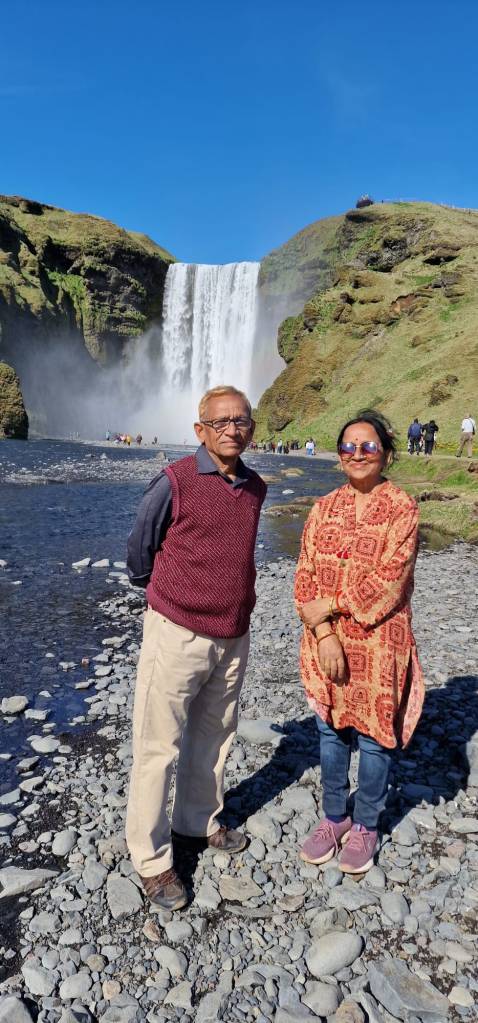
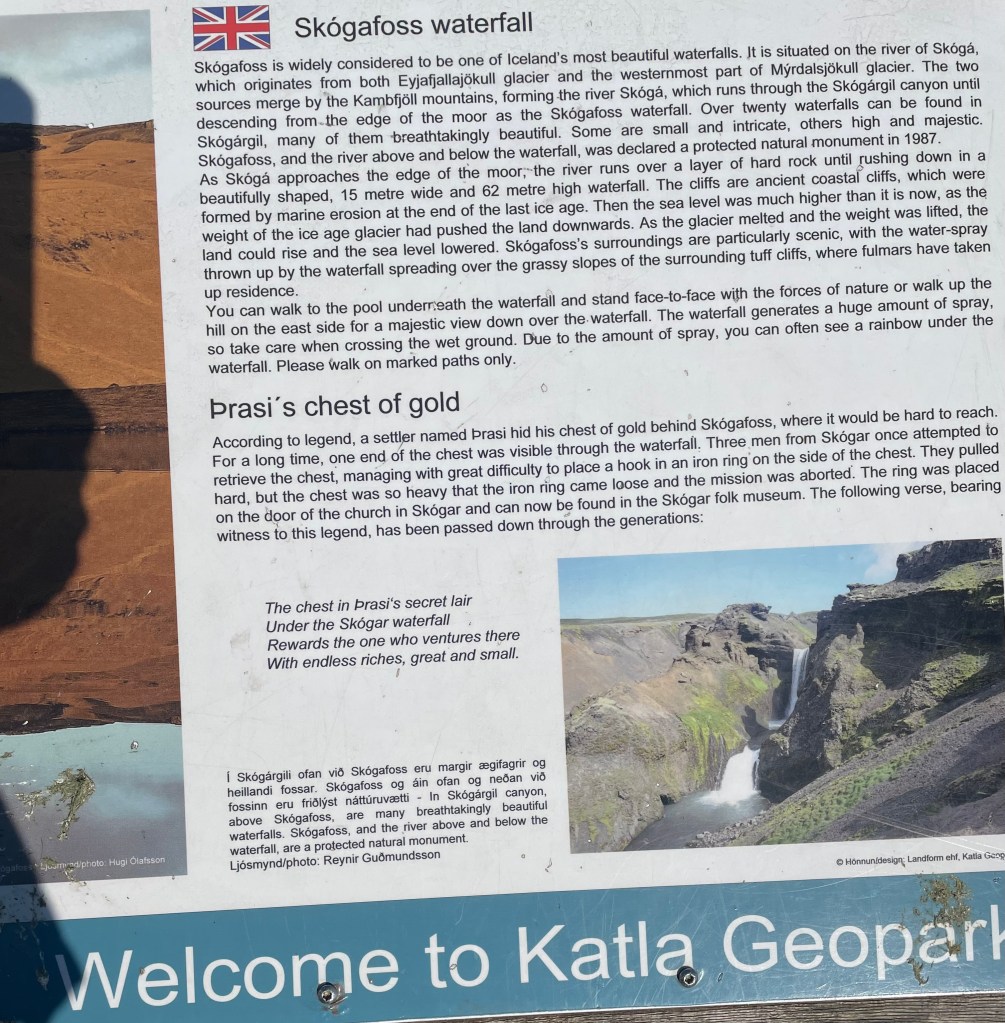
B)SKOGAFOSS WATERFALLS: Its one of the most beautiful waterfalls of Iceland.There is a winding path leading to the top of the waterfall with a watchtower enabling a close look at the begining point of the waterfall.The scene below was quite mesmerising with surrounding areas full of panaromic views prompting us for a extended photo session.

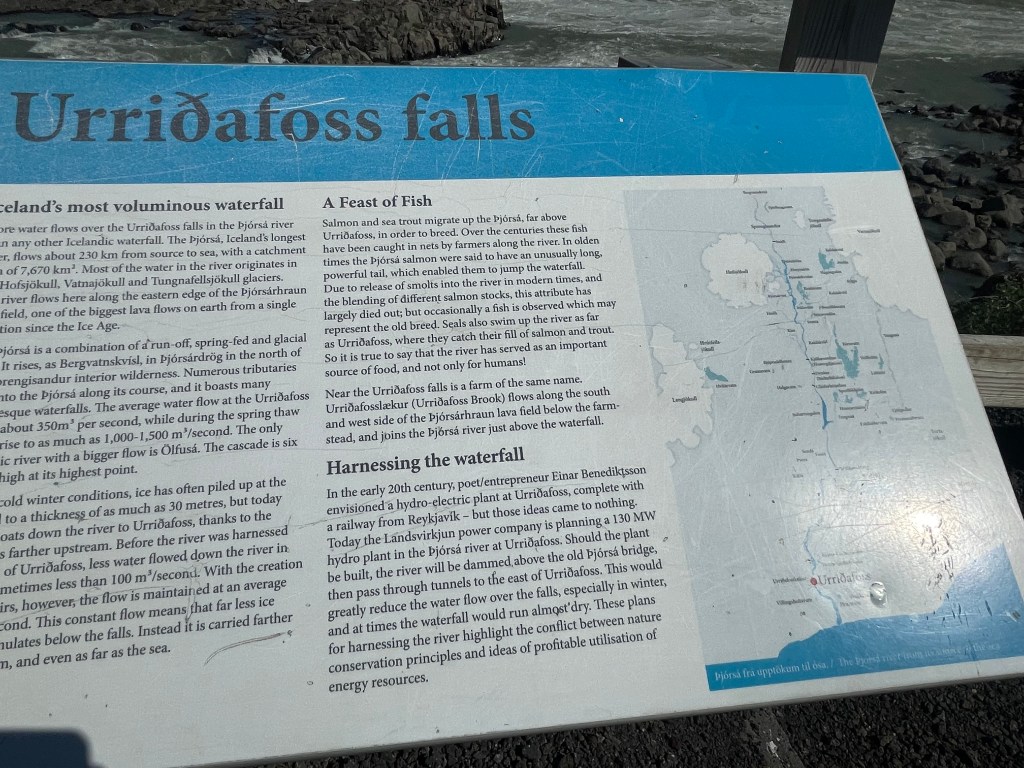
C)URRIDAFOSS WATERFALLS : Urriðafoss is a waterfall in the Þjórsá River. Þjórsá is Iceland’s longest river, 230 km, and Urriðafoss is the most voluminous waterfall in the country. This mighty river drops down (360 m3/sec) by the edge of the Þjórsárhraun lava field in beautiful and serene surroundings. Þjórsárhraun lava field is the result of the greatest lava flow on earth since the Ice Age. It is located right off highway 1.

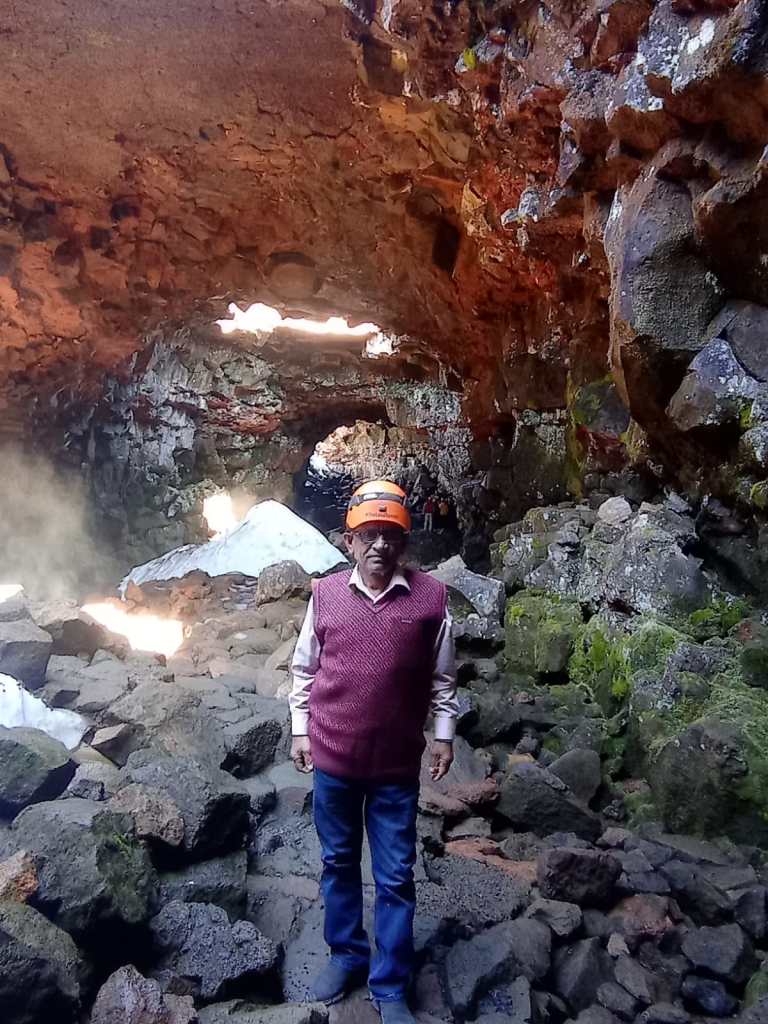
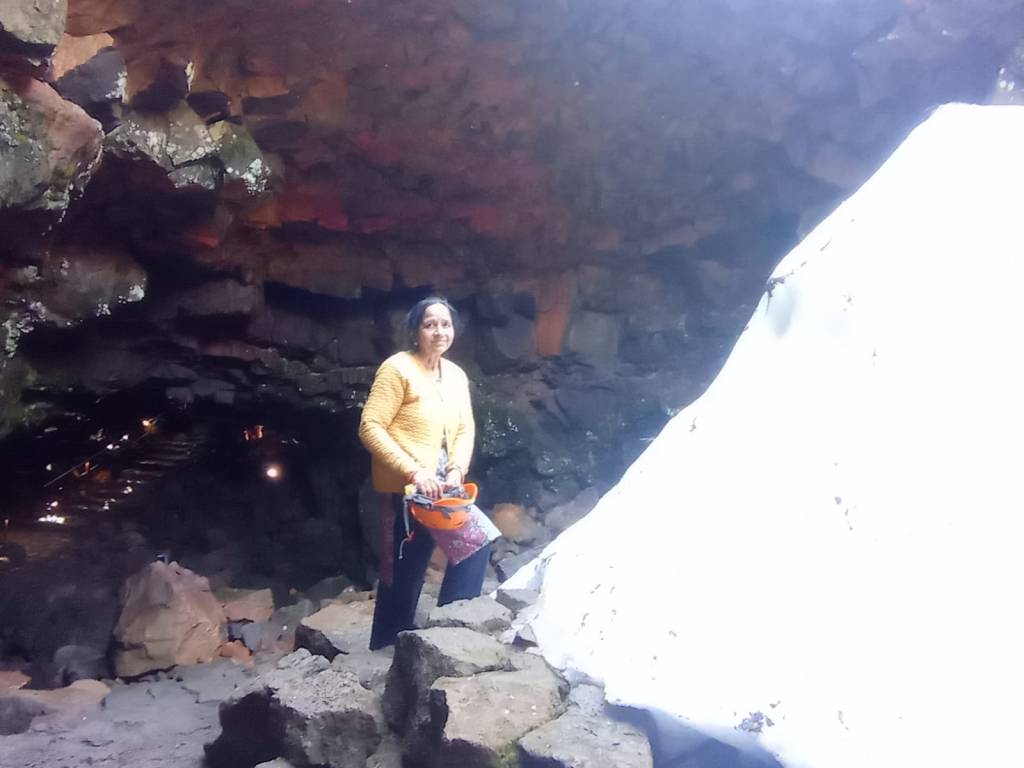
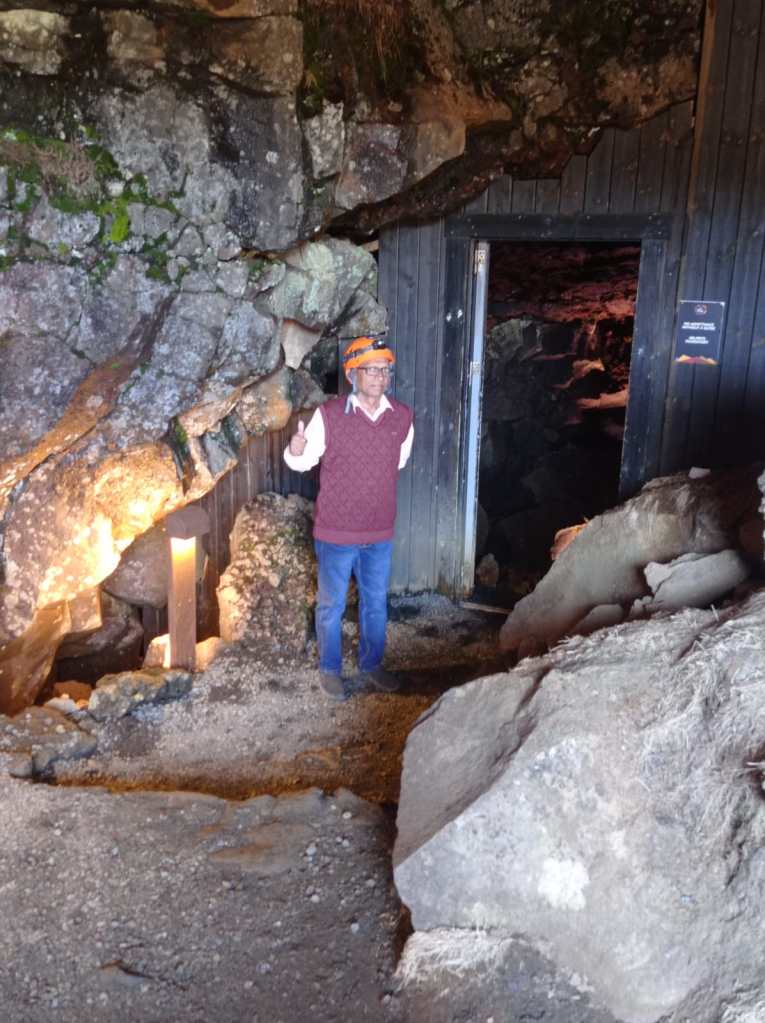
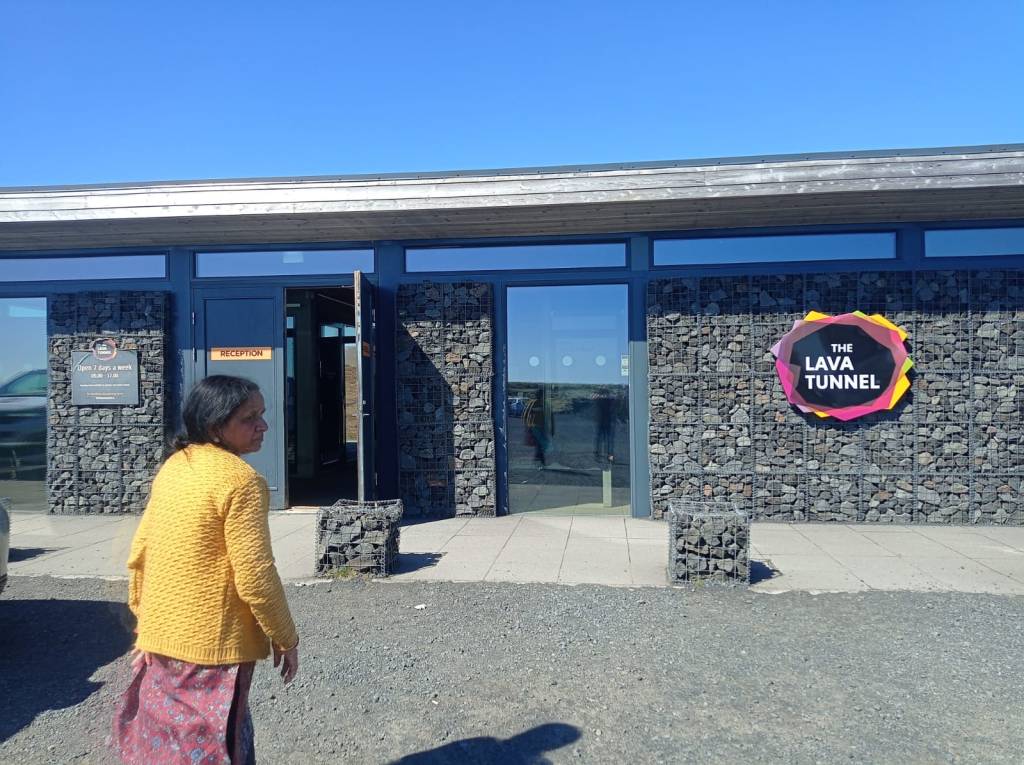
Embarked on a Whale Watching tour,visited amazing Geysers,Crater-Kerid & Raufarholshellir Lava Tunnel in Iceland

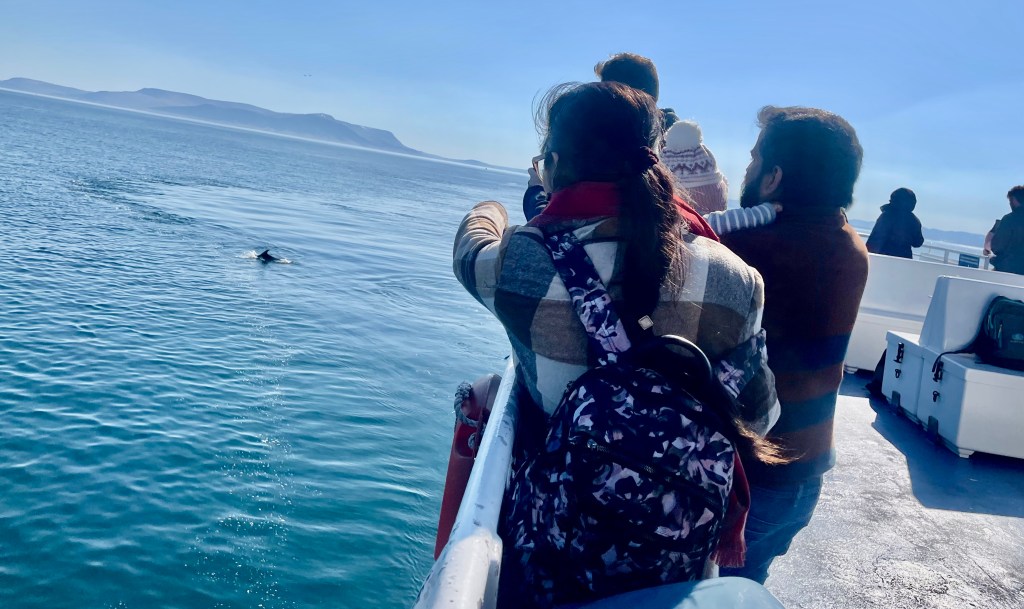
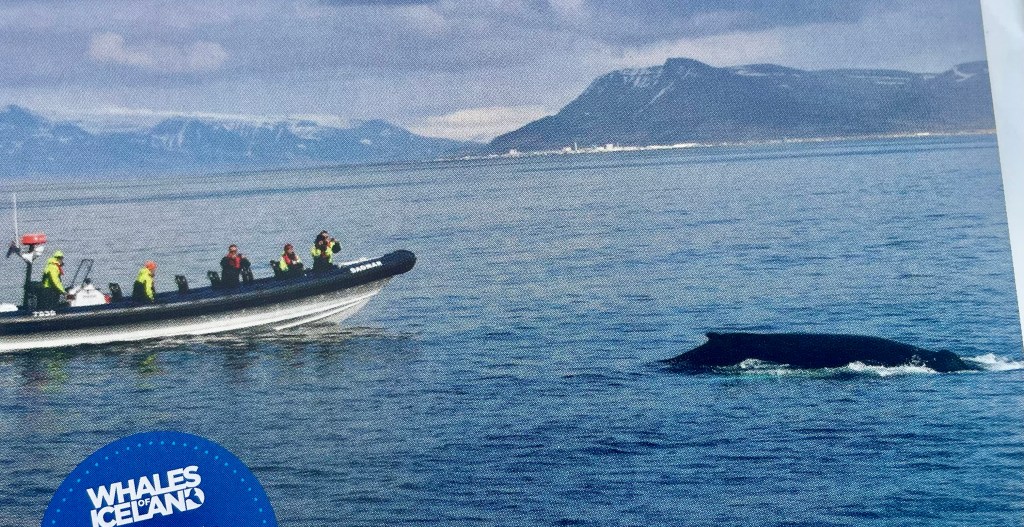
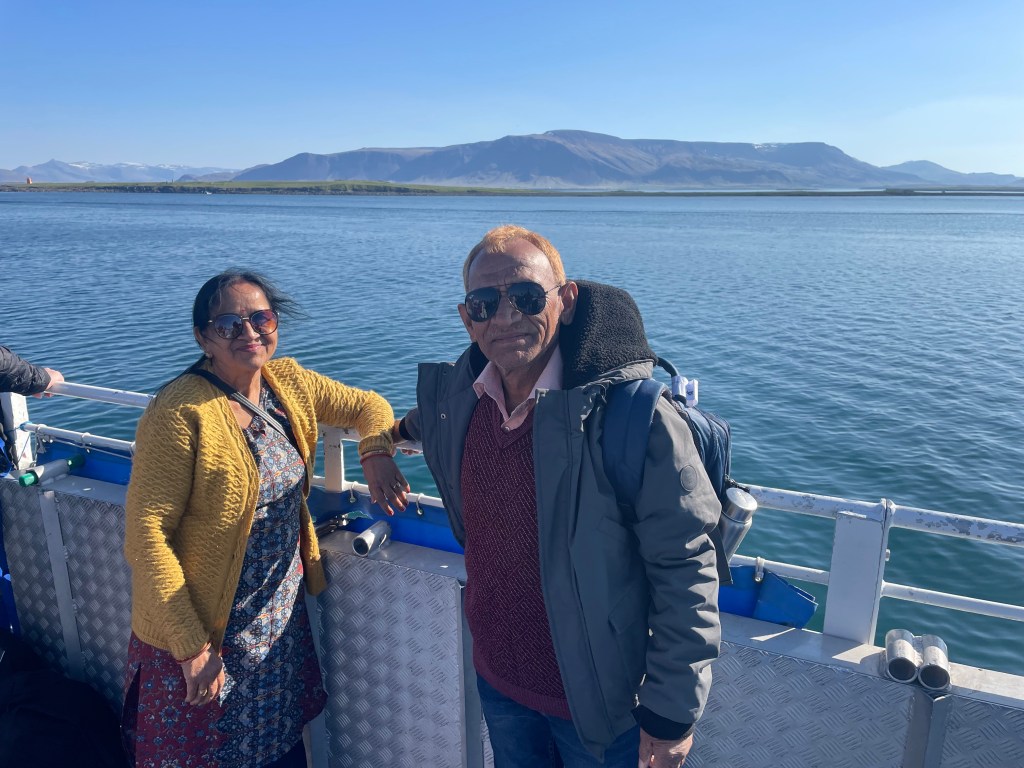
We embarked on a beautiful boat from the Reykjavik harbour.It was a guided tour of around 3 hours having a nice cafetaria serving some great coffee & snacks!The guide was a jolly man entertaining the children,grown ups & the old alike.It also had a cozy little Sovereign shop.Just around 15 min off the harbour ,we felt excited as we sighted a whale for a brief moment at it jumped out of the water.As my mobile camera was ready,I could just capture a glimpse of the whale.

After travelling for another 30 min ,we sighted many beautiful Dolphins in a group performing their “flip” movements as synchronous pairs.It was a treat to the eyes.They seemed to follow our boat for another half an hour.We thoroughly enjoyed the boat tour after which we proceeded for the visit to the amazing ‘Geysers’

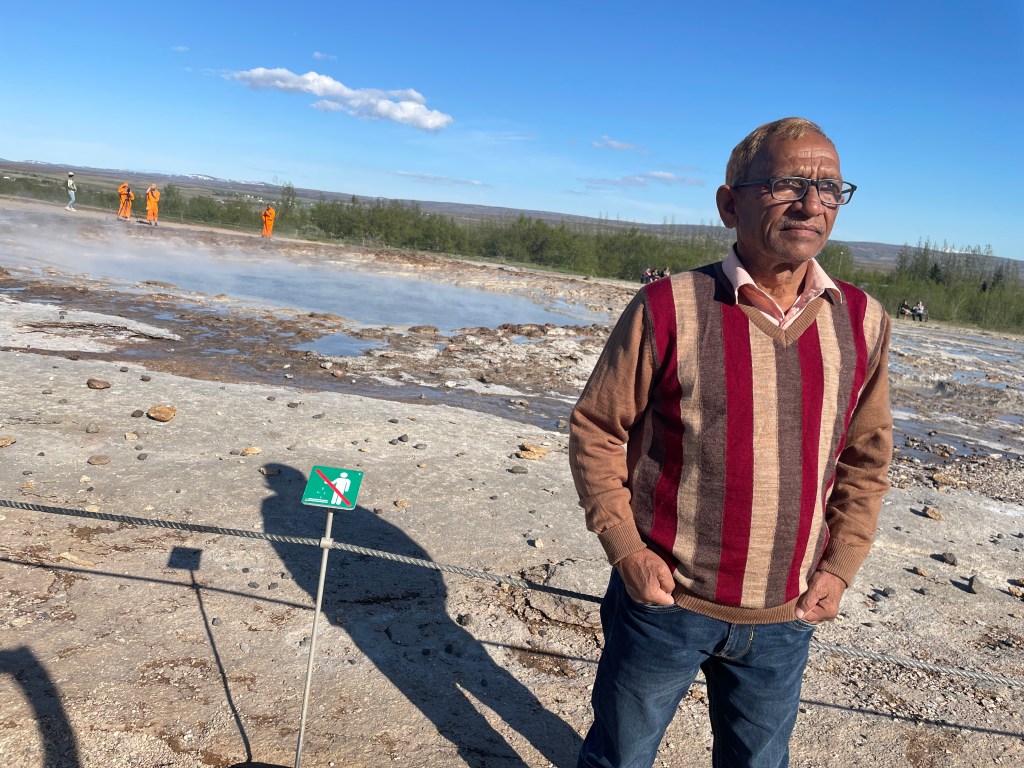
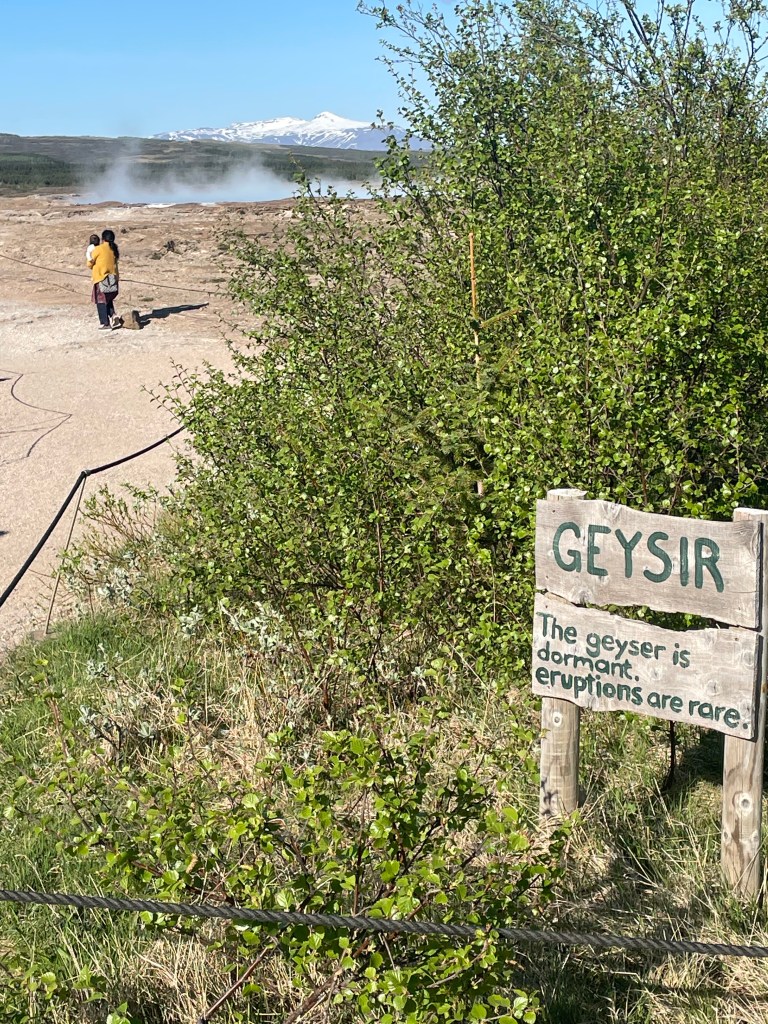
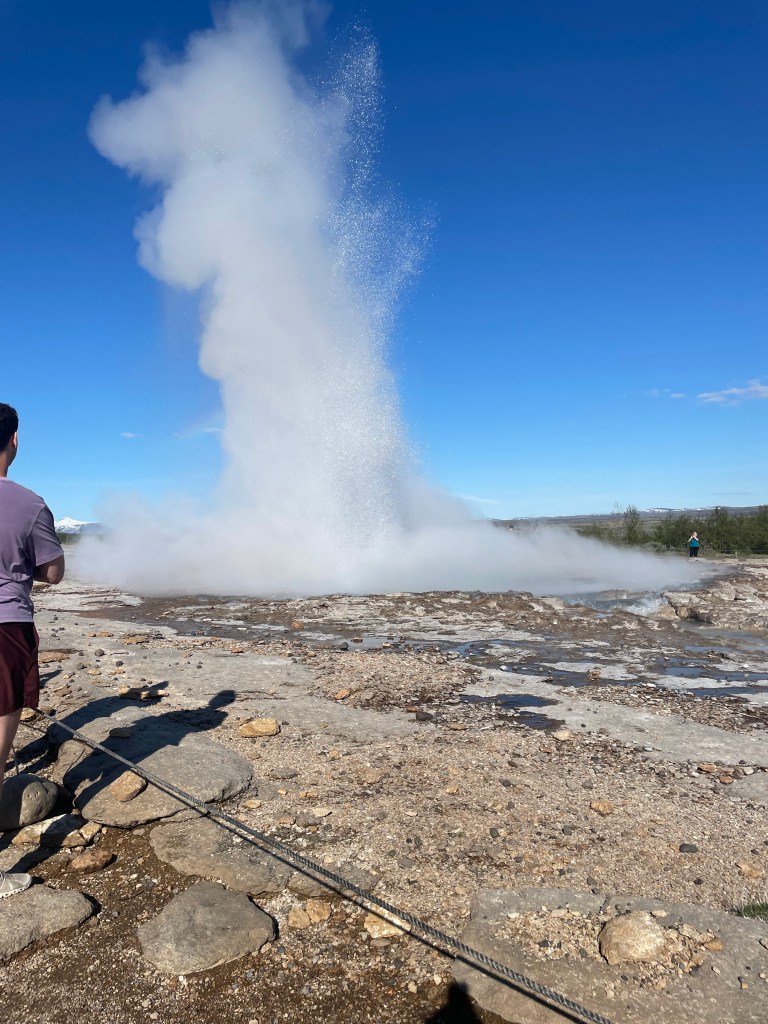
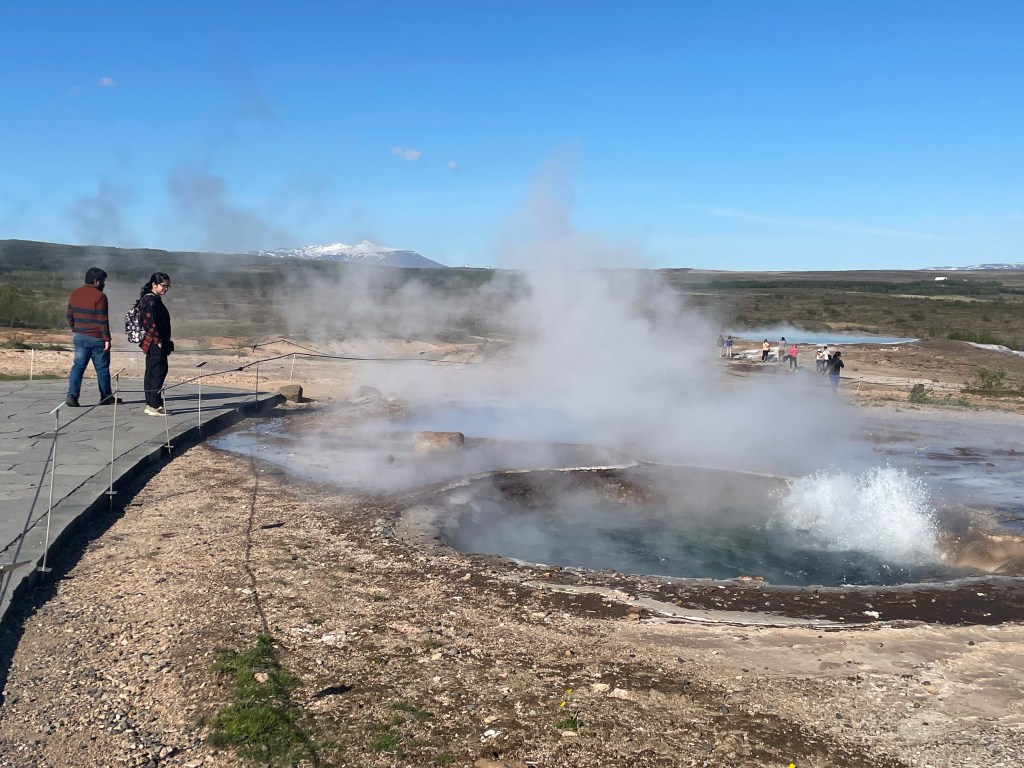
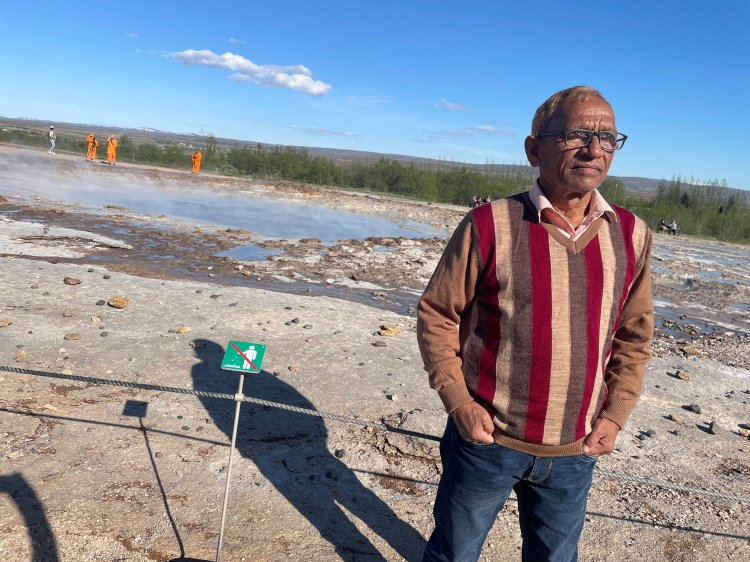
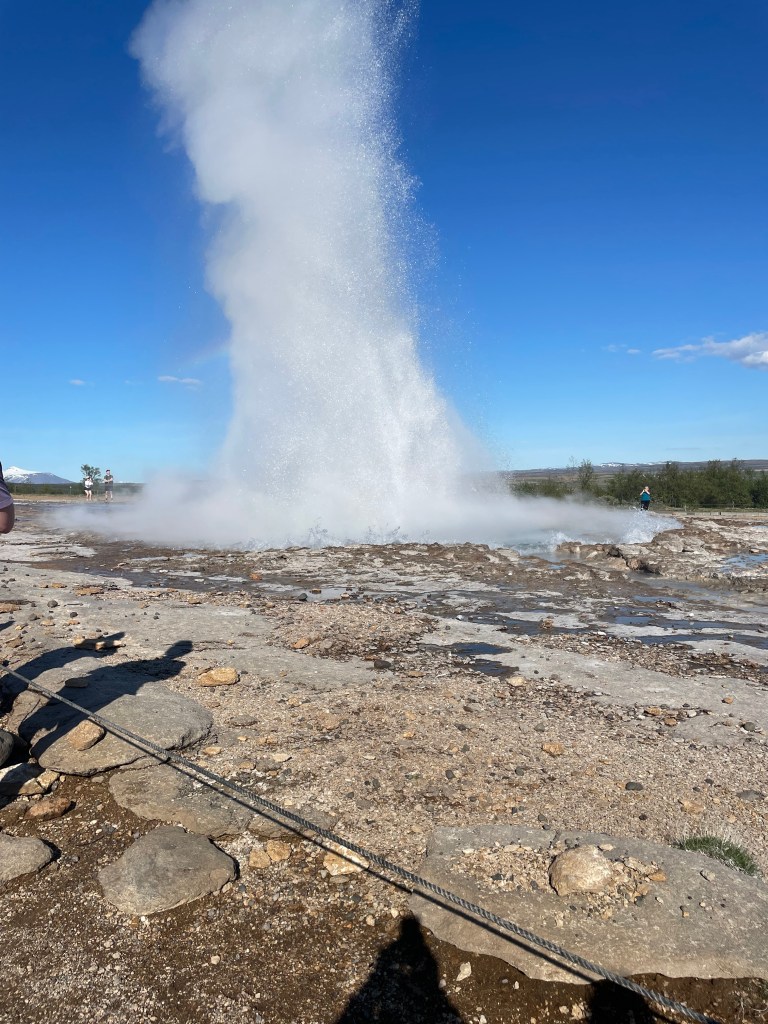
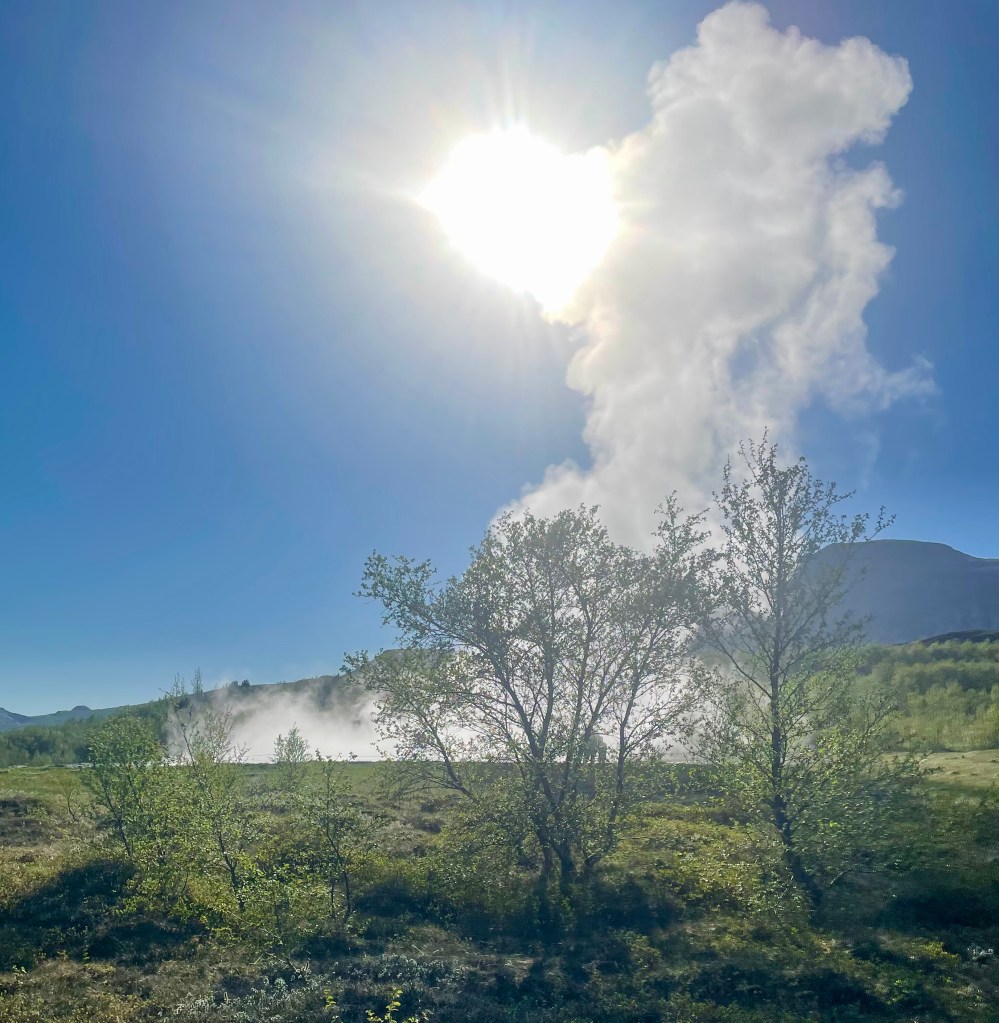
We reached the site of the amazing Geysers & collected some information on their theory & formation.Also learnt about how water is converted into steam & this Geo-thermal energy is being utilized for domestic as well as commercial purposes.All small & big Geysers were amazing & awe inspiring at every eruption.It was quite a fabulous & educative visit.

These are sometimes called “The Great Geysers” located in south western Iceland.The Geological studies suggest that they started forming around 1150CE. They lie in the slopes of Laugarfjall lava dome which is also home to the Strokkur geyser nearby.Strokkur geyser is icelands most visited active geyser.One of the major attractions on the world famous Golden Circle sightseeing route. Eruption at Geyser can hurl water upto 60 mts in the air .Since the 1920s hot water directed from the geysers has been used to heat greenhouses and to grow food that otherwise could not have been cultivated in Iceland’s inhospitable climate .Steam & hot water from the geysers has also been used for heating homes since 1943 in Iceland.

Visited the huge Crater dating back to its creation around 6500 years ago.We enjoyed the rare spectacle.Geologists or the Volcanologists may understand better on its cause of formation.We collected some information on its origin & formation which I am sharing with my readers:

DESCRIPTION :

Raufarhólshellir is the fourth-longest lava tube in Iceland, at 1,360 metres (4,460 ft) long, with a typical height of at least 10 metres (33 ft) and width up to 30 metres (98 ft).[1] The cave has multiple skylights, or holes in the ceiling, under which snow accumulates.Iceland Route 39 crosses over the cave at a point where it is about 15 meters in diameter.The cave hosts microbial mats containing a variety of microorganisms, including actinomycetota and acidobacteriota. The land containing the cave is owned by the Seventh day Adventist Church and rented to a company that operates the guided tours.

HISTORY :

Raufarhólshellir formed 5600 years ago, based on carbon dating.The source of the lava flow that created the tube is 10 kilometres (6.2 mi) uphill from the cave and was part of the Leitahraun eruption. An expedition in 1971 by the Shepton MalletCaving Club was one of the first systematic explorations of caves in Iceland.

Finally we came out of the tunnel happy & amazed,it being a very rewarding experience.

Design a site like this with WordPress.com
Get started