On 10/9/22,We visited the magnificient St Mark’s Square facing onto the Grand Canal ,Doge’s Palace,St Marks Basilica,Correr Museum & the St Mark’s Campanile.The St Mark’s Basilica stands out in splendour with its awesome architecture & sculptures.The view of the Clocktower is breathtaking!The square is a historically significant place with exquisite buidings created by the master artisans showcasing their amazing talents.The place in the heart of Venice radiates a magical atmosphere with its mesmerising affect on its visitors.From the Clocktower we can get beautiful views of the colourful Gondolas in the canal.Beautiful Rialto Bridge is a must visit location in the Venice city.
SAINT. MARKS SQUARE :
Piazza San Marco, often known in English as St Mark’s Square, is the principal public square of Venice, Italy, where it is generally known just as la Piazza. All other urban spaces in the city are called campi. A remark usually attributed to Napoleon calls the Piazza San Marco “the drawing room of Europe”. The square is dominated at its eastern end by St Mark’s Basilica.
SAINT MARK’S BASILICA :
The Patriarchal Cathedral Basilica of Saint Mark (Italian: Basilica Cattedrale Patriarcale di San Marco), commonly known as St Mark’s Basilica (Italian: Basilica di San Marco), is the cathedral church of the Catholic Patriarchate of Venice; it became the episcopal seat of the Patriarch of Venice in 1807, replacing the earlier cathedral of San Pietro di Castello. It is dedicated to and holds the relics of Saint Mark the Evangelist, the patron saint of the city. The church is located on the eastern end of Saint Mark’s Square, the former political and religious centre of the Republic of Venice, and is attached to the Doge’s Palace. Prior to the fall of the republic in 1797, it was the chapel of the Doge and was subject to his jurisdiction, with the concurrence of the procurators of Saint Mark de supra for administrative and financial affairs.
SPENDING SOME QUALITY MOMENTS POSING FOR PHOTOS IN THE MARK’S SQUARE
The Piazzetta dei Leoncini is an open space on the north side of the church named after the two marble lions (presented by Doge Alvise Mocenigo in 1722), but now officially called the Piazzetta San Giovanni XXIII. The neo-classic building on the east side adjoining the Basilica is the Palazzo Patriarcale, the seat of the Patriarch of Venice. SAINT MARK’S CLOCKTOWER :
St. Mark’s Clocktower , completed in 1499,is above a high archway where the street known as the Merceria (a main thoroughfare of the city) leads through shopping streets to the Rialto, the commercial and financial centre. To the right of the clock-tower is the closed church of San Basso, designed by Baldassarre Longhena (1675), sometimes open for exhibitions.
The Clocktower is visible on the left beside the St Marks Basilica.
SAINT MARK’S CAMPANILE : Standing free in the piazza, is St Mark’s Campanile (1156–73 last restored in 1514), rebuilt in 1912 com’era, dov’era (“as it was, where it was”) after the collapse of the former campanile on 14 July 1902. Across the piazza in front of the church are three large mast-like flagpoles with bronze bases decorated in high relief by Alessandro Leopardi in 1505. The Venetian flag of St Mark used to fly from them in the time of the republic of Venice and now shares them with the Italian flag.
Worth visiting places with great architecture & sculptures are the Doge’s Palace & the Correr Museum( I will soon describe them in my next blog)
GRAND CANAL :
One end of the canal leads into the lagoon near the Santa Lucia railway station and the other end leads into the basin at San Marco; in between, it makes a large reverse-S shape through the central districts (sestieri) of Venice. It is 3.8 km long, and 30 to 90 m wide, with an average depth of 5 metres. The banks of the Grand Canal are lined with more than 170 buildings, most of which date from the 13th to the 18th century, and demonstrate the welfare and art created by the Republic of Venice. The noble Venetian families faced huge expenses to show off their richness in suitable palazzos; this contest reveals the citizens’ pride and the deep bond with the lagoon.The churches along the canal include the basilica of Santa Maria della Salute. Centuries-old traditions, such as the Historical Regatta [it], are perpetuated every year along the Canal.
The Grand Canal , Venice
THE RIALTO BRIDGE :
The Rialto Bridge is the oldest of the four bridges spanning the Grand Canal in Venice. Connecting the sestieri of San Marco and San Polo, it has been rebuilt several times since its first construction as a pontoon bridge in 1173, and is now a significant tourist attraction in the city. Grand Canal is the main waterway of Venice. It is lined on each side by palaces and spanned by the Rialto Bridge.
My dear readers may kindly point out any incorrect information in my above writeup needing any corrections! I am truly indebted to Wikipedia & for the invaluable information on the subject !Happy Reading !
On the 9th of Sept.2022 ,We got an opportunity to get a picturesque roundup of the two beautiful islands in the Venetian Lagoon enjoying tremendously boat riding in the mesmerizing lagoon! It was like a dream come true! We got to sight so many enchanting views as well as the activities such as witnessing the glass-blowing processes,visiting glass jewellery shops & the needle-lace-making apart from the traditional fishing establishments & the Lighthouse in Murano !The day long tour was full of bewitching vistas of the lovely boats in the lagoon, the brightly coloured houses & visits to the educative museums in Burano.The beautiful memories of the tour will linger on long in our lives!
MURANO:
The island of Murano is renowned for its long tradition of glass-making. Ferry-loads of visitors come to explore the Museo del Vetro, which tells the story of glass through the centuries, and to shop for locally crafted souvenirs.Murano Venice is one of the major islands in the Venice Lagoon consisting of 7 individual islands, all linked together by bridges.It’s mainly famous for its glass factories and laboratories, and if you have a bit more than a couple of days to spend in Venice, you should consider paying a visit there because this is the place to go if you’re interested in the renowned Murano glass. Most people come here to tour a glass factory and watch a glass-blowing demonstration … and maybe even buy a few hand-blown glass Souvenirs.
The Murano Glass Museum (Italian: Museo del Vetro) is a museum on the history of glass, including local Murano glass, located on the island of Murano, just north of Venice, Italy. The museum was founded in 1861. It was originally built in the Gothic style as a patrician’s palace. The building became the residence of Bishop Marco Giustinian in 1659. He later bought it and donated it to the Torcello diocese. In 1805, the Torcello diocese was closed. In 1840, the palace was sold to the Murano Municipality, who would use it as a town hall, museum, and archives. In 1923, when the Murano Municipality joined Venice, the museum came under the management of the Fondazione Musei Civici di Venezia (MUVE), its current operator.
HISTORY:
Murano was initially settled by the Romans and from the sixth century by people from Altinum and Oderzo. At first, the island prospered as a fishing port and through its production of salt. It was also a centre for trade through the port it controlled on Sant’Erasmo. From the eleventh century, it began to decline as islanders moved to Dorsoduro. It had a Grand Council, like that of Venice, but from the thirteenth century, Murano was ultimately governed by a podestà from Venice. Unlike the other islands in the Lagoon, Murano minted its own coins. In 1291, all the glassmakers in Venice were required to move to Murano. In the following century, exports began, and the island became famous, initially for glass beads and mirrors. Aventurine glass was invented on the island, and for a while Murano was the main producer of glass in Europe. The island later became known for chandeliers. Although decline set in during the eighteenth century, glassmaking is still the island’s main industry.
Venetian Glass Jewellery:
Fantastic Murano collection of venetian glass jewellery completely handcraft products, produced with “lume” working. This technique creates bright and shiny colours but at the same time its refined, elegant ,light and a quality product.
Murano Lighthouse (Italian: Faro dell’Isola di Murano):
It is an active lighthouse located in the south east part of island of Murano in the Venetian lagoon on the Adriatic sea. The first lighthouse, built in 1912, was a metal skeletal tower on piles which was deactivated in 1934. The lighthouse consists of a two-stages cylindrical stone tower, 35 metres high, with double balcony & lantern. The tower is painted white, on the upper stage are painted two black horizontal bands facing the range line, on the east side, in order to have the lighthouse more visible during the day.
Nissan Murano is a mid size crossover SUV manufactured and marketed by Nissan since May 2002 for the 2003 model year, & currently in its third generation.The car derives its name from the Italian city(Murano) renowned for the Murano Glass Souvenirs.
BURANO:
Burano is an island in the Venetian Lagoon, northern Italy, near Torcello at the northern end of the lagoon, known for its lace work and brightly coloured homes. The primary economy is tourism. Burano is 7 kilometres from Venice, a 45-minute trip from St. Mark’s Square by vaporetto, a Venetian water bus. The island is linked to Mazzorbo by a bridge. The current population of Burano is about 2,400. Originally, there were five islands and a fourth canal that was filled to become via e piazza Baldassare Galuppi, joining the former islands of San Martino Destra and San Martino Sinistra. Burano has historically been subdivided into five sestieri, much like Venice. They correspond to the five original islands. The sixth sestiere is neighboring Mazzorbo.
Why are the houses in Burano so colouful ?
The most accredited belief on the different colors of Burano’s houses seems to be linked to the fact that the fishermen decided to paint the facade of their home with an identifying color in order to be able to return there without problems even with the thickest fog.
The island was probably settled by the Roman, and in the 6th century was occupied by people from Altino, who named it for one of the gates of their former city. Two stories are attributed to how the city obtained its name. One is that it was initially founded by the Buriana family, and another is that the first settlers of Burano came from the small island of Buranello, about 8 kilometres to the south.
Although Burano soon became a thriving settlement, it was administered from Torcello &had none of the privileges of that island or of Murano. It rose in importance only in the 16th century, when women on the island began making lace with needles, being introduced to such a trade via Venetian-ruled Cyprus .When Leonardo da Vinci visited in visited the small town of Pano Lefkara in 1841 & purchased a cloth for the main altar of Duomo di Milano.The lace was soon exported across Europe, but trade began to decline in the 18th century &the industry did not revive until 1872,when a school of lacemaking was opened to provide relief for islanders after a disastrous winter for fishing industry .Lacemaking on the island boomed again, but few now make lace in the traditional manner as it is extremely time-consuming & expensive.Burano has a long-established tradition of needle-lace making, though precise historical records are lacking.
Main sights :
Burano is also known for its small, brightly painted houses,which are popular with artists. The colours of the houses follow a specific system, originating from the golden age of its development. If someone wishes to paint their home, one must send a request to the government, who will respond by making notice of the certain colours permitted for that lot.Other attractions include the church of San Martino, with a leaning campanile and a painting by Giambattista Tiepolo (Crucifixion, 1727), the Oratorio di Santa Barbara and the Museum and School of Lacemaking.Burano is very famous forits needle lace. However on the island there is a production of venetian masks and many people work in the nearest Murano, creating precious glass objects.
Lace Museum (in Italian: Museo del merletto) is located at the historic palace of Podestà of Torcello, in Galuppi square, on the island of Burano, near Venice.The palace was seat of the famous Burano lace school from 1872 to 1970. Rare and precious pieces offer a complete overview of the history and artistry of the Venetian and lagoon’s laces, from its origins to the present day are on display, in a picturesque setting decorated in the typical colors of the island. Re-opened to the public in June 2011 after extensive restoration works, the Lace Museum offers a complete overview of the laces of Veniceand islands and is one of the 11 civic museums managed by the Fondazione Musei Civici di Venezia.
BURANO’S LEANING BELL TOWER :
It was built in the seventeenth century & has a square shape and Renaissance and neoclassical architectural features. It has undergone several restorations over the centuries, especially in the upper part of the belfry. Among these maintenance works the most noted is the one carried out by the Tirali, which occurred between 1703 and 1714.
The height of the Burano’s tower is 53 meters and it stands on a base with a side of 6.20 meters.Because of land subsidence it is inclined of 1.83 meters respect to its axis.The top of the leaning tower has always been crowned by an angel, fell in 1867 during a storm; now in its place there is a cross of iron.
My dear readers may kindly point out any incorrect information in my above writeup needing any corrections! I am truly indebted to Wikipedia & for the invaluable information on the subject !Happy Reading !
On the 8th of Sept’2022 evening , We reached Venice,Italy on our 3-day visit of the main attractions of this beautiful destination !Known as the ‘City of Canals’ there are many things Venice is famous for including its beautiful bridges, gondola rides, atmospheric streets and carnival celebrations. Built over 118 islands, Venice and its lagoon is one of the most unique cities in the world. One of the things Venice is famous for is its Carnival celebrations, which take place about three weeks before Ash Wednesday and Lent. Masks are an emblem of the Venetian Carnival. Back in the day, masks protected your identity and social status, meaning people from different social standings could socialise with each other without being judged. Venice is known for its labyrinth of narrow streets, laneways and alleys. Getting lost in the city’s maze-like streets is a rite of passage for visitors. At just 53cm wide, Calle Varisco in the Cannaregio district is the narrowest street in Venice. In fact, it is one of the narrowest streets in Europe.Before setting-off for visiting these attractions the next day, we collated some information on the places which we are sharing with my lovely readers.I will be posting separate blogs on the places visited very shortly.
VENICE :
Venesia or Venexia is a city in north eastern Italy and the capital of the Veneto region. It is built on a group of 118 small islands that are separated by canals and linked by over 400 bridges in a lagoon in the Adriatic Sea. It has no roads, just canals – including the Grand Canal thoroughfare – lined with Renaissance and Gothic palaces. The central square, Piazza San Marco, contains St. Mark’s Basilica, which is tiled with Byzantine mosaics, and the Campanile bell tower offering views of the city’s red roofs. The name is derived from the ancient Veneti people who inhabited the region by the 10th century BC. The city was historically the capital of the Republic of Venice for over a millennium, from 697 to 1797. It was a major financial and maritime power during the Middle Ages and Renaissance as well as an important center of commerce—especially silk, grain, and spice, and of art from the 13th century to the end of the 17th. The sovereignty of Venice came to an end in 1797, in the hands of Napoleon. Subsequently, in 1866, the city become part of the Kingdom of Italy. Venice has been known as “La Dominante”, “La Serenissima”, “Queen of the Adriatic”, “City of Water”, “City of Masks”, “City of Bridges”, “The Floating City”, and “City of Canals”. The lagoon and a part of the city are listed as a UNESCO World Heritage Site. Its the birthplace of Baroque composers Tomaso Albinoni and Antonio Vivaldi.
THE DOGE’S PALACE :
The Doge’s Palace is a palace built in Venetian Gothic style, and one of the main landmarks of the city of Venice in northern Italy. The palace was the residence of the Doge of Venice, the supreme authority of the former Republic. It was built in 1340 and extended and modified in the following centuries. It became a museum in 1923 and is one of the 11 museums run by the Fondazione Musei Civici di Venezia.
ST. MARKS SQUARE :
Piazza San Marco, often known in English as St Mark’s Square, is the principal public square of Venice, where it is generally known just as la Piazza. All other urban spaces in the city are called campi. The Piazzetta is an extension of the Piazza towards San Marco basin in its south east corner. The two spaces together form the social, religious and political centre of Venice and are commonly considered together. A remark usually attributed to Napoleon calls the Piazza San Marco “the drawing room of Europe”.
SANTA MARIA BASILICA :
Santa Maria della Salute, commonly known simply as the Salute, is a Roman Catholic church and minor basilica located at Punta della Dogana. It stands on the narrow finger of Punta della Dogana, between the Grand Canal and the Giudecca Canal, at the Bacino di San Marco, making the church visible when entering the Piazza San Marco from the water. The Salute is part of the parish of the Gesuati and is the most recent of the so-called plague churches. In 1630, Venice experienced an unusually devastating outbreak of the plague. As a votive offering for the city’s deliverance from the pestilence, the Republic of Venice vowed to build and dedicate a church to Our Lady of Health. Construction began in 1631. Most of the objects of art housed in the church bear references to the Black Death. The dome of the Salute was an important addition to the Venice skyline and soon became emblematic of the city, appearing in artworks both by locals, such as Canaletto and Francesco Guardi, and visitors, such as J.
THE RIALTO BRIDGE :
The Rialto Bridge is the oldest of the four bridges spanning the Grand Canal in Venice. Connecting the sestieri of San Marco and San Polo, it has been rebuilt several times since its first construction as a pontoon bridge in 1173, and is now a significant tourist attraction in the city. Grand Canal is the main waterway of Venice. It is lined on each side by palaces and spanned by the Rialto Bridge.
PALAZZO SANTA SOFIA PALACE :
The Ca’ d’Oro or Palazzo Santa Sofia is a palace on the Grand Canal in Venice, northern Italy. One of the older palaces in the city, its name means “golden house” due to the gilt and polychrome external decorations which once adorned its walls. Since 1927, it has been used as a museum, as the Galleria Giorgio Franchetti. It has long been regarded as the best surviving palazzo in Venetian Gothic architecture, retaining all the most characteristic features, despite some losses. On the facade, the loggia-like window group of closely spaced small columns, with heavy tracery with quatrefoil openings above, uses the formula from the Doge’s Palace that had become iconic.The smaller windows show a variety of forms with an ogee arch, capped with a relief ornament, and the edges and zone boundaries are marked with ropework reliefs.
BRIDGE OF SIGHS :
The Bridge of Sighs (Italian: Ponte dei Sospiri) is a bridge in Venice, Italy. The enclosed bridge is made of white limestone, has windows with stone bars, passes over the Rio di Palazzo, and connects the New Prison (Prigioni Nuove) to the interrogation rooms in the Doge’s Palace. It was designed by Antonio Contino, whose uncle Antonio da Ponte designed the Rialto Bridge. It was built in 1600. The view from the Bridge of Sighs was the last view of Venice that convicts saw before their imprisonment. The bridge’s English name was bequeathed by Lord Byron in the 19th century as a translation from the Italian “Ponte dei sospiri”,from the suggestion that prisoners would sigh at their final view of beautiful Venice through the window before being taken down to their cells.
GRAND CANAL :
One end of the canal leads into the lagoon near the Santa Lucia railway station and the other end leads into the basin at San Marco; in between, it makes a large reverse-S shape through the central districts (sestieri) of Venice. It is 3.8 km (2.4 mi) long, and 30 to 90 m (98 to 295 ft) wide, with an average depth of 5 metres (16 feet). The banks of the Grand Canal are lined with more than 170 buildings, most of which date from the 13th to the 18th century, and demonstrate the welfare and art created by the Republic of Venice. The noble Venetian families faced huge expenses to show off their richness in suitable palazzos; this contest reveals the citizens’ pride and the deep bond with the lagoon.The churches along the canal include the basilica of Santa Maria della Salute. Centuries-old traditions, such as the Historical Regatta [it], are perpetuated every year along the Canal.
SAINT MARK’S BASILICA:
SAINT MARK’S BASILICA
The Patriarchal Cathedral Basilica of Saint Mark (Italian: Basilica Cattedrale Patriarcale di San Marco), is the cathedral church of the Catholic Patriarchate of Venice; it became the episcopal seat of the Patriarch of Venice in 1807, replacing the earlier cathedral of San Pietro di Castello. It is dedicated to and holds the relics of Saint Mark the Evangelist, the patron saint of the city. The church is located on the eastern end of Saint Mark’s Square, the former political and religious centre of the Republic of Venice, and is attached to the Doge’s Palace. Prior to the fall of the republic in 1797, it was the chapel of the Doge and was subject to his jurisdiction, with the concurrence of the procurators of Saint Mark de supra for administrative and financial affairs.
MUSEO DE SAN MARCO (MUSEO CORRER) :
The Museo Correr is a museum in Venice located in the St Mark’s Square! It is one of the 11 civic museums run by the Fondazione Musei Civici di Venezia. The museum extends along the southside of the square on the upper floors of the Procuratorie Nuove. With its rich and varied collections, the Museo Correr covers both the art and history of Venice.The Museo Correr originated with the collection bequeathed to the city of Venice in 1830 by Teodoro Correr, a member of a traditional Venetian family, Correr was a meticulous and passionate collector, dedicating most of his life to the collection of both works of art and documents or individual objects that reflected the history of Venice. Upon his death, all this material was donated to the city, together with the family’s palace which then housed it. The nobleman also left the city funds to be used in conserving and extending the collections and in making them available to the public.
MURANO :
The island of Murano is renowned for its long tradition of glass-making. Ferry-loads of visitors come to explore the Museo del Vetro, which tells the story of glass through the centuries, and to shop for locally crafted souvenirs. The Murano Glass Museum (Italian: Museo del Vetro) is a museum on the history of glass, including local Murano glass, located on the island of Murano, just north of Venice, Italy. The museum was founded in 1861. It was originally built in the Gothic style as a patrician’s palace. The building became the residence of Bishop Marco Giustinian in 1659. He later bought it and donated it to the Torcello diocese. In 1805, the Torcello diocese was closed. In 1840, the palace was sold to the Murano Municipality, who would use it as a town hall, museum, and archives. In 1923, when the Murano Municipality joined Venice, the museum came under the management of the Fondazione Musei Civici di Venezia (MUVE), its current operator.
BURANO :
Burano is an island in the Venetian Lagoon, northern Italy, near Torcello at the northern end of the lagoon, known for its lace work and brightly coloured homes. The primary economy is tourism. Burano is 7 kilometres from Venice, a 45-minute trip from St. Mark’s Square by vaporetto, a Venetian water bus. The island is linked to Mazzorbo by a bridge. The current population of Burano is about 2,400. Originally, there were five islands and a fourth canal that was filled to become via e piazza Baldassare Galuppi, joining the former islands of San Martino Destra and San Martino Sinistra. Burano has historically been subdivided into five sestieri, much like Venice. They correspond to the five original islands. The sixth sestiere is neighboring Mazzorbo.
The island was probably settled by the Roman, and in the 6th century was occupied by people from Altino, who named it for one of the gates of their former city. Two stories are attributed to how the city obtained its name. One is that it was initially founded by the Buriana family, and another is that the first settlers of Burano came from the small island of Buranello, about 8 kilometres to the south.
My dear readers may kindly point out any incorrect information in my above writeup needing any corrections! I am truly indebted to Wikipedia & for the invaluable information on the subject !Happy Reading !
On 8/9/22 ,We took a train to Pisa from Rome & enjoyed the journey so much watching the great views of the sea & the ships embarked on the shore !In Pisa we were mesmerized by the view of the Cathedral Square. The square is dominated by four great religious edifices: the Pisa Cathedral, the Pisa Baptistry, the Campanile, and the Camposanto Monumentale (Monumental Cemetery).Having booked the tickets in advance,we quickly proceeded to experience the assend to the top of Pisa’s Leaning Tower.We could sense a strange feeling: after taking a few steps we could feel the tilt.Although its difficult explaining the same.But in all,it was an amazing experience which you gain only when you go through it.There are so many other remarkable places worth visiting in Pisa such as :Pisa Cathedral, Pisa Baptistery ,Museo delle Sinopie ,Bell tower of San Nicola & Museo del Duomo. Galileo Galilei was an Italian astronomer, physicist and engineer who was born in Pisa on 15 February 1564 .Here I am giving brief description of the worth-visiting places in Pisa for my valued readers.
PISA :
Pisa is a city in Italy’s Tuscany region best known for its iconic Leaning Tower. Already tilting when it was completed in 1372, the 56m white-marble cylinder is the bell tower of the Romanesque, striped-marble cathedral that rises next to it in the Piazza dei Miracoli. Also in the piazza is the Baptistry, whose renowned acoustics are demonstrated by amateur singers daily,& the Caposanto Monumentale cemetery.The Leaning Tower of Pisa is one of the most famous constructions in the world. Its fame not only comes from the original trigger for its construction-to show the importance of this city after successfully attacking the city of Sicily, but also from its tilt, which has lasted for more than nine centuries.Pisa is also known for Pisa Cathedral, Pisa Baptistery ,Museo delle Sinopie ,Bell tower of San Nicola & Museo del Duomo.
THE LEANING TOWER OF PISA (Italian: torre pendente di Pisa)
The Tower of Pisa is the campanile, or freestanding bell tower, of Pisa Cathedral. It is known for its nearly four-degree lean, the result of an unstable foundation. The tower is one of three structures in the Pisa’s Cathedral Square (Piazza del Duomo), which includes the cathedral and Pisa Baptistry.
The height of the tower is 55.86 mts from the ground on the low side & 56.67 mts on the high side. The width of the walls at the base is 2.44 mts. Its weight is estimated at 14,500 tonnes.The tower has 296 or 294 steps; the seventh floor has two fewer steps on the north-facing staircase. The tower began to lean during construction in the 12th century, due to soft ground which could not properly support the structure weight. It worsened through the completion of construction in the 14th century. By 1990, the tilt had reached 5.5 degrees. The structure was stabilized by remedial work between 1993 & 2001, which reduced the tilt to 3.97 degrees.
ARCHITECT OF THE TOWER OF PISA :
For many years, the design was attributed to Guglielmo and Bonanno Pisano, a well-known 12th-century resident artist of Pisa, known for his bronze casting, particularly in the Pisa Duomo. Pisano left Pisa in 1185 for Monreale, Sicily, only to come back and die in his home town. A piece of cast bearing his name was discovered at the foot of the tower in 1820, but this may be related to the bronze door inThere has been controversy surrounding the identity of the architect of the Leaning the façade of the cathedral that was destroyed in 1595. A 2001 study seems to indicate Diotisalvi was the original architect, due to the time of construction and affinity with other Diotisalvi works, notably the bell tower of San Nicola and the Baptistery, both in Pisa.
Pisa Cathedral(Cattedrale Metropolitana Primaziale di Santa Maria Assunta):
It is a medieval Roman Catholic cathedral dedicated to the Assumption of the Virgin Mary, in the Piazza dei Miracoli in Pisa, Italy, the oldest of the three structures in the plaza followed by the Pisa Baptistry and the Campanile known as the Leaning Tower of Pisa. The cathedral is a notable example of Romanesque architecture, in particular the style known as Pisan Romanesque. Consecrated in 1118, it is the seat of the Archbishop of Pisa. Construction began in 1063 and was completed in 1092. Additional enlargements and a new facade were built in the 12th century and the roof was replaced after damage from a fire in 1595.
Pisa Baptistery of St. John(Italian: Battistero di San Giovanni) is a Roman Catholic ecclesiastical building in Pisa Italy. Construction started in 1152 to replace an older bapistery, and when it was completed in 1363, it became the second building, in chronological order, in the Piazza dei Miracoli, near the Duomo di Pisa and the cathedral’s free-standing campanile, the famous leaning tower of Pisa. The baptistery was designed by Diotisalvi, whose signature can be read on two pillars inside the building, with the date 1153. Its the largest baptistery in Italy, it is 54.86 m high, with a diameter of 34.13 m. The Pisa Baptistery is an example of the transition from the Romanesque style to the Gothic style: the lower section is in the Romanesque style, with rounded arches, while the upper sections are in the Gothic style, with pointed arches. The Baptistery is constructed of marble, as is common in Italian architecture.
PIAZZA DEI MIRACOLI (Italian:ˈpjattsa dei miˈraːkoli):
Its formally known as Piazza del Duomo (English: Cathedral Square), is a walled 8.87-hectare area located in Pisa, Tuscany, Italy, recognized as an important centre of European medieval art and one of the finest architectural complexes in the world. Considered sacred by the Catholic Church, its owner, the square is dominated by four great religious edifices: the Pisa Cathedral, the Pisa Baptistry, the Campanile, and the Camposanto Monumentale (Monumental Cemetery). Partly paved and partly grassed, the Piazza dei Miracoli is also the site of the Ospedale Nuovo di Santo Spirito (New Hospital of the Holy Spirit), which houses the Sinopias Museum (Italian: Museo delle Sinopie) and the Cathedral Museum (Italian: Museo dell’Opera del Duomo). The name Piazza dei Miracoli was coined by the Italian writer and poet Gabriele d’Annunzio who, in his novel Forse che sì forse che no (1910), described the square as the “prato dei Miracoli”, or “meadow of miracles”. The square is sometimes called the Campo dei Miracoli (“Field of Miracles”). In 1987, the whole square was declared a UNESCO World Heritage Site.
MUSEO DELL’ OPERA DEL DUOMO :
The Museo dell’Opera del Duomo in Pisa is located in Pizza del Duomo , in the building that was the chapter house of the Primaziale , dating back to the 13th century, seminary, academy of fine arts and convent.It displays collected treasures of the cathedral & bapistery,including paintings & archaeological finds.
It was inaugurated in 1986 to house the cathedral’s treasury, the finds removed from sacred monuments for restoration and safeguarding reasons, and all those works that are no longer present in the various buildings of the monumental complex, but which required a public exhibition space. The museum takes its name from the organization that manages the monumental complex, i.e. the Opera del Duomo of Pisa.
MUSEO DELLE SINOPIE :
It was designed by Architect Giovanni di Simone in the 13th century & established as a shelter for Pilgrims & today its part of the Hospital of Santa Chiara.
The sinopias of the frescoes in the monumental cemetery are kept in the Museo delle sinopie in Piazza del Duomo in Pisa .The frescoes, the work of various artists, including Buffalmacco , Andrea Bonaiuti , Antonio Veneziano , Spinello Aretino , Taddeo Gaddi , Piero di Puccio , Benozzo Gozzoli and others, once covered the walls of the cemetery and were destroyed or in any case greatly damaged by the fire of 1944 due to an allied bombing.On that occasion the frescoes were detached for the very urgent restorations (largely still in progress) and these preparatory drawings were found to be extraordinarily preserved. After the restoration they were placed in today’s museum, which is located on the south side of the Piazza del Duomo, where there is one of the two ticket offices of the monumental complex.
BELL TOWER OF SAN NICOLA CHURCH ,PISA :
The octangular bell tower, the second most famous in the city after the Leaning Tower, most likely dates to 1170. There is no proof, but, as in the case of its other more famous counterpart, the architect seems to be Diotisalvi. Originally it was separated from the nearby buildings. It is also slightly tilting; the base is under the current street level.The lower part starts at the top of each side with blind arches including lozenges. The bell has instead a good plan, with a single mullioned window on each side, and is surrounded by a gallery with small arches supported by columns. The cusp has a pyramidal shape.The polychrome effect was obtained by using stones from different locations.
FONTANA DEI PUTTI :
In the Cathedral Square there is a beautiful drinking- water fountain for the convenience of the visitors -the Fontana dei Putti.
My dear readers may kindly point out any incorrect information in my above writeup needing any corrections! I am truly indebted to Wikipedia & for the invaluable information on the subject !Happy Reading !
On 8/9/22 ,We went on a panoramic tour of the Vatican museum & were spell-bound by the amazing display of beautiful paintings & sculptures .The Sistine Chapel, with its ceiling & altar wall decorated by Michelangelo,Four Raphael rooms(decorated by Raphael) & Pinacoteca painting gallery are a great treat to the eyes.The various galleries were awesome & the epitome of excellence in art .The Sistine Chapel is a sight to behold & cherish the memories for ever.The museum has amazing collections which are all unique & interesting.The place is so huge that I would recommend going with a tour or getting an audio guide so that you can make the most of your trip.
The Vatican Museums (Italian: Musei Vaticani) are the public museums of the Vatican City. They display works from the immense collection amassed by the Catholic Church and the papacy throughout the centuries, including several of the most renowned Roman sculptures and most important masterpieces of Renaissance art in the world. The museums contain roughly 70,000 works, of which 20,000 are on display,and currently employ 640 people who work in 40 different administrative, scholarly, and restoration departments. Pope Julius II founded the museums in the early 16th century. The Sistine Chapel, with its ceiling and altar wall decorated by Michelangelo, and the Stanze di Raffaello (decorated by Raphael) are on the visitor route through the Vatican Museums. There are 24 galleries, or rooms, in total, with the Sistine Chapel, notably, being the last room visited within the Museum.
History : The Vatican Museums trace their origin to one marble sculpture, purchased in the 16th century: Laocoön and His Sons was discovered on 14 January 1506, in a vineyard near the basilica of Santa Maria Maggiore in Rome. Pope Julius II sent Giuliano da Sangallo and Michelangelo, who were working at the Vatican, to examine the discovery.On their recommendation, the Pope immediately purchased the sculpture from the vineyard owner. The Pope put the sculpture, which represents the Trojan priest Laocoön and his two sons, Antiphantes and Thymbraeus being attacked by giant serpents, on public display at the Vatican exactly one month after its discovery.Benedict XIV founded the Museum Christianum, and some of the Vatican collections formed the Lateran Museum, which Pius IX founded by decree in 1854. The museums celebrated their 500th anniversary in October 2006 by permanently opening the excavations of a Vatican Hill necropolis to the public. On 1 January 2017, Barbara Jatta became the Director of the Vatican Museums, replacing Antonio Paolucci who had been director since 2007.
Pinacoteca Vaticana(art gallery): The art gallery was housed in the Borgia Apartment until Pius XI ordered construction of a dedicated building. The new building, designed by Luca Beltrami, was inaugurated on 27 October 1932. The museum’s paintings include:
-Giotto: Stefaneschi Triptych -Olivuccio di Ciccarello: Opere di Misericordia -Filippo Lippi: Marsuppini Coronation -Giovanni Bellini: Pietà -Melozzo da Forlì: Sixtus IV Appointing Platina as Prefect of the Vatican Library -Pietro Perugino: Decemviri Altarpiece and San Francesco al Prato Resurrection -Leonardo da Vinci: Saint Jerome in the Wilderness -Raphael: Madonna of Foligno, Oddi Altarpiece and Transfiguration -Titian: Frari Madonna -Antonio da Correggio: Christ in Glory -Paolo Veronese: The Vision of Saint Helena -Caravaggio: The Entombment of Christ -Domenichino, The Last Communion of Saint Jerome -Nicolas Poussin, The Martyrdom of Saint Erasmus -Jan Matejko: Sobieski at Vienna -Collection of Modern Religious Art -The Collection of Modern Religious Art was added in 1973 and houses paintings and sculptures from such artists as Carlo Carrà, Giorgio de Chirico, Vincent van Gogh, Paul Gauguin, Marc Chagall, Paul Klee, Salvador Dalí, and Pablo Picasso.
Sculpture museums: The group of museums includes several sculpture museums surrounding the Cortile del Belvedere. These are the Museo Gregoriano Profano, with classical sculpture & others as below :
Museo Pio-Clementino:
A Roman naval bireme depicted in a relief from the Temple of Fortuna Primigenia in Praeneste (Palestrina)
It was constructed c. 120 BC in the Museo Pio-Clementino.The museum takes its name from two popes:Clement XIV, who established the museum.Pius VI, who brought it to completion.Clement XIV came up with the idea of creating a new museum in Innocent VIII’s Belvedere Palace & started the refurbishment work.Clement XIV founded the Museo Pio-Clementino in 1771; it originally contained artworks of antiquity & the Renaissance.The museum & collection were enlarged by Clement’s successor Pius VI.Today, the museum houses works of Greek & Roman sculpture.
Some notable galleries are as follows:
Octagonal Court (aka Belvedere Courtyard and Cortile delle Statue): this was where some of the first ancient classical statues in the papal collections were first displayed. Some of the most famous pieces, the Apollo of the Belvedere and Laocoön and His Sons have been here since the early 1500s. Sala Rotonda: shaped like a miniature Pantheon, the room has impressive ancient mosaics on the floors, and ancient statues lining the perimeter, including a gilded bronze statue of Hercules and the Braschi Antinous. Greek Cross Gallery (Sala a Croce Greca): with the porphyry sarcophagi of Constance and Saint Helena, daughter and mother of Constantine the Great. Gallery of the Statues (Galleria delle Statue): as its name implies, holds various important statues, including Sleeping Ariadne and the bust of Menander. It also contains the Barberini Candelabra. Gallery of the Busts (Galleria dei Busti) Many ancient busts are displayed. Cabinet of the Masks (Gabinetto delle Maschere). The name comes from the mosaic on the floor of the gallery, found in Villa Adriana, which shows ancient theater masks. Statues are displayed along the walls, including the Three Graces. Sala delle Muse: houses the statue group of Apollo and the nine muses, uncovered in a Roman villa near Tivoli in 1774, as well as statues by important ancient Greek or Roman sculptors. The centerpiece is the Belvedere Torso, revered by Michelangelo and other Renaissance men. Sala degli Animali: so named because of the many ancient statues of animals.
The Sistine Chapel(Italian: Cappella Sistine):
It is a chapel in the Apostolic Palace, in Vatican City and the official residence of the pope. Originally known as the Cappella Magna (‘Great Chapel’), the chapel takes its name from Pope Sixtus IV , who had it built between 1473 and 1481. Since that time, the chapel has served as a place of both religious& functionary papal activity. Today, it is the site of the papal conclave, the process by which a new pope is selected. The fame of the Sistine Chapel lies mainly in the frescoes that decorate the interior, most particularly the Sistine Chapel ceiling &The Last Judgment, both by Michelangelo. During the reign of Sixtus IV, a team of Renaissance painters that included Sandro Botticelli, Pietro Perugino, Pinturicchio, Domenico Ghirlandaio and Cosimo Rosselli, created a series of frescos depicting the Life of Moses &the Life of Christ. These paintings were completed in 1482,&on 15 August 1483 Sixtus IV celebrated the first mass in the Sistine Chapel for the Feast of the Assumption, at which ceremony the chapel was consecrated and dedicated to the Virgin Mary.Between 1508 and 1512, under the patronage of Pope Julius II, Michelangelo painted the chapel’s ceiling, a project which changed the course of Western art &is regarded as one of the major artistic accomplishments of human civilization. In a different political climate, after the Sack of Rome, he returned &between 1535 and 1541, painted The Last Judgment for Popes Clement VII &Paul III.The fame of Michelangelo’s paintings has drawn multitudes of visitors to the chapel ever since they were revealed five hundred years ago.
The four Raphael Rooms (Italian: Stanze di Raffaello)form a suite of reception rooms in the Apostolic Palace, now part of the Vatican Museums, in Vatican City. They are famous for their frescoes, painted by Raphael and his workshop. Together with Michelangelo’s Sistine Chapel ceiling frescoes, they are the grand fresco sequences that mark the High Renaissance in Rome. The Stanze, as they are commonly called, were originally intended as a suite of apartments for Pope Julius II. He commissioned Raphael, then a relatively young artist from Urbino, and his studio in 1508 or 1509 to redecorate the existing interiors of the rooms entirely. After the death of Julius in 1513, with two rooms frescoed, Pope Leo X continued the program. Following Raphael’s death in 1520, his assistants Gianfrancesco Penni, Giulio Romano and Raffaellino del Colle finished the project with the frescoes in the Sala di Costantino.
The statue ofLaocoön and His Sons, also called theLaocoön Group :
It has been one of the most famous ancient sculptures ever since it was excavated in Rome in 1506 and placed on public display in the Vatican museums where it remains. It is very likely the same statue that was praised in the highest terms by the main Roman writer on art, Pliny the Elder. The figures are near life-size and the group is a little over 2 m (6 ft 7 in) in height, showing the Trojan priest Laocoon and his sons Antiphantes and Thymbraeus being attacked by sea serpents.
THE SPIRAL STAIRCASE :
The spiral staircase is an amazing structure being a wonderful experience for visitors!
The cool drinking water supply is quite a convenience for the visitors to the Vatican city!
My dear readers may kindly point out any incorrect information in my above writeup needing any corrections! I am truly indebted to Wikipedia & for the invaluable information on the subject !Happy Reading !
On 8/9/22(third day of our Rome visit), We got an opportunity to see the mesmerizing Renaissance style Church-St. Peter’s Basilica ,Vatican city designed principally by Donato Bramante, Michelangelo, Carlo Maderno and Gian Lorenzo Bernini.We were all awe-struck at the grandeur of the historical place that needs to be seen to be believed !The breathtaking sculptures are fantastic.Here I am sharing with my valued readers the brief history of the Church.
SAINT PETER’S BASILICA :
The Papal Basilica of Saint Peter in the Vatican, or simply Saint Peter’s Basilica, is a church built in the Renaissance style located in Vatican City, the papal enclave that is within the city of Rome, Italy. It was initially planned by Pope Nicholas V and then Pope Julius II to replace the aging Old St. Peter’s Basilica, which was built in the fourth century by Roman emperor Constantine the Great.Old St. Peter’s Basilica was the building that stood, from the 4th to 16th centuries, where the new St. Peter’s Basilica stands today in Vatican City. Construction of the basilica, built over the historical site of the Circus of Nero, began during the reign of Emperor Constantine I. The name “old St. Peter’s Basilica” has been used since the construction of the current basilica to distinguish the two buildings. Construction of the present basilica began on 18 April 1506 and was completed on 18 November 1626. Designed principally by Donato Bramante, Michelangelo, Carlo Maderno and Gian Lorenzo Bernini.
St.Peter’s Basilica is one of the holiest sites of Christianity and Catholic Tradition.It is the most renowned work of Renaissance architecture and the largest church in the world by interior measure. While it is neither the mother church of the Catholic Church nor the cathedral of the Diocese of Rome, St. Peter’s is regarded as one of the holiest Catholic shrines.It has been described as “holding a unique position in the Christian world” and as “the greatest of all churches of Christendom.” Catholic tradition holds that the basilica is the burial site of Saint Peter, chief among Jesus’s apostles and also the first Bishop of Rome.
Saint Peter’s tomb is supposedly directly below the high altar of the basilica, also known as the Altar of the Confession. For this reason, many popes have been interred at St. Peter’s since the Early Christian period. St. Peter’s is famous as a place of pilgrimage and for its liturgical functions. The pope presides at a number of liturgies throughout the year both within the basilica or the adjoining St. Peter’s Square; these liturgies draw audiences numbering from 15,000 to over 80,000 people.St. Peter’s has many historical associations, with the Early Christian Church, the Papacy, the Protestant Reformation and Catholic Counter-reformation and numerous artists, especially Michelangelo. As a work of architecture, it is regarded as the greatest building of its age.St. Peter’s is one of the four churches in the world that hold the rank of Major papal basilica, all four of which are in Rome, and is also one of the Seven Pilgrim Churches of Rome. Contrary to popular misconception, it is not a cathedral because it is not the seat of a bishop; the cathedra of the pope as bishop of Rome is at Saint John Lateran.
The Holy See ( Italian: Santa Sede)also called the See of Rome, Petrine See or Apostolic See, is the jurisdiction of the Pope in his role as the bishop of Rome. It includes the apostolicepiscopal see of the Diocese of Rome, which has ecclesiastical jurisdiction over the Catholic Church & the sovereign city-state known as Vatican City.The Holy See is the universal government of the Catholic Church and operates from Vatican City State, a sovereign, independent territory. The Pope is the ruler of both Vatican City State and the Holy See.
My dear readers may kindly point out any incorrect information in my above writeup needing any corrections! I am truly indebted to Wikipedia & for the invaluable information on the subject !Happy Reading !
A PANORAMIC VIEW OF THE BEAUTIFUL SAINT PETER’S SQUARE, VATICAN CITY.
On 8/9/22(third day of our 3-day Rome trip) we had a tour of the beautiful & panoramic St.Peter’s Square, Vatican city with buildings designed by Gian Lorenzo Bernini with statues of saints atop numerous columns & pillars .He also designed the granite fountain in the square.We were thoroughly mesmerized by the rare spectacle.Noteworthy was the recent instalation of a bronze sculpture called ‘Angels Unawares” in Sept.2019 with a great theme & a message.Amazing sculpture !We also got to see the entrance of Pope’s residence in the Vatican city.
SAINT PETERS’S SQUARE (Italian: Piazza San Pietro):
Its a large plaza located directly in front of St. Peter’s Basilica in Vatican City, the papal enclave inside Rome, directly west of the neighborhood (rione) of Borgo. Both the square and the basilica are named after Saint Peter, an apostle of Jesus whom Catholics consider to be the first Pope. At the centre of the square is an ancient Egyptian obelisk, erected at the current site in 1586. Gian Lorenzo Bernini designed the square almost 100 years later, including the massive Doric colonnades, four columns deep, which embrace visitors in “the maternal arms of Mother Church”. A granite fountain constructed by Bernini in 1675 matches another fountain designed by Carlo Maderno in 1613.
The most impressive part of the square, besides its size, are its 284 columns and 88 pilasters that flank the square in a colonnade of four rows. Above the columns there are 140 statues of saints created in 1670 by the disciples of Bernini..
HISTORY :
Fresco of St. Peter’s Square c. 1587, before the dome of the new St. Peter’s Basilica or the façade had been built. The open space which lies before the basilica was redesigned by Gian Lorenzo Bernini from 1656 to 1667, under the direction of Pope Alexander VII, as an appropriate forecourt, designed “so that the greatest number of people could see the Pope give his blessing, either from the middle of the façade of the church or from a window in the Vatican Palace”. Bernini had been working on the interior of St. Peter’s for decades; now he gave order to the space with his renowned colonnades, using a simplified Doric order, to avoid competing with the palace-like façade by Carlo Maderno, but he employed it on an unprecedented colossal scale to suit the space and evoke a sense of awe. St. Peter’s Square is located within the Vatican City.
According to the Lateran Treaty the area of St. Peter’s Square is subject to the authority of Italian police for crowd control even though it is a part of the Vatican state.
St. PETERS’S SQUARE COLONNADES(a row of stone columns with equal spaces between them,usually supporting a roof ): The colossal Doric colonnades, four columns deep, frame the trapezoidal entrance to the basilica and the massive elliptical area which precedes it. The ovato tondo’s long axis, parallel to the basilica’s façade, creates a pause in the sequence of forward movements that is characteristic of a Baroque monumental approach. The colonnades define the piazza. The elliptical center of the piazza, which contrasts with the trapezoidal entrance, encloses the visitor with “the maternal arms of Mother Church” in Bernini’s expression. On the south side, the colonnades define and formalize the space, with the Barberini Gardens still rising to a skyline of umbrella pines. On the north side, the colonnade masks an assortment of Vatican structures; the upper stories of the Vatican Palace rise above.
VATICAN OBELISK(a tapering stone pillar, typically having a square or rectangular cross section, set up as a monument or landmark) : At the center of the ovato tondo stands the Vatican Obelisk, an uninscribed Egyptian obelisk of red granite, 25.5 m (84 ft) tall, supported on bronze lions and surmounted by the Chigi arms in bronze, in all 41 m (135 ft) to the cross on its top. The obelisk was originally erected in Heliopolis, Egypt, by an unknown pharaoh.
The Emperor Augustus had the obelisk moved to the Julian Forum of Alexandria, where it stood until AD 37, when Caligula ordered the forum demolished and the obelisk transferred to Rome. He had it placed on the spina which ran along the center of the Circus of Nero. It was moved to its current site in 1586 by the engineer-architect Domenico Fontana under the direction of Pope Sixtus V; the engineering feat of re-erecting its vast weight was memorialized in a suite of engravings. The obelisk is the only obelisk in Rome that has not toppled since antiquity.
POPE’S RESIDENCE :
The Apostolic Palace (Latin: Palatium Apostolicum; Italian: Palazzo Apostolico) is the official residence of the Pope, the head of the Catholic Church, located in Vatican City. It is also known as the Papal Palace, the Palace of the Vatican and the Vatican Palace. The Vatican itself refers to the building as the Palace of Sixtus V, in honor of Pope Sixtus V, who built most of the present form of the palace. The present Pope is -Jorge Mario Bergoglio.
St. PETER’S SQUARE :The building contains the Papal Apartments, various offices of the Catholic Church and the Holy See, private and public chapels, Vatican Museums, and the Vatican Library, including the Sistine Chapel, Raphael Rooms, and Borgia Apartment. The modern tourist can see these last and other parts of the palace, but other parts, such as the Sala Regia (Regal Room) and Cappella Paolina, had long been closed to tourists, though the Sala Regia allowed occasional tourism by 2019. The Scala Regia (Regal Staircase) can be viewed from one end and used to enter the Sala Regia. The Cappella Paolina remains closed to tourists.
Angels Unawares is a bronze sculpture by Timothy Schmalz installed in St. Peter’s Square in the Vatican since September 29, 2019. On September 29, 2019, Pope Francis and four refugees from various parts of the world unveiled unveiled & innaugurated the sculpture “Angels Unawares” on the occasion of105th Migrant and Refugee World Day. At its inauguration Pope Francis said he wanted the sculpture “to remind everyone of the evangelical challenge of hospitality”.
History : The six-meter-long sculpture depicts a group of migrants and refugees on a boat wearing clothes that show they originate from diverse cultures and historical moments. For example, there are a Jew fleeing Nazi Germany, a Syrian departing the Syrian civil war, and a Pole escaping the communist regime. The sculptor of the work said that he “wanted to show the different moods and emotions involved in a migrant’s journey”. It was the first time in 400 years, i.e. since Bernini, that a new sculpture was installed in St Peter’s Square.The idea for the sculpture originated with Cardinal Michael Czerny, a fellow Canadian and Undersecretary of the Migrants and Refugees Section, who commissioned it in 2016. Among the people represented on the ship are the Cardinal’s parents, who immigrated to Canada from Czechoslovakia. The sculpture was funded by a family of migrants from northern Italy, the Rudolph P. Bratty Family.
“Angels Unawares” acknowledges the challenges facing migrants and refugees.The inspiration, Schmalz explains, is a New Testament passage from Hebrews 13:2:“Do not neglect to show hospitality to strangers, for thereby some have entertained angels unawares.”
The sculpture, according to Schmalz, reveals that the sacred is to be found in the stranger, including refugees and migrants. Figures on the sculpture represent all historical eras and all cultures, and include a Hasidic Jew escaping Nazi Germany, a modern-day Syrian Muslim, a Cherokee man on the Trail of Tears, a pregnant Polish woman escaping Communism, and an Irish boy finding relief from the potato famine. There are ancient refugees, some from the biblical era, and others who migrated through Ellis Island to find a new home in America. An Italian immigrant carries with him a bag of food, suggesting that he and others brought life to the New World as they immigrated to America. Schmalz hoped that his sculpture would encourage the faithful to reflect on the serious problems facing people who seek to escape war and famine, those who attempt to bring their babies and their wives to security and safety in a new land. “As the statue was unveiled,” Schmalz reports, “there were people coming up dead in the sea near Lampedusa.”
My dear readers may kindly point out any incorrect information in my above writeup needing any corrections! I am truly indebted to Wikipedia & for the invaluable information on the subject !Happy Reading !
THEVATICAN CITY : Vatican City is an independent city-state & enclave surrounded by Rome, Italy & is the headquarters of the Roman Catholic Church. Also known simply as the Vatican, the state became independent from Italy in 1929 with the Lateran Treaty,& it is a distinct territory under “full ownership, exclusive dominion, and sovereign authority and jurisdiction” of the Holy See, itself a sovereign entity of international law, which maintains the city state’s temporal, diplomatic, & spiritual independence. It’s home to the Pope & a trove of iconic art and architecture. Its Vatican Museums house ancient Roman sculptures such as the famed “Laocoön and His Sons” as well as Renaissance frescoes in the Raphael Rooms & the Sistine Chapel, famous for Michelangelo’s ceiling.The Vatican City is a world famous religious sight, home to the Pope and some truly breath-taking architecture.
But there’s plenty more to the place, and the Gray Line Rome are happy to share with us 10 fun facts about Vatican City we may not know:– -It’s the Smallest Country in the World. –As of 2011, the population of the Vatican numbered just 594. This is by far the smallest nation in the world. It also attracts more tourists than anywhere else in the world with nearly 5 ½ million visitors each year. –There’s an ATM with instructions in Latin .Belonging to the Vatican bank, this has to be the only ATM with Latin instructions in the world. How many people have struggled to withdraw money from this ATM? –It owns a telescope in Arizona, USA .With light pollution increasing in Rome, it became increasingly difficult to use the Vatican’s Observatory located 15 miles outside of the city. So, in 1981 the Vatican purchased a state of the art telescope that sits on top of Mount Graham in southeast Arizona. –It has its own army. Known officially as the Pontifical Swiss Guard, this army is only 135 people strong. They were a uniform that looks like it hasn’t been changed since the Renaissance, but they do have modern military training too. –It has its own football team.The Vatican football team consists entirely of employees of the tiny country. Police officers, postal workers, and members of the Swiss Guard have all been known to wear the team colours of yellow, blue, and white. –It has the world’s shortest railway .With just two 300-metre tracks and one station, the Vatican’s railway network is the shortest in the world. It’s used for importing goods and for ceremonial purposes and there are no regular passenger trains scheduled. –It drinks more wine than anywhere else in the world. An average Vatican resident consumes 54.26 litres of wine every year, giving this country the highest wine consumption rate per capita in the world. –The Vatican approved of the Bond movie ‘Skyfall’ .The Vatican approved of the Bond movie ‘Skyfall’ saying that Daniel Craig’s Bond was ‘more human’, ‘less of a cliché’,& ‘less attracted to the pleasures of life’. The Vatican doesn’t like the Beatles.Vatican condemned the Beatles after John Lennon’s infamous ‘we’re more popular than Jesus’ statement. Although the Vatican has since officially forgiven the famous Liverpudlian band. –It is the only UNESCO world heritage country. –Italy has more UNESCO world heritage sites than anywhere else in the world (a great reason to book an Italy trip), but the Vatican is the only country to be entirely designated as a world heritage site. As it’s located in the centre of Rome, it’s easy to get to. It’s full of artistic masterpieces from famous painters like Michelangelo and Raphael, and with all of the above facts in mind, it’s clearly a quirky place like no other.
SAINT PETER’S BASILICA :
The Papal Basilica of Saint Peter in the Vatican, or simply Saint Peter’s Basilica, is a church built in the Renaissance style located in Vatican City, the papal enclave that is within the city of Rome, Italy. It was initially planned by Pope Nicholas V and then Pope Julius II to replace the aging Old St. Peter’s Basilica, which was built in the fourth century by Roman emperor Constantine the Great. Construction of the present basilica began on 18 April 1506 and was completed on 18 November 1626. Designed principally by Donato Bramante, Michelangelo, Carlo Maderno and Gian Lorenzo Bernini, St. Peter’s is the most renowned work of Renaissance architecture and the largest church in the world by interior measure. While it is neither the mother church of the Catholic Church nor the cathedral of the Diocese of Rome, St. Peter’s is regarded as one of the holiest Catholic shrines. It has been described as “holding a unique position in the Christian world” and as “the greatest of all churches of Christendom.” Catholic tradition holds that the basilica is the burial site of Saint Peter, chief among Jesus’s apostles and also the first Bishop of Rome.
SAINT PETER’S SQUARE (Italian: Piazza San Pietro)
Its a large plaza located directly in front of St. Peter’s Basilica in Vatican City, the papal enclave inside Rome, directly west of the neighborhood of Borgo. Both the square & the basilica are named after Saint Peter, an apostle of Jesus whom Catholics consider to be the first Pope. At the centre of the square is an ancient Egyptian obelisk, erected at the current site in 1586. Gian Lorenzo Bernini designed the square almost 100 years later, including the massive Doric colonnades, four columns deep, which embrace visitors in “the maternal arms of Mother Church”. A granite fountain constructed by Bernini in 1675 matches another fountain designed by Carlo Maderno in 1613.
THE VATICAN MUSEUMS :(Italian: Musei Vaticani; Latin: Musea Vaticana)
They are the public museums of the Vatican City. They display works from the immense collection amassed by the Catholic Church and the papacy throughout the centuries, including several of the most renowned Roman sculptures and most important masterpieces of Renaissance art in the world. The museums contain roughly 70,000 works, of which 20,000 are on display, and currently employ 640 people who work in 40 different administrative, scholarly, and restoration departments. Pope Julius II founded the museums in the early 16th century. The Sistine Chapel, with its ceiling and altar wall decorated by Michelangelo, and the Stanze di Raffaello (decorated by Raphael) are on the visitor route through the Vatican Museums. There are 24 galleries, or rooms, in total, with the Sistine Chapel, notably, being the last room visited within the Museum.
My dear readers may kindly point out any incorrect information in my above writeup needing any corrections! I am truly indebted to Wikipedia & for the invaluable information on the subject !Happy Reading !
BREATHTAKING VIEW OF THE ST. ANGELO CASTLE ,ROMEGREAT VIEW OF THE ST. ANGELO CASTLE ,ROME
On 6/9/22 ,We paid a visit to the Castel Sant’Angelo which was initially used as a mausoleum for Roman Emperor Hadrian & his family & it was comverted into a fortress in the 5th century.Finally it was decommissioned to make it a museum in year 1901. The Mausoleum of Hadrian, usually known as Castel Sant’Angelo : Castle of the Holy Angel, is a towering cylindrical building in Parco Adriano, Rome, Italy. It was initially commissioned by the Roman Emperor Hadrian as a mausoleum for himself and his family. The building was later used by the popes as a fortress and castle, and is now a museum. The structure was once the tallest building in Rome. Castel Sant’Angelo, also called Hadrianeum or Sepulcrum Antoninorum, structure in Rome, Italy, that was originally the mausoleum of the Roman emperor Hadrian and became the burial place of the Antonine emperors until Caracalla. It was built in ad 135–139 and converted into a fortress in the 5th century.
While a majority of the monuments from the Roman era are in ruins, the breathtaking Castel Sant’ Angelo, Rome hasn’t managed to stand the test of time for almost 2000 years. This unique monument has had several structural and architectural transformations throughout history, starting as the tomb of Roman Emperor Hadrian to eventually becoming a fortress, the Pope’s residence, a prison, and finally a museum. The museum currently houses artwork, frescoes, sculptures, and much more from various moments in Roman history.
The tomb of the Roman emperor Hadrian, also called Hadrian’s mole, was erected on the right bank of the Tiber, between AD 134 and 139.Originally the mausoleum was a decorated cylinder, with a garden top and golden quadriga. Hadrian’s ashes were placed here a year after his death in Baiae in 138, together with those of his wife Sabina, and his first adopted son, Lucius Aelius, who died in 138. Following this, the remains of succeeding emperors were also placed here, the last recorded deposition being Caracalla in 217. The urns containing these ashes were probably placed in what is now known as the Treasury Room, deep within the building. Hadrian also built the Pons Aelius facing straight onto the mausoleum – it still provides a scenic approach from the center of Rome and the left bank of the Tiber, and is renowned for the Baroque additions of statues of angels holding aloft instruments of the Passion of Christ.
DECLINE OF THE ST.ANGELO CASTLE : Much of the tomb contents and decorations have been lost since the building’s conversion to a military fortress in 401 and its subsequent inclusion in the Aurelian Walls by Flavius Honorius Augustus. The urns and ashes were scattered by Visigoth looters during Alaric’s sacking of Rome in 410, and the original decorative bronze and stone statuary were thrown down upon the attacking Goths when they besieged Rome in 537, as recounted by Procopius. An unusual survivor, however, is the capstone of a funerary urn (probably that of Hadrian), which made its way to Saint Peter’s Basilica, covered the tomb of Otto II and later was incorporated into a massive Renaissance baptistery. The use of spolia from the tomb in the post-Roman period was noted in the 16th century – Giorgio Vasari writes:
…in order to build churches for the use of the Christians, not only were the most honoured temples of the idols [pagan Roman gods] destroyed, but in order to ennoble and decorate Saint Peter’s with more ornaments than it then possessed, they took away the stone columns from the tomb of Hadrian, now the castle of Sant’Angelo, as well as many other things which we now see in ruins.
PAPAL FORTRESS, RESIDENCE AND PRISON :
The popes converted the structure into a castle, beginning in the 14th century; Pope Nicholas III connected the castle to St Peter’s Basilica by a covered fortified corridor called the Passetto di Borgo. The fortress was the refuge of Pope Clement VII from the siege of Charles V’s Landsknechte during the Sack of Rome (1527), in which Benvenuto Cellini describes strolling the ramparts and shooting enemy soldiers. Cellini was incarcerated in the castle due to embezzlement, murder and sodomy. Leo X built a chapel with a Madonna by Raffaello da Montelupo. In 1536, Montelupo also created a marble statue of Saint Michael holding his sword after the 590 plague (as described above) to surmount the Castel.Later Paul III built a rich apartment, to ensure that in any future siege the pope had an appropriate place to stay. Montelupo’s statue was replaced by a bronze statue of the same subject, executed by the Flemish sculptor Peter Anton von Verschaffelt, in 1753. Verschaffelt’s is still in place and Montelupo’s can be seen in an open court in the interior of the Castle. MUSEUM: Decommissioned in 1901, the castle is now a museum: the Museo Nazionale di Castel Sant’Angelo.Inside the Castle you will find-The Hadrians Tomb, the Papal qurters, Fortress, execution grounds & well -preserved Frescos.
VIEWS OF ST. PETERS SQUARE BY NIGHT:
After our visit of the St. Angelo Castle being in the close proximity ,we took a brief round of the St.Peters Square to get some views of the square by night .
My dear readers may kindly point out any incorrect information in my above writeup needing any corrections! I am truly indebted to Wikipedia & for the invaluable information on the subject !Happy Reading !
On 6/9/22(the second day of our Rome trip), We undertook a tour of the Roman Forum which is one of the most sought after sights of Rome.Neighbouring the spectacular architecture of the Colosseum,the Roman Forum boasts of many of the oldest & important structures located here including some ancient shrines & Churches.The Basilica of Maxentius was the largest building in the Forum.The Roman Forum fell into ruins soon after the fall of the Roman Empire .Here I am describing the history of the Forum(its inception ,its functions & the buildings it encompasses in its premises) as well as the brief history of Roman Empire for my interested readers.
ROMAN FORUM :
The Roman Forum, also known by its Latin name Forum Romanum, is a rectangular forum surrounded by the ruins of several important ancient government buildings at the center of the city of Rome. Citizens of the ancient city referred to this space, originally a marketplace, as the Forum Magnum, or simply the Forum. For centuries the Forum was the center of day-to-day life in Rome: the site of triumphal processions and elections; the venue for public speeches, criminal trials, and gladiatorial matches; and the nucleus of commercial affairs. Here statues and monuments commemorated the city’s great men. The teeming heart of ancient Rome, it has been called the most celebrated meeting place in the world, and in all history. Located in the small valley between the Palatine and Capitoline Hills, the Forum today is a sprawling ruin of architectural fragments and intermittent archaeological excavations attracting 4.5 million or more sightseers yearly. Many of the oldest and most important structures of the ancient city were located on or near the Forum. The Roman Kingdom’s earliest shrines and temples were located on the southeastern edge.
A forum (Latin forum “public place outdoors”, plural fora) was a public square in a Roman municipium, or any civitas, reserved primarily for the vending of goods; i.e., a marketplace, along with the buildings used for shops and the stoas used for open stalls. Many fora were constructed at remote locations along a road by the magistrate responsible for the road, in which case the forum was the only settlement at the site and had its own name, such as Forum Popili or Forum Livi. For centuries the Forum was the center of day-to-day life in Rome: the site of triumphal processions and elections; the venue for public speeches, criminal trials, and gladiatorial matches; and the nucleus of commercial affairs. Here statues and monuments commemorated the city’s great men.
According to tradition, the Forum was founded as a result of the conciliation of two rivals,Romulus (founder of Rome) who ruled the Palatine Hill, and his nemesis Titus Tatius, who controlled the Capitoline Hill.
THE FUNCTIONS OF THE FORUM:
In addition to its standard function as a marketplace, a forum was a gathering place of great social significance, and often the scene of diverse activities, including political discussions and debates, rendezvous, meetings, et cetera. In that case it supplemented the function of a Conciliabulum. Every muncipium had a forum. Fora were the first of any civitas synoecized whether Latin, Italic, Etruscan, Greek, Celtic or some other. The first forums were sited between independent villages in the period, known only through archaeology. After the rise of the Roman Republic, the most noted forum of the Roman world, the Roman Forum in Rome itself, served as a model of new construction. By the time of the late Republic expansions refurbishing of the forums of the city had inspired Pompey Magnusto create the Theatre of Pompeyi n 55 BC. The Theatre included a massive forum behind the theatre arcades known as the Porticus Pompei (Colonnades of Pompey). The structure was the forebearer to Julius Caesar’s first Imperial forum and the rest to follow. Fora were a regular part of every Roman province in the Republic and the Empire.All fora would have a Temple of Jupiter at the north end, and would also contain other temples, as well as the Basilica.At election times, candidates would use the steps of the temples in the forum to make their election speeches, and would expect their clients to come to support them.
LIST OF MONUMENTS OF ROMAN FORUM:
1 Existing (or reconstructed) ruins 1.1 Temples 1.2 Basilicas 1.3 Arches 1.4 Government buildings or official residences 1.5 Smaller monuments 1.6 Pools, springs 1.7 Roads, streets, staircases 2 Vanished (or almost vanished) structures 2.1 Associated with the old Comitium 2.2 Elsewhere in the Forum 3 Christian churches
PALANTINEHILL
This list of monuments of the Roman Forum(Forum Romanum) includes existing and former buildings, memorials and other built structures in the famous Roman public plaza during its 1,400 years of active use (8th century BC–ca 600 AD). It is divided into three categories: those ancient structures that can be seen today as ruins or reconstructions, ancient structures that have vanished or exist only as fragments, and churches of the later, Christian, era. Many of the Forum’s monuments were originally built in the periods of the Kingdom (753 BC–509 BC) and the Republic (509 BC–27 BC), although most were destroyed and rebuilt several times. The existing ruins generally date from the Imperial period (27 BC–476 AD).
ROMAN EMPIRE: After Julius Caesar’s death and the end of the subsequent civil war, Augustus would finish his great-uncle’s work, giving the Forum its final form. This included the southeastern end of the plaza where he constructed the Temple of Caesar and the Arch of Augustus there (both in 29 BC). The Temple of Caesar was placed between Caesar’s funeral pyre and the Regia. The Temple’s location and reconstruction of adjacent structures resulted in greater organization akin to the Forum of Caesar. The Forum was also witness to the assassination of a Roman Emperor Galba in 69 AD.
The history of the Roman Empirecovers the history of ancient Rome from the fall of the Roman Republic in 27 BC until the abdication of Romulus Augustulus in AD 476 in the West, and the Fall of Constantinople in the East in AD 1453. Ancient Rome became a territorial empire while still a republic, but was then ruled by Roman emperors beginning with Augustus (r. 27 BC – AD 14), becoming the Roman Empire following the death of the last republican dictator, the first emperor’s adoptive father Julius Caesar.Rome had begun expanding shortly after the founding of the Roman Republic in the 6th century BC, though it did not expand outside the Italian Peninsula until the 3rd century BC.Civil war engulfed the Roman state in the mid 1st century BC, first between Julius Caesar and Pompey, and finally between Octavian and Mark Antony. Antony was defeated at the Battle of Actium in 31 BC. In 27 BC, the Senate made Octavian imperator (“commander”) thus beginning the Principate, the first epoch of Roman imperial history usually dated from 27 BC to AD 284; they later awarded him the name Augustus, “the venerated”. The success of Augustus in establishing principles of dynastic succession was limited by his outliving a number of talented potential heirs; the Julio-Claudian dynasty lasted for four more emperors—Tiberius, Caligula, Claudius, and Nero—before it yielded in AD 69 to the strife-torn Year of the Four Emperors, from which Vespasian emerged as victor. Vespasian became the founder of the brief Flavian dynasty, to be followed by the Nerva–Antonine dynasty which produced the “Five Good Emperors”: Nerva, Trajan, Hadrian, Antoninus Pius and the philosophically inclined Marcus Aurelius. In 212, during the reign of Caracalla, Roman citizenship was granted to all freeborn inhabitants of the Empire. Despite this gesture of universality, the Severan dynasty was tumultuous—an emperor’s reign was ended routinely by his murder or execution. In the reign of Philip the Arab (r. 244–249), Rome celebrated the thousandth anniversary of her founding by Romulus and Remus with the Saecular Games. Diocletian (r. 284–305) restored stability to the empire .Diocletian’s reign also brought the Empire’s most concerted effort against the perceived threat of Christianity, the “Great Persecution”. The state of absolute monarchy that began with Diocletian endured until the fall of the Eastern Roman Empire in 1453. Order was eventually restored by the victories of Constantine, who became the first emperor to convert to Christianity, and who founded Constantinople as a new capital for the empire after defeating his co-emperor Licinius. The reign of Julian, who under the influence of his adviser Mardonius attempted to restore Classical Roman and Hellenistic religion, only briefly interrupted the succession of Christian emperors of the Constantinian dynasty. Theodosius I, the last emperor to rule over both the Eastern empire and the whole Western empire, died in AD 395 after making Christianity the official religion of the Empire. The Western Roman Empire began to disintegrate in the early 5th century as the Germanic migrations and invasions of the Migration Period overwhelmed the capacity of the Empire to assimilate the immigrants and fight off the invaders. Most chronologies place the end of the Western Roman Empire in 476, when Romulus Augustulus was forced to abdicate to the Germanic warlord Odoacer.By placing himself under the rule of the eastern emperor Zeno, rather than naming himself or a puppet ruler as emperor, as other Germanic chiefs, had done, Odoacer ended the separate Roman government of the Western empire. The Eastern empire exercised diminishing control over the west over the course of the next century. The empire in the east—known today as the Byzantine Empire, but referred to in its time as the “Roman Empire” or by various other names—ended in 1453 with the death of Constantine XI and the fall of Constantinople to the Ottoman Turks.
Arch of Septimius Severus: The white marble Arch of Septimius Severus was added at the northwest end of the Forum close to the foot of the Capitoline Hill and adjacent to the old, vanishing Comitium. It was dedicated in 203 AD to commemorate the Parthian victories of Emperor Septimius Severus and his two sons against Pescennius Niger, and is one of the most visible landmarks there today. The arch closed the Forum’s central area. Besides the Arch of Augustus, which was also constructed following a Roman victory against the Parthians, it is the only triumphal arch in the Forum. The Emperor Diocletian (r. 284–305) was the last of the great builders of Rome’s city infrastructure and he did not omit the Forum from his program. The reign of Constantine the Great saw the completion of the construction of the Basilica of Maxentius (312 AD), the last significant expansion of the Forum complex. This restored much of the political focus to the Forum until the fall of the Western Roman Empire almost two centuries later.
TheBasilica of Maxentius and Constantine ( Basilica di Massenzio), sometimes known as the Basilica Nova—meaning “new Basilica”—or Basilica of Maxentius, is an ancient building in the Roman Forum, Rome, Italy. It was the largest building in the Forum, and the last Roman basilica built in the city.
TheBasilica Julia (Basilica Giulia) was a structure that once stood in the Roman Forum. It was a large, ornate, public building used for meetings and other official business during the Roman Empire. Its ruins have been excavated. What is left from its classical period are mostly foundations, floors, a small back corner wall with a few arches that are part of both the original building and later Imperial reconstructions and a single column from its first building phase.It was built on the site of the earlier Basilica Sempronia (170 BC) along the south side of the Forum, opposite the Basilica Aemilia. It was initially dedicated in 46 BC by Julius Caesar with building costs paid from the spoils of the Gallic war, and was completed by Augustus, who named the building after his adoptive father. The ruins which have been excavated date to a reconstruction of the Basilica by the Emperor Diocletian, after a fire in 283 AD destroyed the earlier structure.
The Roman Forumfell into complete disrepair after the fall of the Roman Empire. It was eventually used as a grassland, known in the Middle Ages as the ‘Campo Vaccino,’ translating to the Cow Field. This resulted in a large majority of the stone and marble to be extensively plundered.
The Roman Forum was reconstructed many times during its existence. This allowed for various forms of architecture from different eras to merge together. Influence from each period can be seen in the design and construction of the buildings.
We have all heard the phrase “Rome wasn’t built in a day.” The popular saying, attributed to a medieval French proverb, conveys that it takes time to build beautiful things. This time frame can’t really be quantified. Of course, you can say that Rome is still being built, that it has experienced cycles of construction and demolition since its founding in 753 BCE
THE ROMAN FORUM – MORE THAN A MILLENIUM :
The center of civic life in ancient Rome, the Forum developed gradually over more than a millennium, with construction beginning in the late 8th century BC and continuing through the early 7th century AD.
One of the earliest monuments in the Roman Forum that still exists today is the Temple of Castor and Pollux, which dates from 494 BC (Roman Republic).One of the most sought-after sights in Rome, the Forum remains at the top of the list for most visitors. Now standing as ruins of temples, monuments, and other structures, the Forum still welcomes crowds.
My dear readers may kindly point out any incorrect information in my above writeup needing any corrections! I am truly indebted to Wikipedia & for the invaluable information on the subject !Happy Reading !


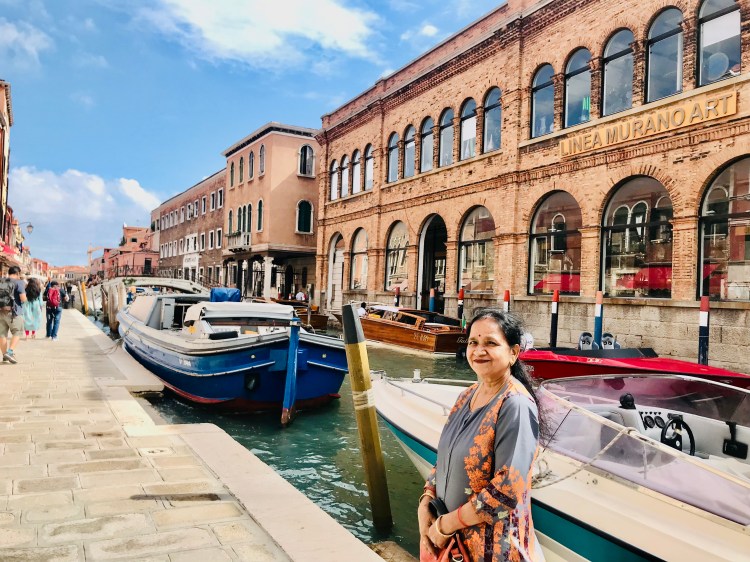
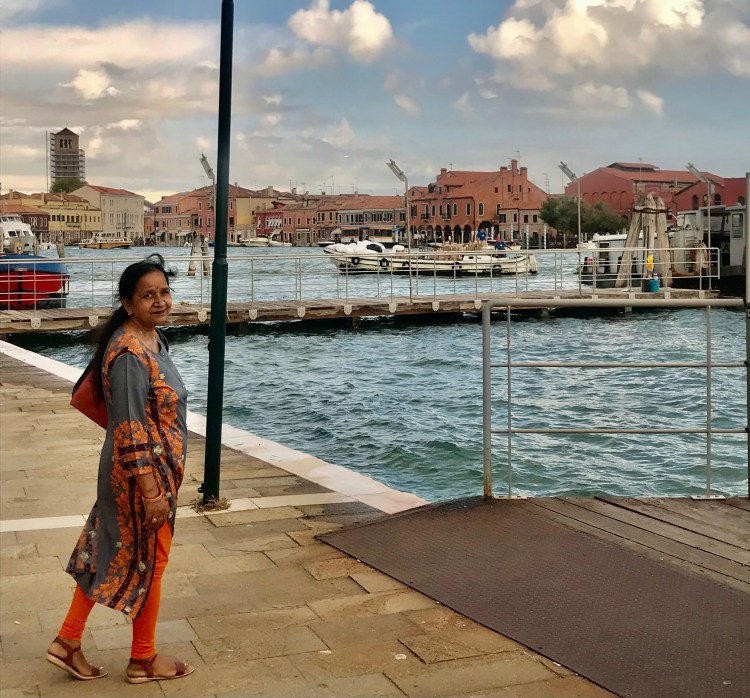


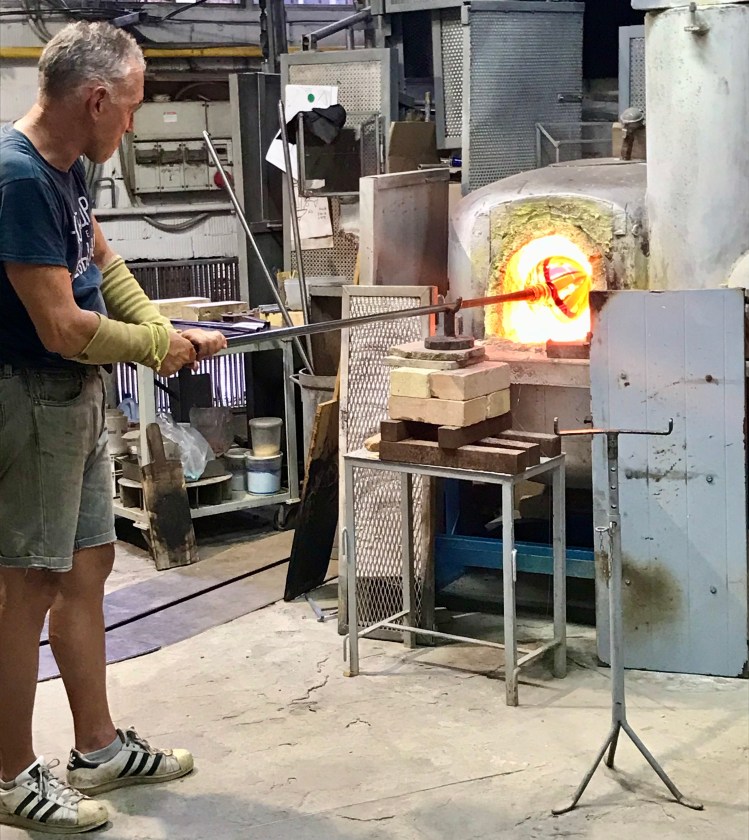


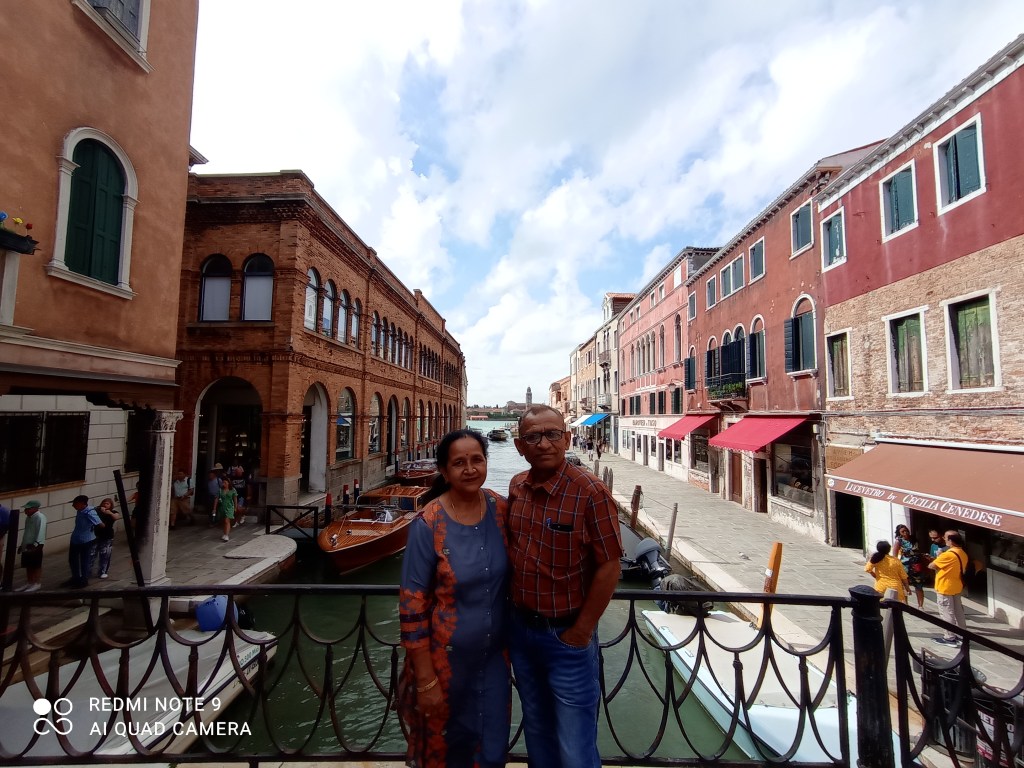


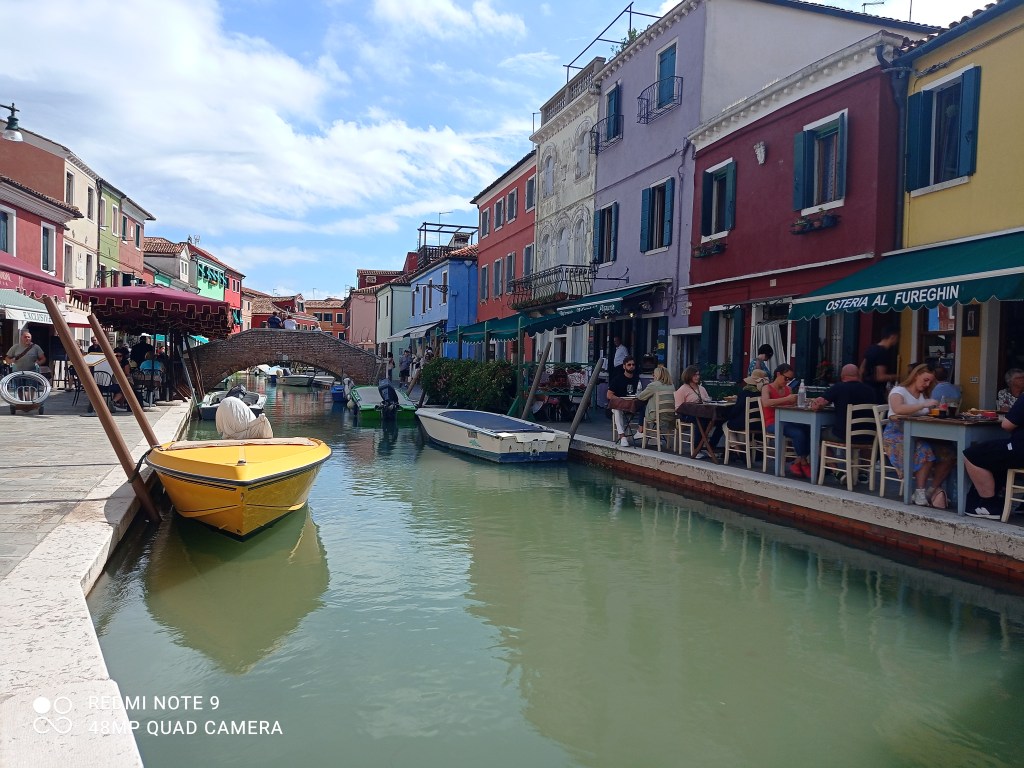


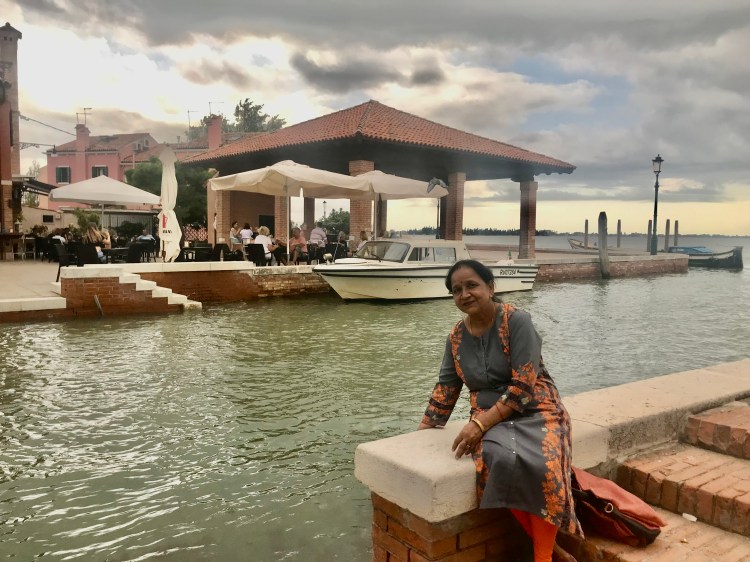
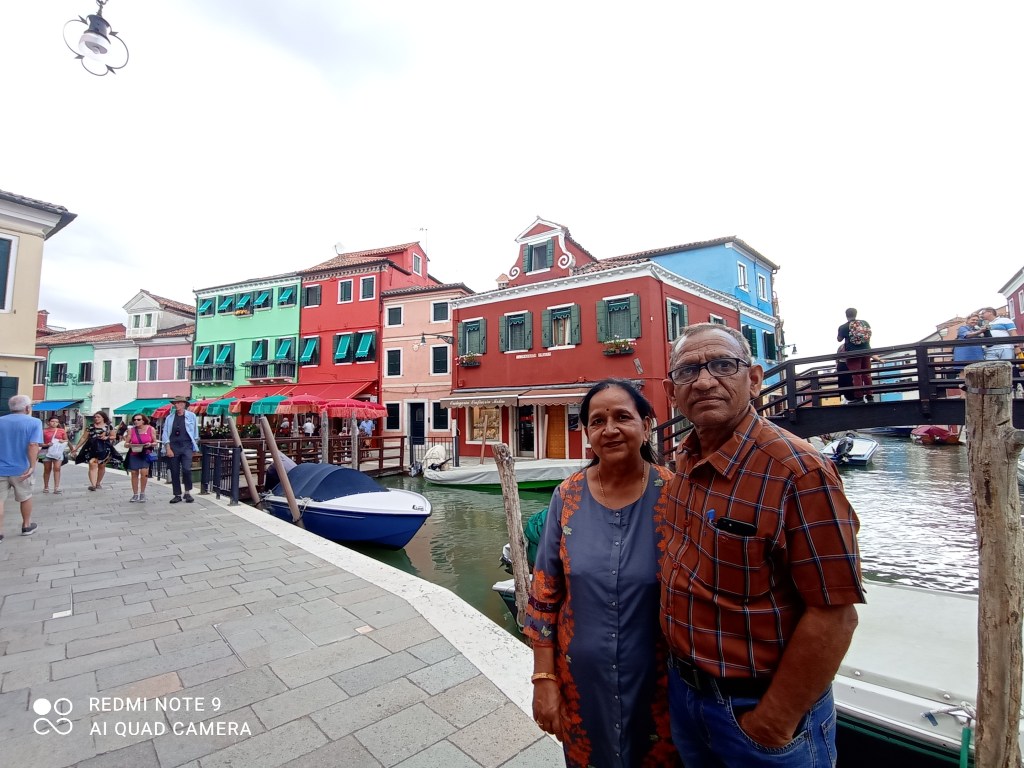


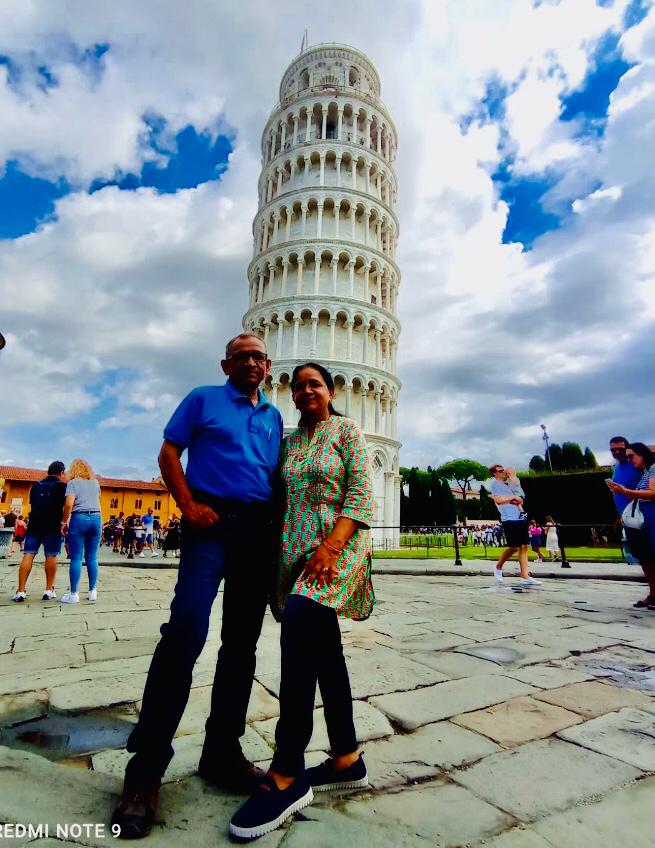
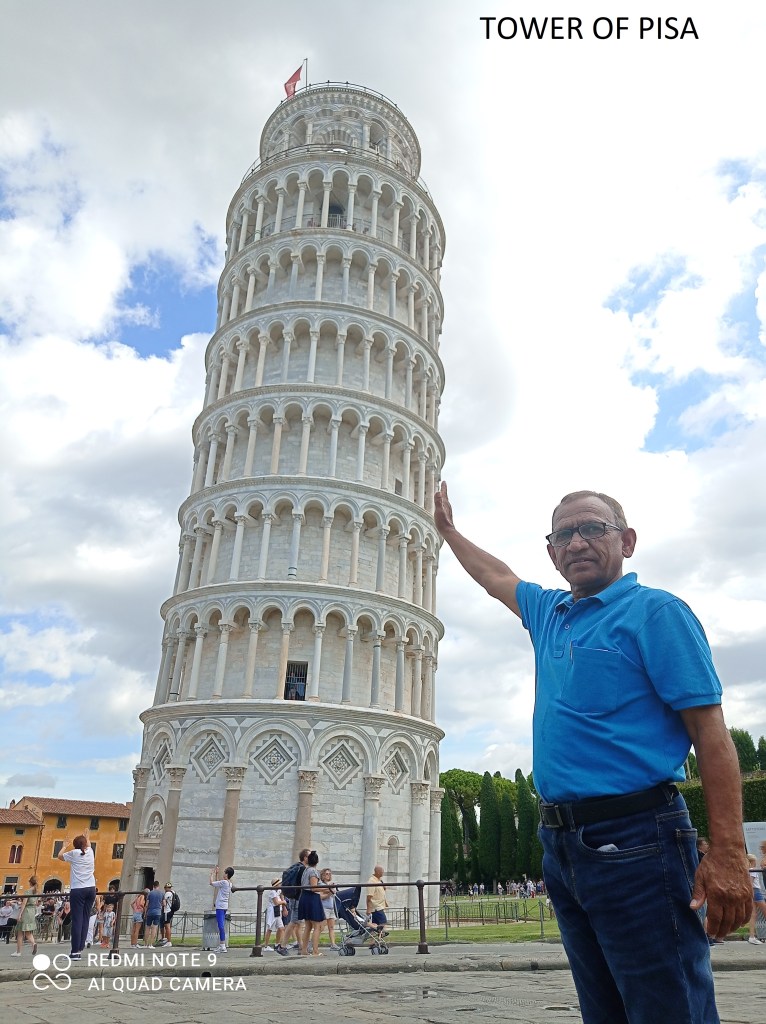


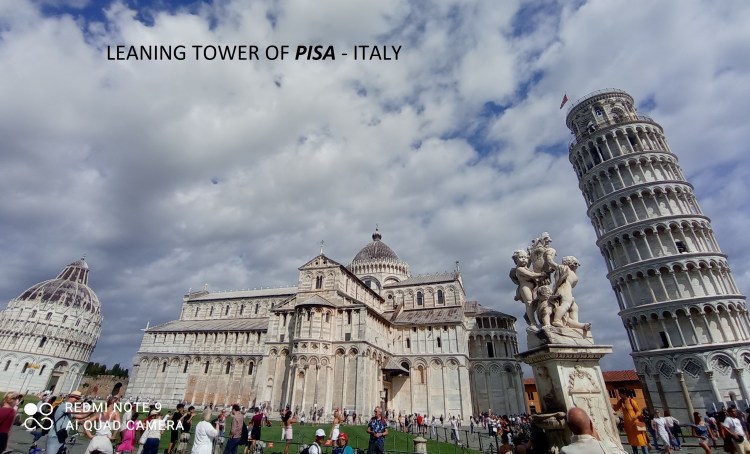


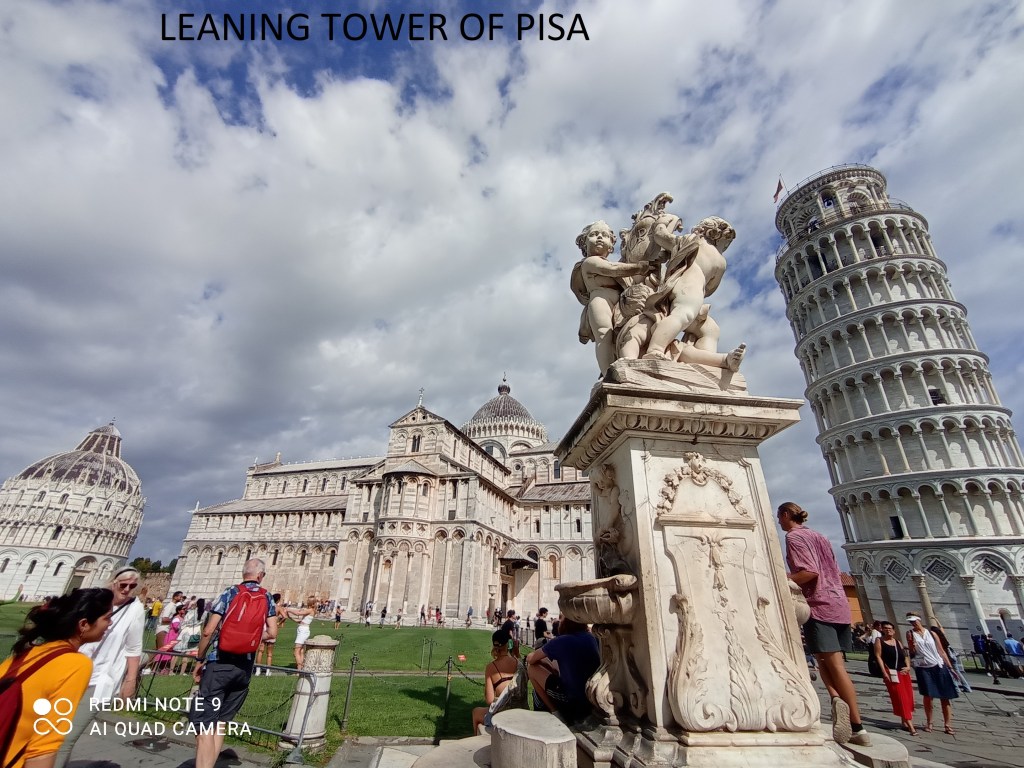


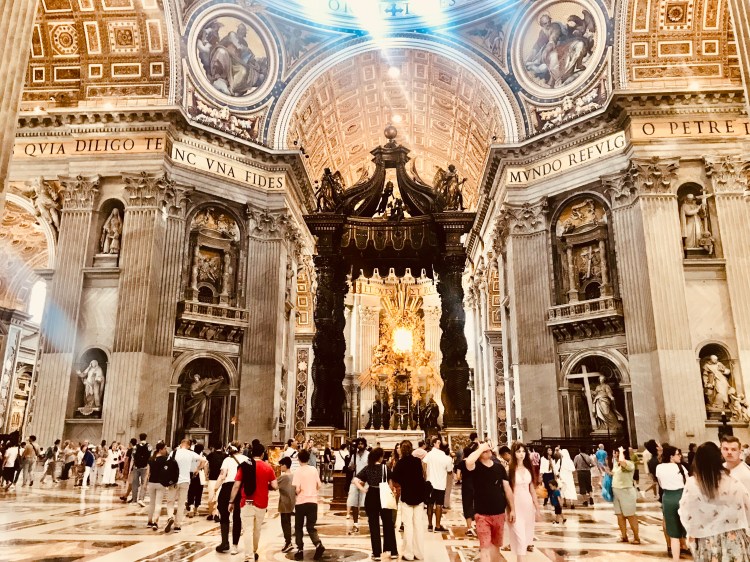


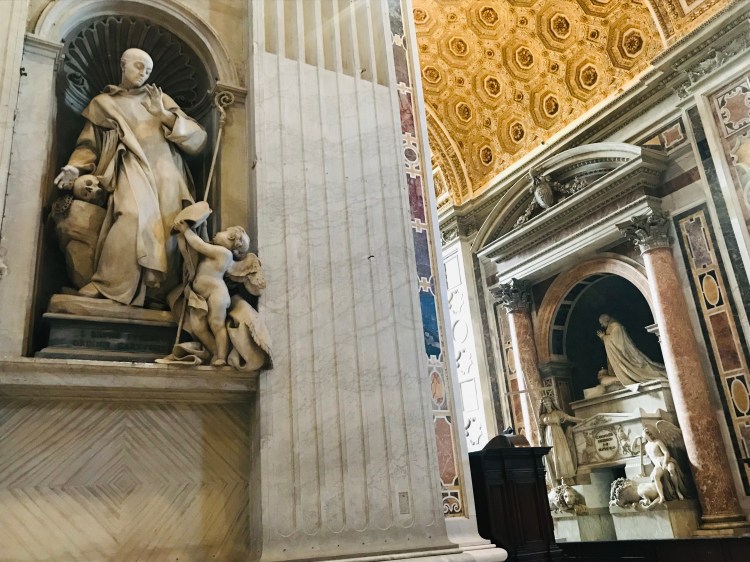
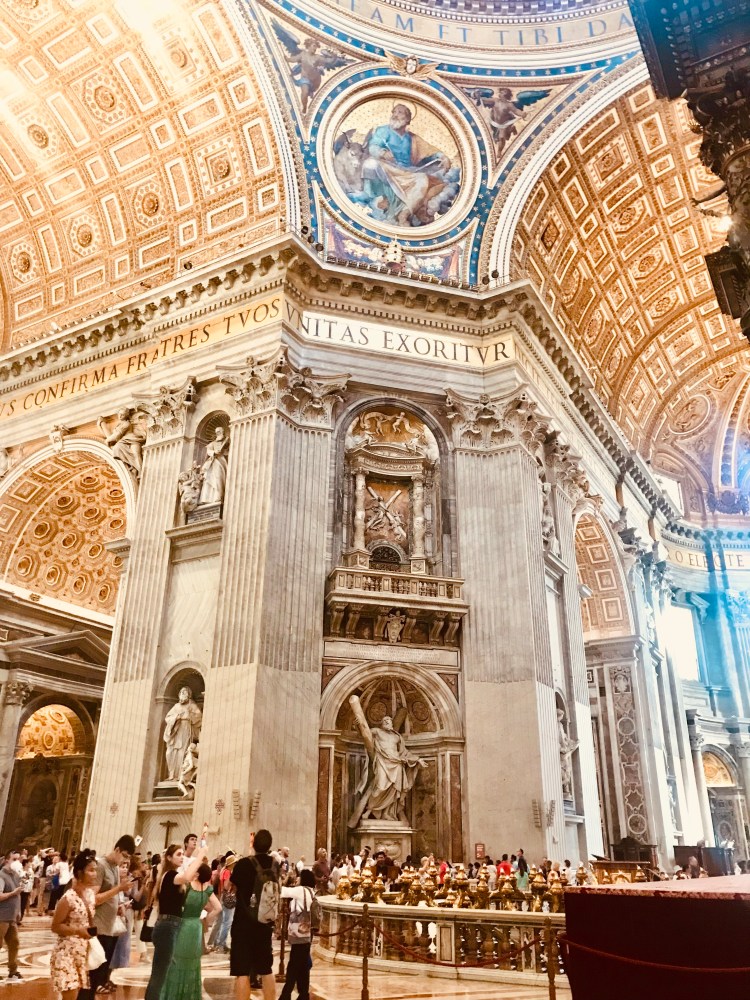


 Travel and Share