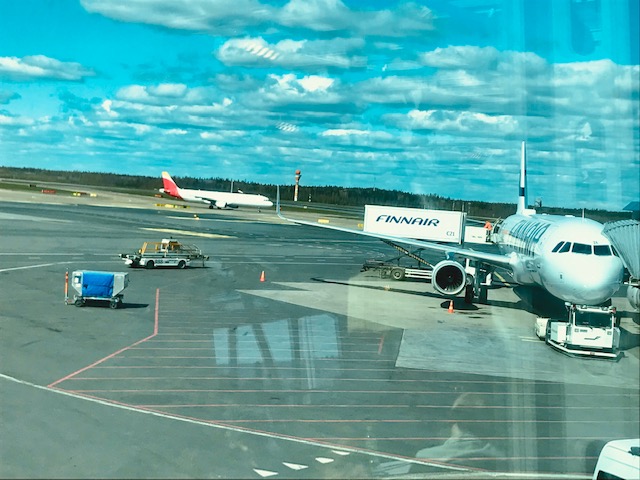
WAITING AT THE T-3,DELHI AIRPORT FOR OUR AMSTERDAM FLIGHT WITH A CHANGEOVER AT WARSAW(POLAND)POSING AT THE WARSAW AIRPORT DURING THE LAYOVERAT WARSAW AIRPORTAT THE WARSAW AIRPORT
On 9th May 2025 ,amid very tense situation of war threat between India-Pakistan, We set out from Delhi on our 45 days trip of Eindhoven(NLs)to reunite with son & family & celebrate our Grand daughter Tarinni’s birthday on 19th May 2025.The celebration is planned to be held in Iceland where we will be touring from 17th to 22th May.I feel indebted to all my friends & co-bloggers for their invaluable wishes & blessings.I am grateful to the Almighty for bestowing us with yet another opportunity to visit Europe & explore the very sceinic ,rejunuvating & beautiful continent yet again.I will remind my valued readers that we visited Eindhoven in this month last year to assist our son in the delievery of their first child Tarinni.I will be posting a blog on the birthday Celebrations then. Happy Reading !
WITH OUR CUTE GRAND DAUGHTER ‘TARINNI’WITH CUTE “TARINNI”
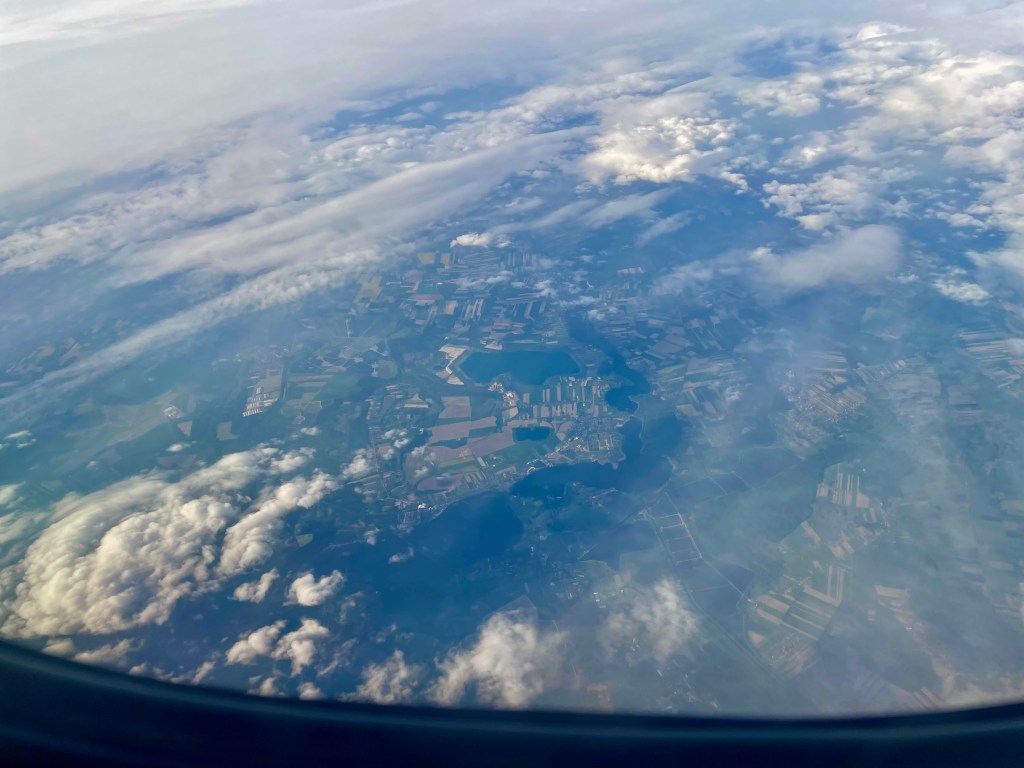
During our flight through Warsaw & Amsterdam, we came across some mesmerising views of the cities which I captured through my mobile camera posted below.
AERIAL VEIW OF WARSAW CITYScreenshotScreenshotBEAUTIFUL VEIWS OF AMSTERDAMAERIAL MESMERISING VIEWS OF THE AMSTERDAM CITY
On 21/1/25,after our amazing ‘Lion Safari’ of Gir Wildlife Sanctuary, we proceeded to Somnath Temple & Triveni Sangam.On the very first glimpse of Somnath temple,we felt speechles at the spiritual grandeur, peaceful atmosphere,beautiful architecture & significance of it being considered the first Jyotirlinga.We had a very comfortable darshan of the Mahadev temple as all the facilities at the temple were well managed including the evening Mangal Arti even in the peak hours.The temple’s architecture & ambience is impressive including the interior decoration.The scenic coastal location provides amazing view of the ocean from the temple.The old Somnath temple located outside the boundary is must visit for everyone.The Light & Sound show is a delight to watch depicting the original history of the Somnath temple.After visiting the Somnath temple, visited the Triveni Sangam where I took a dip in the the spiritual atmosphere.
Some noteworthy facilities being efficiently managed by the Temple management: 1)Visitors are provided with locker for storing their belongings free of charges. 2)Shoes/slippers counters are provided for the convenience of visitors. 3)Cameras/Mobiles aren’t allowed inside the temple premises!However private photographers providing you photo prints @Rs 100/- as remembrance of visit. 4)Security,Traffic & transportation is being managed very effectively.Also there is free facility of Golf carts for the physically chalanged & elderly upto the Temple entrance. 5)Prasad is available on payment basis in numerous stalls of temple management. 6)Darshan process is very convenient.Separate lines for gents & ladies are available for darshan in the temple.
After the Triveni sangam we proceeded for visiting the Junagadh Fort at 4 pm but could not get entry being already closed for the day.Such bad luck .Never the less,I had prepared some notes on Junagadh & the tourist attractions which I am providing for my valued readers.Happy Reading ,friends !
WE ALL FIVE POSING WITH THE ‘SOMNATH TEMPLE’ IN THE BACKDROP
Somnath temple (somanātha) or Deo Patan, is a Hindu temple, located in Prabhas Patan, Veraval in Gujarat, India. It is one of the most sacred pilgrimage sites the Tirtha Kshetra for Hindus and is the first among the twelve jyotirlinga shrines of Shiva. It is unclear when the first version of the Somnath temple was built, with estimates varying between the early centuries of the 1st millennium and about the 9th century CE. Various texts, including the Mahabharata and Bhagavata Purana, mention a tirtha (pilgrimage site) at Prabhas Patan on the coastline of Saurashtra, where the later temple was, but archaeology has not found traces of an early temple, though there was a settlement there.
The temple was reconstructed several times in the past after repeated destruction by multiple Muslim invaders and rulers, notably starting with an attack by Mahmud Ghazni in January 1026 In the late 19th and early 20th centuries, historians and archaeologists of the colonial era actively studied the Somnath temple because its ruins showed a historic Hindu temple that was turning into an Islamic mosque.After India’s independence, those ruins were demolished, and the present Somnath temple was reconstructed in the Māru-Gurjara style of Hindu temple architecture. The contemporary Somnath temple’s reconstruction was started under the orders of the first Deputy Prime Minister of India, Vallabhbhai Patel, after receiving approval for reconstruction from Mahatma Gandhi. The reconstruction was completed in May 1951, after Gandhi’s death.
Location
The Somnath temple is located along the coastline in Prabhas Patan, Veraval, Saurashtra region of Gujarat. It is about 400 kilometres southwest of Ahmedabad, 82 kilometres south of Junagadh – another major archaeological and pilgrimage site in Gujarat. It is about 7 kilometres southeast of the Veraval railway junction, about 130 kilometres southeast of the Porbandar airport and about 85 kilometres west of the Diu airport. The Somnath temple is located close to the ancient trading port of Veraval, one of three in Gujarat from where Indian merchants departed to trade goods. The 11th-century Persian historian Al-Biruni states that Somnath has become so famous because “it was the harbor for seafaring people and a station for those who went to and fro between Sufala in the country of Zanj (east Africa) and China”. Combined with its repute as an eminent pilgrimage site, its location was well known to the kingdoms within the Indian subcontinent. Literature and epigraphical evidence suggest that the medieval-era Veraval port was also actively trading with the Middle East and Southeast Asia. This brought wealth and fame to the Veraval area, as well as the temple.
The site of Prabhas Patan was occupied during the Indus Valley Civilisation, 2000–1200 BCE. It was one of very few sites in the Junagadh district to be so occupied. After abandonment in 1200 BCE, it was reoccupied in 400 BCE and continued into the historical period. Prabhas is also close to the other sites similarly occupied: Junagadh, Dwarka, Padri and Bharuch.
History :
The site of Somnath has been a pilgrimage site from ancient times on account of being a Triveni Sangam (the confluence of three rivers: Kapila, Hiran and Saraswati). Soma, the Moon god, is believed to have lost his lustre due to a curse, and he bathed in the Sarasvati River at this site to regain it. The result is said to be the waxing and waning of the moon. The name of the town, Prabhasa, meaning lustre, as well as the alternative name Someshvara (“the lord of the moon” or “the moon god”), arise from this tradition
Ruined Somnath temple, 1869
The name Someshvara begins to appear starting in the 9th century. The Gurjara-Pratihara king Nagabhata II (r. 805–833) recorded that he has visited tirthas in Saurashtra, including Someshvara.Romila Thapar states that this may not imply the existence of a temple, but rather that it was a pilgrimage site (tirtha). The Chaulukya (Solanki) king Mularaja possibly built the first temple for Soma (“moon god”) at the site sometime before 997 CE, even though some historians believe that he may have renovated a smaller earlier temple.
Mahmud of Ghazni, the Turkic Muslim ruler of the Ghaznavid Empire, raided India as far as Somnath, Mathura and Kannauj in Gurjara-Pratihara territory. In 1026, during the reign of Bhima I, the Turkic Muslim ruler Mahmud of Ghazni raided and plundered the Somnath temple, breaking its jyotirlinga. He took away a booty of 20 million dinars.According to Romila Thapar, relying on a 1038 inscription of a Kadamba king of Goa, the condition of Somnath temple in 1026 after Ghazni’s is unclear because the inscription is “puzzlingly silent” about Ghazni’s raid or temple’s condition. This inscription, states Thapar, could suggest that instead of destruction it may have been a desecration because the temple seems to have been repaired quickly within twelve years and was an active pilgrimage site by 1038
The raid of 1026 by Mahmud is confirmed by the 11th-century Persian historian Al-Biruni, who worked in the court of Mahmud, who accompanied Mahmud’s troops between 1017 and 1030 CE on some occasions, and who lived in the northwest Indian subcontinent region – over regular intervals, though not continuously. The invasion of Somnath site in 1026 CE is also confirmed by other Islamic historians such as Gardizi, Ibn Zafir and Ibn al-Athir. However, two Persian sources – one by adh-Dhahabi and other by al-Yafi’i – state it as 1027 CE, which is likely incorrect and late by a year, according to Khan – a scholar known for his studies on Al-Biruni and other Persian historians.According to Al-Biruni: The location of the Somnath temple was a little less than three miles west of the mouth of the river Sarasvati. The temple was situated on the coast of the Indian ocean so that at the time of flow the idol was bathed by its water. Thus that moon was perpetually occupied in bathing the idol and serving it.”
Somnath means “Lord of the Soma” or “moon”.The site is also called Prabhasa (“place of splendor”). Somnath temple has been a jyotirlinga site for the Hindus, and a holy place of pilgrimage (tirtha). It is one of five most revered sites on the seacoast of India, along with the nearby Dwaraka in Gujarat, Puri in Odisha, Rameswaram and Chidambaram in Tamil Nadu.
Scriptural mentions
Many Hindu texts provide a list of the most sacred Shiva pilgrimage sites, along with a guide for visiting the site. The best known were the Mahatmya genre of texts. Of these, Somnatha temple tops the list of jyotirlingas in the Jnanasamhita – chapter 13 of the Shiva Purana, and the oldest known text with a list of jyotirlingas. Other texts include the Varanasi Mahatmya (found in Skanda Purana), the Shatarudra Samhita and the Kothirudra Samhita. All either directly mention the Somnath temple as the number one of twelve sites, or call the top temple as “Somesvara” in Saurashtra – a synonymous term for this site in these texts.The exact date of these texts is unknown, but based on references they make to other texts and ancient poets or scholars, these have been generally dated between the 10th and 12th century, with some dating it much earlier and others a bit later. The Somnath temple is not mentioned in ancient Sanskrit texts of Hinduism, but the “Prabhasa-Pattana”
The Somnath temple is not mentioned in ancient Sanskrit texts of Hinduism, but the “Prabhasa-Pattana” is mentioned as a tirtha (pilgrimage site) For example, the Mahabharata (c. 400 CE in its mature form)in Chapters 109, 118 and 119 of the Book Three (Vana Parva), and Sections 10.45 and 10.78 of the Bhagavata Purana state Prabhasa to be a tirtha on the coastline of Saurashtra.
Reconstruction during 1950–1951
K. M. Munshi with archaeologists and engineers of the Government of India, Bombay, and Saurashtra, with the ruins of Somnath Temple in the background, July 1950.Before independence, Veraval was part of the Junagadh State, whose ruler had acceded to Pakistan in 1947. India contested the accession and annexed the state after holding a referendum. India’s Deputy Prime Minister Vallabhbhai Patel came to Junagadh on 12 November 1947 to direct the stabilization of the state by the Indian Army, at which time he ordered the reconstruction of the Somnath temple.
When Patel, K. M. Munshi and other leaders of the Congress went to Mahatma Gandhi with their proposal to reconstruct the Somnath temple, Gandhi blessed the move but suggested that the funds for the construction should be collected from the public, and the temple should not be funded by the state.Accordingly, The Somnath Trust was established to collect funds and oversee the construction of the temple. Munshi headed the Trust. Being the Civil Supplies minister in the Government of India, Munshi was keen to involve the Government of India in the reconstruction effort, but he was overruled by Nehru.According to Pandit Prem Nath Bazaz, there had been an agreement between the U.P. Government and the Indian Sugar Syndicate, wherein six annas (that is 40 paise) had to be collected out of the price of every mound of sugar by the Syndicate for the renovation of the Somnath temple.
The ruins were pulled down in October 1950. The mosque present at that site was shifted few kilometres away by using construction vehicles.The new structure was built by the traditional Sompura builders of temples in Gujarat. On 11 May 1951, Rajendra Prasad, the President of India performed the installation ceremony for the temple at the invitation of Munshi.
Present temple
The present temple is a Māru-Gurjara architecture (also called Chaulukya or Solanki style) temple. It has a “Kailash Mahameru Prasad” form, and reflects the skill of the Sompura Salats, one of Gujarat’s master masons. The architect of the new Somnath temple was Prabhashankarbhai Oghadbhai Sompura, who worked on recovering and integrating the old recoverable parts with the new design in the late 1940s and early 1950s. The new Somnath temple is intricately carved, two level temple with pillared mandapa and 212 relief panels. A wide-angle view – a bit distorted – from the southeast side of the present Somnath temple. Nataraja can be seen on the sukhanasi, along with the two-storey design. The temple’s śikhara, or main spire, is 15 metres in height above the sanctum, and it has an 8.2-metre-tall flag pole at the top.According to Ananda Coomaraswamy – an art and architecture historian, the earlier Somnath temple ruin followed the Solanki-style, which is Nagara architecture inspired by the Vesara ideas found in Western regions of India.
Artwork
The rebuilt temple as found in the ruined form in the 19th century and the current temple used recovered parts of previous temple with significant artwork. The new temple has added and integrated the new panels with a few old ones, the color of the stone distinguishing the two. The panels and pillars with historic artwork were and are found in the south and southwest side of the Somnath temple. In general, the reliefs and sculpture is mutilated, to the point that it is difficult for most to “identify the few images that remain” on panels, states Cousens. An original Nataraja (Tandava Shiva), albeit with chopped arms and defaced, can be seen on the south side. A mutilated Nandi is to the right. To the left of this are traces of Shiva-Parvati, with the goddess seated in his lap. Towards the north-east corner, portions of panels in a band similar to Ramayana scenes in historic Hindu temples can be traced. Sections can be seen with “beautiful vertical mouldings, on either side of the main front doorway”, states Cousens, and this suggests that the destroyed temple was “exceedingly richly carved”. The temple likely had a galaxy of Vedic and Puranic deities, as one of the partially surviving relief shows Surya’s iconography – two lotuses in his hand. The older temple featured an open plan, with great windows that allow light into the mandapa and circumambulation passage. The intricate and detailed artwork inside and on the pillars of Somnath temple were quite similar to those found in the Luna Vasahi temple at Mount Abu.
Tirtha and festivals
The Somnath-Prabhasa tirtha has been one of the revered tirtha (pilgrimage) site for the Hindus. It is the famed Prabhasa site found in Brahmi script inscriptions in Maharashtra sites.It is mentioned in the poems of Kalidasa. The new temple is the top pilgrimage site in Gujarat along with Dwarka.
Archaeological studies
The Somnath temple site and coastline has been excavated for archaeological evidence by Indian teams. The first major excavation was completed in 1950–51 just before the Somnath temple was reconstructed. It was led by B. K. Thapar, one of the Director General of Archaeological Survey of India, and a report published. This Thapar study yielded direct and substantial evidence of a 10th-century or earlier large temple. B. K. Thapar estimated the older temple to be from the 9th century, while Dhaky states to more likely from the 10th century, i.e. from 960 to 973 CE. The Thapar study also found artifacts and ruins with ancient scripts such as Brahmi and later scripts such as proto-Nagari and Nagari, thus confirming the antiquity of Somnath-Patan through at least much of the 1st-millennium.
Triveni Sangam in Gir Somnath
The Triveni Sangam in Gir Somnath is located 1,4 km from Somnath temple ,Veraval in Gir Somnath district, Gujarat. It marks the confluence of rivers Hiran, Kapila and the Saraswati, where they meet the Arabian Sea on the west coast of India. Most of the people visit here to take bath and to perform rituals. Its believed that taking bath at this Sangam will remove all our sins. The site of Somnath has been a pilgrimage site from ancient times on account of being a Triveni Sangam: The Gurjara-Pratihara king Nagabhata II recorded that he has visited tirthas in Saurashtra, including Someshvara, an alternative name for the temple.
POSING ON THE HOLY TRIVENI SANGAM GHATS
Triveni Sangam is said to be a place where Hindus can attain moksha or release from the cycle of life and death. One can see a number of people praying or just experiencing the spiritual atmosphere sitting by the stairs. The fervour is often upstaged by hundreds of gulls that flock at the stepped ghats. The significance of the Triveni Sangam dates back to thousands of years ago when the rivers Hiran, Kapila and the Sarswati.
Junagadh:
Its the city and headquarters of Junagadh district in the Indian state of Gujarat. Located at the foot of the Girnar hills, 355 kilometres southwest of Ahmedabad and Gandhinagar (the state capital), it is the seventh largest city in the state. It is dominated by the Chudasama clan of Rajputs since ancient times.
Main tourist attractions:
Gate of the city of Junagadh, Statue of Narsinh Mehta, Ashoka’s Rock Edict at Girnar, Girnar Hills, Radha Damodar Temple, Junagadh, Damodar Kund, Shri Swaminarayan Mandir, Junagadh, Mahabat Maqbara
JUNAGADH FORTDAMODAR KUND & GIRNAR HILL IN THE BACKGROUNDJUNAGADH BUDDHIST CAVES
Literally translated, Junagadh means “Old Fort”. It was a part of Saurashtra state and later Bombay state. In 1960, in consequence of the Maha Gujarat movement, it became part of the newly formed Gujarat state.
History
As per the legend, the founder of the Ror Dynasty Raja Dhaj, Ror Kumar, also known as Rai Dyach, ruled over the principality of Jhunagarh in the fifth century BC. An early structure, Uparkot Fort, is located on a plateau in the middle of town. It was originally built in 319 BCE during the Mauryan dynasty by Chandragupta . The fort remained in use until the 6th century, after which it was abandoned for approximately 300 years. It was later rediscovered by the Chudasama ruler Graharipu in 976 CE.The fort was subsequently besieged 16 times over a 1000-year period. One unsuccessful siege lasted twelve years.
Within 2 kilometres of Uparkot Fort is an inscription with fourteen Edicts of Ashoka on a large boulder. The inscriptions are in Brahmi script in a language similar to Pali and date from 250 BCE. On the same rock there is a later inscription in Sanskrit, which was added around 150 CE by Mahakshatrap Rudradaman I, the Saka (Scythian) ruler of Malwa, and a member of the Western Kshatrapas dynasty,and which has been described as “the earliest known Sanskrit inscription of any extent”.Another inscription dates from about 450 CE and refers to Skandagupta, the last Gupta emperor. Old rock-cut Buddhist caves in this area, dating from well before 500 CE, have stone carvings and floral work. There are also the Khapra Kodia Caves north of the fort, and the Bava Pyara Caves south of the fort. The Bava Pyara caves contain artworks of both Buddhism and Jainism.
THE FORTEEN EDICTS OF ASHOKA
The Maitraka dynasty ruled Gujarat from 475 to 767 CE. The founder of the dynasty, General Bhatarka, military governor of Saurashtra peninsula under the Gupta Empire, established himself as the independent ruler of Gujarat around the last quarter of the 5th century.
Chudasama dynasty
The early history of the Chudasama dynasty – which ruled Saurashtra from Junagadh – is almost lost. Bardic legends vary significantly in the names, order, and number of early rulers, making them unreliable as historical sources. According to tradition, the dynasty is said to have been founded in the late 9th century by Chudachandra. Subsequent rulers such as Graharipu, Navaghana, and Khengara, were in conflict with the Chaulukya rulers Mularaja and Jayasimha Siddharaja; and Saurashtra was briefly governed by Chaulukya governors during this period. These events are recorded in contemporary and later Jain chronicles In 1350, Junagadh was conquered by Muhammad bin Tughluq with the help and forces of Koli chieftain Jesaji (Jesing) from Ra Khengar.
After the end of the rule of the Chaulukyas and their successors, the Vaghela dynasty, in Gujarat, the Chudasamas ruled independently, or as vassals of successor states, the Delhi Sultanate and the Gujarat Sultanate. Mandalika I was the first Chudasama ruler known from inscriptions, and during his reign, Gujarat was invaded by the Khalji dynasty of Delhi. The last king of the dynasty, Mandalika III, was defeated and forcibly converted to Islam in 1472 by Gujarat Sultan Mahmud Begada, who annexed the state. The Uparkot Fort of Junagadh was occupied by the Chudasamas during the reign of Graharipu. It is said to have been later rebuilt by Navaghana, who had transferred his capital from Vamanasthali to Junagadh. He is also credited with construction of the stepwells Navghan Kuvo and Adi Kadi Vav in the fort. His descendant Khengara is attributed with building a stepwell, Ra Khengar Vav, on the way to Vanthali from Junagadh.
Best time to visit Somnath/Junagarh is in the cooler months of November to Feb.
My dear readers may please note that I have collated the above invaluable information on ‘Somnath Teerth & Junagadh’ from Wikipedia & friends to whom I am so very grateful.
A LION ,A LIONESS & A CUB IN THEIR NATURAL HABITAT IN THE GIR NATIONAL PARKScreenshot
Overnight stay at Kavish Lion Resort,Gir
kavish Lion ResortLovely & serene views of Resort by nightkavish Lion Resort by night RESTING PLACES IN THE BACKYARD WITH NICE VIEWSAT RECEPTION CENTRE OF GIR LION SAFARI
After attending a marriage function at Rajkot ,Gujarat on 19th/20th Jan’25, we (myself, my wife Anupama,son Abhimanyu ,daughter Soumya & granddaughter Nivedita )set out for Gir for safari of the Gir National park & wildlife Sanctuary famous for abode of the Asiatic lion.Stayed at a beautiful& comfortable Resort Kavish for the night .Next morning(21th Jan) we reached the Reception Centre of the Gir national Park & Sanctuary as per our booking & Schedule .The 4-seater Gypsy took us for a 3-hour drive(with one stop for availing washroom) on a picturesque tour of the rich biodiverse jungle.The staff guide/naturalist & driver were quite friendly & helpful.We had only to follow the guide & avoid making noise in this period. During the safari we were thrilled to encounter face to face with a lioness & a cub.We were very happy to sight them at such a close range for at least ten minutes feeling greatly excited.Also we were overwhelmed sighting the rare animal & plant biodiversity in the sanctury.The view at the Kamleshwer dam & the lake were simply amazing spectacle to watch.We took some photographs which I am displaying here for my valued readers.Happy Reading ,dear friends!
GIR NATIONAL PARK SAFARI BY GYPSY
About Gir National Park and Wildlife Sanctuary
Its also known as Sasan Gir, is a forest, national park, and wildlife sanctuary near Talala Gir in Gujarat, India. It is located 43 km north-east of Somnath, 65 km south-east of Junagadh and 60 km south-west of Amreli. It was established in 1965 in the erstwhile Nawab of Junagarh’s private hunting area, with a total area of 1,410.30 Sq km of which 258.71 Sqkm is fully protected as a national park and 1,151.59 Sqkm as wildlife sanctuary. It is part of the Khathiar-Gir dry deciduous forests eco-region.
The 14th Asiatic Lion Census 2015 was conducted in May 2015. In 2015, the population was 523 (27% up compared to previous census in 2010). The population was 411 in 2010 and 359 in 2005. The lion population in Junagadh District was 268 individuals, 44 in Gir Somnath District, 174 in Amreli District, and 37 in Bhavnagar district. There are 109 males, 201 females and 213 cubs.
Gir National Park is closed from 16 June to 15 October every year, throughout the monsoon season.One can find the details of the Lion Safari on line booking information on its official website.Its a must-visit destination & experience of a lifetime.
History
In the 19th century, the rulers of Indian princely states used to invite the British colonists for hunting expeditions. At the end of the 19th century, only about a dozen Asiatic lions were left in India, all of them in the Gir Forest, which was part of the Nawab of Junagarh’s private hunting grounds. British viceroys brought the drastic decline of the lion population in Gir to the attention of the Nawab of Junagadh, who established the sanctuary. Today, it is the only area in Asia where Asiatic lions occur and is considered one of the most important protected areas in Asia because of its biodiversity. The Gir ecosystem with its diverse flora and fauna is protected as a result of the efforts of the government forest department, wildlife activists and NGOs. It is now considered the jewel of Gujarat’s ecological resources.
Gir National Park and Gir Wildlife Sanctuary ; Water reserves:
The seven major perennial rivers of the Gir region are Hiran, Shetrunji, Dhatarvadi, Shingoda, Machhundri, Ambajal and Raval Rivers. The four reservoirs of the area are at four dams, one each on Hiran, Machhundri, Raval and Shingoda rivers, including the biggest reservoir in the area, the Kamleshwar Dam, dubbed ‘the lifeline of Gir’.
During peak summer, surface water for wild animals is available at about 300 water points. When drought hits the area following poor rainfall, surface water is not available at a majority of these points, and water scarcity becomes a serious problem (mainly in the eastern part of the sanctuary). Ensuring the availability of water during peak summer is one of the major tasks of the Forest Department staff.
Flora : Teak trees
More than 400 plant species were recorded in the survey of Gir forest in 1955. The botany department of M.S. University of Baroda has revised the count to 507 during their survey. According to the 1964 forest type classification, the Gir forest falls under “very dry teak forest” classification. Teak occurs mixed with dry deciduous species. Dry deciduous scrub forest and Dry savannah forests (Locally known as “vidis”). It is the largest dry deciduous forest in western India. Teak bearing areas are mainly in the eastern portion of the forest, which constitutes nearly half of the total area. Several species of acacia trees are found. Also found here are ber, jamun, babul (acacia), flame of the forest, ziziphus, tendu and dhak. Also plants like karanj, umlo, amli, sirus, kalam, charal and an occasional Vad (banyan tree) are found. These broadleaf trees provide cool shade and moisture content to the region. As part of the afforestation programme, casuarina and prosopis have been planted along the borders of the Gir forest.
The forest is an important biological research area with considerable scientific, educational, aesthetic and recreational values. It provides nearly 5 million kilograms of green grass by annual harvesting, which is valued approximately at ₹ 500 million. The forest provides nearly 123,000 metric tons worth of fuel wood annually.
Wildlife :Mugger crocodile ,Indian leopard & Striped hyena .The count of 2,375 distinct fauna species of Gir includes about 38 species of mammals, around 300 species of birds, 37 species of reptiles and more than 2,000 species of insects.
The carnivores group mainly comprises the Asiatic lion, Indian leopard, jungle cat, striped hyena, golden jackal, Bengal fox, Indian gray mongoose, ruddy mongoose, and honey badger. Asiatic wildcat and rusty-spotted cat occur, but are rarely seen.
The main herbivores of Gir are chital, nilgai, sambar, four-horned antelope, chinkara and wild boar. Blackbucks from the surrounding area are sometimes seen in the sanctuary. Among the smaller mammals, porcupine and hare are common, but the pangolin is rare.
AN OWL NESTLING IN BARK OF A TREENEELGAI
The reptiles are represented by the mugger crocodile, Indian cobra, tortoise and monitor lizard which inhabit the sanctuary’s bodies of water. Snakes are found in the bush and forest. Pythons are sighted at times along the stream banks. Gir has been used by the Gujarat State Forest Department which formed the Indian Crocodile Conservation Project in 1977 and released close to 1,000 marsh crocodiles into Lake Kamaleshwar and other small bodies of water in and around Gir. The plentiful avifauna population has more than 300 species of birds, most of which are resident. The scavenger group of birds has six recorded species of vultures. Some of the typical species of Gir include crested serpent eagle, Bonelli’s eagle, changeable hawk-eagle, brown fish owl, Indian eagle-owl, rock bush-quail, Indian peafowl, brown-capped pygmy woodpecker, black-headed oriole, crested treeswift and Indian pitta. The Indian grey hornbill was not found from the last census of 2001.
WILD BOARS
Asiatic Lion:
The Asiatic lion’s habitat is dry scrub land and open deciduous forest. The lion population increased from 411 individuals in 2010 to 674 in 2020, and all of them live in or around Gir National Park. In 1900 it was estimated that the population was as low as 100, and the Asiatic lion was declared a protected species. A census in 1936 recorded 289 animals. The first modern-day count of lions was done by Mark Alexander Wynter-Blyth, the principal of Rajkumar College, Rajkot and R.S. Dharma kumar sinhji sometime between 1948 and 1963;and a further survey, in 1968, recorded that since 1936 numbers had fallen to 162.
Even though the Gir Forest is well protected, there are instances of Asiatic lions being poached. They have also been poisoned in retaliation for attacking livestock. Some of the other threats include floods, fires and the possibility of epidemics and natural calamities. Gir nonetheless remains the most promising long-term preserve for them. During a prolonged drought from 1899 to 1901, lions attacked livestock and people beyond the Gir Forest. After 1904, the rulers of Junagadh compensated livestock losses. Today, the lions in Gir National Park rarely attack people.
Lion conservation:
The Lion Breeding Programme creates and maintains breeding centres. It also carries out studies of the behaviour of the Asiatic lions and also practices artificial insemination. One such centre has been established in the Sakkarbaug Zoo at the district headquarters of Junagadh, which has successfully bred about 180 lions. A total of 126 pure Asiatic lions have been given to zoos in India and abroad. The census of lions takes place every five years. Previously indirect methods like using pugmarks of the lion were adopted for the count. However, during the census of April 2005 (which originally was scheduled for 2006, but was advanced following the reports and controversy over vanishing tigers in India), “Block-Direct-Total Count” method was employed with the help of around 1,000 forest officials, experts and volunteers . It means that only those lions were counted that were “spotted” visually. Use of “live bait” (a prey that is alive and used as a bait) for the exercise, though thought to be a traditional practice, was not used this time. The reason believed to be behind this is the Gujarat High Court ruling of 2000 against such a use of animals.
During the 2010 census ‘The Cat Women of Gir Forest’ counted more than 411 lions in the park, and 523 in 2015. The women who do the counting are from traditional tribes in neighbouring villages. There are over 40 women van raksha sahayaks, who seek only to protect the animals of the park.
Kamleshwer dam & the lake
Kamleshwer dam is the biggest reservoir in the area is dubbed ‘the lifeline of Gir’.We thoroughly enjoyed our short stop at this beautiful place with breathtaking views.
GIR COWS
Ecological problems
Gir National Park and Sanctuary faces a number of threats to its ecosystem. Natural threats include recurrent drought, cyclones, and forest fires . Anthropogenic threats include over-grazing ,encroachment, excessive traffic and resultant weed infestation .Tourism contributes to this environmental degradation, as does the mining carried out in the periphery. Pollution results from the railway lines that run through the peripheral zone.The narrow genetic base in the large mammals is also an issue of growing concern.
Summary of activities at the Gir national park
Screenshot
My dear readers may please note that I have collated the above invaluable information on ‘the Gir Wildlife sanctuary’ from Wikipedia & friends to whom I am so very grateful.
GOODBYE 2024 !THANKS EVERYONE WHO GAVE ME THE REASON TO SMILE IN 2024 !MAY YOUR LOVE AND BLESSINGS REMAIN WITH US IN THE NEW YEAR 2025.
Stepping into the New Year 2025 is an opportunity for a fresh start & a new page in life to be embraced on a positive note as its time for celebration, reflection & hope!Lets be happy as the world needs you! Keeping everything behind us, lets wish everyone,on the eve of the new calender year, marking the opportunnity to set new goals & embrace fresh beginnings!Lets pray to the Almighty for peace,sound health, joy & happiness as everyone needs to grow & thrive! Lets settle all our disputes & fights & focus on mending broken links!Lets be compassionateto each other & make this planet a better place to live in !
HAPPY NEW YEAR 2025
ITSTIME FOR THE NEW YEAR RESOLUTIONS :-
Let go off the useless baggage on our heads ,embrace life, new adventures,good fortunes,renewed hopes, new opportunities!Take a leap of faith & begin the wonderful New year-2025. By believing, Celebrate endings for they provide new beginings!Break a bad habit ,learn a new skill & take calculated risks in life!Stay committed to your decisions but stay flexible in your approach!Be happy as you deserve nothing but the best & your time is coming!Past is leaving !The present is for embracing & future is for setting new hopes !Live in this transformative phase of self discovery!All the best everyone for a very peaceful & healthy life in future!
MAY YOUR LOVE AND BLESSINGS REMAIN WITH US IN THE NEW YEAR 2025
LETS ALL WELCOME THE NEW YEAR -2025WITH RENEWED ENTHUSIASM:
On this special occasion, I take this opportunity to present some inspiring Quotes by motivational writers showing way to a virtuous life!Happy reading dear readers💖
ScreenshotScreenshotScreenshotScreenshotScreenshotSPENDING SOME QUALITY TIME IN THE NATURAL SETTINGS IS QUITE BENEFICIAL FOR OUR PHYSIQUE AND MENTAL HEALTH
Being a travel enthusiast , I have a greatPassion for travel and adventure : Right from my early childhood ,I had a passion for travelling to new places & indulging in sports and adventure !As I grew up I started travelling & exploring places as soon I got any opportunity being very curious about the way of life, language, culture & the religious belief of people !Having travelled to places I wanted to share my travel stories with people alongwith information on the places visited!After a bit of search I came across this beautiful site-Wordpress serving a great platform for exchange of invaluable information on diverse topics,Travel being one !Here I got associated with many great travelers & their great sites with a treasure of informative blogs !I am immensely inspired by their thoughts regarding ‘travels’ which I am putting into words here:
“Travel is an aspect of life like our journey through life. Traveling is like pursuing our goals in life. Exploring a new country is like a dream turning into a reality .To journey is to enjoy what is on the route: whatever our interests are: people, architecture, customs, history, weather, the local situation, their politics & the personal ups and downs of journeying. This is just like life. We expect life to run smoothly, often complain when it doesn’t, some of us even try to control life tightly in our fists so that we don’t face any unexpected situations. But if we let go and flow with life, we enjoy what is on route; it might not be exactly the way we thought it would turn out but it will be fuller & richer. My experience of life & travel is that it is much better than what I imagined it would be“.
Here I am sharing some travel photos alongwith some inspiring quotes:
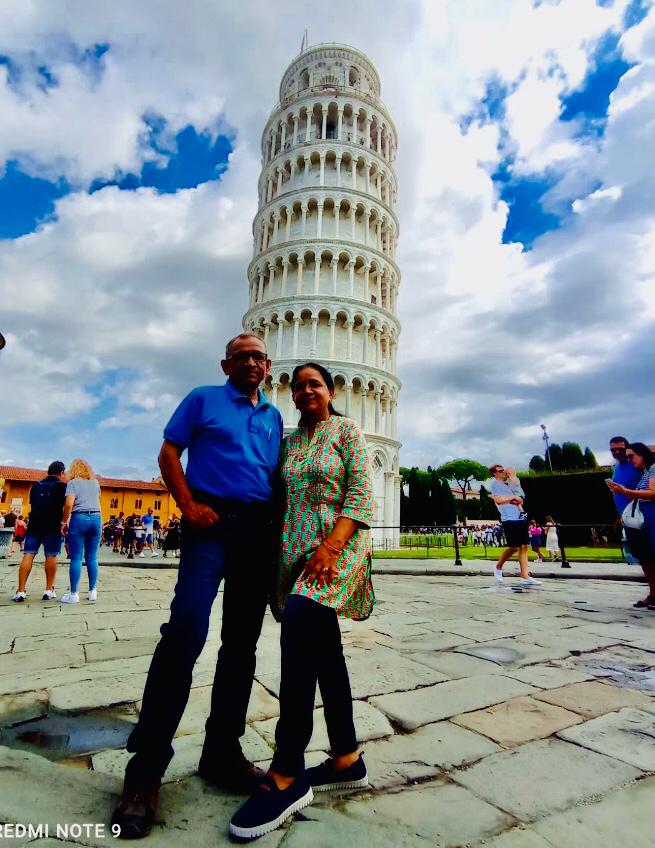
IT HELPS CHILDREN TO ENJOY THEIR PRIME WITHOUT HAVING TO WORRY TOO MUCH ABOUT THEIR AGEING PARENTSSPENDING SOME QUALITY TIME TOGETHER WITNESSING ONE OF THE SEVEN WONDERS OF WORLDFOLLOWING MY PASSION OF LIFE :TRAVELLING & EXPLORING PLACES SINCE 50 YRS NOWROME ,ITALYENYOYING LIFE TO THE FULLEST VISITING AMAZING PLACESIN ROMEPOSING FOR A PHOTO IN THE COLOSSEUM ,ROMEA VISIT TO THE LEANING TOWER OF PISA ,ITALY:AN ARCHITECTURAL MARVELA BEAUTIFUL FAMILY OUTING TO VISIT THE AMAZING SAGRADA FAMILIA CHURCH ! A FAMILY IS SOURCE OF JOY ,COMFORT & UNCONDITIONED LOVE 💖POSING IN FRONT OF THE AMAZING ARCHITECTURE IN BRUSSELSFEELING HIGH AT “THE TOP OF EUROPE”A FAMILY DOESN’T NEED TO BE PERFECT, IT JUST NEEDS TO BE UNITED IN LOVE ❤ENJOYING VISIT TO THE MESMERIZING BOATING VILLAGE ,GIETHOORN (NETHERLANDS)ENJOYINGFAMILY TIME :A FAMILY IS ONE OF THE NATURE’S MASTERPIECESScreenshotTHE BEST WAY OF BEING IMMORTAL IS TO LEARN TO REMAIN ALIVE IN PEOPLES’ HEARTS 💖FOREVER😁MISTAKE IS JUST A PAGE OF LIFE BUT A RELATION IS A COMPLETE BOOK! IF NECESSARY YOU CAN TEAR OFF ONE PAGE OF BOOK BUT PLEASE DO NOT LOOSE THE BOOK ITSELF !It took me a lifetime collecting ‘happiness’,but then I realized happy are those who were distributing happinessIf someone talks to you using his heart💖, kindly do not reply to him using your brains please 😀😁
FINALLY I, ALONGWITH MY FAMILY ,WISH YOU ALL A VERY HAPPY & PROSPEROUS NEW YEAR 2025 💕
Today I have completed my 5 years blogging with WordPress.com!On this occasion, I want to thank “WordPress” for providing such a beautiful platform enabling us to express our thoughts & experiences in our own words ! And I also express my heartiest gratitude to my lovely Co-Bloggers for extending their love & invaluable support in this fascinating blogging journey till date!I am sure you all will keep supporting me in future too!I am indebted to all my 389 Subscribers for the encouragement showered upon me during this period!Through my blogs I have shared my travel experinces with my valued readers at the same time tried to provide maximum information on the destinations visited!I have posted 117 blogs till now!
Wishing all my lovely readers sound health & happy blogging !
EINDHOVEN RAILWAY STATIONEINDHOVEN AIRPORT :THE SECONG LARGEST AIRPORT IN NETHERLANDSEvoluon :Conference centre (now a Lab.) in a landmark 1960 former Science museum building resembling a U F OStatue of the great Painter Van Gogh in Nuenen village“STARRY NIGHT”-A WORLD FAMOUS PAINTING BY THE DUTCH PAINTER -VINCENT VAN GOGHDesigned by Daan Roosegaarde, the new Van Gogh -Roosegaarde cycle path in Nuenen village near Eindhoven is made of thousands of glowing stones inspired by Van Gogh’s ‘Starry Night’Phillips Football stadium, EindhovenPSV FOOTBALL CLUB ,EINDHOVENPRE HISTORIC VILLAGE & EINDHOVEN MUSEUMIRON SMITH SHOP IN THE PREHISTORIC TIMESA VISIT (IN AUG 2019) TO THE AMAZING PLACE ZAANSE SCANS WITH HUNDREDS OF WINDMILLS ALL AROUND THE PLACE
Having gone through my latest blogs, my lovely co-bloggers & readers must be already aware that we were on a 75-day tour of Eindhoven (Netherlands) from 10/05/24 to 27/07/24 to fulfil an important mission of assisting my son & daughter in law in the delievery of their first child.Apart from fulfilling our mission we had some amazing local trips which I have already described in my latest blogs.During our stay at Eindhoven we embraced every opportunity to make each moment memorable living life to the fullest.In the process we made some memories of the beautiful place that will live on in our hearts, creating emotional connection.These memories we will cherish for ever being an invaluable treasure of our heart.We never know this may have been our last visit to the place which we have visited on three occasions in the past five years.Here I take this opportunity to replay some precious moments of the tours through a panaroma of images captured by us during our Eindhoven visits.Happy Reading friends.
AT T3 IGIA , DELHISTOPOVER AT HELSINKIREACHED AMSTERDAM ON 10/05/24enroute Eindhoven
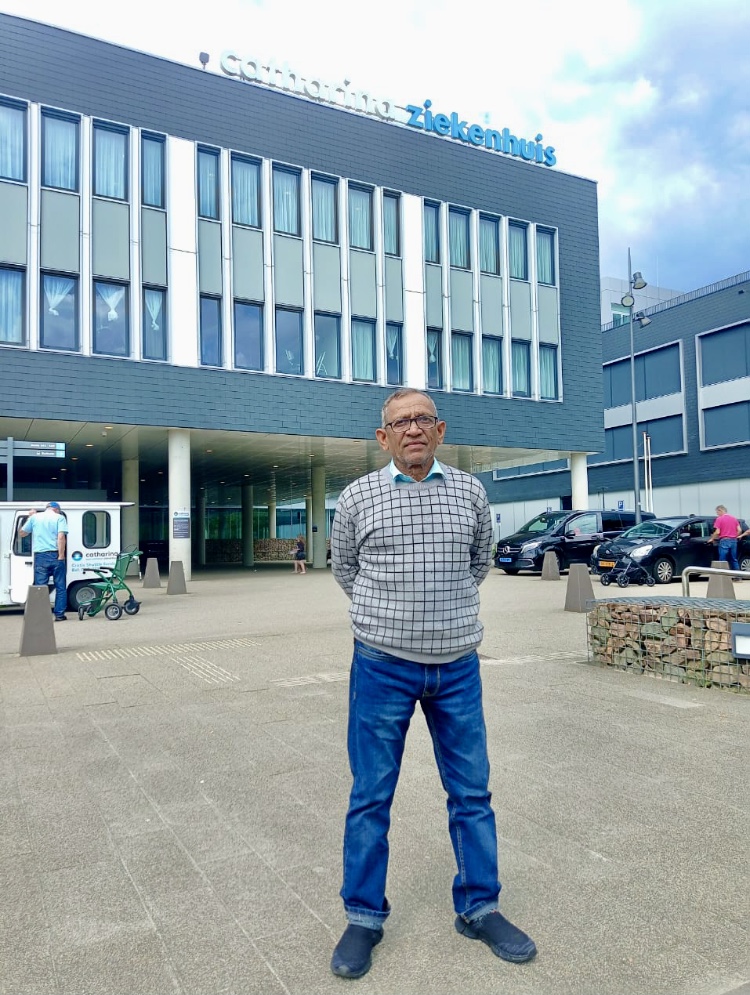
1)Admitted daughter in law Akanksha in Catharina hospital,Eindhoven on 19/05.
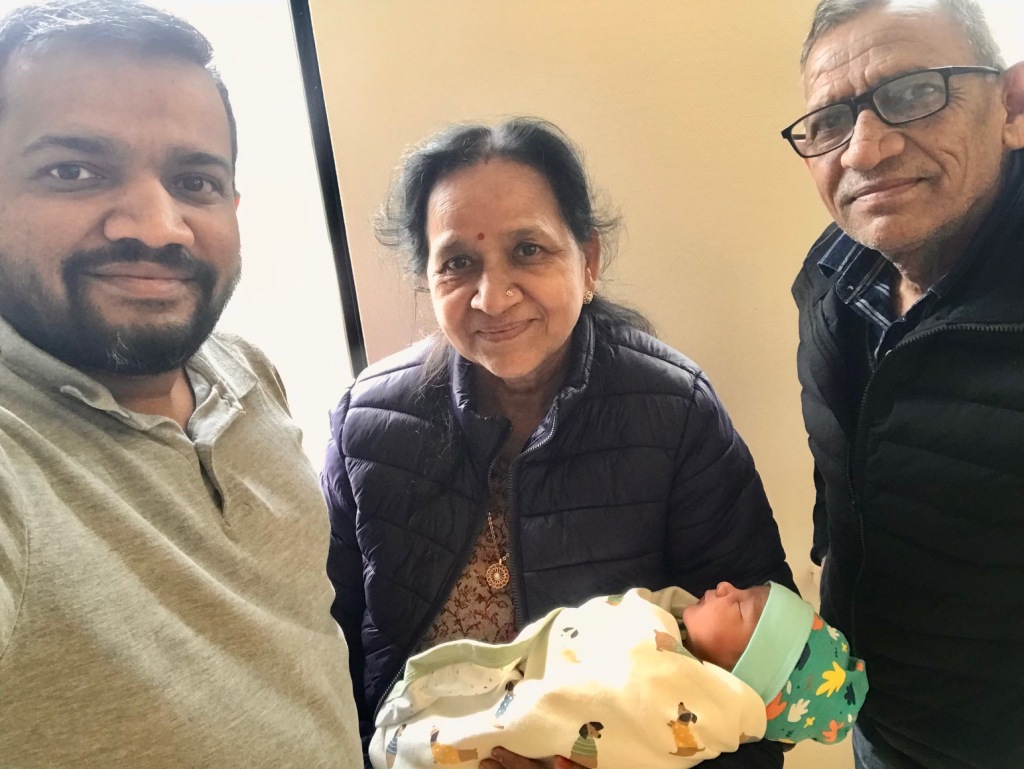
AT THECATHARINA HOSPITAL,EINDHOVENFOR DELIEVERY OF OUR GRANDCHILDON 19/05/24ScreenshotPROUD MOTHER AKANKSHA WITH CUTE NEW BORN “TARRINI”FATHER ABHIMANYU , GRANDMOTHER ANUPAMA & GRANDFATHER DHIRENDRA (MYSELF) WITH “TARRINI”
2)Visited Nuenen Village (near Eindhoven) where,once upon a time,the great Painter Van Gogh lived(1883-85) & started his artworks such as “Potato Eaters” (1885).”Starry Night” is regarded as his greatest masterpiece painted in 1889.
POTATO EATERS :A MASTERPIECE PAINTED IN NUENEN BY VINCENT VAN GOGH IN 1884ScreenshotPAINTER VINCENT VAN GOGHSTATUE OF VAN GOGH IN NUENEN VILLAGEVINCENTER MUSEUM ,NUENEN VILLAGEScreenshot“STARRY NIGHT”( 1889)oil on Canvas painting is widely regarded as Van Gogh’s Magnus Opus-Its one of the most recognisable painting in western art.It depicts the view from the east facing window of his asylum room at Saint-Remy-de-Province ,France.
3)EVOLUON MUSEUM, EINDHOVEN :EXPLORING THE EXCITING WORLD OF FUTURE
ScreenshotScreenshot
4)PRE HISTORISCH DORP (PREHISTORIC VILLAGE) OR EINDHOVEN MUSEUM:
5)EXPLORING GENNEPER PARK FOR ITS DIVERSE UTILITIESAVENUES:
WATER MILL IN THE GENNEPER PARK,EINDHOVENScreenshotIN 1884,GREAT PAINTER VINCENT VAN GOGH PAINTED THE WATERMOLLEN HERE IN THE GENNEPER PARK
GENNEPER HOEVE :This organic farm provides fresh vegetables, seasonal fruits,fresh milk from reared cows of the farm,fresh cheese ,etc.Hen & Pigs are also reared here.
THE ORGANIC PRODUCE SHOP ,GENNEPER PARKParticipating in the Centenary celebration of Genneper Hoeve established in the year 1924.Enjoing some fresh Milk fruit shake.
PHOOD FARM:ANOTHER ORGANIC FARM SUPPLYING FRESH PRODUCE AT THE FARM:
ScreenshotScreenshotScreenshotScreenshot
7)VISITING PARKS(FULL OF GREENERY & FRESH AIR)HAVING WALKING TRACKS : HENRI DUNANT PARK:
ScreenshotScreenshotScreenshotScreenshot
STADSWONDEL PARK:
GENDER PARK NAMED AFTER RIVER STREAM GENDER FLOWING BESIDE THE PARK:
How was Eindhoven named? River ‘Gender’ was earlier called Einde & hoven means a piece of land.ScreenshotGENDER STREAM FLOWING BELOW THE BRIDGE
8) A trip to the amazing “Giethoorn” popularly called the “Dutch Venice” (180kms from Eindhoven.)
Screenshot
I have very sweet memories of the place (Eindhoven) etched in my heart.I will like to present some meaningful quotes on these “Memories” for my valued readers (Credit to the writer of these quotes,Mr.Chris Allmer to whom I am so very grateful):
“Memories are the timeless treasures of the heart.” – Unknown
This quote conveys the enduring value and emotional significance of memories. Memories are not bound by time but live on in the heart, creating a lasting emotional connection. By valuing and cultivating memories as treasures of the heart, we can keep the essence of cherished experiences alive within us.
“The best things in life are the people we love, the places we’ve been, and the memories we’ve made along the way.” – Unknown
This quote encapsulates the essence of a rich and fulfilling life, emphasizing the importance of relationships, experiences, and memories. It reminds us to prioritize meaningful connections, seek out new experiences, and create lasting memories. By nurturing relationships, seeking new experiences, and cherishing the memories we’ve made, we can create a life filled with love, joy, and meaningful experiences.
“Memories are the key to unlocking the future.” – Unknown
This quote suggests that memories shape and inform our decisions and actions as we move forward in life. By reflecting on past experiences, learning from them, and using those lessons to guide our choices, we can create a future that aligns with our values and aspirations. Memories serve as a key that unlocks the potential for personal growth and development.
“Our memories are the bridge between the past and present – they help us move forward while keeping the past alive.” – Unknown
This quote highlights the role that memories play in connecting our past experiences with our present lives. Memories act as a bridge, allowing us to carry the lessons & experiences of the past into the present, while still appreciating & honoring our personal history. By embracing & reflecting on our memories, we can remain connected to our past while remaining open to new experiences & opportunities in the present.
“Precious Memories” :They are the ways of holding on to the things you love, the things you are ,the things you never want to lose.Death leaves a heartache no one can heal.Love leaves a memory no one can steal.
In conclusion,these quotes about making memories have reminded us of the importance of cherishing & capturing the precious moments that make up our lives.They have encouraged us to slow ,be present & createlasting memories that will bring joy & warmth to our hearts for years to come.Life is too short to let these moments pas by us ,so these words of wisdom inspire to embrace every opportunity to make memmories that willbe cherished for ever.As you embark on your journey ,remember to life to the fullest & make every moment count.
Apart from our latest visit ,we have been to Eindhoven in August 2019 & July 2022 & have great memories of the other European countries we visited keeping Eindhoven as our base.Here I am sharing some images of the places we had visited on those tours.
1)JULY/AUG ‘2022 TOUR:
ScreenshotScreenshot
AUG/SEPT’2019 TOUR :
Finally on 27/7/24 ,we started on our return journey from Eindhoven (NLs) to India after our 75-days of quite productive & meaningful stay.
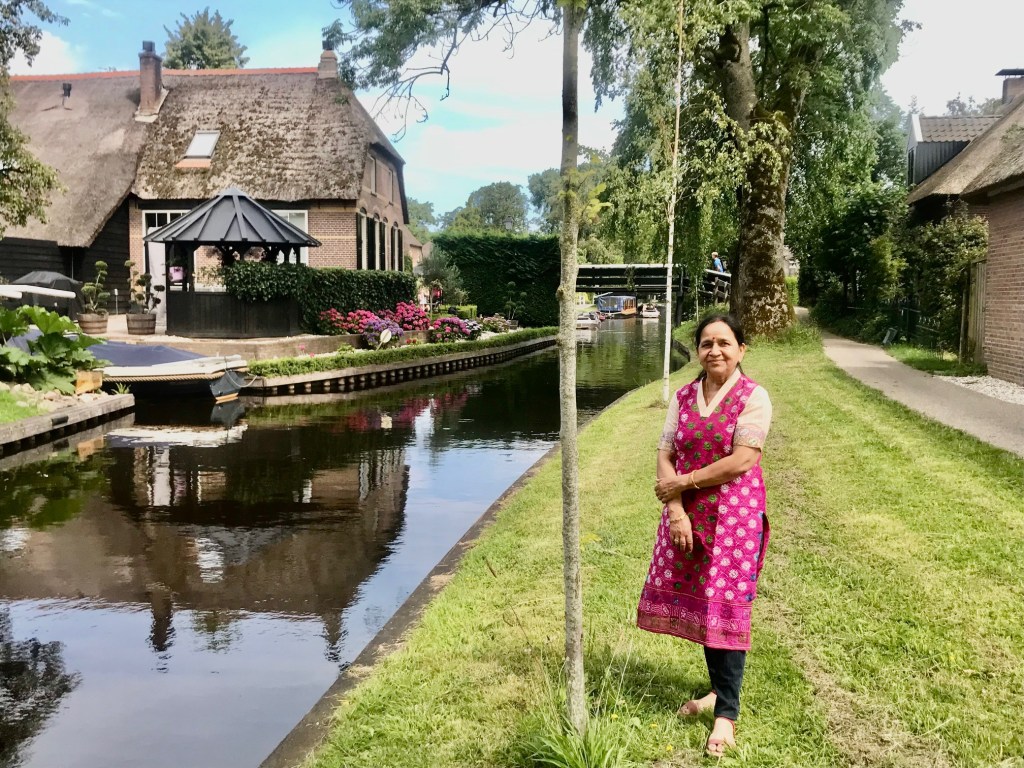
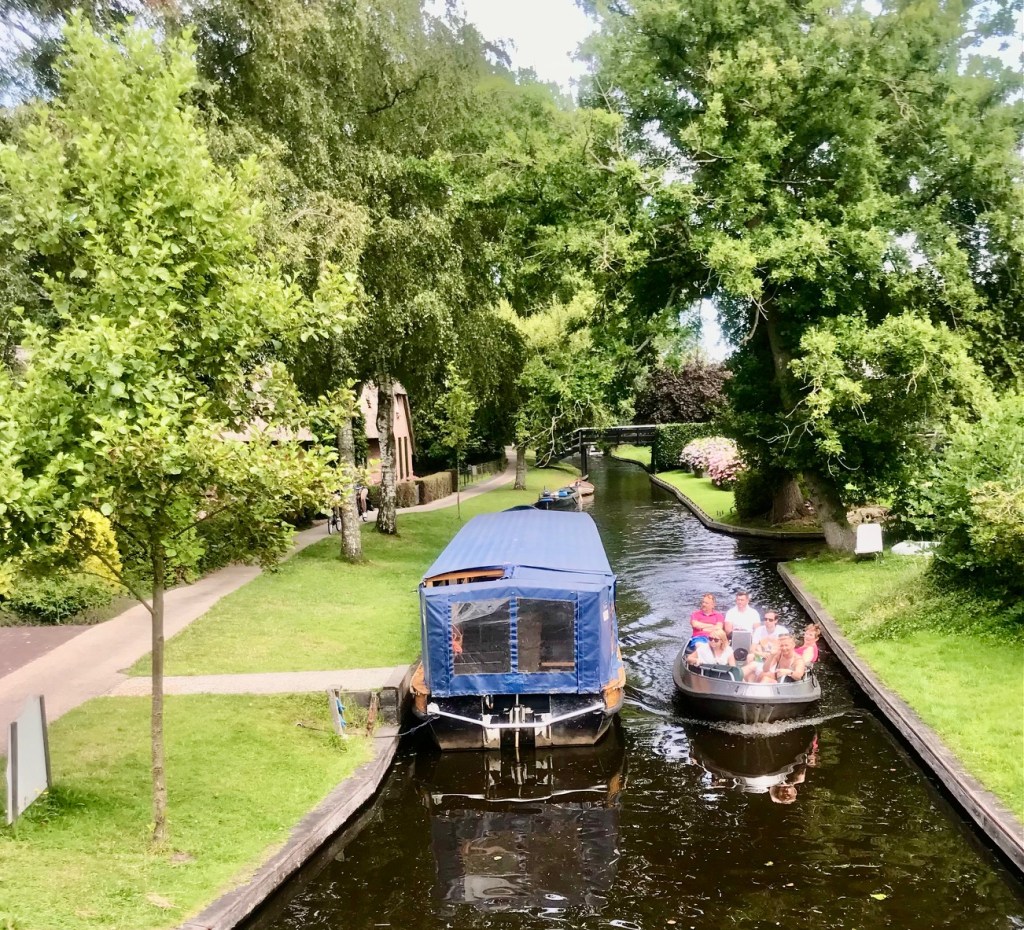
A PICTURESQUE VIEW OF A CANAL ,BOAT & A HOUSE WITH A BLOOMING GARDEN :QUITE ENCHANTING GIETHOORN
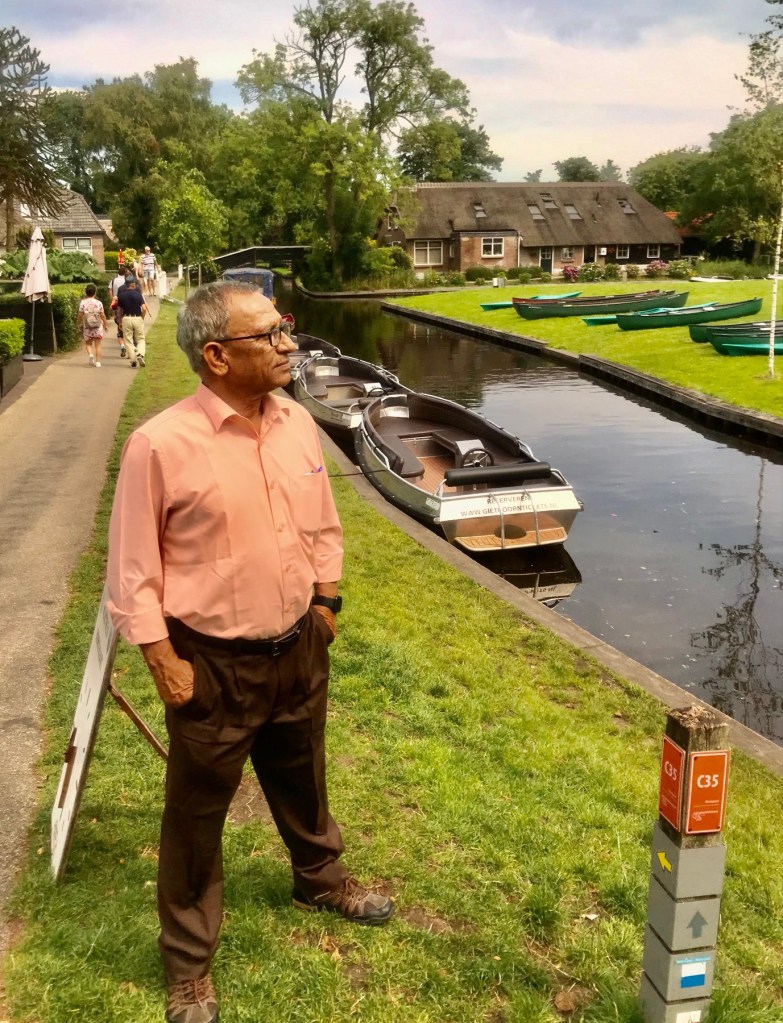
On 19th July 2024 ,We five (me, wife, son, daughter in law & “Taarini”-the little one)set- off from Eindhoven for a day-tour to the amazing Giethoorn village around 185 km away (120km from Amsterdam) popularly called the “Venice of the Netherlands”. Its a must- see attraction & we were mesmerised by the picturesque beauty of the water canals, colourful boats & lovely houses with so many visitors enjoying their outing.Incidentally Taarini has turned 2 months old today enjoying her first outing away from home & it was a unique experience & a magical getaway.Happy Reading my dear friends💕
Taarini enjoying with papa AbhimanyuTaarini’s mother Akanksha taking a selfie while boatingLITTLE TAARINI LOOKING AROUND CURIOUSLY
About the village – Giethoorn:
The village has 2630 inhabitants and is known for its bridges , waterways and flat- bottomed boats . It is sometimes called the “Dutch Venice”. Giethoorn is elongated and consists of three neighborhoods -the Noordeinde, the Middenbuurt and the Zuideinde. The Dorpsgracht(Village Canal) is the central axis of Giethoorn and ends in the south in Zuideindiger Wijde. The farms and houses are separated by plot ditches over which there are ramps that connect the house plots. The humpback whale farm is characteristic of Giethoorn. The peat extraction(extraction of decayed vegetation or organic matter)created puddles and lakes. To transport the peat, canals and ditches were dug. Many houses are, as it were, built on islands, which can only be reached via bridges. Most of the more than 176 bridges are privately owned.Also there are some newly built houses on sale.
The only continuous connection through the old village by land is a cycle and walking path that runs from Noordeinde to Zuideinde. The main traffic takes place over the water. The main traditional vessel used for this purpose was the , propelled with a punt boom (punting). Nowadays, all kinds of motor-driven boats are used for this purpose and punting is hardly done anymore.
A WATERMILL IN GIETHOORN
Giethoorn is a mostly car-free village in the northeastern Dutch province of Overijssel. It’s known for its boat-filled waterways, footpaths, bicycle trails and centuries-old thatched-roof houses. It borders a section of the Weerribben-Wieden National Park, a marshy area once popular for peat and reed harvesting. Next to the park, Museum Giethoorn ‘t Olde Maat Uus is a farm museum illustrating the region’s history.Its a living museum showcasing a historic farming village with costumed actors, a gift shop & a cafe.Also there is a lovely Watermill & a Church in the canal waterways.
Giethoorn Museum
When you think of Giethoorn , you think of sailing in Giethoorn. A visit is of course not complete without a beautiful boat trip through the village and the Weerribben Wieden National Park, the beautiful natural monument in our area. There are many options to discover Giethoorn from the water, in addition to the traditional point or the whisper boat, the offer has now been considerably expanded. Discover the area in a unique way, on a SUP or pedal boat. Still nice in a whisper boat, then definitely go for a nice evening trip, then it is nice and quiet in the canals.
Giethoorn Church
A day out in Giethoorn is not complete without something to eat and drink. Fortunately, Giethoorn has many places where you can enjoy a bite to eat and a drink at an affordable price. And did you know that Giethoorn also has a star restaurant? This way, you can turn your day out into a real culinary affair. Of course you can relax on a terrace for a bite to eat and a drink after a day full of activities. But it might be even more fun to do an activity in combination with food. Then choose a cool cooking workshop! Or go for a package where the food and drinks in Giethoorn are part of the activity.
There is also plenty of tasty food for children. So if you are out for the day with children, go for a tasty pancake or choose the old-fashioned snack bar! This way the children are also happy and how nice is it to enjoy such a tasty snack every now and then! Check out all the options to complement your outing with a delicious meal, from a luxury dinner to a tasty snack and from fish to pizza!
Below you will find an overview of all the different options for ‘sailing in Giethoorn’. If you look for an option, you will find all companies in Giethoorn that offer this activity. You can also reserve an activity directly.Reserve a boat to sail yourself and book a covered tour with a guide .
Smit Giethoorn : An ideal place for enjoying your day.
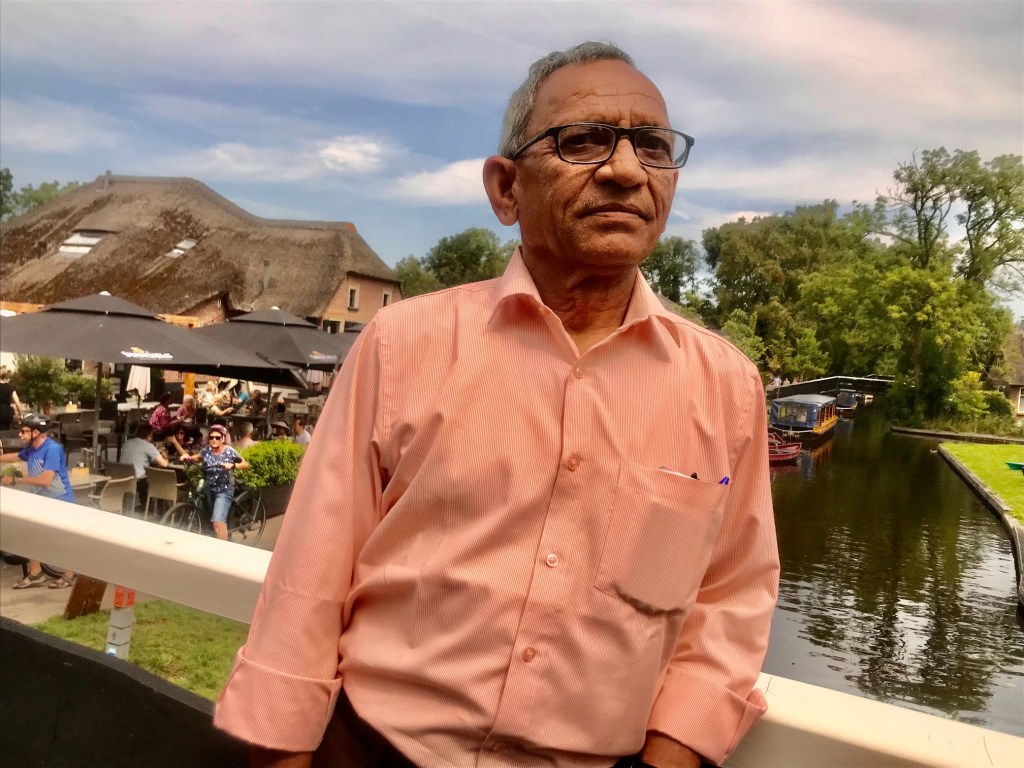
MYSELF AT THE SMIT GIETHOORN
Restaurant :
The well-known water village Giethoorn offers many possibilities for a pleasant day out. Enjoy the water with a (sailing) point, rowing boat, whisper boat or canoe. Or would you rather join the tour, with text and explanation from an experienced skipper? Smit Giethoorn is the right address for all your wishes. After a day in Giethoorn you will of course also want to eat something. You can also go to Smit Giethoorn for that.
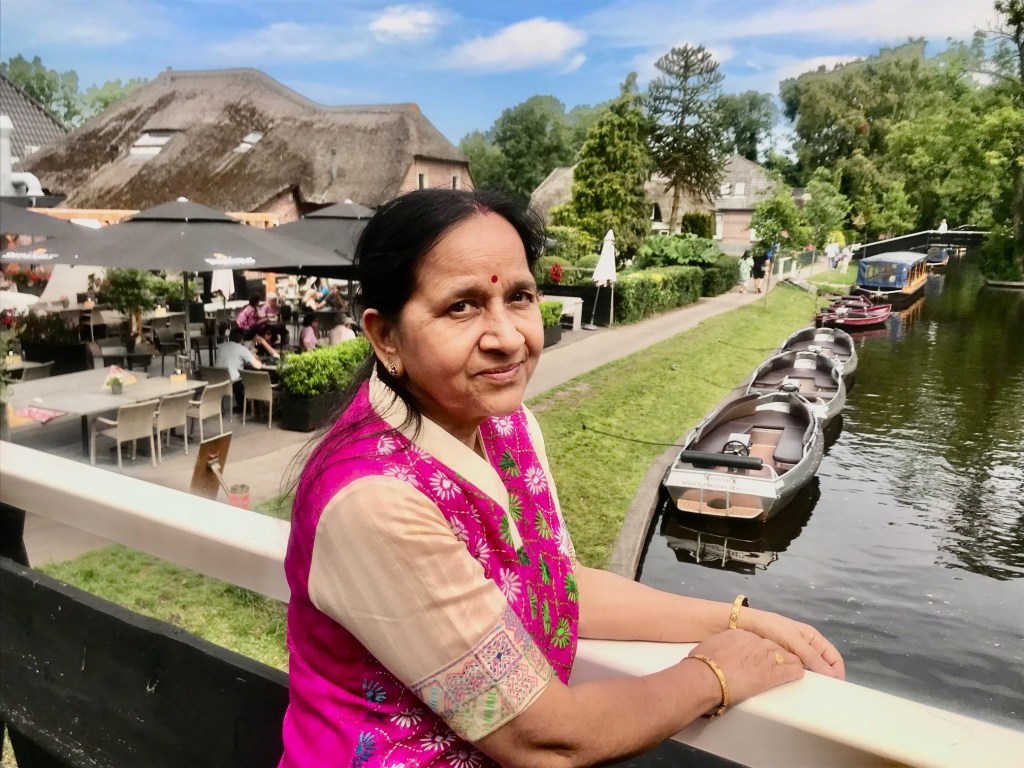
WIFE ANUPAMA POSING ON THE BRIDGE AT ‘SMIT GIETHOORN’
Terrace With beautiful in Giethoorn you can of course also sit on our cozy terrace located on the village canal of Giethoorn and enjoy the boats that sail by. There is also the opportunity to order from our menu or at our ice cream counter.
Parties/ receptions/ weddings/ parties Our restaurant is also ideal for parties, receptions, weddings and parties, with or without various buffets. Let us inform you and also ask about the possibilities for a day in Giethoorn with many possibilities that you can read about on our packages.
Bar We will be happy to pour or tap you a drink at our cozy bar. Please note: almost every Wednesday evening, pirate choir ‘De Waterlanders’ practices with us. It can suddenly become very cozy!
Some information about the Boat routes in the canal waterways with related fares:
ScreenshotScreenshot
Boat rentals(Tentative rates depending on requirements)
Would you like to explore the village, lake and nature reserves on your own? You can do this in one of our whisper boats, in a (sailing) point, rowing boat, canoe or luxury sloop.
2-4 p whisperboat
Online best price:
€ 39,50 – 1,5 hour sailing
Price on site: Kerkweg 35
€ 50,00 – 1,5 hour sailing
2-4 persons boat
Online best price:
€ 59,99 – 2 hours sailing
Price on site: Kerkweg 35
€ 75,00 – 2 hours sailing
2-5 persons boat
Online best price:
€ 69,95 – 2 hours sailing
Price on site: Kerkweg 35
€ 85,00 – 3 hours sailing
Luxury boat 2-6 persons
Online best price:
€ 72,95 – 1.5 hours sailing
Price on site: Kerkweg 35
€ 85,00 – 1.5 hours sailing
Whisper boat Discover the beautiful village of Giethoorn and the nature reserve De Wieden in one of our beautiful whisper boats. Enjoy a day of silent sailing and the beautiful ditches and lakes. Our whisper boats are open boats, very stable and intended for approx. 5 people. The boat is easy to steer and is powered by a virtually silent electric motor. You will receive a route map of Giethoorn and the surrounding area, so you can always find your way back. We have whisper boats for up to 6 to 8 people and for an additional charge some for 10 people.
(Sailing) Punter Sailing on the Bovenwiede, punting in Giethoorn or a punt treasure hunt through the canals are all possible. With this Gieterse Punter, a stable flat-bottomed boat, you can explore the village canals of Giethoorn with the help of a (punter) boom. Once you arrive at the Bovenwiede, you can enjoy the peace and quiet and set up your sail to sail a few courses. Or do you just want to enjoy the sun? Float and dream away on the lake, moor at the recreation island, discover nature and enjoy our beautiful Giethoorn.
ABHIMANYU WITH WATERMILL IN THE BACKGROUND
Luxury Sloops We also have several luxury electric sloops. Enjoy a fun day on the water with family and friends. Enjoy the beautiful nature of Giethoorn and surroundings. Take an unforgettable trip across the Gieterse waters and discover this special village. Our sloops are also ideal for larger trips through the Weerribben and Wieden National Park with all its characteristic water villages. These boats are suitable for groups of up to 10 people. Ask us about the possibilities of, for example, receiving a picnic basket or packed lunch, or discuss a place in our restaurant for a delicious meal after a beautiful day of sailing.
Special packages :
Smit Giethoorn has many special packages. These packages have been carefully put together, but if you want to make changes, this is always possible in consultation. Times in the packages are indicative and can be adjusted. If you want to add or remove components, we will look at the various options together.
Spend the night in Giethoorn:
Plenty of reasons to choose to spend the night in Giethoorn:
It is impossible to see and experience everything Giethoorn has to offer in one day. Of course, most guests go sailing in Giethoorn, but a walk through Giethoorn and the surrounding area, or a bike ride through the Weerribben-Wieden national park is also highly recommended. But seeing everything at your leisure in one day is actually almost impossible. And early in the morning it is also wonderful to walk in the village, nice when there is no one else there. Or a beautiful evening walk while enjoying the sunset
HUGE NUMBER OF HOUSES AVAILABLE ON RENT :PLENTY OF NIGHT STAY OPTIONS TO CHOOSE FROM
I AM INDEBTED TO OFFICIAL WEBSITE OF GIETHOORN FOR USEFUL INFORMATION
On 14th July’24,I undertook a study-tour of the agricultural farms & fields in Eindhoven for witnessing the greenery & Biological diversity(healthy existence of human & other species in the ecosystem).We know that green environment is a boost to mental health refreshing us in the clean & natural surroundings enhancing our general health.My dear readers,lets discuss what is Biological Diversity or Biodiversity in detail.
The tripods in the field are riders used for drying hay.We use them to provide a hiding place for mammals such as hedgehogs,mice, weasles & stoats.In the spring many birds get nestling material from here(-Animal Diversity.)
Eindhoven Muncipality has taken some concrete measures to conserve the Biodiversity & balanced ecosystems through Nature Combination(combination of sustainable agriculture or food production maintaining the ecological balance at the same time).Eindhoven Muncipality have formulated future plans for achieving the goals to be implemented by the end of this decade.Some firms,such as ,Genneper Hoeve & Phood farm(I have already described them in my previous blogs) are engaged in Nature-inclusive farming with rich Biodiversity maintaining the ecological balance in nature.Muncipality is also committed to provide shelter to animals(like Bats,Bees, sparrows ducks & small insects) in the farms to boost the much needed animal diversity.As rich Biodiversity maintains ecological balance,it is fundamental to the well- being of our planet.Therefore we must join hands in order to achieve this goal.
SIGNBOARDS MAKING US AWARE OF PRESENCE OF SMALL CREATURES IN THE NATURE PARKBEAUTIFUL BRIDGES WITH FRESH WATER STREAMS FLOWING UNDERNEATH
Visited vast expanses of well maintained grasslands, river streams & trees/shrubs: It was a great spectacle witnessing the mesmerising expanses of grasslands, variety of trees ,water streams & pathways rich in plant & animal diversity so valuable for our planet Earth.It was a very refreshing experience in the peaceful natural surroundings.
ScreenshotPEOPLE HEADING FOR A GREAT PICNIC IN THE PEACEFUL/CALM NATURE PARK EXCEPT FOR THE TWITTERING OF BIRDS
Towards nature-inclusive agriculture: Nature combinations can bring about major social gains.This is especially true for one of the chief global challenges: a more sustainable agriculture & food production.Worldwide we are faced with the challenge of increasing productivity & reducing the use of raw materials.This must be done in a way that meets the rising demand for food, improves the quality of the living environment & leaves the reserves of raw materials intact.In short: more agriculture and more nature as well.This will only be possible if we work towards a more nature-inclusive agriculture, a way of food production that is economically woven into nature to the benefit of both. This route offers major opportunities for Dutch agriculture in the long term. The government therefore encourages the development of this nature-inclusive agriculture and of more efficient raw material chains, building on the work of the front-runners in these fields.
ECOLOGICAL FARMING:THE NATURE -INCLUSIVE FARMING ENHANCING BIOLOGICAL DIVERSITYECOLOGICAL FARMING AT THE GENNEPER HOEVEGENNEPER HOEVE :THE ORGANIC FARM SUPPORTING THE ECOSYSTEMCOWS AT THE GENNEPER HOEVE ,GENNEPER PARKENScreenshotAQUAPONIC FARMING :A NEW CONCEPT OF ORGANIC FARMING AT THEPHOOD FARM ,EINDHOVEN
What is Biodiversity & how is it essential for processes that support life on Earth :
Biodiversity, in simple terms, means a diversity of life forms. The various diverse forms of life on Earth are commonly referred to as biodiversity.It is used to refer to the different life forms that are found in a specific ecosystem. Diverse life forms share the same environment, and they are affected by each other in a state of dependency.
Lets try to understand Biodiversity & as to how it is important for a balanced & healthy environment which is fundamental to the well being of our planet Earth:
1)Biodiversity is essential for the processes that support all life on Earth, including humans. Without a wide range of animals, plants and microorganisms, we cannot have the healthy ecosystems that we rely on to provide us with the air we breathe and the food we eat.
2)Importance & Conservation of plant diversity are fundamental for the well-being of our planet. Plant biodiversity means the variety of plants living in a certain place, including different species and their unique traits. Diversity in plants is like having a diverse team where each member brings something special.
3) Plants are like the superheroes of Earth.They produce the air we breathe, offer food for animals & even help keep the weather steady.Plant diversity is the key to a balanced and healthy environment & taking care of it as it is essential for the ecosystems that support life on our planet.For the ecosystem to function well it is important to conserve diverse species at single location & across landscapes.
4)Animal diversity provides a boost to the ecosystems’ productivity where each species has a vital role to play.What is the difference between animal diversity and biodiversity?Biodiversity is a complex term that includes not only the variety of different animals (species diversity) but also the difference between animals of the same species (genetic diversity) and between ecosystems (ecosystem diversity).
5)Plant biodiversity is invaluable because it balances ecosystems, protects watersheds, mitigates erosion, moderates climate, and provides shelter for animals. Threats to plant biodiversity include the increasing human population, pollution, deforestation, and species extinction.
6)Ecosystem represents a complex balanced interaction between the two important components, biotic and abiotic that constitutes a healthy ecosystem. An ecosystem with high biodiversity is capable of developing into an efficient ecosystem. In contrast to this, a wide array of studies reveals that it is the functional traits of the organisms and not their taxonomic identification that affects the ecosystem linked processes .
7)Thus, in order to undertake mechanistic studies[the field of study of reverse engineering neural networks(type of machine learning process called deep learning) from the learned weights down to human-interpretable algorithms] of ecosystem dynamics, it is the functional diversity that happens to be the most significant or crucial index for addressing the efficiency determination of an ecosystem.
8)Functional diversity is a component of biodiversity that generally includes the wide range of metabolic activities carried out by the microorganisms in communities and ecosystem. It can be taken as a measure for distribution and productivity of organisms inhabiting a particular niche(a subset of a habitat where only a particular species lives).
9)Functional diversity is of high ecological importance because it is one of the components of diversity that influences the ecosystem dynamics, stability, nutrient availability, productivity and other aspects of ecosystem functioning . The functional diversity indicates the reliability of an ecosystem by addressing their diverse metabolic potential.
Understanding Habitat Conservation :
BAT BOXES INSTALLED IN THE GENNEPER PARKEN FOR SHELTERING BATSBat boxes are provided in parks & farms to shelter the BatsBIRD SHELTERS ARE PROVIDED ON TREES BY RESIDENTSSmall birds sheltersBEE SHELTERS
Habitat conservation is a crucial aspect of ensuring the survival and well-being of wildlife across the globe. By understanding habitat conservation and its benefits, we can work together to protect the vibrant ecosystems that support countless species, promote ecological balance, and enhance human well-being.Here lets explore the importance of conserving wildlife habitats, discuss the threats they face, highlight successful conservation efforts, and offer ways in which you can help.
BIRD SHELTERBEE SHELTERS PROVIDED BY MUNCIPALITY
Habitat conservation is a multifaceted concept that aims to preserve, restore, and manage natural ecosystems for the benefit of wildlife and human populations alike. It encompasses a variety of approaches and strategies, all focused on ensuring the long-term survival and health of diverse habitats and the species that rely on them.
W.W.F’s. MISSION :
W W F’S MISSION
WWF’s mission is to stop the degradation of the planet’s natural environment and to build a future in which humans live in harmony with nature, by conserving the world’s biological diversity, ensuring that the use of renewable natural resources is sustainable, and promoting the reduction of pollution and wasteful consumption.Biodiversity maintains the ecological balance. It helps in the healthy existence of humans and other species in the ecosystem. It helps in high productivity and human wellness. Biodiversity provides humans with valuable genetic diversity.
The Challenges ahead are :
1)Our food systems are putting an impossible strain on nature & failing to nourish all people on the planet. Transforming our food systems is therefore key to bending the curve of biodiversity loss and achieving the Sustainable Development Goals.
2) To improve our food production systems without exceeding the carrying capacity of ecosystems and the planet to meet the food and nutrition needs of current and future generations. This requires a paradigm shift from maximizing production at the expense of nature to farming with biodiversity to achieve nature-positive production at scale.
3)In landscapes that consist predominantly or to a large extent of intact natural ecosystems, the first priority should be to protect the remaining natural habitat, including indigenous territories, from conversion to agriculture.
4) Land that is used to produce food needs to be managed in such a way that agriculture enhances the richness and abundance of biodiversity and ecosystem functions, reduces greenhouse gas emissions, and enhances resilience to climate change.
5) Abandoned or degraded agricultural land needs to be restored to natural habitat or rehabilitated to support sustainable food production.
GLOBAL SCENARIO :
1)Around the world, research, evidence and experience shows that it is possible for agricultural systems within multi-functional landscapes to provide food, feed, fuel and fibre as well as habitat and corridor functions for biodiversity, climate resilience and enhanced ecosystem services.
2) Agroecological approaches provide a pathway to protect nature, manage agriculture in ways that enhance the richness of biodiversity and restore the ecosystem functions of degraded systems, by applying a holistic and interconnected set of ecological and social concepts to the design and management of food and agricultural systems. The ten elements of agroecology can be applied at the farm, landscape and food system level, to realize nature-positive production at scale.
3)In line with the Climate Agreement and the Sustainable Development Goal 11,‘Make cities and human settlements inclusive, safe, resilient and sustainable’, the United Nations pronounced the period from 2021-2030 ‘the decade of ecosystem restoration’. This decade focuses on the protection and restoration of ecosystems worldwide, for humans and nature.
4) Smart urban planting offers countless benefits: it safeguards biodiversity, cleans the air, allows water to infiltrate the soil and decreases the impact of heatwaves. A green environment is also proven to boost mental health.
5)The WHO states that nature improves sleep, decreases stress and amplifies our feelings of happiness. So, green spaces contribute to the well-being of humans and the planet. Over the past 25 years, the amount of green space in European cities has increased by 38%, and currently, 44% of the European urban population lives within 300 metres of a public park. This means that a growing number of cities is earmarking space for urban nature and living space for their residents.
Nature-Concious Residents putting up Gardens to enhance Biological Diversity:
BEAUTIFUL REAR GARDEN BESIDE A RIVER STREAMVERY WELL MAINTAINED GARDEN BESIDE A RIVER STREAMNICELY MAINTAINED FRONT GARDEN OF THE HOUSESNICELY DECORATED GARDEN AREAS
Note :I am indebted to the Wikipaedia for the invaluable information on the subject.
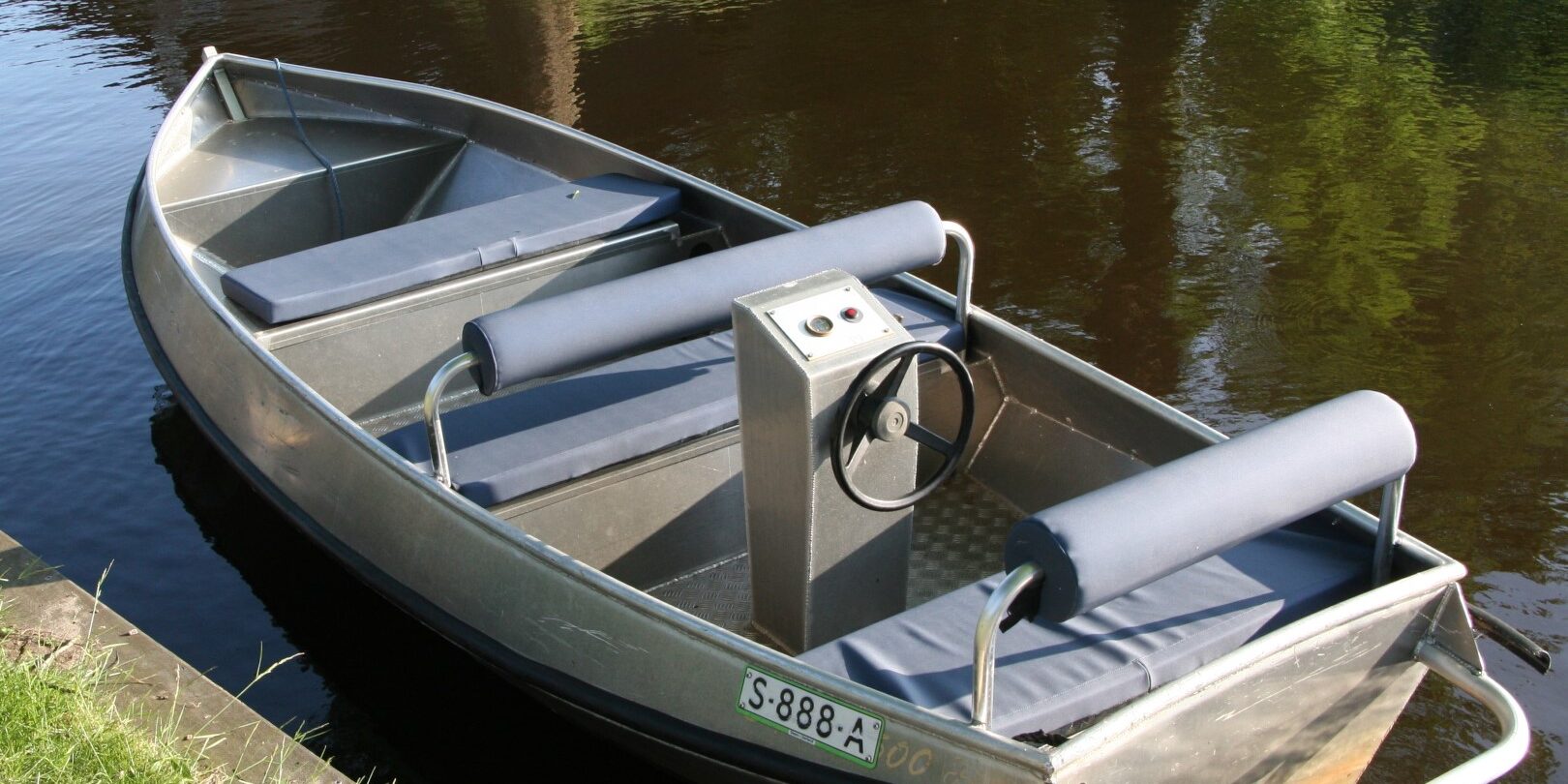
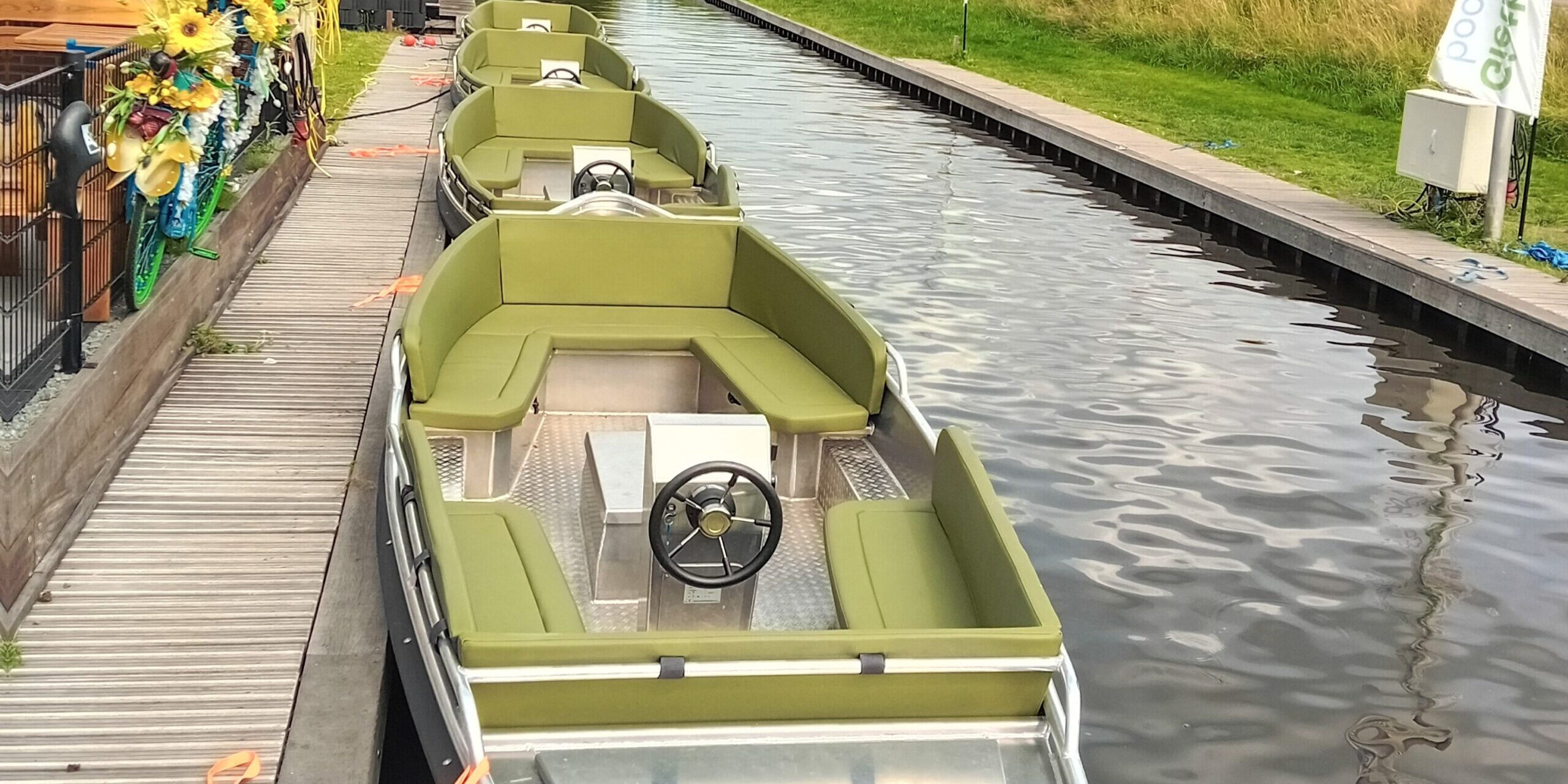
CHILDREN ROWING A PEDAL BOAT -NICE SPORT & PHYSICAL ACTIVITYPEOPLE USING CYCLE AS MEANS OF TRANSPORTATION FOR OFFICE AS WELL AS HOUSEHOLD REQUIREMENTS
On the 10th July’24, I went on a very long walking tour in the surrounding area of my son’s house in Eindhoven & was very inspired by the healthy lifestyle of the Dutch people whether young or the old.They all are very health-concious engaging in various excercises/sports activities to keep their bodies fit & healthy.On my long tour I witnessed them busy with these activities,namely, Brisk walking ,Running ,Cycling ,Scating, playing games such as Football ,swimming ,Lawn tennis,Horse riding,Canoeing in the river stream, fishing , Pets raising(dogs & cats), Visiting organic farms for purchase of fresh produce & long-distance bike racing.Followed by these activities ,they have very healthy eating habbits always going for fresh food refraining from very strong spicy food (cooked in masalas).I was very much impressed with their activities & took some photos for my readers to view.One thing I observed was that,they mostly travelled by bicycles irrespective of their status in the society & never thought low about it.This culture has not only minimised the pollution levels here but has contributed to their physical fitness & sound health.One more observation I have made is that people here ,on many weekends, leave on friday nights for distant sea-side destination by cars with boats towed to their vehicles to rejoice after the week at office.Its how they rejuvenate themselves.Although all my readers are already quite aware of the virtues of various physical activities, excercises & healthy eating,but still, lets revise as to what it takes to be healthy.Happy Reading, Friends !
We know that staying active is one of the best ways to keep our bodies healthy. But did you know it can also improve your overall well-being and quality of life? Here are just a few of the ways physical activity can help you feel better, look better & live life better.
It’s a natural mood lifter:
Regular physical activity can relieve stress, anxiety, depression and anger. You know that “feel good sensation” you get after doing something physical? Think of it as a happy pill with no side effects! Most people notice they feel better over time as physical activity becomes a regular part of their lives.
It keeps you physically fit & strong :
Without regular activity, your body slowly loses its strength, stamina and ability to function properly. It’s like the old saying: you don’t stop moving from growing old, you grow old from stopping moving. Exercise increases muscle strength, which in turn increases your ability to do other physical activities.
LONG DISTANCE BIKER ON THE MOVE
It helps keep the Doctor away :
Stand up when you eat your apple a day! Too much sitting and other sedentary activities can increase your risk of heart disease and stroke. One study showed that adults who watch more than 4 hours of television a day had an 80% higher risk of death from cardiovascular disease.
Being physically active can help you : The adage “healthy body, healthy mind” is true for all ages. Being physically active can increase your confidence and sense of self-worth while also providing you with social opportunities. Regular physical activity, such as yoga, can help you sleep better, improve your harmonal balance & digestion.
Screenshot
Being Physically Active benefits you in many ways :
1)Lowers your blood pressure. 2)Boosts your level of good cholesterol. 3)Improves blood flow (circulation). 4)Keeps your weight under control. 5)Prevents bone loss that can lead to osteoporosis. 6) Lowers medical expenses, interventions and medications in later life!
CHILDREN’S CYCLING PLAY TRACKCHILDREN’S FOOTBALL COURTBeautiful parks for families to enjoy their timeCHILDREN’S PLAY STATIONS
It can help you live longer :
It’s true, 70 is the new 60 …but only if you’re healthy. People who are physically active & at a healthy weight live about seven years longer than those who are not active & are obese. The important part is that those extra years are generally healthier years! Staying active helps delay or prevent chronic illnesses and diseases associated with aging. So active adults maintain their quality of life and independence longer as they age.
FOOTBALL GROUNDS FOR ALL CATEGORIESGREAT FACILITY WITH DUE RESPECT
Here are some other benefits you may get with regular physical activity :
1)Helps you quit smoking and stay tobocco-free 2 )Boosts your energy level so you can get more done. 3)Helps you manage stress and tension. 4)Promotes a positive attitude and outlook. 5)Helps you fall asleep faster and sleep more soundly. 6)Improves your self-image and self-confidence. 7)Helps you spend more time outdoors.
NICE SWIMMING POOL FOR ALL AGE GROUPSNEW SWIMMING CENTER BEING CONSTRUCTED FOR THE PEOPLE OF EINDHOVEN
Many reputed organisations recommend at least 150 minutes of moderate-intensity aerobic activity each week. You can knock that out in just 30 minutes a day, 5 days a week. And every minute of moderate to vigorous activity counts toward your goal.
HORSE STABLES & SHELTERS
The Role of Entertainment, Sports & Excercises in Maintaining Sound Health :
In recent years, physicians, psychologists and economists have embarked on a journey to illuminate the connection between joy and wellness. Fascinating research exists, and there is value in understanding the effect of happiness on our lives. Happiness has been correlated with better health, both in individuals and communities. Some studies have even suggested that states of happiness may be associated with lower stress-related hormones and better immune function. Various Data collated from different researches have shown that positive mood, optimism and humor are linked to better health and well-being. One key factor that brings about happiness however is Entertainment because of its ability to provoke laughter through the humour it creates. Entertainment is a way of teaching or passing information in a more relaxed atmosphere. It consists of sports and physical exercises, music, dance and drama.Any related research,therefore, is a sojourn into the various ways entertainment can contribute to the physical well being of those who participate in it. It presents an individual analysis of the various tools of entertainment (sports and physical exercises, music, dance and drama) and the roles they play in healthcare.
VERY BIG STADIUM HAVING NUMEROUS TENNIS COURTS FOR ALL,YOUNG & OLD
BEAUTIFUL LUSH GREEN GOLF-COURSES
Role of Travel & Tourism in Personal Well-being & Health:
Travel is an aspect of life like our travels through life. To travel is like pursuing our goal in life. There are many goals in life which we get to stop at and explore but we still know where we eventually want to proceed to. Exploring a new country is like making real what is not yet attained, like dreams, it becomes a reality . To journey is to enjoy what is on route: whatever our interests are: people, architecture, customs, history, weather, the local situation, their politics and the personal ups and downs of journeying. This is just like life. We expect life to run smoothly, often complain when it doesn’t, some of us even try to control life tightly in our fists so that we don’t face any unexpected situations. But if we let go and flow with life, we enjoy what is on route; it might not be exactly the way we thought it would turn out but it will be fuller and richer. My personal experience of life and travel is that it is much better than what I imagined it would be.
TRAVELLING IS VERY MUCH LIKE LIFE ITSELF – TO KEEP HAPPY & ENJOY WHAT IS ON ROUTEAT THE COLOSSEUM (ROME )-BEAMING HAPPY FACES
Role of meditation & tranquility for attaining inner mental peace in our lives:
Meditation infuses far-reaching & longlasting benefits into our lives:we lower our stress levels ,our pain,connect better, improve our focus & are kinder to ourselves .But it needs a quite tranquil environment to be effective. “Tranquility is stillness of the mind, inner silence in abundance, quiet bereft of chaotic state, prevalence of inner peace consistent with our need, calmness in any situation and condition. A tranquil state of mind is acquired when we’ve total control over our mind and body. Meaning of peace is quietness, being in harmony, tranquility or without any sort of disorder”.
WE FEEL REFRESHED IN PEACEFUL NATURAL SETTINGSMEDITATING BESIDE A LAKE IN TRANQUIL & MIND REFRESHING ENVIRONMENT IS QUITE BENEFICIAL
Role of Refreshments & drinks for replenishment followed with physical exertion:
PAVIJOEN RESTAURANT,GENNEPER PARKEN, EINDHOVENAN IDEAL PLACE TO GET REFRESHED AFTER A WORKOUTNICE RELAXING PLACE WITH FAMILY
While we engage in sports & physical activity ,we must also take care that our body is replenished with some breakfast & drinks regularly at any Restaurant or any food point.
Note :I am indebted to the Wikipaedia for the invaluable information on the subject.
On 05/07/24, I Visited & toured the amazing Food Farm in Eindhoven & watched as to how green vegetables, herbs & mushrooms are grown in the Care & Community farms ecologically through innovation & technology for healthier living.Best part of it is that the items are delievered to the consumers directly.Especially I watched the production of ‘Broth’-the Elixir of life which is a vegetable soup with very rich protein ingredients providing great source of energy to the consumer at the same time it has curative properties in cases of certain ailments!In olden days it used to be termed as Grandmaa’s sure-shot prescription in a variety of illnesses especially for young children & mothers.Here I am describing my visit in the words of the ‘Phood Farm”
ScreenshotScreenshotScreenshot
Sustainable ecological farming,healthy eating
Phood Farm is an Aquaponic Care Farm and Community Farm in the southeast of Eindhoven. Here we grow vegetables, herbs, microgreens and mushrooms in a sustainable, ecological way, both indoors and outdoors. In the middle of the city! Our mission is to keep the city healthy, which starts with what you sow, how you grow it and what you eat. We grow our products and deliver them hyper-locally, directly to the end consumer and companies that want to buy healthy, local and ecological vegetables directly from the ‘farmer’
IN THE ABOVE PICTURE I WAS TRYING TO UNDERSTAND AQUAPONIC FARMING PROCESS:QUITE LOGICAL APPROACHScreenshotScreenshot
We are “greening” the city with a pink edge.
Phood Farm is the urban farm that inspires the city to produce and consume regeneratively, caringly and community based. Our innovative aquaponic care farm has now grown into a hyperlocal farming community. Together with the neighborhood and our care participants we grow vegetables, in the middle of the city in a hypermodern way. The place where fresh, pure, unprocessed food is the new standard. Where you come to recover your health through healthy eating .
Welcome to the Phood Family :
What is “Phood Farm”? What do we find important & what do we stand for? A green future, where the healthy growth of plants & people is central. We would like to take you into our world of pure, fresh ,healthy , unprocessed & ecologically -grown vegetables.
ScreenshotScreenshot
We produce unprocessed food locally, through innovation,technology & an ecological system.
Our plants grow in different ways for different purposes. For example, within an Aquaponic Care Farm we have one of the most innovative and sustainable ways to grow vegetables in places where this was previously not possible, such as in (monumental) buildings, on roofs or in deserts. In short, Aquaponic Farming is growing on water, where the food comes from fish manure and is converted into usable plant food. The fish in turn get clean water from the plants, which completes the circle in a self-regulating system. A very sustainable way of growing food that uses 90% less water.
Sustainability is of the utmost importance to us, which is why we opt for hyper-local production in the middle of the city that delivers directly to the end consumer, without any form of transport.
Phood care.
In addition to health and sustainability, caring for each other & each other’s well-being is an important point of attention within Phood Farm. We are a social enterprise & offer people with a distance to the labor market opportunities for development & growth.
Learning by working in the farm:
At Phood Farm we are all students of life, with an open attitude to new possibilities and developments. Are you motivated to build a green and social world together? Then take a look at our internship vacancies and growth places.
Screenshot
Phood kitchen:Local food nurtured by new technology.100%good for you
In a monumental building in the middle of the city, the world of restorative food and urban farming comes to life. Hyper-local, rich in vegetables, herbs and color, based on stock and with an alkaline balance. Our products are grown with care, both through aquaponic farming and regenerative methods in the open ground. Get to know the new Phood Standard and discover how we are redefining nutrition and wellness.
ScreenshotScreenshotScreenshot
BROTH : THE ELIXIR OF LIFE
What do you eat when you don’t feel fit? Grandma’s chicken soup or vegetable broth. And we love your health! That’s why we brew an elixir that has been around since the beginning of time – BROTH – or (bone) broth. It repairs your inner intestinal wall, supports your collagen production, detoxifies your liver and is a small protein bomb in one. You will find our broth every week in the Phood Farm Vegetable Box.
Broth is used for pregnancy support, flu symptoms, leaky gut, irritable bowel syndrome, inflammation reduction, skin rejuvenation, muscle health, joint strength.
ScreenshotScreenshotScreenshot
FEELING QUITE IMPRESSED WITH THE NEW INNOVATIVE TECHNOLOGY “AQUAPONIC FARMING” AT THE PHOOD FARM
I’m grateful to ‘Phood Farm’ website for invaluable information on the subject.